

Polyrhachis thompsoni
- Scientific Name
- Polyrhachis thompsoni
- Subgenus
- Myrmhopla
- Tribe
- Camponotini
- Subfamily
- Formicinae
- Author
- Bingham, 1903
- Distribution
- Found in 1 countries
Polyrhachis thompsoni Overview
Polyrhachis thompsoni is an ant species of the genus Polyrhachis. It is primarily documented in 1 countries , including Lao People's Democratic Republic. Detailed taxonomic data and occurrence records can be further explored via authoritative databases such as AntWeb or the Global Biodiversity Information Facility (GBIF).
Polyrhachis thompsoni
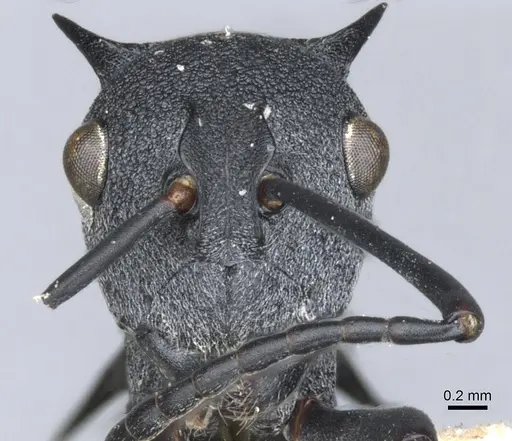
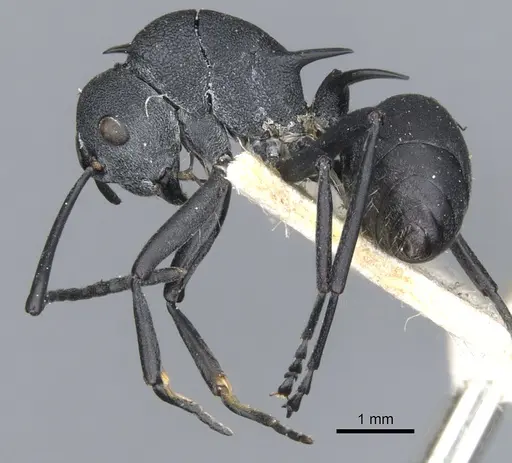
Polyrhachis thompsoni is a spiny ant species belonging to the subgenus Myrmhopla, native to the Himalayan region and Southeast Asia. Workers are medium-sized ants with the characteristic spines on their thorax that give the genus its common name. They are found across India (Himachal Pradesh, Sikkim, Tripura), Nepal, Bhutan, Myanmar, and southern China (Yunnan), typically at elevations between 400-1600 meters [1][2][3]. This species inhabits cool broadleaved forests and agricultural areas in its native range, suggesting it prefers temperate to subtropical conditions at moderate elevations.
Quick Summary
- Difficulty: Medium
- Origin & Habitat: Himalayan region and Southeast Asia, found in India (Himachal Pradesh, Sikkim, Tripura), Nepal (Makawanpur district at 400m), Bhutan (Tsirang at 1400-1600m), Myanmar, and China (Yunnan). Inhabits cool broadleaved forests and agricultural land at elevations of 400-1600 meters [1][2][3].
- Colony Type: Likely single-queen colonies (monogyne) based on typical Polyrhachis genus patterns. Colony size appears moderate, though exact maximum is unknown.
- Colony: Monogyne
- Founding: Claustral
- Size & Growth:
- Queen: Estimated 10-12mm based on genus typical size for Polyrhachis species in subgenus Myrmhopla
- Worker: Estimated 6-8mm based on genus patterns
- Colony: Unknown, likely several hundred workers based on related species
- Growth: Moderate, likely similar to other Formicinae at 6-10 weeks egg to worker at optimal temperature
- Development: Estimated 6-10 weeks at optimal temperature based on typical Formicinae development (Development time inferred from related Formicinae species. Temperature-dependent, warmer conditions accelerate development.)
- Antkeeping:
- Temperature: Keep at 22-26°C. Based on their elevation range (400-1600m) in the Himalayan region, they prefer moderate temperatures, not tropical heat, but not cool either. A gentle gradient allowing workers to self-regulate is ideal.
- Humidity: Moderate humidity around 50-70%. They come from areas with cool broadleaved forests, suggesting they tolerate a range of conditions. Keep the nest substrate slightly moist but allow some drying areas.
- Diapause: Likely yes, based on temperate Himalayan distribution, they probably require a winter rest period. Expect reduced activity during colder months.
- Nesting: Semi-arboreal nesting preferences. In captivity, they do well in naturalistic setups with vertical spaces, or Y-tong/plaster nests with chambers scaled to their size. Provide climbing structures and avoid overly compact horizontal layouts.
- Behavior: Generally calm and non-aggressive for a Formicinae ant. Workers are active foragers that search for honeydew and small prey. They have moderate escape risk due to their size, not tiny enough to slip through standard barriers, but ensure good containment. They are diurnal and actively forage during daylight hours.
- Common Issues: lack of specific care data makes precise requirements uncertain, start with moderate conditions and adjust based on colony behavior, semi-arboreal nature means they need vertical space and climbing structures in captivity, winter dormancy requirements are inferred but not directly studied, monitor for seasonal slowdowns, wild-caught colonies may be stressed from collection and require careful acclimation, diet acceptance in captivity is not documented, start with sugar water and small protein sources
Natural History and Distribution
Polyrhachis thompsoni is distributed across the Himalayan foothills and Southeast Asia, with confirmed records from India (Himachal Pradesh, Sikkim, Tripura), Nepal, Bhutan, Myanmar, and southern China (Yunnan province) [1][4][2]. The species was originally described by Bingham in 1903 from Myanmar specimens. Collection data shows they inhabit elevations from 400 meters in Nepal to 1600 meters in Bhutan, typically in cool broadleaved forests and agricultural land [3]. This elevation range suggests they prefer temperate conditions rather than tropical heat. The subgenus Myrmhopla contains several similar spiny ant species that are primarily arboreal or semi-arboreal, constructing nests in vegetation or using pre-existing cavities.
Housing and Nest Setup
Based on their semi-arboreal nature and typical Polyrhachis behavior, these ants do best in setups that allow for vertical climbing space. A Y-tong (acrylic) nest with appropriately sized chambers works well, or you could use a naturalistic setup with vertical structures. The nest should have chambers scaled to their worker size (roughly 6-8mm). Provide a foraging area that includes climbing surfaces, branches, cork bark, or artificial vines work well. Because they come from moderate elevations with seasonal temperature changes, they benefit from a temperature gradient within their enclosure, allowing workers to choose their preferred warmth. Escape prevention should be moderate, they are not tiny escape artists, but standard barriers are recommended.
Feeding and Diet
Like most Formicinae ants, Polyrhachis thompsoni likely has an omnivorous diet. They probably consume honeydew from aphids and scale insects in nature, along with small insects and arthropods for protein. In captivity, offer sugar water or honey as a constant energy source. For protein, small live prey like fruit flies, small crickets, or mealworms are appropriate. Start with sugar water and small protein items, then observe what your colony accepts. Since this species is not well-documented in captivity, be prepared to experiment with food acceptance. Remove uneaten prey after 24 hours to prevent mold issues.
Temperature and Seasonal Care
Based on their collection at 400-1600m elevation in the Himalayan region, these ants prefer moderate temperatures rather than tropical warmth. Aim for 22-26°C in the nest area, with a slight gradient so workers can self-regulate. Room temperature in most homes (20-24°C) should work well. Given their temperate distribution, they likely require a winter rest period. Reduce temperature to around 15-18°C for 2-3 months during winter, reducing food accordingly. This mimics their natural cycle where cooler winters slow colony activity. Monitor your colony, if they become less active in late fall, begin the cooling period gradually.
Colony Development
Polyrhachis thompsoni is a claustral founding species, the queen seals herself in a chamber and raises her first workers alone using stored body fat reserves. This is typical for Formicinae and inferred from genus patterns. The first workers (nanitics) will be smaller than mature workers but should quickly grow as the colony expands. Development from egg to worker likely takes 6-10 weeks at optimal temperature, similar to other Formicinae. Colony growth will be moderate, not the fastest, but steady once established. A healthy founding colony should reach 50+ workers within the first year under good conditions. Provide consistent warmth and adequate food to support development.
Frequently Asked Questions
How long does it take for Polyrhachis thompsoni to produce first workers?
Based on typical Formicinae development, expect first workers (nanitics) in about 6-10 weeks after the queen lays eggs, assuming optimal temperature around 24-26°C. This is an estimate since this specific species has not been studied in captivity.
What temperature do Polyrhachis thompsoni ants need?
Keep them at 22-26°C. They come from moderate elevations (400-1600m) in the Himalayan region, so they prefer temperate conditions rather than tropical heat. A slight temperature gradient in their enclosure allows workers to choose their preferred spot.
Do Polyrhachis thompsoni ants need hibernation?
Likely yes. Based on their distribution in the Himalayan region with seasonal temperature changes, they probably require a winter rest period. Reduce temperature to 15-18°C for 2-3 months during winter and reduce feeding accordingly.
What do Polyrhachis thompsoni ants eat?
They are omnivorous like most Formicinae. Offer sugar water or honey as a constant energy source, plus small protein items like fruit flies, small crickets, or mealworms. Start with these basics and adjust based on what your colony accepts.
Are Polyrhachis thompsoni good for beginners?
This species is rated as Medium difficulty. While not the most challenging ant to keep, there is limited captive care information available. Beginners should be comfortable with basic antkeeping and prepared to adjust conditions based on colony behavior.
How big do Polyrhachis thompsoni colonies get?
Colony size is not well documented, but based on related species, they likely reach several hundred workers. Growth is moderate, expect steady expansion over the first year once the colony establishes.
Can I keep multiple Polyrhachis thompsoni queens together?
This species is likely monogyne (single queen per colony) based on typical Polyrhachis patterns. Combining unrelated queens is not recommended as they would likely fight. If you capture a founding queen, house her alone until colony establishment.
What type of nest is best for Polyrhachis thompsoni?
They do well in Y-tong (acrylic) nests with chambers scaled to their size, or naturalistic setups with vertical climbing structures. Provide some vertical space since they are semi-arboreal by nature. Avoid overly compact horizontal-only layouts.
References

This caresheet is licensed under CC BY-SA 4.0 .
CASENT0903383
View on AntWeb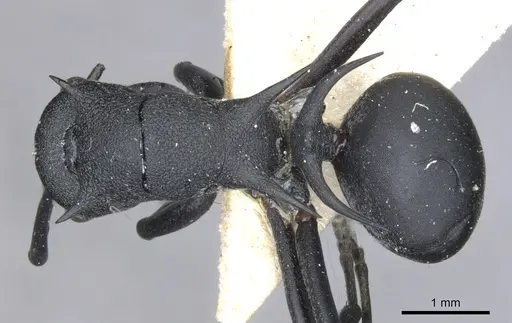
Literature
Loading...Loading products...