

Polyrhachis terpsichore
- Scientific Name
- Polyrhachis terpsichore
- Subgenus
- Hedomyrma
- Tribe
- Camponotini
- Subfamily
- Formicinae
- Author
- Forel, 1893
- Distribution
- Found in 1 countries
Polyrhachis terpsichore Overview
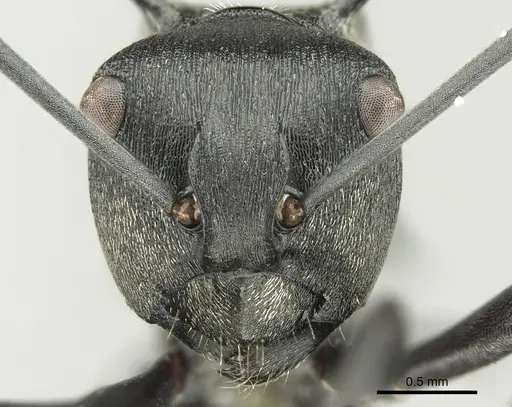
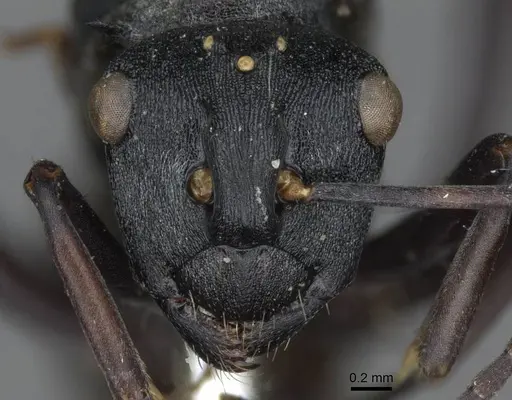
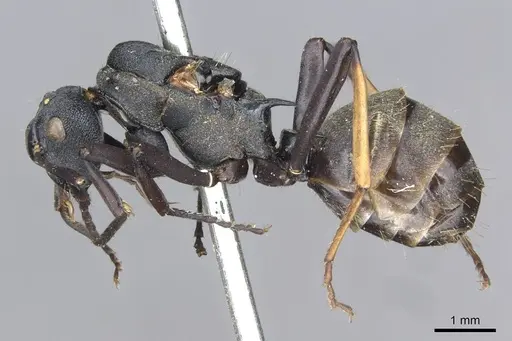
Polyrhachis terpsichore is an ant species of the genus Polyrhachis. It is primarily documented in 1 countries , including Australia. Detailed taxonomic data and occurrence records can be further explored via authoritative databases such as AntWeb or the Global Biodiversity Information Facility (GBIF).
Polyrhachis terpsichore
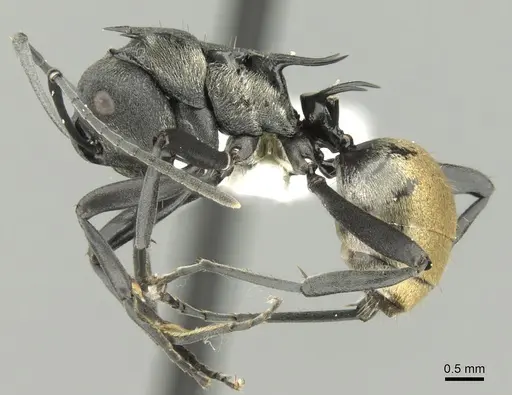
Polyrhachis terpsichore is an Australian ant species belonging to the subgenus Hedomyrma, part of the Formicinae subfamily. These are medium-sized ants known for their distinctive spines protruding from the thorax. Queens were originally described by Forel in 1893,though exact measurements are not readily available. Workers construct nests in cavities within rotting wood, using mud to seal and waterproof their nesting chambers [1][2].
This species has been recorded in Australia's tropical northern regions, including the Wessel Islands where it appears to be a rainforest specialist found only on larger islands like Marchinbar [3]. Like other Polyrhachis species, they have pupal cocoons and exhibit lignicolous (wood-nesting) habits. As Formicinae ants, they defend themselves by spraying formic acid rather than stinging.
Quick Summary
- Difficulty: Medium
- Origin & Habitat: Australia, specifically the tropical northern regions and rainforests of the Northern Territory. They are considered a rainforest specialist species, nesting in rotting wood cavities in humid forest environments [3][2].
- Colony Type: Unconfirmed, colony structure (single-queen vs multi-queen) has not been documented for this specific species.
- Size & Growth:
- Queen: Unconfirmed, original description by Forel 1893 does not include measurements [1]. Based on genus patterns, likely 8-12mm.
- Worker: Unconfirmed, no specific measurements available for this species. Polyrhachis workers typically range 4-10mm.
- Colony: Unknown, no colony size data available for this species.
- Growth: Unknown, development timeline has not been studied.
- Development: Unconfirmed, no direct development data exists. Based on related Polyrhachis species, estimate 6-10 weeks at tropical temperatures. (Estimate based on genus-level data for related species, specific timeline for P. terpsichore unconfirmed.)
- Antkeeping:
- Temperature: Aim for 24-28°C, mimicking tropical Australian conditions. A gentle gradient allowing workers to self-regulate is recommended. Room temperature in most homes (20-24°C) may be acceptable, but warmer conditions will support more active colonies.
- Humidity: High humidity is essential, these are rainforest specialists. Keep nest substrate consistently moist but not waterlogged. The rotting wood they naturally nest in provides a good model: damp but with some drier areas for escape.
- Diapause: Unconfirmed, Australian tropical species may not require true hibernation, but a slight cool period during winter months (15-20°C for 2-3 months) may benefit colony health.
- Nesting: Lignicolous (wood-nesting) species. In captivity, they do well in wood-based nests, Y-tong (AAC) nests, or naturalistic setups with rotting wood pieces. They seal their nests with mud-like material to create airtight chambers [4]. Provide damp wood or cork as nest material.
- Behavior: Generally calm and non-aggressive compared to many ant species. Workers are active foragers but not particularly territorial or defensive. They construct elaborate nests in rotting wood, sealing entrances with mud. Escape risk is moderate, use standard barrier methods (Fluon) but no special escape prevention required beyond standard measures. As Formicinae, they may spray formic acid when threatened.
- Common Issues: humidity control is critical, these rainforest specialists die quickly in dry conditions, wood-nesting requires specific setup, standard test tubes may not be ideal for established colonies, colony slow to establish, limited data means founding colonies may face challenges, wild-caught colonies may have parasites or diseases not yet understood by keepers, temperature too low causes lethargy and may halt brood development
Housing and Nest Preferences
Polyrhachis terpsichore is a lignicolous species, meaning it naturally nests in rotting wood [2][5]. In the wild, workers excavate cavities in decayed stems and seal the entrances with a mud-like substance to create waterproof, airtight chambers [4]. This adaptation allows them to survive in challenging environments, including mangrove areas subject to tidal flooding.
For captive care, provide a naturalistic setup with actual rotting wood pieces or a Y-tong (AAC) formicarium with cork or wood inserts. The nest material should remain consistently moist but never waterlogged. Avoid test tube setups for established colonies, these ants need the ability to construct and modify their nesting chambers similar to their natural behavior. A small water reservoir connected to the nest area helps maintain humidity without flooding.
Feeding and Diet
The specific diet of Polyrhachis terpsichore has not been documented in scientific literature. However, Polyrhachis ants are generally omnivorous, feeding on honeydew, nectar, and small insects in the wild. Workers forage actively and will likely accept sugar sources (honey water, sugar water) and protein sources (small insects like fruit flies, mealworms, crickets).
Offer a varied diet with constant access to a sugar source and protein prey 2-3 times per week. Remove uneaten prey after 24-48 hours to prevent mold. Since this species is unstudied in captivity, be prepared to experiment with food acceptance. Observe worker behavior, active foraging suggests they need more food, while lethargic behavior may indicate temperature or humidity issues.
Temperature and Seasonal Care
As an Australian tropical species, Polyrhachis terpsichore prefers warm, humid conditions. Aim for temperatures in the 24-28°C range, which mimics their natural rainforest habitat in northern Australia. A heating cable on one side of the nest can create a temperature gradient, allowing workers to regulate their own exposure.
Regarding diapause or winter rest, this species comes from tropical northern Australia where temperatures remain warm year-round. True hibernation is likely not required, but a slight reduction in temperature during winter months (dropping to 18-22°C for 2-3 months) may simulate seasonal patterns and promote colony health. Monitor colony activity, if workers remain active throughout winter, simply maintain stable temperatures. Do not allow temperatures to drop below 15°C. [3]
Behavior and Defense
Polyrhachis ants are generally known for their relatively calm temperament compared to many other ant genera. Workers are active foragers but not particularly aggressive toward keepers or other colonies. Their common name 'spiny ant' refers to the distinctive spines protruding from their thorax, which serve as a defense mechanism.
As members of the Formicinae subfamily, these ants do not have a functional stinger. Instead, they defend themselves by spraying formic acid, a chemical irritant. While not dangerous to humans, it can be unpleasant. Handle gently and avoid provoking the colony. Escape prevention using standard methods (Fluon on container edges) is sufficient, these are not particularly escape-prone compared to tiny species, but they are active foragers.
Frequently Asked Questions
How long does it take for Polyrhachis terpsichore to produce first workers?
The exact development timeline is unconfirmed for this species. Based on related Polyrhachis species, expect 6-10 weeks from egg to first worker at optimal temperatures (24-28°C). Be patient, founding colonies can take several months to establish, and limited captive data means growth may be slower than expected.
What is the best nest type for Polyrhachis terpsichore?
They are lignicolous (wood-nesting) ants, so provide a naturalistic setup with rotting wood pieces, cork, or a Y-tong formicarium with wood inserts. Keep the nest material consistently moist. Standard test tubes are not ideal for established colonies, these ants need to modify their environment similar to wild behavior.
Are Polyrhachis terpsichore good for beginners?
This species is rated as Medium difficulty. While generally calm and manageable, the specific care requirements (high humidity, wood-nesting setup, warm temperatures) and limited captive data make it better suited for keepers with some experience. Beginners may struggle with humidity control and the specialized nesting requirements.
How big do Polyrhachis terpsichore colonies get?
The maximum colony size is unknown, no scientific data exists on colony size for this species. Based on genus patterns, expect several hundred workers at maturity. Growth is likely slow given limited data and the unstudied nature of this species in captivity.
Do Polyrhachis terpsichore need hibernation?
True hibernation is likely not required since they come from tropical Australia. However, a slight cool period during winter (15-20°C for 2-3 months) may benefit colony health. Monitor your colony's activity, if they remain active year-round, simply maintain stable warm temperatures.
Can I keep multiple queens together?
The colony structure (monogyne vs polygyne) is unconfirmed for this species. Combining unrelated queens is not recommended since we don't know their social behavior. Start with a single queen colony and do not attempt to introduce additional queens.
What do Polyrhachis terpsichore eat?
They are omnivorous like most Polyrhachis species. Offer sugar sources (honey water, sugar water) constantly and protein (small insects like fruit flies, mealworms) 2-3 times per week. Acceptance is not guaranteed since captive feeding has not been documented, be prepared to experiment.
Why is my Polyrhachis terpsichore colony dying?
The most likely causes are: low humidity (they are rainforest specialists), incorrect temperature (too cold), or improper nesting setup (they need wood, not test tubes). Check that the nest material is consistently damp, temperatures are 24-28°C, and the colony has appropriate nesting material. Limited captive data also means wild-caught colonies may carry parasites.
When do Polyrhachis terpsichore nuptial flights occur?
The timing of nuptial flights is unconfirmed. For Australian tropical ants, flights typically occur during warm, humid months (roughly October through March). If you have a mature colony, watch for winged reproductives during these months.
References

This caresheet is licensed under CC BY-SA 4.0 .
CASENT0906605
View on AntWeb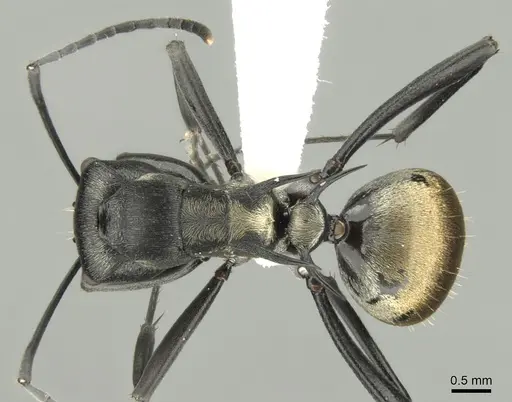
CASENT0910848
View on AntWeb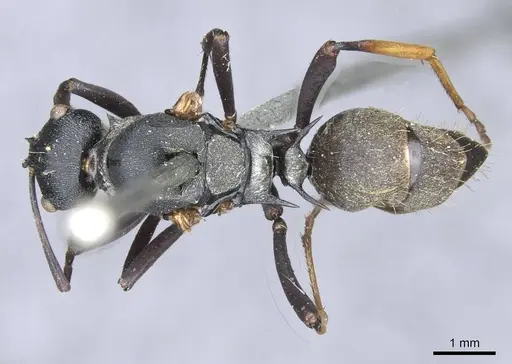
Literature
Loading...Loading products...