

Polyrhachis schenckii
- Scientific Name
- Polyrhachis schenckii
- Subgenus
- Hagiomyrma
- Tribe
- Camponotini
- Subfamily
- Formicinae
- Author
- Forel, 1886
- Distribution
- Found in 2 countries
Polyrhachis schenckii Overview
Polyrhachis schenckii is an ant species of the genus Polyrhachis. It is primarily documented in 2 countries , including Australia, Papua New Guinea. Detailed taxonomic data and occurrence records can be further explored via authoritative databases such as AntWeb or the Global Biodiversity Information Facility (GBIF).
Polyrhachis schenckii
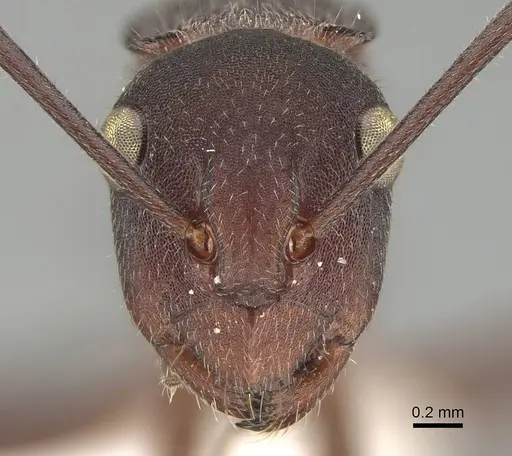
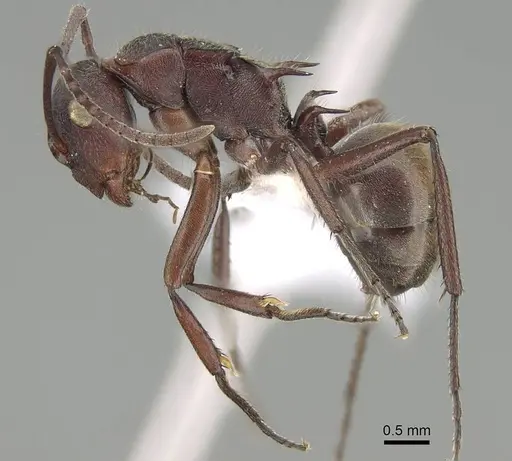
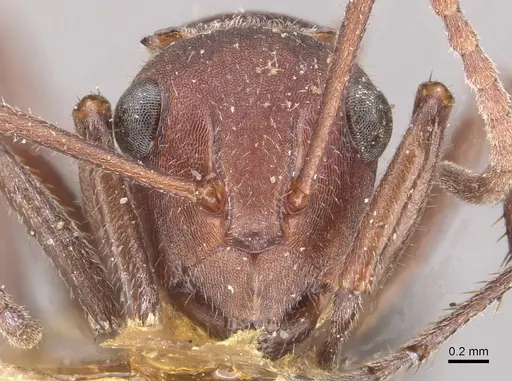
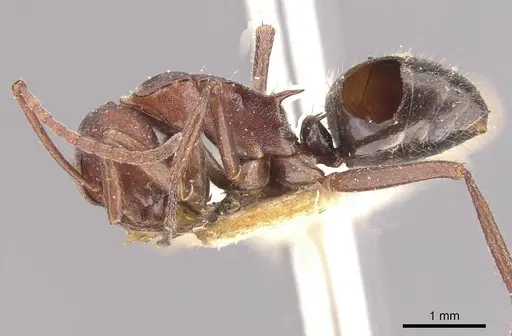
Polyrhachis schenckiii is a small, striking ant species native to the Australasian region, found across Papua New Guinea, the Torres Strait islands, and northern Australia [1]. Workers measure 5-6.5mm in length and have a distinctive light-red to reddish-brown coloration with darker patches on the head, mesosoma, and petiole [1][2]. The species is easily recognized by its small size and the strongly posteriorly converging lateral margins of the promesonotal dorsum [2]. Queens are slightly larger at 6.85-7.16mm and closely resemble workers in coloration and sculpture [2]. This ground-nesting species builds nests hidden under stones, pieces of wood, or tufts of grass in open eucalypt forest and savannah woodland [1][2].
Quick Summary
- Difficulty: Medium
- Origin & Habitat: Papua New Guinea, Torres Strait islands, and northern Australia (Cape York Peninsula and Northern Territory). Found in open eucalypt forest and savannah woodland [1][2].
- Colony Type: Colony structure is unconfirmed. Based on typical Polyrhachis patterns, likely single-queen (monogyne) colonies. Further research needed to confirm.
- Size & Growth:
- Queen: 6.85-7.16 mm [2]
- Worker: 4.99-6.50 mm [1]
- Colony: Unknown, limited data available. Based on similar Polyrhachis species, likely several hundred workers.
- Growth: Moderate, estimated based on genus patterns
- Development: 6-10 weeks, estimated based on related Polyrhachis species (Development time is not directly documented for this species. Estimates based on typical Polyrhachis genus patterns at tropical temperatures.)
- Antkeeping:
- Temperature: Keep at 24-28°C based on their tropical Australian/PNG distribution. A gentle gradient allowing workers to self-regulate is ideal.
- Humidity: Maintain moderate to high humidity (60-80%). Their natural habitat in northern Australia and PNG has high rainfall. Keep substrate consistently moist but not waterlogged.
- Diapause: Unlikely, being a tropical species from northern Australia and PNG, they probably do not require a true diapause. However, a slight reduction in temperature during the cooler months may be beneficial.
- Nesting: Ground-nesting species that prefers subterranean nests. In captivity, a naturalistic setup with soil or a Y-tong/plaster nest works well. They nest under cover in the wild (stones, wood, grass tufts), so provide dark, sheltered chambers.
- Behavior: Polyrhachis schenckiii is a subordinate Camponotini species, meaning it is relatively peaceful and not aggressive [3]. Workers are active foragers that likely search for honeydew and small insects. They have pupal cocoons, which is notable as some related Polyrhachis species have naked pupae [4][5]. Escape risk is moderate, they are not particularly small but active, so standard barrier precautions apply.
- Common Issues: tropical species may struggle in cool, dry environments, maintain warmth and humidity, ground-nesting behavior means they need deeper substrate or appropriate nest chamber depth, limited availability in the antkeeping hobby, may be difficult to acquire, wild-caught colonies may carry parasites or not adapt well to captive conditions, slow colony growth can test keeper patience, moderate growth rate means waiting months for significant colony development
Nest Preferences
Polyrhachis schenckiii is a ground-nesting species that naturally builds nests hidden under stones, pieces of wood, or tufts of grass [1]. The nest entrances are typically concealed, which is typical of many subterranean Polyrhachis species [4]. In captivity, provide a naturalistic setup with sufficient soil depth (at least 5-10cm) or a Y-tong/plaster nest with appropriately sized chambers. Since they naturally nest under cover, dark chambers help replicate their natural conditions. The presence of pupal cocoons in this species [4][5] means they need adequate chamber space for brood development.
Feeding and Diet
Like most Polyrhachis species, P. schenckii likely has an omnivorous diet typical of the Camponotini tribe. They probably feed on honeydew from aphids and scale insects, plus small insects and arthropods for protein. In captivity, offer a varied diet including sugar water or honey as an energy source, and protein sources like small crickets, mealworms, or other appropriately sized insects. Feed protein 2-3 times per week and keep sugar sources available constantly. Fresh fruit may also be accepted. Observe your colony's preferences and adjust feeding accordingly.
Temperature and Care
Being a tropical species from northern Australia and Papua New Guinea, Polyrhachis schenckiii requires warm conditions. Maintain temperatures in the range of 24-28°C, which matches their natural habitat in the Australian seasonal tropics. A slight temperature gradient allows workers to self-regulate their brood care. Use a heating cable or mat on one side of the nest if room temperature is below this range. Avoid temperatures below 20°C for extended periods. The humid conditions of their native rainforest and savanna habitats should be replicated, aim for 60-80% humidity in the nest area. [3]
Behavior and Temperament
As a member of the Subordinate Camponotini functional group [3], Polyrhachis schenckiii is relatively peaceful and not particularly aggressive. Workers are active foragers that search for food both on the ground and possibly in low vegetation. They are not known for being escape artists, but standard barrier precautions (like Fluon on test tube rims) are still recommended. The species has pupal cocoons [4][5], which is worth noting for timing of development, workers emerge fully formed rather than as larvae that need to be carried. Their moderate size (5-6.5mm workers) makes them easy to observe.
Distribution and Biogeography
Polyrhachis schenckiii has a remarkably wide distribution for a Hagiomyrma species, ranging from Papua New Guinea south across the Torres Strait to northern Australia [1][2]. The species occurs on Cape York Peninsula and in the Northern Territory in Australia, with populations also found on islands in the Torres Strait [6]. This Torresian biogeographic pattern [3] indicates they are adapted to tropical conditions with high rainfall. The species shows some regional variation in morphology, pronotal humeri are more angular in PNG specimens, while antennal scapes are longer in Northern Territory populations [2].
Frequently Asked Questions
How long does it take for Polyrhachis schenckii to produce first workers?
The exact development timeline is not documented, but based on related Polyrhachis species, expect 6-10 weeks from egg to worker at optimal tropical temperatures (24-28°C). Patience is key with this species.
What do Polyrhachis schenckii ants eat?
They likely have an omnivorous diet similar to other Polyrhachis species. Offer sugar water or honey for energy, plus small insects (crickets, mealworms) for protein. They probably also collect honeydew in the wild.
Do Polyrhachis schenckii ants need hibernation?
Unlikely, being a tropical species from northern Australia and PNG, they probably do not require a true diapause. A slight temperature reduction during cooler months may be natural but is not required in captivity.
Are Polyrhachis schenckii good for beginners?
This species is rated as Medium difficulty. While not the easiest species for beginners due to their specific temperature and humidity needs, they are relatively peaceful and manageable once those conditions are met.
How big do Polyrhachis schenckii colonies get?
Colony size is not well documented, but based on related Polyrhachis species, colonies likely reach several hundred workers over time. Growth is moderate.
What type of nest is best for Polyrhachis schenckii?
A naturalistic setup with soil or a Y-tong/plaster nest works well. They are ground-nesting ants that naturally nest under cover (stones, wood), so provide dark, sheltered chambers with space for brood.
Can I keep multiple Polyrhachis schenckii queens together?
Colony structure is not well documented for this species. Based on typical Polyrhachis patterns, they likely form single-queen colonies. Combining unrelated queens is not recommended without evidence they can coexist.
Where is Polyrhachis schenckii found in the wild?
They occur in Papua New Guinea, across the Torres Strait islands, and in northern Australia (Cape York Peninsula and Northern Territory). They live in open eucalypt forest and savannah woodland.
What makes Polyrhachis schenckii different from other Polyrhachis?
It is one of the most widely distributed Hagiomyrma species and is recognized by its small size, light-red coloration, and the strongly posteriorly converging lateral margins of the promesonotal dorsum. It also has pupal cocoons, which not all Polyrhachis species have.
References

This caresheet is licensed under CC BY-SA 4.0 .
CASENT0740820
View on AntWeb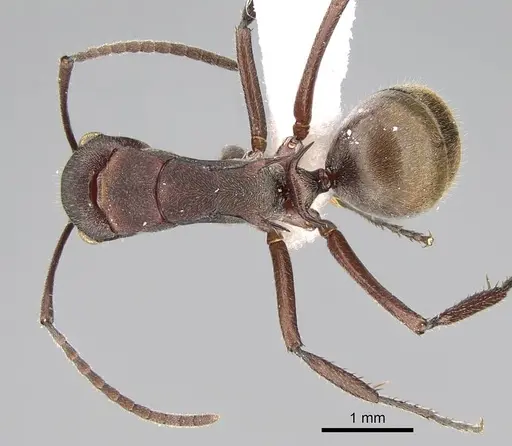
CASENT0910807
View on AntWeb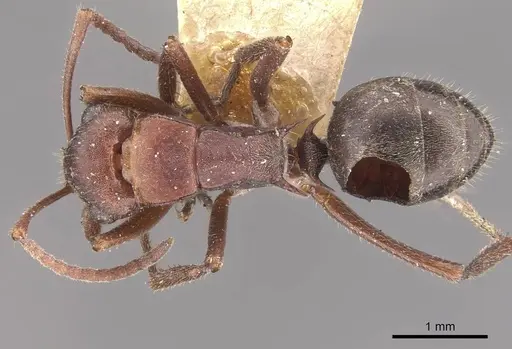
Literature
Loading...Loading products...