

Polyrhachis robsoni
- Scientific Name
- Polyrhachis robsoni
- Subgenus
- Cyrtomyrma
- Tribe
- Camponotini
- Subfamily
- Formicinae
- Author
- Kohout, 2006
- Distribution
- Found in 1 countries
Polyrhachis robsoni Overview
Polyrhachis robsoni is an ant species of the genus Polyrhachis. It is primarily documented in 1 countries , including Australia. Detailed taxonomic data and occurrence records can be further explored via authoritative databases such as AntWeb or the Global Biodiversity Information Facility (GBIF).
Polyrhachis robsoni
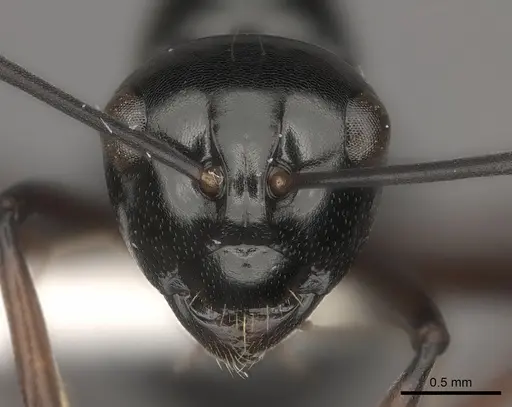
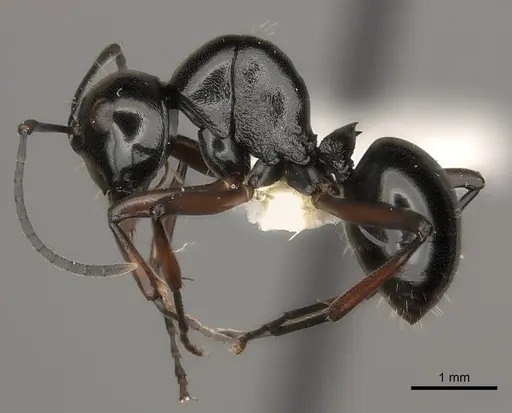
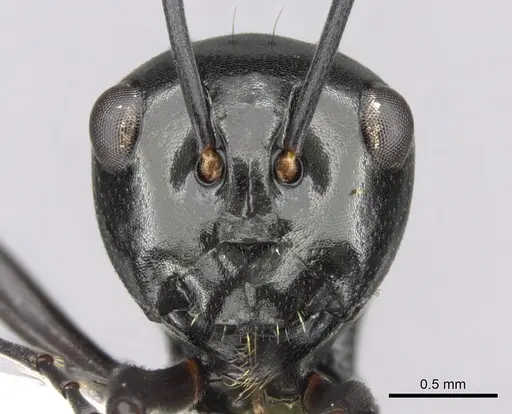
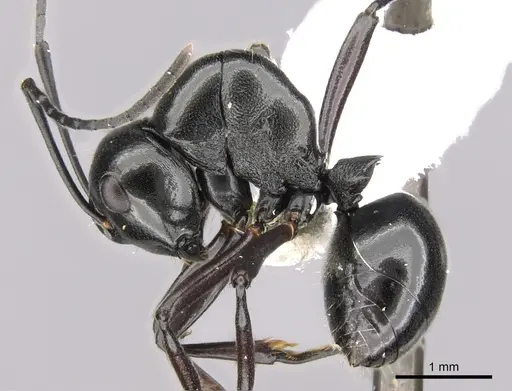
Polyrhachis robsoni is a striking weaver ant native to the rainforests of north Queensland, Australia. Workers measure 5.3-6.5mm and are mostly black with reddish-brown legs and antennae. They have a distinctive highly arched mesosoma (the middle body section), toothed pronotal shoulders, and four spines on the petiole. Unlike many weaver ants, they lack spines on the propodeum. Colonies are polydomous, meaning they build multiple connected nests in trees and shrubs by weaving leaves together with silk produced by their larvae [1][2].
What makes P. robsoni particularly fascinating is their supercolonial structure with dimorphic queens. This species has two queen sizes: large macrogynes (6.6-8.8mm) and tiny microgynes. Studies in the Cairns Botanic Gardens found up to 16 queens in a single nest, with microgynes outnumbering macrogynes roughly 2:1. Workers show no aggression toward nestmates from different colonies, and relatedness decreases with distance, a hallmark of supercolonial organization [3][4].
Quick Summary
- Difficulty: Medium
- Origin & Habitat: North Queensland, Australia, found from Cooktown south to Mission Beach, plus Thursday Island in Torres Strait. Nests in lowland and riparian rainforests, building nests between leaves on lower branches of trees and shrubs [5].
- Colony Type: Supercolonial, polygynous (multiple queens per colony). Colonies can have both macrogynous (large) and microgynous (tiny) queens. Studies show 18 of 37 nests were polygynous, with queen numbers ranging from 0-16 per nest [3].
- Colony: Optionally polygyne, Supercolonial
- Founding: Semi-claustral
- Size & Growth:
- Queen: 6.60-8.82mm (macrogynes) and smaller microgynes [5]
- Worker: 5.29-6.50mm [5]
- Colony: Estimated 100-500+ workers in established colonies. Studies found 2-115 workers per nest, with colonies spanning multiple nests [3].
- Growth: Moderate, based on typical Polyrhachis development
- Development: Estimated 6-8 weeks at optimal temperature (inferred from genus patterns) (Development time not specifically studied for this species, estimates based on related Polyrhachis species)
- Antkeeping:
- Temperature: Keep at 24-28°C. As a tropical Australian species, they need warm conditions year-round. Room temperature in most homes should suffice, but a heating cable on one side of the nest can help maintain warmth [5].
- Humidity: High humidity (60-80%). Being arboreal nesters in rainforest habitats, they need moist air but also good ventilation to prevent mold. Mist occasionally and provide a water tube, but ensure the nest isn't waterlogged [5].
- Diapause: No, being tropical, they do not require hibernation. Keep them warm year-round [5].
- Nesting: Arboreal weavers need vertical space with materials they can weave. Provide live or artificial plant material, leaf replicas, or a naturalistic setup with twigs and leaves they can bind together. Y-tong nests with added twigs work well, or a formicarium with plenty of vertical climbing opportunities [1][2].
- Behavior: Peaceful and non-aggressive toward colony members, even workers from different nests show negligible hostility. They are active foragers that hunt small invertebrates and tend honeydew-producing insects. Workers are monomorphic (all the same size). They use silk from larvae to weave protective nests between leaves. Escape risk is moderate, they are good climbers but not particularly small [3][1].
- Common Issues: mold growth due to high humidity requirements, ensure good ventilation while maintaining moisture, queen loss in newly established colonies, polygynous colonies can survive queen loss better than single-queen species, escape prevention, while not tiny, they are excellent climbers and will escape without barriers, temperature drops below 20°C can slow or stop brood development, keep warm year-round, improper nesting setup, they need vertical space and materials to weave, not just horizontal chambers
Housing and Nest Setup
P. robsoni needs an arboreal setup that mimics their natural tree-dwelling lifestyle. Unlike ground-nesting ants, they require vertical space with climbing opportunities. A naturalistic formicarium with live or artificial plants works best, they will actually weave leaves together using silk from their larvae, just like in the wild. Alternatively, a Y-tong (AAC) nest with added twigs and branches gives them structure to climb and explore. The outworld should include small live plants or leaf replicas they can use for nest-building. Because they are polydomous (living across multiple nests), providing several connection points or small stations around the enclosure encourages natural behavior. Escape prevention is important, use fluon on rim edges and ensure any gaps are sealed, though they are not tiny enough to require fine mesh [1][2].
Feeding and Diet
Like most Polyrhachis species, P. robsoni is an omnivorous forager. They hunt small invertebrates (especially soft-bodied prey like fruit flies, small caterpillars, and pinhead crickets) and collect honeydew from aphids and scale insects. In captivity, offer a varied diet: protein sources like small live or frozen insects 2-3 times per week, and sugar sources like honey water or sugar water constantly available. They will also accept fruit occasionally. Being weaver ants, they are active hunters, ensure prey is small enough for workers to tackle. A varied diet promotes colony growth and queen fecundity. Remove uneaten prey after 24-48 hours to prevent mold [5].
Temperature and Seasonal Care
As a tropical species from north Queensland, P. robsoni needs consistent warmth. Keep the nest area at 24-28°C year-round. This temperature range supports optimal brood development and worker activity. A small heating cable placed on one side of the nest creates a gentle gradient, allowing ants to self-regulate. They do not require hibernation or diapause, in fact, temperatures below 20°C can slow or halt brood development. Room temperature (22-26°C) in most homes is usually suitable, but monitor with a thermometer. Avoid placing the nest near air conditioning vents or drafty windows that could cause temperature fluctuations [5].
Colony Structure and Queen Care
This species is polygynous with dimorphic queens, a fascinating social structure. Macrogynes (large queens,6.6-8.8mm) can disperse and found new colonies independently, while microgynes (tiny queens) are produced in established colonies and may stay nearby. Studies found up to 16 queens in a single nest, with an average of about 3 queens per nest. The presence of multiple queens doesn't cause aggression, workers from different nests show almost no hostility toward each other, making this a truly supercolonial species. If your colony loses a queen, others can take over egg-laying duties. This makes P. robsoni more resilient to queen loss than single-queen species. However, establishing a new colony from scratch may take longer as the queen must forage during founding (semi-claustral behavior) [3][4].
Weaving Behavior
P. robsoni is a weaver ant that uses silk produced by larvae to bind leaves together into nest structures. Workers hold larvae at work sites and manipulate them to spin silk, though this behavior is less ritualized than in Oecophylla (the classic weaver ant). In captivity, you can observe this by providing materials like cotton, small fabric pieces, or live plants with flexible leaves. The ants will attempt to bind these together. Interestingly, this species lacks pupal cocoons, the larvae spin silk for nest construction rather than for protective cocoons during metamorphosis. Providing natural materials enhances welfare and allows展示 this fascinating behavior [1][6].
Handling and Temperament
P. robsoni is generally calm and non-aggressive compared to many ant species. They are not known to sting aggressively, though they may bite if threatened. Their primary defense is the four spines on their petiole (the narrow waist section). Workers are active and curious, exploring their environment regularly. They are excellent climbers and will explore vertical surfaces readily. When handling, gently coax them rather than grabbing, they may bite if squeezed. These ants are best observed rather than handled frequently. Their peaceful nature makes them suitable for observation-focused antkeepers who enjoy watching complex social behaviors [3][5].
Frequently Asked Questions
Is Polyrhachis robsoni good for beginners?
P. robsoni is intermediate in difficulty. They are more challenging than simple species like Lasius but easier than some exotic ants. The main challenges are providing proper arboreal housing and maintaining warmth year-round. Their polygynous nature actually makes them more forgiving, if one queen dies, others can take over. They are peaceful and fascinating to watch, making them rewarding for dedicated hobbyists [5].
How long does it take for the first workers to emerge?
Based on typical Polyrhachis development, expect first workers (nanitics) in approximately 6-8 weeks after the queen lays eggs, at optimal temperature (24-28°C). This is an estimate as specific development time has not been documented for this species. The first workers will be smaller than mature workers and may take several more weeks to reach full size. Patience is key, founding colonies can take months to establish solid worker populations [5].
Can I keep multiple queens together?
Yes, and in fact this species naturally lives in polygynous colonies with multiple queens. Unlike many ants, they do not fight, workers from different colonies show negligible aggression. You can introduce additional queens to an existing colony, though this is rarely necessary as established colonies produce their own replacement queens. The presence of both large macrogynes and tiny microgynes in natural colonies is normal [3].
What do I feed Polyrhachis robsoni?
Offer a varied diet: small live insects (fruit flies, small crickets, mealworms) 2-3 times weekly as protein, and honey water or sugar water constantly available. They also accept fruit occasionally. Remove uneaten prey after a day to prevent mold. Being tropical weaver ants, they are active hunters that prefer live prey, though they will accept frozen/thawed insects [5].
Do they need hibernation?
No. As a tropical species from north Queensland, Australia, they do not require hibernation or winter cooling. Keep them warm year-round at 24-28°C. Temperature drops below 20°C can slow or stop brood development. If your room temperature is below this range, use a small heating cable or mat to maintain warmth [5].
How big do colonies get?
Colonies can reach several hundred workers across multiple nests. Studies in the wild found 2-115 workers per individual nest, with colonies spanning many nests connected together. In captivity, a well-established colony after several years could reasonably reach 300-500+ workers. Their supercolonial structure means they naturally spread across multiple nesting sites [3].
When should I move them to a formicarium?
Move from a test tube setup to a proper formicarium once the colony reaches 20-30 workers and you see active weaving behavior. They need vertical space and materials to weave, so a naturalistic setup with plants or twigs works better than a standard horizontal formicarium. Ensure the outworld has climbing structures before moving [5].
Why are my ants dying?
Common causes include: temperatures below 20°C (tropical species need warmth), low humidity causing desiccation, mold from over-misting without ventilation, improper diet (too little protein or sugar), and stress from excessive disturbance. Check temperature first, use a thermometer. Ensure they have both protein and sugar sources. If mold is an issue, improve ventilation and reduce misting [5].
References

This caresheet is licensed under CC BY-SA 4.0 .
CASENT0217437
View on AntWeb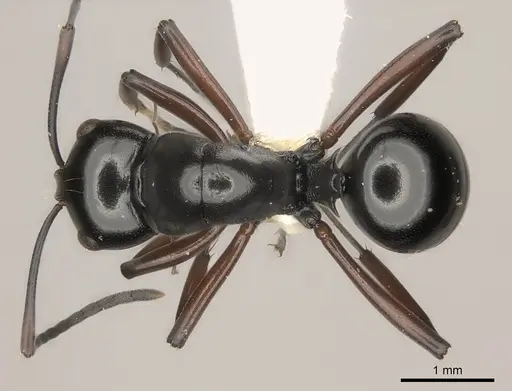
CASENT0281362
View on AntWeb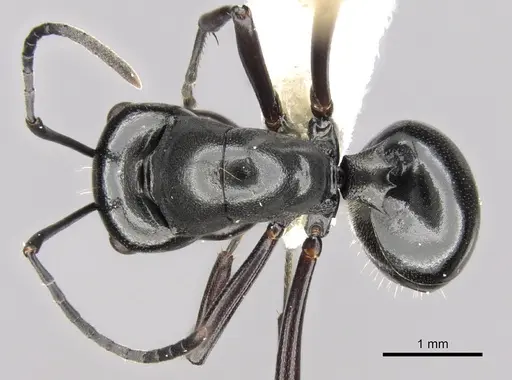
Literature
Loading...Loading products...