

Polyrhachis regesa
- Scientific Name
- Polyrhachis regesa
- Subgenus
- Myrma
- Tribe
- Camponotini
- Subfamily
- Formicinae
- Author
- Bolton, 1973
- Distribution
- Found in 1 countries
Polyrhachis regesa Overview
Polyrhachis regesa is an ant species of the genus Polyrhachis. It is primarily documented in 1 countries , including Congo. Detailed taxonomic data and occurrence records can be further explored via authoritative databases such as AntWeb or the Global Biodiversity Information Facility (GBIF).
Polyrhachis regesa
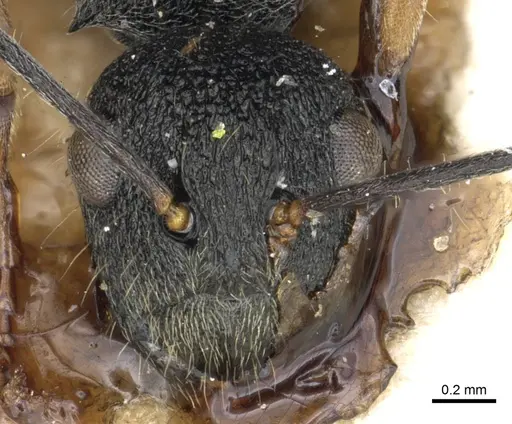
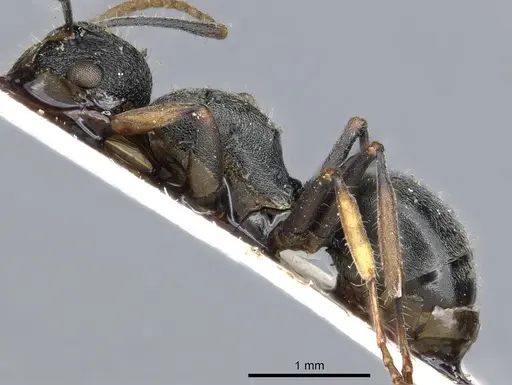
Polyrhachis regesa is a tiny Afrotropical ant measuring just 4.4-4.8mm in total length. Workers are predominantly black with the gaster being slightly shinier than the alitrunk, and they have distinctive white erect hairs covering their head, body, and legs. The antennae and legs show brown to yellow-brown coloration. This species is identifiable by its propodeal tubercles and the spined petiole, workers have a pair of dorsal spines and smaller lateral spines on the petiole segment. P. regesa belongs to the revoili species-group within the Myrma subgenus and is closely related to P. otleti and P. khepra. The species has been documented in Ghana and the Republic of Congo (Niari Region), where it was collected from primary forest using fogging samples [1].
Quick Summary
- Difficulty: Unknown, limited data available
- Origin & Habitat: Afrotropical region, Ghana and Republic of Congo (Niari Region). Collected from primary forest [1].
- Colony Type: Unconfirmed, colony structure has not been documented for this species
- Size & Growth:
- Queen: Not described in available literature
- Worker: 4.4-4.8mm
- Colony: Unknown, no colony size data available
- Growth: Unknown
- Development: Unconfirmed, estimated 6-10 weeks based on typical Formicinae development at warm temperatures (Development timeline is not directly documented for P. regesa. Estimates based on genus-level patterns for small tropical Formicinae.)
- Antkeeping:
- Temperature: Likely 24-28°C based on primary forest habitat in central African region. Provide a warm gradient if possible.
- Humidity: High humidity expected, primary forest floor conditions. Keep substrate consistently moist but not waterlogged.
- Diapause: Unlikely, tropical species from Congo/Ghana probably does not require hibernation
- Nesting: No specific nesting data available. Likely prefers humid, shaded areas. Consider a naturalistic setup or acrylic/plaster nest with good moisture retention.
- Behavior: Behavior is unstudied. As a Formicinae member, they likely can spray formic acid as defense rather than sting. Their small size and forest habitat suggest they are active foragers. Escape prevention should be moderate, they are small but not among the tiniest ants.
- Common Issues: Limited species-specific care information makes proper husbandry challenging, Tropical humidity requirements may be difficult to maintain consistently, Wild-caught colonies may have parasites or diseases not yet documented, Small size may require fine mesh barriers for containment, Primary forest habitat needs stable conditions, avoid temperature and humidity fluctuations
Identification and Morphology
Polyrhachis regesa is a small ant species with workers measuring 4.4-4.8mm in total length. Workers are primarily black with the gaster showing slightly more shine than the alitrunk. The most distinctive features include numerous erect white hairs covering the head, body, and especially the antennae and legs, the hairs on the tibiae and scapes are notably longer than those on the gaster. The propodeum has a pair of minute tubercles, and the petiole is armed with a pair of dorsal spines and smaller lateral spines. The first gastral segment has a concave anterior face medially. This species belongs to the revoili species-group within the Myrma subgenus and can be distinguished from related species P. otleti by the presence of propodeal tubercles (versus ridges in P. otleti). [1]
Distribution and Habitat
Polyrhachis regesa is known from two main locations in the Afrotropical region: Ghana (Eastern Region, Mampong and Adeiso) and the Republic of Congo (Niari Region) [1]. The Congo specimens were collected from a fogging sample in primary forest, indicating this species lives in dense, humid tropical forest environments. The Ghana specimens were collected using pyrethrum knock-down sampling, suggesting they are surface-active foragers. No specific microhabitat details (nesting preferences, elevation range) are documented in available literature.
Housing and Nesting
Since specific nesting data is not available for P. regesa, housing recommendations must be based on the species' known habitat (primary forest in Congo) and genus-level patterns. Provide a humid environment with stable temperatures in the warm range (24-28°C). A naturalistic setup with a moisture-retentive substrate works well for forest species. Acrylic or plaster nests with a water reservoir can maintain appropriate humidity levels. Ensure there are both humid and slightly drier areas within the enclosure so the ants can self-regulate. As small ants, they may benefit from tight-fitting connections between nest and outworld. Adequate ventilation is important to prevent mold while maintaining humidity.
Feeding and Diet
No specific dietary information is documented for P. regesa. As a Polyrhachis species (tribe Camponotini, subfamily Formicinae), they likely have a typical omnivorous diet similar to other forest ants in this group, accepting nectar/honeydew, small insects, and possibly extrafloral nectaries. Offer sugar water or honey as a constant energy source, and provide small protein sources like fruit flies, small crickets, or other micro-insects. Start with modest offerings and adjust based on colony acceptance. Given their tiny size (under 5mm), prey items should be appropriately small.
Temperature and Seasonal Care
Based on the species' collection from primary forest in the Republic of Congo (a tropical central African location), these ants likely prefer warm, stable temperatures in the range of 24-28°C. The Niari Region experiences a tropical climate with consistent warmth year-round, so significant temperature drops are likely unnecessary and potentially harmful. Room temperature in most homes (20-24°C) may be marginally cool, consider providing a gentle heat gradient with a heating cable on one side of the nest area. Avoid temperature fluctuations and drafts. Humidity should be kept high, reflecting their forest floor origin. [1]
Behavior and Defense
Specific behavioral observations for P. regesa are not documented in available literature. As a Formicinae member, this species has formic acid spray as its primary defense mechanism rather than a stinger. Their small size (under 5mm) and collection method (fogging and pyrethrum knock-down) suggest they are active foragers, likely foraging in the leaf litter layer or on vegetation. Escape prevention should be moderate, while not among the tiniest ants, they can fit through small gaps. Use standard barrier methods (fluon on container edges) as a precaution.
Frequently Asked Questions
How big do Polyrhachis regesa ants get?
Workers measure 4.4-4.8mm in total length, making them a small ant species. Queen size is not described in available literature.
Where does Polyrhachis regesa come from?
This species is found in the Afrotropical region, specifically Ghana and the Republic of Congo (Niari Region) [1]. They live in primary forest environments.
What temperature do Polyrhachis regesa ants need?
Based on their tropical forest habitat in central Africa, they likely prefer warm conditions around 24-28°C. This is an estimate based on their known distribution rather than direct studies.
How long does it take for Polyrhachis regesa to develop from egg to worker?
The specific development timeline is unconfirmed for this species. Based on typical Formicinae patterns for small tropical species, estimate 6-10 weeks from egg to first worker at optimal warm temperatures.
What do Polyrhachis regesa ants eat?
Specific dietary data is not documented. Based on genus patterns, they likely accept sugar sources (honey water, nectar) and small protein prey like fruit flies or micro crickets. Offer a varied diet and observe preferences.
Is Polyrhachis regesa good for beginners?
This species is not recommended for beginners due to very limited species-specific care information. The lack of documented husbandry requirements makes proper care challenging. Consider starting with better-documented species.
Does Polyrhachis regesa need hibernation?
No, as a tropical species from Congo and Ghana, they do not require hibernation. Maintaining warm, stable temperatures year-round is likely appropriate.
What type of colony does Polyrhachis regesa form?
Colony structure (monogyne vs polygyne) is unconfirmed for this species. No published data on queen number or colony founding behavior exists.
How do I identify Polyrhachis regesa?
Workers are identifiable by their small size (4.4-4.8mm), black coloration with brown antennae and legs, numerous erect white hairs, propodeal tubercles, and spined petiole with dorsal and lateral spines. They belong to the revoila species-group.
References

This caresheet is licensed under CC BY-SA 4.0 .
CASENT0250034
View on AntWeb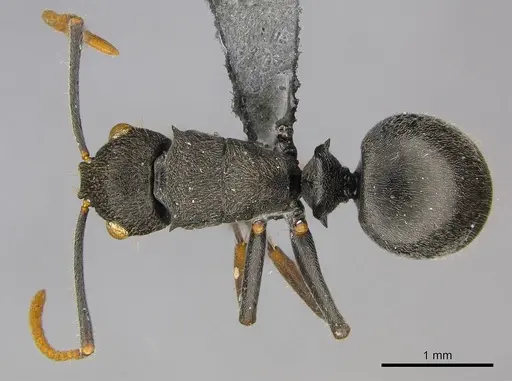
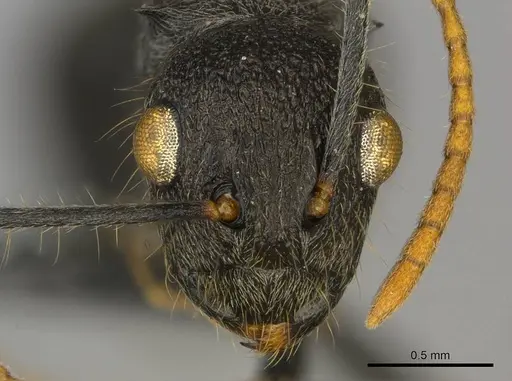
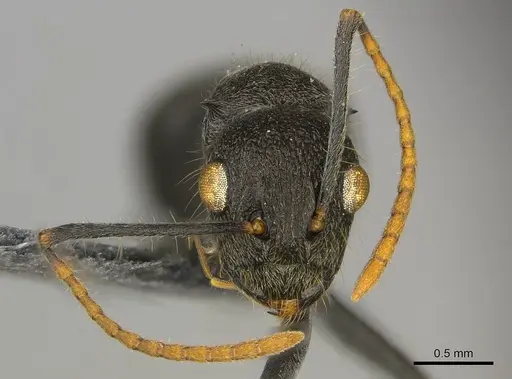
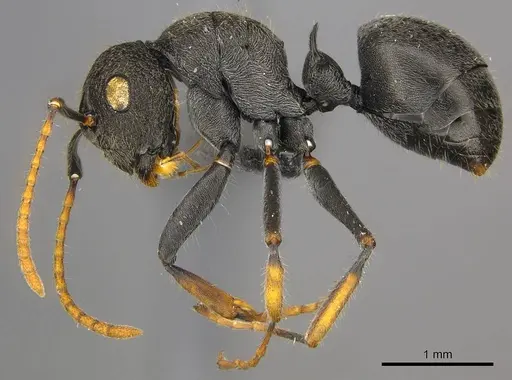
CASENT0903464
View on AntWeb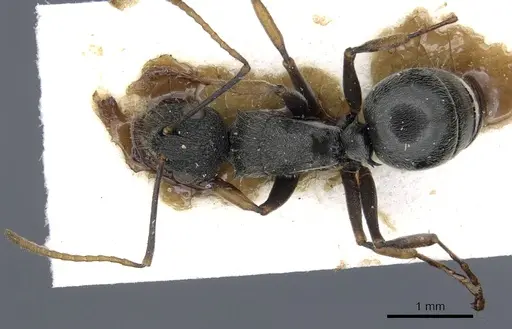
Literature
Loading...Loading products...