

Polyrhachis pseudothrinax
- Scientific Name
- Polyrhachis pseudothrinax
- Subgenus
- Campomyrma
- Tribe
- Camponotini
- Subfamily
- Formicinae
- Author
- Hung, 1967
- Distribution
- Found in 1 countries
Polyrhachis pseudothrinax Overview
Polyrhachis pseudothrinax is an ant species of the genus Polyrhachis. It is primarily documented in 1 countries , including Australia. Detailed taxonomic data and occurrence records can be further explored via authoritative databases such as AntWeb or the Global Biodiversity Information Facility (GBIF).
Polyrhachis pseudothrinax
Polyrhachis pseudothrinax is a medium-sized ant belonging to the gravis species-group, easily recognized by its single middle petiolar spine. Workers measure 7-9mm with a robust, dark body and distinctive reddish-brown to orange legs. The head has longitudinal rugae, the gaster is finely striated, and the body is covered in erect hairs. This species ranges from north Queensland across the Northern Territory to the Kimberley region of Western Australia, preferring laterite and sandstone habitats in the Australian seasonal tropics. As a member of the Subordinate Camponotini functional group, these ants are relatively peaceful and not aggressive. The single median petiolar spine makes them unique among Australian Polyrhachis, only the related P. unicornis shares this feature but differs in spine shape and eye structure.
Quick Summary
- Difficulty: Medium
- Origin & Habitat: Northern Australia, from north Queensland westwards across the Northern Territory to the Kimberley region of Western Australia. Found in laterite and sandstone habitats in the Australian seasonal tropics (Torresian biogeography) [1][2].
- Colony Type: Colony structure is unconfirmed. Based on typical Polyrhachis patterns, likely single-queen colonies. No documented ergatoid replacement reproductives for this species.
- Size & Growth:
- Queen: ~9.42 mm [2]
- Worker: 7.00-9.22 mm [2]
- Colony: Unknown, likely moderate sized colonies based on related species
- Growth: Moderate, estimated based on genus patterns
- Development: Estimated 6-10 weeks based on typical Polyrhachis development at optimal temperature (Direct development data unavailable for this species. Related Polyrhachis species in the gravis-group typically develop in 6-10 weeks at tropical temperatures.)
- Antkeeping:
- Temperature: Keep at 24-30°C. Given their Australian tropical distribution, they prefer warm conditions. A heating cable on one side of the nest creates an ideal gradient.
- Humidity: Moderate to high humidity preferred. Keep nest substrate slightly moist but not waterlogged. Provide a water source in the outworld.
- Diapause: Unlikely required. As a tropical species from northern Australia, they likely do not require a true hibernation period. However, a slight cool-down during winter months may be beneficial.
- Nesting: In nature they likely nest in soil or under stones. In captivity, a Y-tong (AAC) nest or plaster formicarium works well. Provide moderate humidity and avoid overly dry conditions.
- Behavior: Generally peaceful and not aggressive. As Subordinate Camponotini, they are less likely to dominate resources or engage in aggressive territorial behavior. Workers are active foragers. Escape risk is moderate due to their medium size, standard barrier methods should suffice.
- Common Issues: tropical species may struggle in cool, dry conditions, maintain warmth, colonies may be slow to establish, patience is required, limited published care information means some trial and error may be needed, wild-caught colonies may have parasites, quarantine and observe new colonies
Appearance and Identification
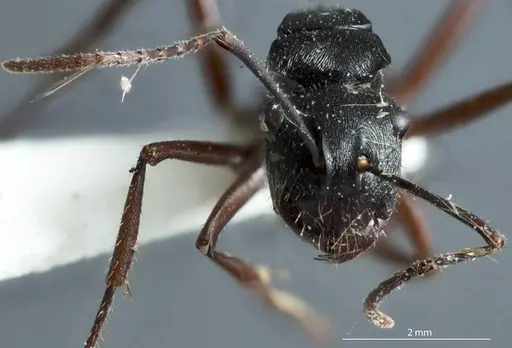
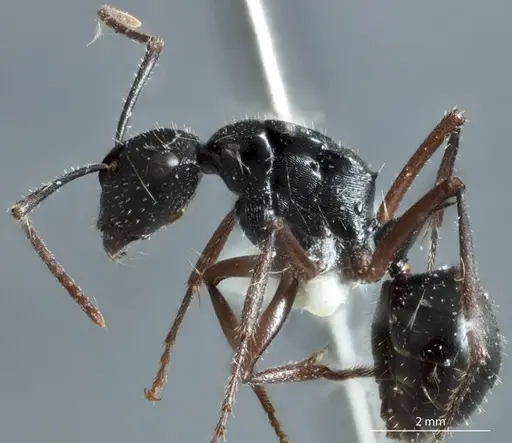
Polyrhachis pseudothrinax workers are medium-sized ants measuring 7-9mm in total length. They have a robust, dark (almost black) body with very distinctive reddish-brown to orange legs that stand out against the dark coloration. The most distinguishing feature is the single median spine on the petiole (the narrow waist segment), which is as high as the mesonotum when viewed from the side and bends slightly backward. The head has longitudinal rugae (grooves), the pronotum has transverse rugae behind the 'neck', and the gaster is very finely striated giving it a matte appearance dorsally. The body is covered in erect hairs, particularly on the antennae, head, legs, and alitrunk. Queens are similar but larger at about 9.4mm, with the usual queen characters including three ocelli, wings, and larger eyes. The single median petiolar spine is unique among Australian Polyrhachis, only P. unicornis shares this feature but differs in having a shorter, less acute spine and larger, less convex eyes. [2]
Natural Distribution and Habitat
This species has a wide distribution across northern Australia, ranging from north Queensland westwards across the Northern Territory to the Kimberley region of Western Australia. They inhabit laterite and sandstone sites in the Australian seasonal tropics, which falls within the Torresian biogeographic region. The species appears to be somewhat more common than other members of the gravis-group. There is slight geographic variation: Queensland populations tend to have slightly longer antennal scapes (SI 118-126) compared to Northern Territory populations (SI 112-120). This is a tropical to subtropical species that experiences warm temperatures year-round in its native range. [1][2]
Feeding and Diet
Polyrhachis ants are typically omnivorous, feeding on honeydew, nectar, and small insects. In captivity, they should be offered a varied diet including sugar water or honey as a constant energy source, and protein-rich foods such as small crickets, mealworms, or other insects. Feed protein 2-3 times per week, and keep sugar water available at all times. As medium-sized ants, they can handle prey items larger than what tiny ants would accept. Observe your colony's preferences and adjust feeding accordingly. Remove uneaten prey after 24-48 hours to prevent mold.
Temperature and Heating Requirements
As a tropical Australian species, Polyrhachis pseudothrinax requires warm conditions to thrive. Maintain nest temperatures between 24-30°C, with the warmer end of this range preferred for optimal brood development. Use a heating cable or heating mat on one side of the nest to create a temperature gradient, allowing workers to regulate their own temperature by moving between warmer and cooler areas. Place the heating element on top of the nest to avoid drying out the substrate. Room temperature alone may be insufficient, especially in cooler climates, monitor with a thermometer placed near the nest. Avoid temperatures below 20°C for extended periods.
Nesting and Colony Setup
In their natural habitat, these ants likely nest in soil or under stones in tropical areas. For captive care, a Y-tong (AAC) nest or plaster formicarium works well. Provide moderate humidity, the nest substrate should be slightly moist but never waterlogged. Include some drier areas within the nest so workers can choose their preferred microclimate. A water tube or small water source in the outworld should be provided. Given their moderate size, standard formicarium chambers sized appropriately for medium ants will suit them well. Allow sufficient space for colony growth as they expand.
Behavior and Temperament
Polyrhachis pseudothrinax belongs to the Subordinate Camponotini functional group, indicating they are relatively peaceful ants that are not particularly aggressive or dominant. Workers are active foragers but not particularly territorial or aggressive toward other ants. They are medium-sized ants, so escape prevention is straightforward, standard barrier methods like fluon on the rim of the outworld should prevent escapes. They do not have a potent sting, though larger Polyrhachis species can deliver a mild sting if handled roughly. Observe your colony's activity patterns, they should be active and foraging regularly when warm. [1]
Frequently Asked Questions
How long does it take for Polyrhachis pseudothrinax to produce first workers?
Direct development data is not available for this species. Based on typical Polyrhachis development patterns, expect first workers (nanitics) approximately 6-10 weeks after the queen lays eggs, assuming optimal temperatures of 26-30°C. Growth may be slower if temperatures are lower.
What temperature do Polyrhachis pseudothrinax ants need?
Keep them warm at 24-30°C. As a tropical Australian species, they prefer temperatures on the warmer end of this range. Use a heating cable on one side of the nest to create a gradient.
Do Polyrhachis pseudothrinax ants need hibernation?
Likely no true hibernation is required. As a tropical species from northern Australia, they experience warm conditions year-round. A slight reduction in temperature during winter months may be natural but is probably not necessary in captivity.
How big do Polyrhachis pseudothrinax colonies get?
Colony size is not well documented for this species. Based on related Polyrhachis species, colonies likely reach several hundred workers. They are not known for forming supercolonies.
Are Polyrhachis pseudothrinax good for beginners?
This species is rated as Medium difficulty. They require warm, humid conditions typical of tropical ants, and there is limited published care information. Some experience with antkeeping is helpful, but they are not particularly difficult once their temperature needs are met.
What do Polyrhachis pseudothrinax eat?
They are omnivorous. Offer sugar water or honey as a constant energy source, and protein-rich foods like small crickets, mealworms, or other insects 2-3 times per week.
Can I keep multiple Polyrhachis pseudothrinax queens together?
Colony structure is not well documented for this species. Based on typical Polyrhachis patterns, they likely form single-queen colonies. Combining unrelated queens is not recommended without documented evidence of polygyny in this species.
What makes Polyrhachis pseudothrinax easy to identify?
They have a single median petiolar spine, a unique feature among Australian Polyrhachis. Only the related P. unicornis shares this trait but differs in spine shape and eye structure.
When should I move my colony to a formicarium?
Move them when the test tube setup becomes crowded or the colony reaches around 30-50 workers. Ensure the formicarium has appropriately sized chambers for medium ants and maintains proper humidity.
References

This caresheet is licensed under CC BY-SA 4.0 .
ANTWEB1041182
View on AntWeb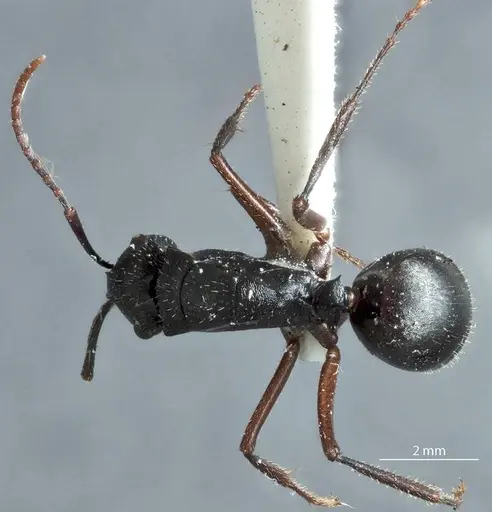
Literature
Loading...Loading products...