

Polyrhachis muelleri
- Scientific Name
- Polyrhachis muelleri
- Subgenus
- Myrmhopla
- Tribe
- Camponotini
- Subfamily
- Formicinae
- Author
- Forel, 1893
- Distribution
- Found in 1 countries
Polyrhachis muelleri Overview
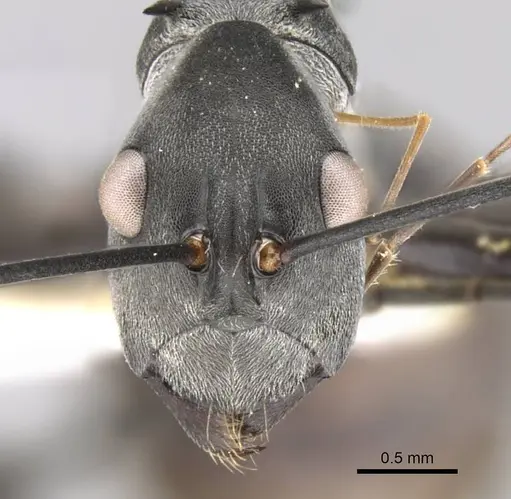
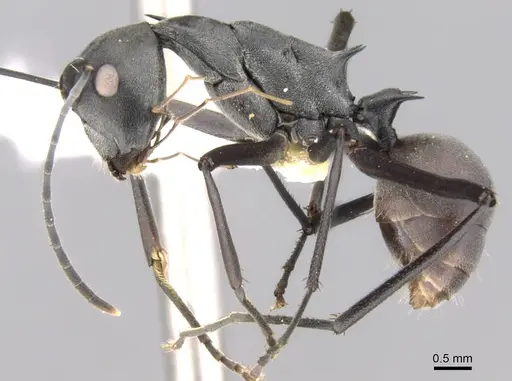
Polyrhachis muelleri is an ant species of the genus Polyrhachis. It is primarily documented in 1 countries , including Malaysia. Detailed taxonomic data and occurrence records can be further explored via authoritative databases such as AntWeb or the Global Biodiversity Information Facility (GBIF).
Polyrhachis muelleri
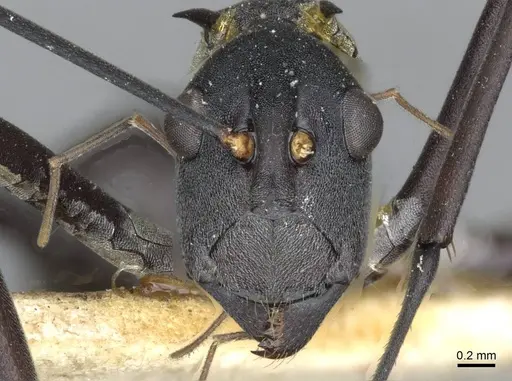
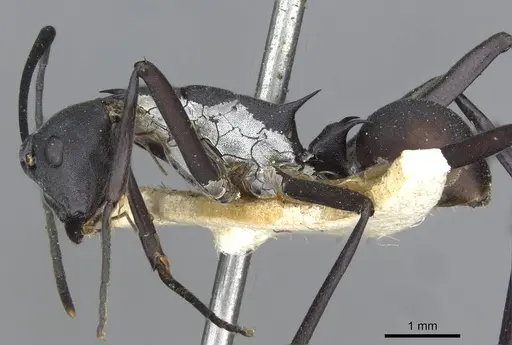
Polyrhachis muelleri is a tropical weaver ant species found across Southeast Asia, from Thailand and Malaysia through Singapore, Borneo, Sumatra, and Java. These ants are famous for their unique nesting behavior, they use larval silk to weave protective nests on the underside of leaves, typically positioning them about 2 meters above ground in rainforest canopies. Workers are black and stand out against the green leaves they nest in. Colonies are relatively small, averaging around 17 workers with a single queen. A fascinating trait is their larvae's green coloration, which acts as camouflage to hide the nest contents from predators, the larvae and pupae blend in with the surrounding foliage while the adult ants remain black and visible [1].
Quick Summary
- Difficulty: Medium
- Origin & Habitat: Primary rainforests of Southeast Asia, Thailand, Malaysia, Singapore, Borneo, Sumatra, and Java. They are arboreal nesters, constructing silk-woven nests on the underside of leaves approximately 2 meters above ground [1][2].
- Colony Type: Monogyne (single queen) colonies with polydomous nesting, colonies maintain multiple connected nests across different leaves or locations [3][4]. Queens are similar in size to workers, showing minimal dimorphism [1].
- Colony: Monogyne
- Size & Growth:
- Queen: Estimated 6-8mm based on genus patterns, exact measurements not documented in available literature
- Worker: Estimated 5-7mm based on genus patterns
- Colony: Small colonies, averaging 17 workers with up to perhaps 50-100 workers in mature colonies [1]
- Growth: Moderate, small colony size suggests moderate growth rate
- Development: Estimated 6-8 weeks based on typical Formicinae development at tropical temperatures (Development timeline not directly studied, estimate based on related Polyrhachis species and tropical temperature ranges)
- Antkeeping:
- Temperature: Keep at 24-28°C, these are tropical rainforest ants requiring warm, stable temperatures. A heating cable on one side of the nest creates a suitable gradient [1].
- Humidity: High humidity required, aim for 70-80%. Their natural arboreal habitat in rainforest canopies stays consistently moist. Mist regularly and provide a water tube, but ensure good ventilation to prevent mold [1].
- Diapause: No, as a tropical species from Southeast Asian rainforests, they do not require hibernation or winter rest. Maintain consistent temperatures year-round [1].
- Nesting: Weaver ants need space to construct silk nests. A naturalistic setup with live plants or artificial leaves works well. Y-tong (AAC) nests with smooth surfaces can also work, but provide materials they can use for silk attachment. They prefer arboreal setups over ground nests [1][5].
- Behavior: Polyrhachis muelleri is a relatively calm, non-aggressive species. Workers forage using group recruitment and establish short-term trails to food sources [4]. They collect honeydew from extrafloral nectars and dead insects. As weaver ants, they may be more active at night and spend time exposed on leaves. Their small colony size and gentle temperament make them interesting to observe, but their arboreal nature means escape prevention is important, they will explore and may climb. They are not known for stinging and pose no danger to keepers [1].
- Common Issues: small colony size means slow population growth, don't expect rapid expansion, polydomous nesting behavior may cause workers to scatter in larger setups, provide connected spaces, tropical humidity requirements can lead to mold if ventilation is poor, arboreal nature means they may not accept ground-level test tube setups easily, green larvae and pupae may be mistaken for pests by inexperienced keepers, this is normal camouflage
Nest Preferences and Housing
Polyrhachis muelleri is an arboreal weaver ant, which means their housing needs differ from typical ground-nesting ants. In the wild, they construct silk-woven nests on the underside of leaves, typically positioning them about 2 meters above ground in the rainforest canopy. Their larvae possess specialized silk glands that produce material for nest construction rather than spinning cocoons, mainly female larvae perform this task, representing a division of labor among the brood [6]. For captive care, a naturalistic setup with live plants or artificial leaves works best, giving them materials to attach their silk nests to. Y-tong (AAC) nests can also work, but ensure smooth surfaces and provide small plant material or fabric strips they can use for attachment. They are polydomous, meaning they may establish multiple connected nests, this is normal behavior and they should be given space to spread out. Avoid fully enclosed test tube setups as they prefer more open, arboreal-style housing [5][3].
Feeding and Diet
In the wild, Polyrhachis muelleri forages for extrafloral nectar (EFN) from plants and collects dead insects [4]. They use group recruitment and establish short-term foraging trails to food sources. For captive care, offer sugar water or honey as a constant energy source. For protein, provide small insects like fruit flies, small crickets, or mealworms. Since they are arboreal and may not readily accept prey on the ground, place food on elevated surfaces or near their nest sites. Their small colony size means portions should be appropriately sized, small amounts of fresh food offered 2-3 times per week is sufficient. Remove uneaten food promptly to prevent mold in their humid environment. They are not specialized predators, so a varied diet of sugars and small protein sources works well [4].
Temperature and Humidity
As a tropical rainforest species from Southeast Asia, Polyrhachis muelleri requires warm and humid conditions. Keep temperatures in the range of 24-28°C, which matches their natural canopy habitat in primary rainforests. A heating cable placed on one side of the nest creates a temperature gradient they can regulate by moving between areas. Humidity should be maintained at 70-80%, this is critical for their health and mimics the consistently moist conditions of their arboreal habitat. Regular misting helps, but ensure adequate ventilation to prevent stagnant air and mold growth. Unlike temperate species, they do not require any diapause or winter rest period. Maintain consistent temperatures year-round since they have no evolutionary adaptation to cold seasons [1].
Colony Structure and Behavior
Polyrhachis muelleri colonies are monogynous, meaning they have a single queen. Wild colonies average around 17 workers, though mature captive colonies may reach 50-100 workers. They are polydomous, maintaining multiple nests within their colony territory, this is a notable behavioral trait where workers spread across several connected nest sites rather than concentrating in one location [3][4]. Queens are remarkably similar in size to workers, showing only slight differences in body size [1]. Workers are black and forage actively, using group recruitment to locate and harvest food. Their larvae and pupae have a distinctive green coloration that provides camouflage against the leaves they nest in, this mimetic coloration reduces the visibility of nest contents to predators [6]. The colony is peaceful and non-aggressive, making them safe to handle and observe. They are not known for stinging and pose no danger to keepers.
Frequently Asked Questions
How long does it take for Polyrhachis muelleri to produce first workers?
Based on typical Formicinae development at tropical temperatures (24-28°C), expect first workers (nanitics) approximately 6-8 weeks after the queen lays her first eggs. This is an estimate since the exact development timeline has not been directly documented for this species.
Can I keep Polyrhachis muelleri in a test tube setup?
Test tube setups are not ideal for this species. As arboreal weaver ants, they prefer more open, elevated spaces where they can construct silk nests. A naturalistic setup with plants or a Y-tong nest with available attachment materials works better. If you must use a test tube, place it horizontally and provide plant material or fabric they can use for nest building.
How big do Polyrhachis muelleri colonies get?
Wild colonies average around 17 workers, with mature colonies potentially reaching 50-100 workers. They are relatively small colonies compared to some other ant species, but they maintain multiple nest sites (polydomous) which gives the impression of a larger presence.
Do Polyrhachis muelleri need hibernation?
No, they do not require hibernation. As a tropical rainforest species from Southeast Asia, they need consistent warm temperatures year-round. Maintain temperatures of 24-28°C without seasonal drops.
What do Polyrhachis muelleri eat?
They primarily collect extrafloral nectar and dead insects in the wild. In captivity, offer sugar water or honey as a constant energy source, and supplement with small insects like fruit flies, small crickets, or mealworms for protein. Place food on elevated surfaces since they are arboreal foragers.
Are Polyrhachis muelleri good for beginners?
They are rated as medium difficulty. While their small colony size and peaceful nature make them manageable, their specific arboreal housing needs and high humidity requirements may present challenges for complete beginners. Their unique weaver ant behavior makes them an interesting species for those willing to meet their care requirements.
Why are the larvae green?
The green coloration of Polyrhachis muelleri larvae and pupae is a form of camouflage called mimetic coloration. This helps hide the nest contents from predators by making the brood blend in with the green leaves they nest on. The adult ants are black and more visible, but the vulnerable brood is well-protected by this natural camouflage.
Can I keep multiple queens together?
No, Polyrhachis muelleri is monogyne, meaning colonies have only a single queen. Multiple queens will fight and only one will survive. In the wild, colonies are founded by a single queen who establishes the nest alone.
When should I move them to a formicarium?
Move them to a larger setup once the colony reaches around 20-30 workers and the test tube space becomes cramped. Since they are polydomous and arboreal, a naturalistic setup with multiple chambers or connected spaces works better than a single compact formicarium.
References

This caresheet is licensed under CC BY-SA 4.0 .
CASENT0906765
View on AntWeb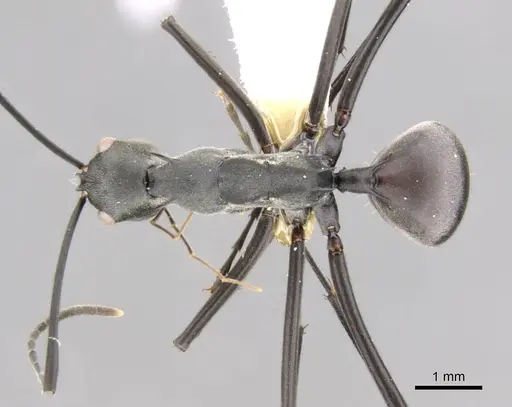
CASENT0910868
View on AntWeb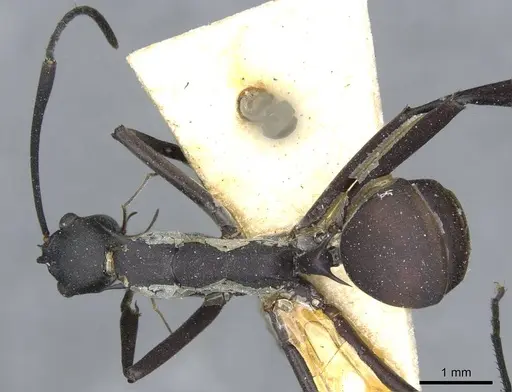
Literature
Loading...Loading products...