

Polyrhachis loweryi
- Scientific Name
- Polyrhachis loweryi
- Subgenus
- Hirtomyrma
- Tribe
- Camponotini
- Subfamily
- Formicinae
- Author
- Kohout, 1990
- Distribution
- Found in 1 countries
Polyrhachis loweryi Overview
Polyrhachis loweryi is an ant species of the genus Polyrhachis. It is primarily documented in 1 countries , including Australia. Detailed taxonomic data and occurrence records can be further explored via authoritative databases such as AntWeb or the Global Biodiversity Information Facility (GBIF).
Polyrhachis loweryi
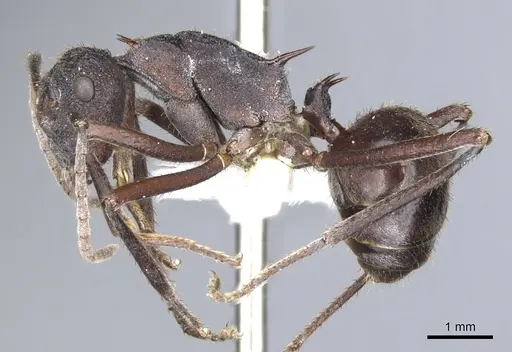
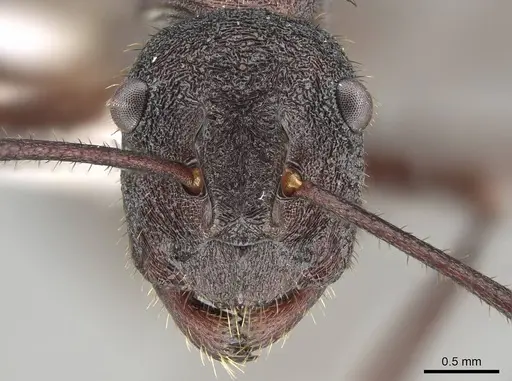
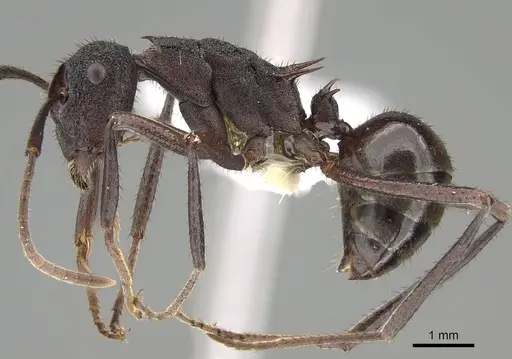
Polyrhachis loweryi is a distinctive Australian ant species known for its dark reddish-brown coloration and prominent spines. Workers measure around 7.5-8.8mm with a robust build featuring well-developed pronotal spines and propodeal spines. The body is covered in bristle-like hairs, with silvery appressed pubescence most visible on the gaster. This species is native to southern Queensland, Australia, specifically found near Miles in dry sclerophyll forest [1][2]. What makes P. loweryi truly fascinating is its lifestyle as a guest ant, it lives exclusively within the nests of Rhytidoponera species, making it one of the few known social parasites in the Polyrhachis genus and the first documented example of this parasitic relationship in Australia [2][3].
Quick Summary
- Difficulty: Expert
- Origin & Habitat: Southern Queensland, Australia. Found in dry sandy sclerophyll forest with Callitris vegetation near Miles. This species is an obligate inquiline, it cannot establish colonies without a host Rhytidoponera colony [1][2].
- Colony Type: Single-queen colonies (monogyne). This is a social parasite that requires a host colony of Rhytidoponera species to survive. In mixed colonies, only one Polyrhachis queen is typically present. Workers are not inseminated but can lay male-destined eggs [3][4].
- Colony: Monogyne
- Queen: Socially parasitic
- Size & Growth:
- Queen: Approximately 9.27mm [5]
- Worker: 7.5-8.8mm [1][5]
- Colony: Colonies typically contain around 90 workers plus brood in mixed colonies with hosts [3]
- Growth: Unknown, growth depends heavily on host colony acceptance and resources
- Development: Unknown, this species relies on host workers for brood care, making development timing difficult to observe [3] (Development is likely tied to host colony resources. Polyrhachis workers can lay male eggs, but their brood care is done by their own workers, not the host [3].)
- Antkeeping:
- Temperature: Keep at room temperature around 22-26°C. This species comes from subtropical Queensland, so moderate warmth is appropriate. Avoid temperature extremes [1].
- Humidity: Moderate humidity similar to what Rhytidoponera species prefer. Keep nest substrate slightly moist but not waterlogged. Good ventilation is important to prevent mold.
- Diapause: Unknown, no specific data on hibernation requirements. Queensland has mild winters, so a cool period around 15-18°C may be appropriate if the species shows seasonal slowdown.
- Nesting: This is the critical challenge, P. loweryi requires a host Rhytidoponera colony to survive. In captivity, you would need to establish a Rhytidoponera colony first, then introduce P. loweryi. They construct their own closed chambers within the host nest structure using soil and plant fibers [3]. A naturalistic setup with appropriate nesting chambers would be needed.
- Behavior: P. loweryi is a peaceful guest ant that integrates into host colonies without killing the host queen. Workers move freely within the host nest and can leave to forage, sharing food with host workers via trophallaxis. They maintain their own brood but host workers will sometimes carry Polyrhachis brood alongside their own. When the colony relocates, P. loweryi can follow independently using trail communication, though host workers occasionally carry them. Escape risk is moderate, workers are around 8mm so standard barriers work well. They are not aggressive and rely on their spines for defense [3].
- Common Issues: Host colony requirement is the primary challenge, without a healthy Rhytidoponera host colony, P. loweryi cannot survive, Integration failure, host colonies may reject the parasitic guests, leading to worker death, Obtaining the host species, Rhytidoponera species may be difficult to source and keep, Colony collapse, if the host colony dies or abandons the nest, the P. loweryi colony will likely perish, Limited colony growth, as a social parasite, colony size is constrained by host colony resources
Understanding the Guest Ant Lifestyle
Polyrhachis loweryi represents a fascinating case of social parasitism in ants. Unlike slave-making ants that raid other colonies for brood, P. loweryi is a guest ant (inquiline) that lives peacefully within host colonies without killing the host queen. The host species are Rhytidoponera ants, which belong to a different subfamily (Ponerinae), making this an unusual cross-subfamily parasitic relationship [3][4]. In the wild, you can find mixed colonies containing both species, with the Polyrhachis queen in only about one out of every few mixed colonies. Workers from queenright colonies can invade neighboring host nests, carrying young brood that gets reared with food furnished by host workers [3]. This lifestyle means P. loweryi has lost the ability to establish colonies independently, they absolutely require a host to survive.
Housing Requirements and the Host Challenge
Keeping P. loweryi is an advanced undertaking precisely because they require a host colony. You cannot simply set up a nest and expect them to thrive, first you must establish and maintain a healthy Rhytidoponera colony. Rhytidoponera species are ground-nesting ants from Australia, and they have different care requirements than typical Formicinae. In the wild, P. loweryi constructs its own closed chambers within the host nest structure, using soil and plant fibers to create separate living spaces [3]. For captivity, you would need a naturalistic setup large enough to house both species, with appropriate chambers and substrate for the host colony. The two species can coexist peacefully, with P. loweryi workers moving freely between host workers and even receiving food via trophallaxis. Success requires careful introduction and monitoring of both species.
Feeding and Nutrition
P. loweryi workers are omnivorous and can obtain food in multiple ways. Within the host colony, they can receive carbohydrate and protein directly from host workers through trophallaxis (food-sharing). They also forage independently and can collect liquid carbohydrate sources. Their own workers care for their brood, so they do need protein for raising new workers [3]. In captivity, you should offer standard ant foods: sugar water or honey for carbohydrates, and protein sources like mealworms, crickets, or other small insects. The host Rhytidoponera colony will also need appropriate nutrition. Both species benefit from varied diets. Feed the mixed colony a few times per week, removing any uneaten prey to prevent mold.
Behavior and Colony Dynamics
Watching a mixed P. loweryi and Rhytidoponera colony reveals fascinating interactions. The guest ants are remarkably integrated, they can move freely through the host nest, and host workers sometimes carry P. loweryi workers and brood during nest relocations. Interestingly, host workers carry P. loweryi in the 'formicine posture' (curled around the carrier's body) rather than the typical ponerine posture used for their own species [3]. When relocating nests, P. loweryi can follow independently using trail-laying behavior and leader communication, similar to other Polyrhachis species. They are not aggressive toward hosts but will defend themselves using their spines if threatened. The colony structure is unusual: while workers can lay male eggs, only one queen is typically present in mixed colonies, and she remains in the host nest [3].
Defense and Identification
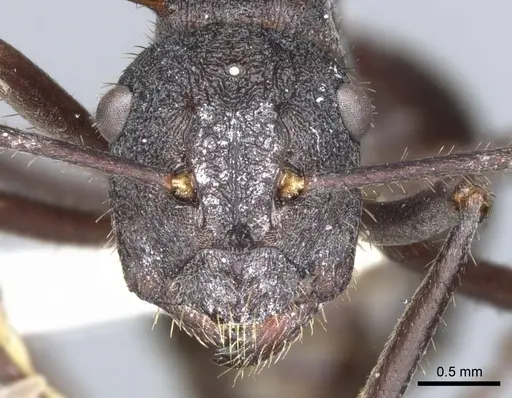
P. loweryi has several defensive adaptations. The most obvious is the series of spines along the body, prominent pronotal spines, propodeal spines, and petiolar spines. These spines make them difficult for predators to swallow and serve as a physical defense. They also have bristle-like hairs covering much of the body. Coloration is dark reddish-brown, almost uniform, with mandibles, spines, and the subpetiolar process slightly lighter. Workers are monomorphic (one size), around 7.5-8.8mm total length. The median ocellus is well-developed and distinct, which is unusual among Polyrhachis and helps identify this species [1][2]. The combination of spines, reddish-brown color, and the specific host association (Rhytidoponera) makes identification relatively straightforward for this species.
Frequently Asked Questions
Can I keep Polyrhachis loweryi without a host colony?
No. P. loweryi is an obligate social parasite that cannot survive without a host Rhytidoponera colony. This is not a species you can keep like typical ants, you must first establish a healthy Rhytidoponera colony and then introduce the guests. Without a host, they will die.
How do I introduce Polyrhachis loweryi to a host colony?
Introduction should be done carefully. In the wild, workers from established colonies invade neighboring host nests. In captivity, you may need to gradually introduce small numbers of P. loweryi workers to allow the host colony to accept them. Monitor closely for aggression. Some rejection is normal, but persistent fighting means the introduction may fail.
What do Polyrhachis loweryi eat?
They are omnivorous. In mixed colonies, they receive food directly from host workers via trophallaxis. They also forage independently for carbohydrates (sugar water, honey) and protein (small insects like mealworms or fruit flies). Offer food a few times per week.
Are Polyrhachis loweryi good for beginners?
No. This is an expert-level species due to the host colony requirement. You need to successfully keep Rhytidoponera ants first, then manage a mixed-species colony. The complexity of the parasitic relationship and the difficulty of obtaining both species makes this unsuitable for beginners.
How big do Polyrhachis loweryi colonies get?
In the wild, mixed colonies contain around 90 Polyrhachis workers plus their brood, along with the host colony [3]. Colony size is constrained by host colony resources, they cannot grow beyond what the host can support. In captivity, expect similar limitations.
Do they need hibernation?
Unknown. This species comes from subtropical Queensland, which has mild winters. A slight cool period (15-18°C) during winter months may be appropriate, but specific diapause requirements have not been documented. Monitor your colony for seasonal slowdowns.
Can I keep multiple P. loweryi queens together?
In mixed colonies, only one Polyrhachis queen is typically found [3]. Multiple queens would likely compete, and the host colony may not support multiple parasitic queens. Keep single-queen colonies for best success.
Where can I find Polyrhachis loweryi in the wild?
This species is known only from the Miles area in southern Queensland, Australia. They are found in dry sclerophyll forest, living as guest ants in Rhytidoponera nests. Finding them requires locating host colonies and checking for the presence of the parasitic guests [1][2].
Why is this species called a guest ant?
Guest ant (or inquiline) refers to ants that live within the nests of other ant species without being fully integrated like true parasites. P. loweryi lives within Rhytidoponera nests, uses host resources, but maintains its own queen and brood care. They are not killed by host workers and can move freely, they are truly 'guests' rather than parasites that harm the host [3][4].
References

This caresheet is licensed under CC BY-SA 4.0 .
CASENT0903356
View on AntWeb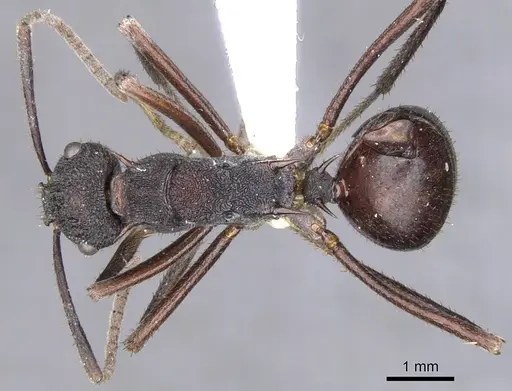
CASENT0919911
View on AntWeb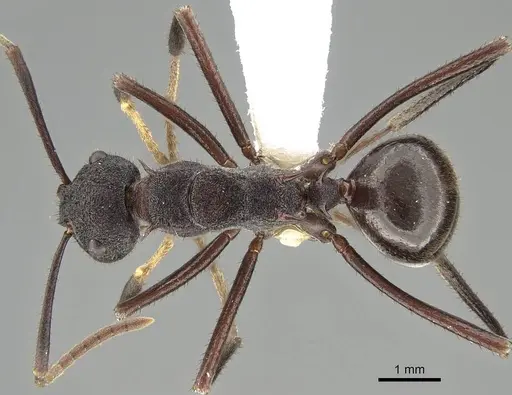
Literature
Loading...Loading products...