

Polyrhachis hoffmanni
- Scientific Name
- Polyrhachis hoffmanni
- Subgenus
- Hagiomyrma
- Tribe
- Camponotini
- Subfamily
- Formicinae
- Author
- Kohout, 2013
- Distribution
- Found in 0 countries
Polyrhachis hoffmanni Overview
Polyrhachis hoffmanni is an ant species of the genus Polyrhachis. It is primarily documented in 0 countries . Detailed taxonomic data and occurrence records can be further explored via authoritative databases such as AntWeb or the Global Biodiversity Information Facility (GBIF).
Polyrhachis hoffmanni
Polyrhachis hoffmanni is a medium-sized ant native to Australia, specifically found in the Queensland regions of Riversleigh and Lawn Hill. Workers measure 5.81-6.69mm with a distinctive appearance featuring long, golden hairs covering most body surfaces, a key feature that separates this species from the similar P. archeri and P. anderseni which lack these hairs entirely [1]. The species belongs to the penelope group within the Hagiomyrma subgenus and has a black body with reddish-brown coloration on the gaster underside and medium to dark reddish-brown legs and antennae [1]. Queens are larger at approximately 8.01mm [1]. This ground-nesting species is one of the less-studied Polyrhachis ants, with much of its biology remaining unknown.
Quick Summary
- Difficulty: Medium
- Origin & Habitat: Australia, Queensland (Riversleigh and Lawn Hill). Ground-nesting species found in arid to semi-arid regions of northern Australia [1].
- Colony Type: Unknown colony structure. No data on whether they are single-queen (monogyne) or multi-queen (polygyne).
- Size & Growth:
- Queen: ~8.01 mm [1]
- Worker: 5.81-6.69 mm [1]
- Colony: Unknown, no colony size data available
- Growth: Unknown, no development data available
- Development: Unknown, no direct measurements. Based on typical Polyrhachis patterns (medium-sized Formicinae), estimate 6-10 weeks at optimal temperature. (Development timeline has not been studied. Estimates based on genus-level patterns for medium-sized tropical ants.)
- Antkeeping:
- Temperature: Keep warm, around 24-28°C. As an Australian species from Queensland, they likely prefer temperatures in the low-to-mid 20s°C. A heating cable on one side of the nest creates a gradient allowing the ants to self-regulate.
- Humidity: Moderate humidity. Ground-nesting species from relatively arid regions, so avoid overly damp conditions. Keep substrate lightly moist but allow it to partially dry between waterings.
- Diapause: Likely minimal or no true diapause. Queensland has mild winters, so a brief cooling period (2-4 weeks at 15-18°C) may be beneficial but is probably not required.
- Nesting: Ground-nesting species. A naturalistic setup with soil or a Y-tong/plaster nest works well. Provide a decent outworld space as they are moderately active foragers.
- Behavior: Generally calm and non-aggressive foragers. As a Formicine ant, they do not have a stinger but may spray formic acid as a defense. They are moderate-sized ants that should handle well in captivity. Escape prevention should be good, they are not tiny ants, but standard barriers (Fluon, vaseline) are still recommended. Activity level is moderate, they forage individually rather than in large raiding parties.
- Common Issues: lack of biological data means care is based on genus-level inference rather than species-specific research, no information on founding behavior, assume claustral (queen seals herself in) based on typical Polyrhachis patterns, growth rate is unknown so new keepers may experience uncertainty during colony establishment, no documented diet preferences, start with typical omnivore offerings (sugar water, protein sources), hibernation requirements are unclear, err on the side of mild cooling rather than extended cold periods
Nest Preferences and Housing
Polyrhachis hoffmanni is a ground-nesting species, so your setup should reflect their natural habitat. A naturalistic terrarium with soil substrate works well, or you can use a Y-tong (acrylic) nest with a dirt chamber. Since they come from Queensland's relatively arid regions, they do not need high humidity like some tropical species. Provide a nest area with moderate moisture that can partially dry out between waterings. The outworld should be spacious enough for foraging, these are moderately active ants that will search for food across the container. Use standard escape prevention (Fluon on rim edges, vaseline barriers) though they are not particularly prone to escaping like tiny species might be. [1]
Feeding and Diet
Diet preferences have not been documented for this species, but based on typical Polyrhachis behavior and their position in the Formicinae subfamily, they are likely omnivorous. Offer sugar water or honey as a constant energy source. For protein, provide small insects (fruit flies, small crickets, mealworms) or other arthropods. Polyrhachis ants generally accept a varied diet including both sweet liquids and protein sources. Feed protein 2-3 times per week, and keep sugar water available at all times. Remove uneaten prey after 24-48 hours to prevent mold issues. If your colony grows larger, you can increase feeding frequency accordingly.
Temperature and Seasonal Care
As an Australian species from Queensland, Polyrhachis hoffmanni prefers warm conditions. Aim for temperatures in the 24-28°C range during the active season. A heating cable placed on part of the nest can create a gentle gradient, the ants will move to their preferred temperature zone. During the Australian winter (roughly June-August in their range), temperatures naturally drop, but their native climate remains mild. You do not need a true hibernation, a brief cooling period to around 15-18°C for 2-4 weeks may simulate seasonal slowdown but is not strictly required. Avoid prolonged cold exposure as this species is not adapted to harsh winters. Monitor colony activity: if workers become sluggish, slightly warm the setup, if they avoid the heated area, reduce temperature. [1]
Colony Establishment and Growth
Since founding behavior has not been documented for this species, we must rely on typical Polyrhachis patterns. Most Polyrhachis ants are claustral founders, the queen seals herself in a chamber and lives off stored fat reserves until her first workers (nanitics) emerge. Provide a founding queen with a small test tube setup with water reservoir (via cotton), kept in darkness at around 24-26°C. Do not disturb the queen during this period, she needs peace to establish her colony. Once workers emerge (likely 6-10 weeks based on genus inference), you can begin offering small amounts of food. Growth rate is unknown but expect it to be moderate, not as fast as some tropical pioneers but faster than slow-growing desert species. Patience is key, especially in the first few months.
Behavior and Handling
Polyrhachis hoffmanni workers are moderately sized (5.81-6.69mm) and should be manageable in captivity. They are not known to be particularly aggressive, Formicine ants typically rely on formic acid spray rather than stinging. Workers are active foragers that search individually for food rather than forming large raiding parties. You may observe them carrying prey back to the nest or recruiting nestmates to larger food sources. Their distinctive long hairs make them visually striking under magnification. They handle disturbance reasonably well once established, but like all ants, they prefer minimal interference during the founding stage. The queen is relatively large (~8mm) and robust, making her easy to locate in the nest. [1]
Frequently Asked Questions
How long does it take for Polyrhachis hoffmanni to produce first workers?
The exact timeline is unknown as this species has not been studied. Based on typical Polyrhachis genus patterns for medium-sized ants, expect around 6-10 weeks from egg to worker at optimal temperature (24-26°C). The first workers (nanitics) will be smaller than mature workers.
What do Polyrhachis hoffmanni ants eat?
Diet has not been documented for this species. Based on typical Polyrhachis behavior, they are likely omnivorous. Offer sugar water or honey as a constant energy source, and protein such as small insects (fruit flies, small crickets, mealworms) 2-3 times per week.
Are Polyrhachis hoffmanni ants good for beginners?
This species is rated as Medium difficulty. While not overly demanding, the lack of species-specific biological data means you will be relying on genus-level care patterns. They are not as documented as common pet trade species, so some experimentation may be needed. If you have kept other Polyrhachis or medium-sized ants successfully, this is a reasonable choice.
What temperature do Polyrhachis hoffmanni ants need?
Keep them warm at 24-28°C. As a Queensland (Australia) species, they are adapted to tropical to subtropical conditions. A heating cable on part of the nest creates a gradient. Avoid temperatures below 20°C for extended periods.
Do Polyrhachis hoffmanni ants need hibernation?
Probably not. Queensland has mild winters, and this species is from relatively arid regions. A brief cooling period (2-4 weeks at 15-18°C) may be beneficial but is not required. Avoid prolonged cold exposure.
How big do Polyrhachis hoffmanni colonies get?
Colony size is unknown, no research has documented maximum colony sizes. Based on their medium worker size and typical Polyrhachis patterns, expect moderate colony sizes likely in the hundreds to low thousands of workers over time.
Can I keep multiple Polyrhachis hoffmanni queens together?
Colony structure (monogyne vs polygyne) has not been documented for this species. Without data, combining unrelated queens is not recommended as it may result in aggression. If you obtain a colony, assume single-queen structure unless you observe multiple queens coexisting peacefully.
Why is so little known about Polyrhachis hoffmanni biology?
This species was only described in 2013 by Kohout, and it appears to have a limited distribution in remote areas of Queensland. Many Australian ants remain poorly studied despite being common in their native range. The scientific focus has been on taxonomy (identifying and describing the species) rather than detailed biological studies.
References

This caresheet is licensed under CC BY-SA 4.0 .
CASENT0887786
View on AntWeb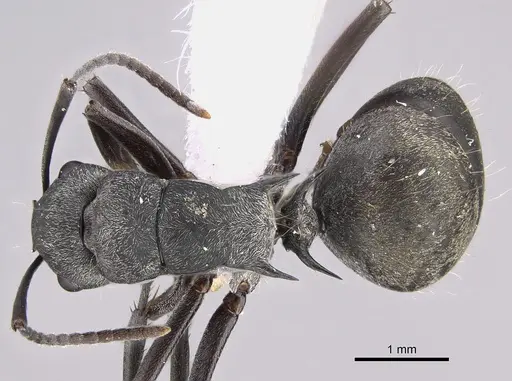
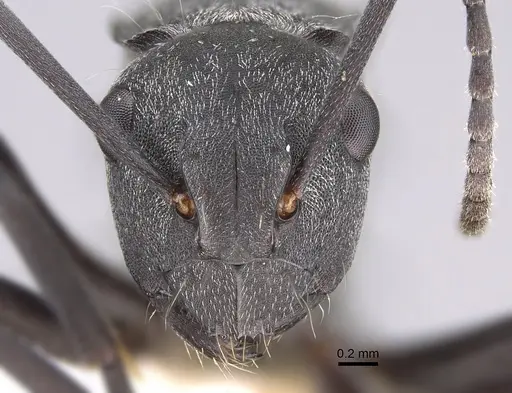
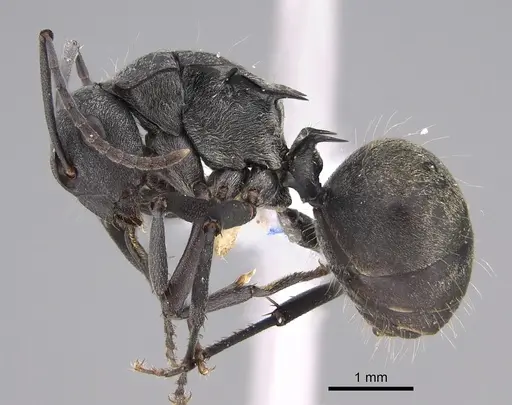
Literature
Loading...Loading products...