

Polyrhachis gravis
- Scientific Name
- Polyrhachis gravis
- Subgenus
- Campomyrma
- Tribe
- Camponotini
- Subfamily
- Formicinae
- Author
- Clark, 1930
- Distribution
- Found in 1 countries
Polyrhachis gravis Overview
Polyrhachis gravis is an ant species of the genus Polyrhachis. It is primarily documented in 1 countries , including Australia. Detailed taxonomic data and occurrence records can be further explored via authoritative databases such as AntWeb or the Global Biodiversity Information Facility (GBIF).
Polyrhachis gravis
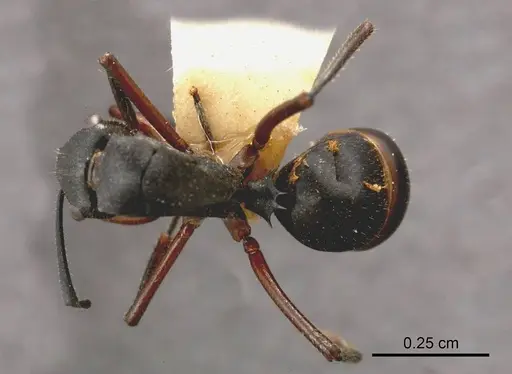
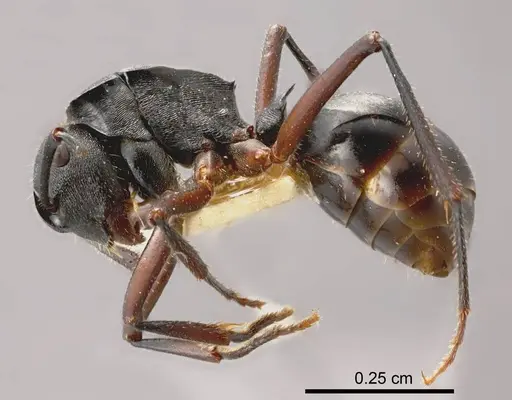
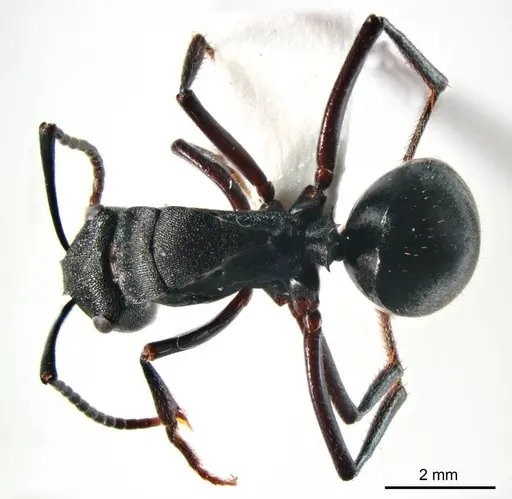
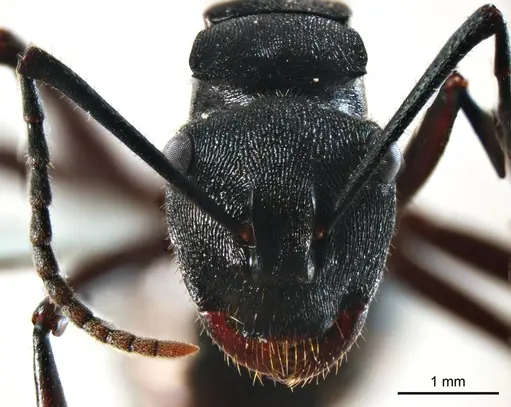
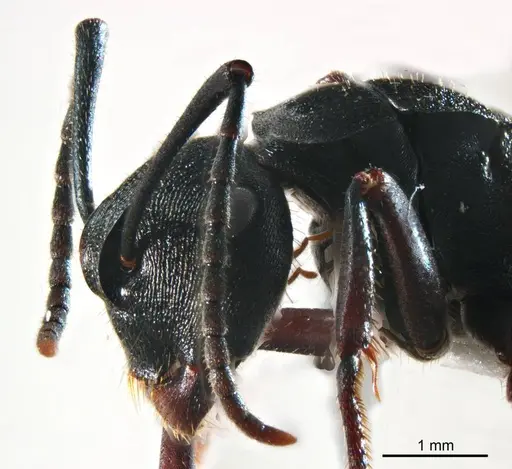
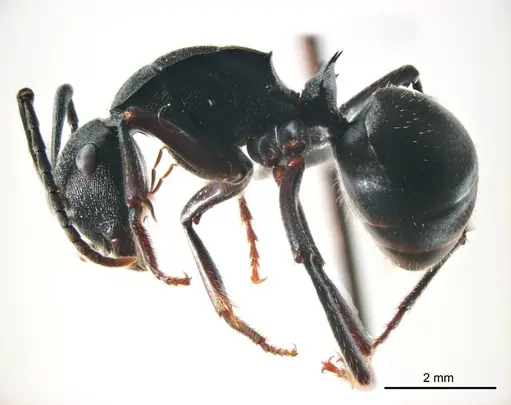
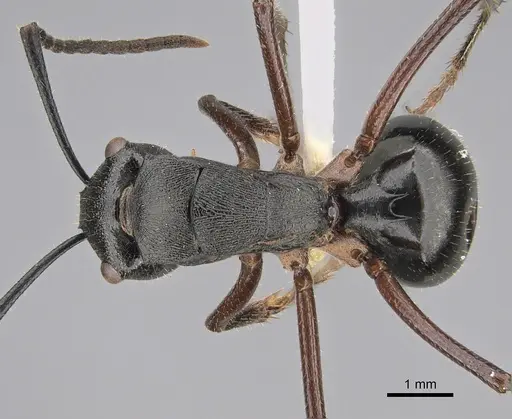
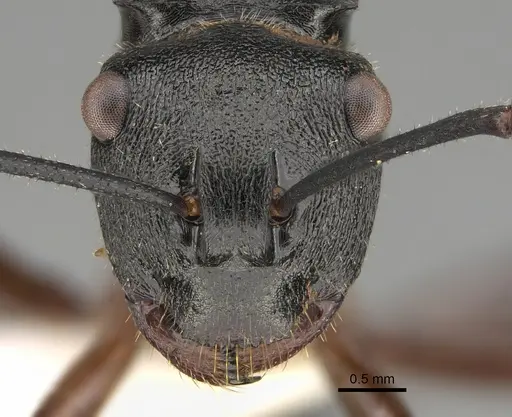
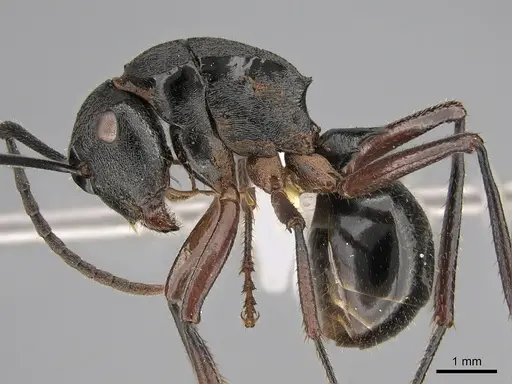
Polyrhachis gravis is a striking large ant native to the arid heartland of Australia. Workers measure 8-10.5mm and are predominantly black with reddish-brown mandibles, antennae tips, legs, and posterior coxae. The species gets its common name from the four distinctive sharp spines protruding from its petiole (the narrow waist section). Their body is shiny with longitudinal striate-rugose sculpturing, and they have short yellow erect hairs scattered across their body, more dense near the gaster tip. This species belongs to the Campomyrma subgenus and is a member of the gravis species-group. [1][2]
What makes P. gravis particularly interesting is its adaptation to some of Australia's harshest environments, the dry mulga woodlands and spinifex grasslands of central Australia. Despite being widely distributed across this vast arid region from Western Australia through the Northern Territory to western Queensland, the species remains relatively morphologically uniform. However, captive care information is limited since sexual forms and immature stages have never been documented in the scientific literature. [1][2]
Quick Summary
- Difficulty: Medium
- Origin & Habitat: Central Australia, Pilbara region of Western Australia, across the Northern Territory to western Queensland. Inhabits dry mulga and spinifex (triodia) grassland country. [1][2]
- Colony Type: Unknown, sexual forms and immature stages have not been documented, so colony structure (single-queen or multi-queen) is unconfirmed. [2]
- Size & Growth:
- Queen: Unknown, queens have not been described [2]
- Worker: 8.12-10.58mm total length, HL 2.18-2.48mm, HW 1.93-2.20mm [1]
- Colony: Unknown, colony size has not been documented
- Growth: Unknown, no development data available
- Development: Unknown, development timeline has not been studied. Based on typical Formicinae patterns and large worker size, expect 8-12 weeks at optimal temperature. (No direct measurements available. Related Polyrhachis species suggest moderate development time.)
- Antkeeping:
- Temperature: Arid habitat suggests tolerance for warmer, drier conditions. Start around 24-28°C and observe colony activity. A gentle heat gradient allows ants to thermoregulate.
- Humidity: Arid-adapted species, keep nest substrate moderately dry to dry, with a small moist area for brood if present. Avoid constant saturation. Think desert conditions, not rainforest.
- Diapause: Likely, as an Australian arid-zone species, they probably experience reduced activity during cooler winter months. Provide a cool period around 15-18°C for 2-3 months.
- Nesting: Lignicolous (wood-nesting) in the wild, they naturally nest in rotting wood, under bark, or in dead plant material. [3] In captivity, a Y-tong (AAC) nest, plaster nest, or naturalistic setup with wood pieces works well. They may also use subterranean spaces. [4] Provide a dark nesting area with some humidity but not wet conditions.
- Behavior: Not well documented, but Polyrhachis species are generally less aggressive than many Formicinae. Workers are moderately active foragers. Escape risk is moderate given their large size, standard formicarium barriers are usually sufficient. They have pupal cocoons, which is typical of the subfamily. [3] The spiny petiole provides some defense against predators. [1]
- Common Issues: limited availability, this species is rarely available in the antkeeping hobby due to lack of documented captive colonies, unknown colony structure makes it difficult to know optimal housing arrangements, no established feeding guidelines, diet preferences in captivity are unconfirmed, development timeline unknown makes it hard to track colony progress, arid species may be sensitive to overwatering, keep conditions dry
Natural History and Distribution
Polyrhachis gravis is endemic to the arid and semi-arid regions of central Australia. Its range extends from the Pilbara region in Western Australia, across the Northern Territory, to western Queensland. This is one of the most arid regions on the Australian continent, characterized by low rainfall, extreme temperature fluctuations, and sparse vegetation dominated by mulga (Acacia aneura) woodlands and spinifex (Triodia) grasslands. [1][2]
The species was originally described by Clark in 1930 and has remained relatively well-documented morphologically, but biological aspects including colony structure, reproduction, and development remain unstudied. Despite its wide geographic distribution, P. gravis shows remarkably little morphological variation, with only minor differences in body sculpturing and spine length noted between populations from different regions. [1]
Nest Preferences and Housing
In the wild, Polyrhachis gravis is lignicolous, meaning it nests in wood, typically in rotting logs, under bark, or in dead tree limbs. [3] One source also indicates they can be subterranean, using underground chambers. [4] This suggests they prefer dark, enclosed spaces with some structural material to anchor their nest.
For captive care, a Y-tong (acrylic and cotton) nest or plaster nest works well. The nest chambers should be enclosed and dark. Because they come from arid environments, keep the nest substrate on the dry side, slightly moist is fine, but avoid constant dampness. A naturalistic setup with cork bark or wood pieces can also work. Ensure the outworld provides adequate foraging space and escape prevention, as workers are large enough to be contained with standard barriers. [3][4]
Feeding and Diet
The specific diet of Polyrhachis gravis has not been documented in scientific literature. As a member of Formicinae, they likely have a varied diet similar to other ants in this subfamily, typically including nectar/honeydew, small insects, and possibly seeds.
In captivity, offer a standard ant diet: sugar water or honey as an energy source, and protein sources like mealworms, crickets, or other small insects. Given their large worker size (8-10mm), they can handle prey items that smaller ants cannot. Start with sugar water and small insects, and observe acceptance. Remove uneaten prey after 24-48 hours to prevent mold. Feed protein 2-3 times per week and keep sugar water available constantly.
Temperature and Seasonal Care
As an arid-adapted species from central Australia, Polyrhachis gravis is accustomed to warm temperatures and significant seasonal variation. In their natural habitat, summer temperatures regularly exceed 40°C, while winter nights can drop near freezing.
For captive care, maintain nest temperatures around 24-28°C. A heating cable or mat on one side of the nest creates a gradient allowing thermoregulation. Place the heating on top of the nest, not underneath, to avoid excessive drying. During Australian winter (roughly June-August), the colony will likely benefit from a cool period around 15-18°C for 2-3 months to simulate natural seasonal cycles. This diapause period helps regulate colony biology. Reduce feeding during this cool period.
Behavior and Defense
Polyrhachis gravis workers are large (8-10.5mm) and robust. The most distinctive morphological feature is the four sharp spines on the petiole, two middle and two lateral, which serve as defense structures. [1] When threatened, workers can raise their gaster and present these spines toward potential predators.
Compared to many aggressive ant species, Polyrhachis ants are generally more docile. They are not known to be particularly territorial or aggressive toward keepers. Workers are active foragers but typically not aggressive. Their large size makes them easy to observe, and they generally adapt well to captive observation. Standard escape prevention using fluon or barrier tape on smooth surfaces is adequate for this species.
Challenges and Limitations
The primary challenge in keeping Polyrhachis gravis is the complete lack of documented captive breeding information. Sexual forms (queens and males) have never been described, meaning we don't know what their nuptial flights look like or when they occur. Colony structure (single-queen vs multi-queen) is unknown, and development timelines are unconfirmed. [2]
This species is also rarely available in the antkeeping hobby, as no established captive breeding protocols exist. Most specimens would need to be wild-caught, which carries risks including parasites, disease, and stress from capture. If you do obtain a colony, expect a period of adjustment as they acclimate to captive conditions. Document your observations carefully, any captive breeding success would be valuable new information for the antkeeping community. [2]
Frequently Asked Questions
How long does it take for Polyrhachis gravis to develop from egg to worker?
The development timeline is unknown, this has never been scientifically documented for this species. Based on typical Formicinae patterns and their large worker size (8-10mm), expect roughly 8-12 weeks at optimal temperature. Related Polyrhachis species suggest moderate development speed.
What do Polyrhachis gravis ants eat?
Specific diet is unconfirmed, but as Formicinae they likely accept sugar sources (honey, sugar water) and protein (insects like mealworms, crickets). Feed protein 2-3 times per week and keep sugar water available. Remove uneaten prey after 24-48 hours.
Can I keep Polyrhachis gravis in a test tube setup?
A test tube can work for a small colony, but given their lignicolous (wood-nesting) nature and arid habitat preferences, a Y-tong or plaster nest is more appropriate. Test tubes can become too humid for this arid-adapted species.
Do Polyrhachis gravis ants need hibernation?
Likely yes, as an Australian arid-zone species from central Australia, they probably experience cooler winter conditions and would benefit from a 2-3 month diapause period around 15-18°C during winter months.
Are Polyrhachis gravis good for beginners?
Not recommended for beginners due to limited available care information and rarity in the hobby. The lack of documented captive breeding and unknown development timeline makes them challenging. More established species with clear care guides are better choices for new antkeepers.
How big do Polyrhachis gravis colonies get?
Colony size is unknown, this has never been documented in scientific literature. Related Polyrhachis species typically form colonies of several hundred to a few thousand workers.
What temperature should I keep Polyrhachis gravis at?
Aim for 24-28°C in the nest area. As an arid-adapted species from central Australia, they tolerate warmer conditions. A gentle heat gradient allows thermoregulation. Avoid temperatures below 20°C for extended periods.
When do Polyrhachis gravis nuptial flights occur?
Unknown, sexual forms have never been documented for this species, so nuptial flight timing is unconfirmed. Australian arid-zone ants typically have flights during warmer months.
Is Polyrhachis gravis monogyne or polygyne?
Unknown, colony structure has not been studied. No queens have been described, so we cannot determine whether they form single-queen or multi-queen colonies.
What humidity level do Polyrhachis gravis need?
Keep conditions dry to moderately moist. As an arid-adapted species from central Australia's mulga and spinifex country, they prefer drier conditions than many tropical ants. Avoid constant dampness or waterlogging.
Why is my Polyrhachis gravis colony not growing?
Without established care guidelines, growth issues are difficult to diagnose. Ensure proper temperature (24-28°C), adequate but not excessive humidity, and varied protein diet. Stress from capture is common in wild-caught colonies. Consider that development may simply be slow, we don't have baseline timelines to compare against.
References

This caresheet is licensed under CC BY-SA 4.0 .
Literature
Loading...Loading products...