

Polyrhachis frauenfeldi
- Scientific Name
- Polyrhachis frauenfeldi
- Subgenus
- Myrmothrinax
- Tribe
- Camponotini
- Subfamily
- Formicinae
- Author
- Mayr, 1862
- Distribution
- Found in 1 countries
Polyrhachis frauenfeldi Overview
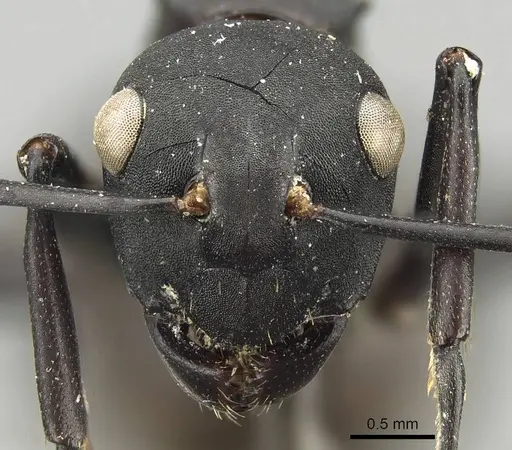
Polyrhachis frauenfeldi is an ant species of the genus Polyrhachis. It is primarily documented in 1 countries , including Indonesia. Detailed taxonomic data and occurrence records can be further explored via authoritative databases such as AntWeb or the Global Biodiversity Information Facility (GBIF).
Polyrhachis frauenfeldi
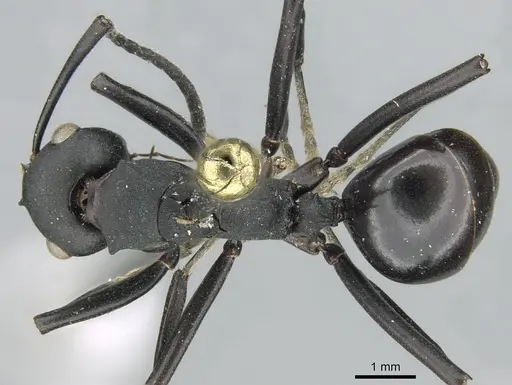
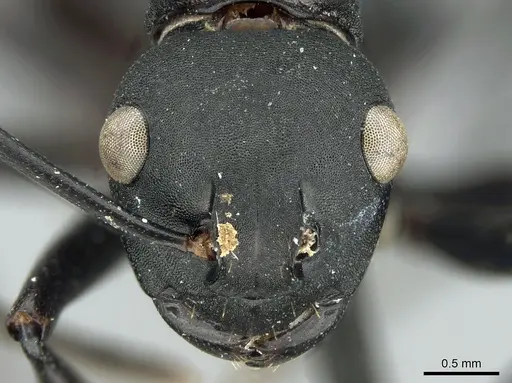
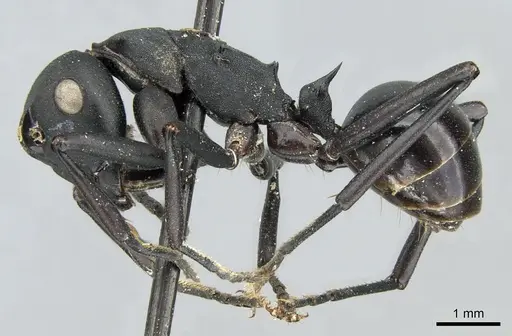
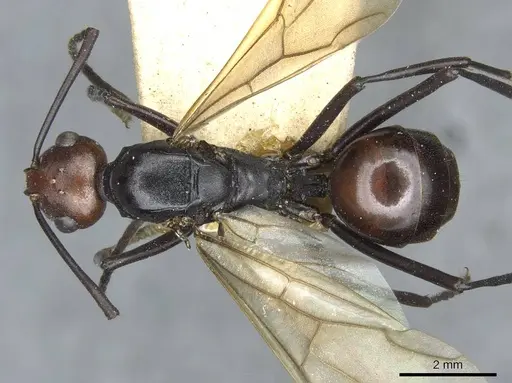
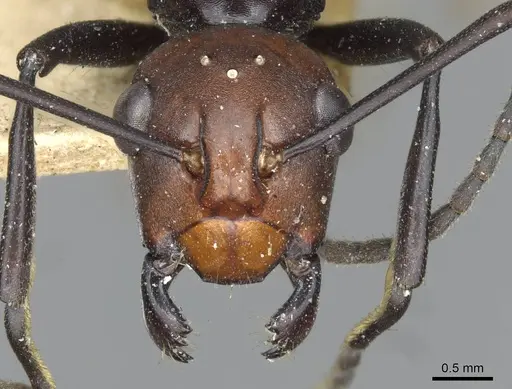
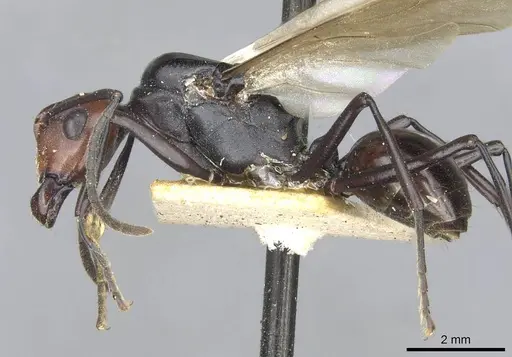
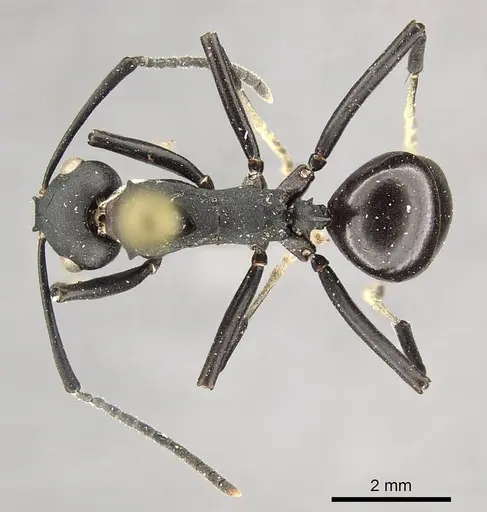
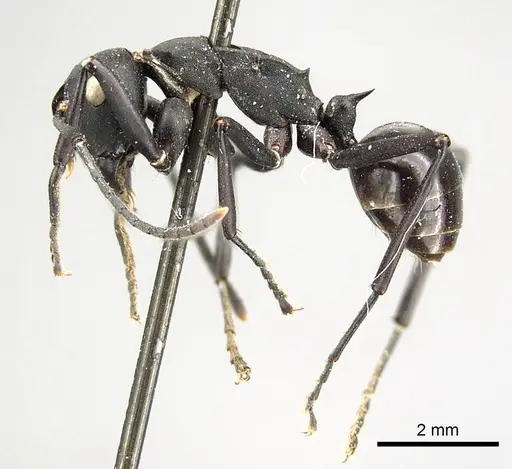
Polyrhachis frauenfeldi is a medium-sized arboreal ant belonging to the subgenus Myrmothrinax, found across the Indomalaya region including Indonesia, Singapore, Sri Lanka, and extending into Queensland, Australia [1][2]. Workers are built with the characteristic curved spines on the thorax that give Polyrhachis their common name 'spiny ants', these spines help protect them from predators. This species nests in trees and shrubs, constructing nests from carton material mixed with silk, which they weave into protective structures in vegetation [3][4]. Unlike many Formicinae, their pupae develop inside protective cocoons [3].
Quick Summary
- Difficulty: Medium
- Origin & Habitat: Tropical and subtropical forests of Southeast Asia and northern Australia, Indonesia (Java), Singapore, Sri Lanka, Borneo, and Queensland [1][2][5]. They are arboreal nesters, building homes in trees and shrubs rather than in soil.
- Colony Type: Likely single-queen (monogyne) colonies based on typical Polyrhachis patterns. Colony size appears moderate, though exact maximum is unconfirmed.
- Colony: Monogyne
- Founding: Claustral
- Size & Growth:
- Queen: Estimated 9-11mm based on genus patterns (no direct species measurement found)
- Worker: Estimated 6-8mm based on genus patterns
- Colony: Estimated several hundred workers based on related Polyrhachis species
- Growth: Moderate
- Development: Estimated 6-8 weeks at tropical temperatures (25-28°C), inferred from related Polyrhachis species (Development time is estimated, they have cocooned pupae which may take slightly longer than naked pupae of other Formicinae)
- Antkeeping:
- Temperature: Keep warm at 24-28°C. Their tropical origin means they need consistent warmth. A heating cable on one side of the nest creates a gradient for them to regulate their temperature.
- Humidity: Moderate to high humidity (60-80%). As arboreal ants, they are accustomed to humid forest conditions but not waterlogged nests. Provide a water tube for drinking access.
- Diapause: No, this is a tropical species that does not require hibernation. Keep temperatures stable year-round.
- Nesting: Arboreal setup required, they will not do well in standard soil nests. Use a naturalistic setup with branches, cork, or other elevated structures. A Y-tong (AAC) nest with added vertical space and branches works well. They use carton/silk material in the wild, so providing some loose nesting material they can manipulate is beneficial [3][4].
- Behavior: Generally peaceful and not aggressive toward keepers. Like most Polyrhachis, they are active foragers that will search for honeydew and small prey. Escape risk is moderate, they are good climbers but not as tiny as some escape artists. Use standard barrier precautions. They are diurnal and actively forage during daylight hours.
- Common Issues: arboreal nature means standard soil formicariums are unsuitable, they will not nest properly, tropical species sensitive to temperature drops below 22°C, cold drafts can be fatal, cocooned pupae require higher humidity than naked pupae, too dry causes desiccation, lack of natural nesting material may cause stress, provide branches or cork for nest-building, wild-caught colonies may have parasites specific to their arboreal lifestyle
Nest Preferences and Housing
Polyrhachis frauenfeldi is an arboreal species, this is the single most important factor in their care. In the wild, they build nests in trees and shrubs using carton material mixed with silk, creating protective structures attached to branches and vegetation [3][4]. In captivity, they need an arboreal-style setup rather than a typical underground formicarium. The best options include naturalistic setups with branches, cork bark, or bamboo sections where they can build their carton nests. A Y-tong (AAC) nest can work if you add vertical branches or perching spots inside. Avoid standard plaster or soil nests unless you modify them extensively with climbing structures. The nest should have some humidity but allow for good ventilation, stagnant, overly damp conditions cause mold problems. Provide a separate outworld for foraging with branches leading up to the nest area.
Feeding and Diet
Like other Polyrhachis species, these ants are omnivorous with a preference for sweet liquids and protein. In the wild, they forage for honeydew from aphids and scale insects, and hunt small insects. In captivity, offer sugar water or honey as a constant energy source. For protein, provide small insects like fruit flies, small crickets, or mealworms. Feed protein 2-3 times per week, and keep sugar sources available at all times. They are active foragers, so place food in the outworld where they can easily access it. Remove uneaten prey after 24-48 hours to prevent mold. Fresh water should always be available, a small water tube or damp cotton works well.
Temperature and Seasonal Care
Being a tropical species from Southeast Asia and northern Australia, Polyrhachis frauenfeldi requires warm conditions year-round. Keep the nest area at 24-28°C for optimal brood development. A heating cable placed on one side of the nest creates a temperature gradient allowing the ants to regulate their own temperature by moving between warmer and cooler areas. Avoid placing the nest near air conditioning vents, windows with cold drafts, or any area where temperatures might drop below 22°C for extended periods. Unlike temperate species, they do not enter diapause or hibernation. Maintain consistent temperatures throughout the year, seasonal temperature fluctuations are not required and could stress or harm the colony. Room temperature in most homes should be sufficient if kept in a warm room, but monitor with a thermometer. [2][1]
Understanding Their Unique Biology
Polyrhachis frauenfeldi belongs to the subgenus Myrmothrinax, a group known for their arboreal lifestyle and distinctive spiny morphology [3]. The spines on their thorax are not just decorative, they help protect these ants from predators in their arboreal habitat. A key biological feature is that their pupae develop inside cocoons [3], unlike many Formicinae which have naked pupae. This means you may see the queen tending to silk-covered pupae rather than the white naked pupae typical of species like Camponotus or Lasius. The cocoons require slightly higher humidity to develop properly, too dry and the pupae desiccate. When keeping these ants, watch for the silk threads they produce to construct their carton nests. Providing natural materials like small twigs, leaves, or cork bark gives them materials to work with for nest construction.
Behavior and Colony Dynamics
Polyrhachis frauenfeldi is generally calm and not particularly aggressive, making them manageable in captivity. Workers are active foragers, patrolling branches and vegetation in search of honeydew and small prey. They are diurnal, being most active during daylight hours. The colony will establish a main nest in their arboreal setup and may create satellite positions if given enough space. Unlike ground-nesting species, they are comfortable climbing and will readily traverse branches, tubes, and other structures. Queens are likely claustral founders based on typical Polyrhachis patterns, after mating, the queen seals herself in a small chamber and raises the first workers alone on stored body fat. The founding period may take several months, so patience is required when establishing new colonies. Once established, colonies grow moderately with each new generation of workers.
Frequently Asked Questions
Can I keep Polyrhachis frauenfeldi in a test tube?
A test tube alone is not suitable for this species. They are arboreal ants that need vertical space and branches to build their nests. Use a naturalistic setup with branches, cork, or a modified Y-tong nest with climbing structures.
What is the best nest type for Polyrhachis frauenfeldi?
An arboreal-style setup is essential. Provide branches, cork bark, or bamboo sections where they can build carton nests. A Y-tong nest with added vertical elements works well, or a fully naturalistic setup with live or artificial plants.
How long until first workers appear?
Expect 6-8 weeks from egg to first worker at 25-28°C, though this is estimated from related species. The queen will seal herself in during founding and raise the first brood alone.
Are Polyrhachis frauenfeldi good for beginners?
This species is rated as medium difficulty. While not aggressive, their arboreal nesting requirements are different from most beginner-friendly ground-nesting ants. If you are comfortable setting up an arboreal-style habitat, they can be rewarding.
Do they need hibernation or diapause?
No, this is a tropical species from Southeast Asia and Queensland, Australia. They do not require hibernation. Keep temperatures warm and stable year-round at 24-28°C.
What do Polyrhachis frauenfeldi eat?
They are omnivorous. Offer sugar water or honey as a constant energy source, and protein (small insects like fruit flies, crickets, or mealworms) 2-3 times per week. They will also collect honeydew if aphids are available.
How big do colonies get?
Colony size is estimated at several hundred workers based on related Polyrhachis species. Growth is moderate, expect several months to reach significant numbers.
Can I keep multiple queens together?
Based on typical Polyrhachis patterns, this species likely forms single-queen colonies. Combining unrelated queens is not recommended as they would likely fight.
References

This caresheet is licensed under CC BY-SA 4.0 .
Literature
Loading...Loading products...