

Polyrhachis exotica
- Scientific Name
- Polyrhachis exotica
- Subgenus
- Myrmhopla
- Tribe
- Camponotini
- Subfamily
- Formicinae
- Author
- Kohout, 1987
- Distribution
- Found in 1 countries
Polyrhachis exotica Overview
Polyrhachis exotica is an ant species of the genus Polyrhachis. It is primarily documented in 1 countries , including Philippines. Detailed taxonomic data and occurrence records can be further explored via authoritative databases such as AntWeb or the Global Biodiversity Information Facility (GBIF).
Polyrhachis exotica
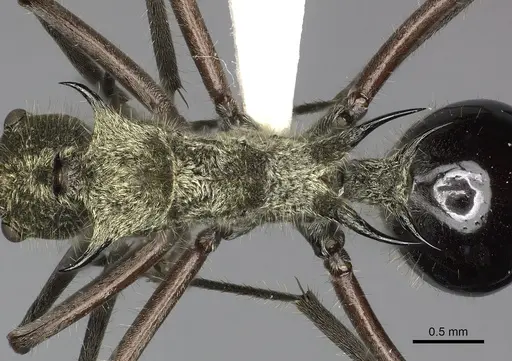
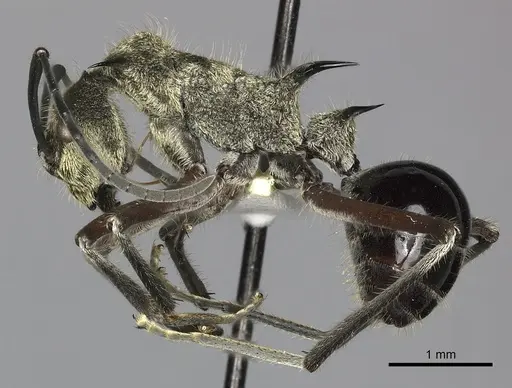
Polyrhachis exotica is a large, striking ant native to the Philippines. Workers measure 13-15mm, making them one of the larger Polyrhachis species. They have a distinctive appearance with an exceptionally domed pronotum (the middle body section behind the head), long curved spines projecting from the pronotum and propodeum, and a smooth, shiny gaster (abdomen). The body is black to very dark reddish brown, with reddish-brown legs and mandibles, and the gaster shows deep red reflections. This species belongs to the Myrmhopla subgenus and the sexspinosa species group, but unlike other members of this group, P. exotica has a smooth and shining gaster rather than a hairy one, making it immediately identifiable.
This species is endemic to the Philippines, meaning it's found nowhere else in the world [1]. As a tropical ant from the Philippines, it likely prefers warm, humid conditions similar to other Polyrhachis species. However, since nothing has been documented about its biology in the scientific literature, care recommendations must be based on what we know about related species in the genus.
Quick Summary
- Difficulty: Medium
- Origin & Habitat: Philippines, endemic to this region [1]. As a tropical species, it likely inhabits forest environments.
- Colony Type: Colony structure is unconfirmed. Based on typical Polyrhachis patterns, likely monogyne (single queen) but this needs confirmation.
- Size & Growth:
- Queen: 16.08-16.63mm
- Worker: 13.31-14.66mm
- Colony: Unknown, no colony size data exists for this species
- Growth: Moderate, inferred from genus patterns
- Development: Estimated 6-10 weeks based on typical Polyrhachis development at tropical temperatures (Direct development data unavailable, estimate based on related species in genus)
- Antkeeping:
- Temperature: Keep at 24-28°C, tropical species requiring warm conditions. A heating cable on one side of the nest can provide a gradient.
- Humidity: High humidity preferred, aim for 70-80%. Keep the nest substrate consistently moist but not waterlogged.
- Diapause: Unlikely, as a tropical species from the Philippines, they probably do not require a hibernation period. However, a slight reduction in temperature during winter months may be beneficial.
- Nesting: In nature, Polyrhachis species often nest in rotting wood, under bark, or in soil. For captivity, a Y-tong (AAC) nest, plaster nest, or naturalistic setup with damp substrate works well.
- Behavior: Polyrhachis ants are generally not aggressive but can be defensive when threatened. As Formicinae, they do not have a functional stinger but will bite and spray formic acid. Workers are moderately active and forage for food. Escape prevention should be good, these are large ants that cannot squeeze through typical barrier gaps. They are not known to be escape artists.
- Common Issues: no documented biology means care is based on genus inference, results may vary, humidity control is critical, tropical ants easily die in dry conditions, temperature must remain warm, cool conditions will slow or stop brood development, wild-caught colonies may carry parasites that are difficult to treat, slow growth can frustrate beginners, patience is required
Appearance and Identification
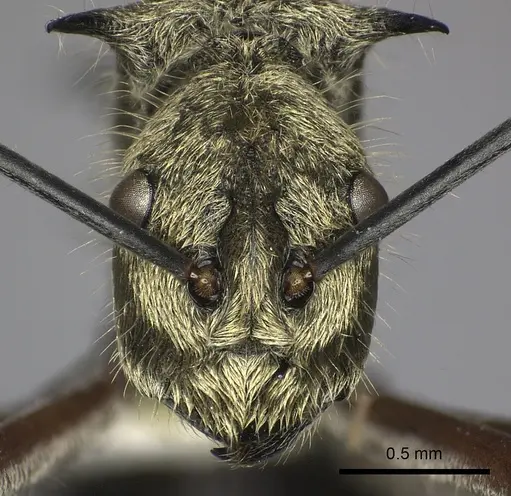
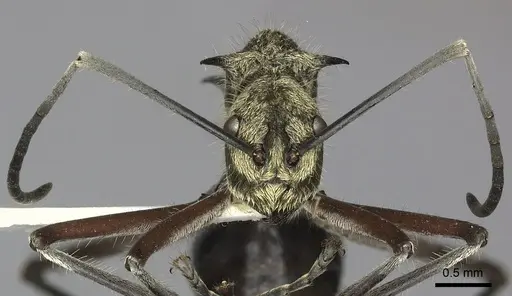
Polyrhachis exotica is a visually striking ant that stands out from other Polyrhachis species. Workers reach 13-15mm in length, making them quite large compared to many common ant species. The most distinctive feature is the exceptionally domed pronotum, the section behind the head is strongly convex, almost dome-like in profile. Workers have long, curved spines projecting from the pronotum that curve forward, and strong propodeal spines that are elevated and recurved. The gaster (abdomen) is smooth and shining, which is unique among species in the sexspinosa group, other members have hairy gasters.
The body coloration is black to very dark reddish brown, with reddish-brown mandibles, legs, and antennae. The gaster shows distinctive deep red reflections that catch the light. Queens are even larger at 16-17mm and have the typical three ocelli (simple eyes) and fully developed mesosoma with wings. Males have not been documented for this species. [1]
Natural History
Polyrhachis exotica is endemic to the Philippines, meaning it is found nowhere else on Earth [1]. Beyond this basic distribution information, nothing has been documented about its biology in the scientific literature. We don't know its nesting habits, diet, colony size, nuptial flight timing, or any aspect of its natural history.
As a member of the genus Polyrhachis, which contains over 700 species worldwide, we can make educated guesses based on related species. Most Polyrhachis species are tropical or subtropical, nest in rotting wood or soil, and feed on honeydew, nectar, and small insects. The Philippines has a tropical climate with high humidity year-round, so this species almost certainly requires warm, humid conditions.
Temperature and Care
As a tropical species from the Philippines, Polyrhachis exotica requires warm temperatures to thrive. Keep the nest area at 24-28°C, with a slight gradient allowing workers to choose their preferred temperature. A heating cable placed on one side of the nest can create this gradient effectively, place it on top of the nest, not underneath, to avoid drying out the substrate.
Temperature is critical for this species. If the environment is too cool, brood development will slow dramatically or stop entirely. Room temperature may be insufficient in cooler climates, monitor with a thermometer and adjust heating accordingly. Avoid sudden temperature swings, as stable conditions are better for colony health.
Humidity and Nesting
High humidity is essential for this tropical species. Aim for 70-80% relative humidity in the nest area. The substrate should be consistently moist but never waterlogged, standing water can drown colonies. Polyrhachis species in captivity often do well in Y-tong (AAC) nests, plaster nests, or naturalistic setups with damp soil.
For a naturalistic approach, use a mix of soil and organic material that retains moisture well. Provide a water reservoir in the outworld as well. Monitor condensation on the nest, excessive condensation can indicate too much moisture, while complete absence suggests the nest is drying out. Adjust watering frequency based on these observations rather than a fixed schedule.
Feeding and Diet
While no specific dietary studies exist for P. exotica, Polyrhachis species are typically omnivorous. They feed on honeydew from aphids and scale insects, nectar from flowers, and small insects for protein. In captivity, offer a varied diet including sugar water or honey (sweet foods), and protein sources like small crickets, mealworms, or other insects.
Feed small amounts initially and observe what the colony accepts. Remove uneaten food after 24-48 hours to prevent mold. A constant sugar source (honey water or honey) should be available, with protein offered 2-3 times per week depending on colony size. Fresh water should always be accessible.
Colony Development
Nothing is known about the founding behavior or development timeline of Polyrhachis exotica. Based on typical Polyrhachis patterns, the queen likely seals herself in a chamber (claustral founding) and raises the first workers alone using stored fat reserves. The first workers (nanitics) are typically smaller than normal workers.
Based on related species, expect 6-10 weeks from egg to first worker at optimal temperatures (around 26°C). Colony growth will likely be moderate, not as fast as some tropical species, but faster than temperate species. A mature colony might reach several hundred workers, though we have no specific data for this species.
Frequently Asked Questions
How long does it take for Polyrhachis exotica to produce first workers?
The exact timeline is unknown, but based on typical Polyrhachis development, expect 6-10 weeks from egg to first worker at optimal tropical temperatures (around 26°C). This is an estimate since no specific development data exists for this species.
What temperature do Polyrhachis exotica ants need?
Keep them at 24-28°C. As a tropical Philippines species, they require warm conditions. A heating cable on one side of the nest creates a gradient that allows workers to regulate their own temperature.
Can I keep Polyrhachis exotica in a test tube?
A test tube can work for a founding queen, but a larger setup will be needed as the colony grows. Once workers number in the dozens, transfer to a Y-tong nest, plaster nest, or naturalistic setup with proper humidity control.
How big do Polyrhachis exotica colonies get?
The maximum colony size is unknown, no wild colony data exists for this species. Based on related Polyrhachis species, a mature colony might reach several hundred workers, but this is an estimate.
Do Polyrhachis exotica need hibernation?
Probably not. As a tropical species from the Philippines, they likely do not require a winter dormancy period. However, a slight temperature reduction (a few degrees) during winter months may be natural and beneficial.
What do Polyrhachis exotica eat?
Based on typical Polyrhachis diet, they likely accept sugar sources (honey, sugar water) and protein (small insects, mealworms). Offer a varied diet and remove uneaten food to prevent mold.
Is Polyrhachis exotica good for beginners?
This species is rated Medium difficulty. While large and visually impressive, the lack of documented biology means care is based on inference from related species. Experienced antkeepers will have better success with this species.
Can I keep multiple Polyrhachis exotica queens together?
The colony structure is unconfirmed. Most Polyrhachis species are monogyne (single queen), but polygyny has been documented in some species. Until more is known, keeping only one queen per colony is recommended.
Why is my Polyrhachis exotica colony dying?
The most likely causes are: too low temperature (below 24°C), too dry conditions (humidity below 70%), or poor initial founding conditions. Wild-caught colonies may also carry parasites. Review temperature and humidity first.
References

This caresheet is licensed under CC BY-SA 4.0 .
CASENT0249116
View on AntWeb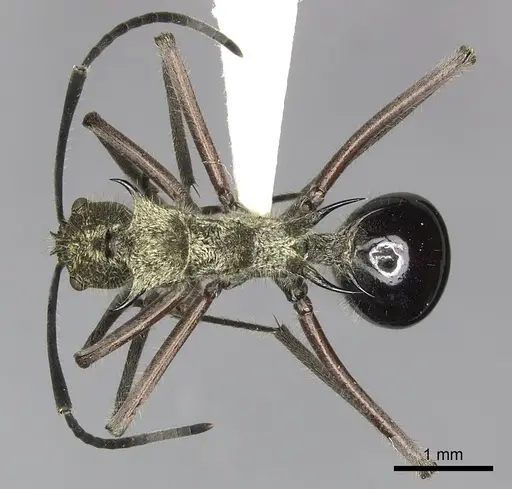
Literature
Loading...Loading products...