

Polyrhachis eremita
- Scientific Name
- Polyrhachis eremita
- Subgenus
- Hirtomyrma
- Tribe
- Camponotini
- Subfamily
- Formicinae
- Author
- Kohout, 1990
- Distribution
- Found in 1 countries
Polyrhachis eremita Overview
Polyrhachis eremita is an ant species of the genus Polyrhachis. It is primarily documented in 1 countries , including Australia. Detailed taxonomic data and occurrence records can be further explored via authoritative databases such as AntWeb or the Global Biodiversity Information Facility (GBIF).
Polyrhachis eremita
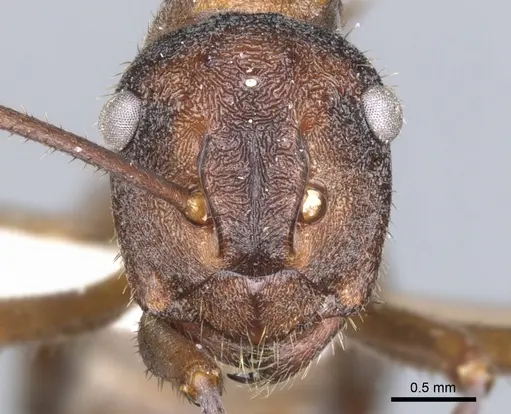
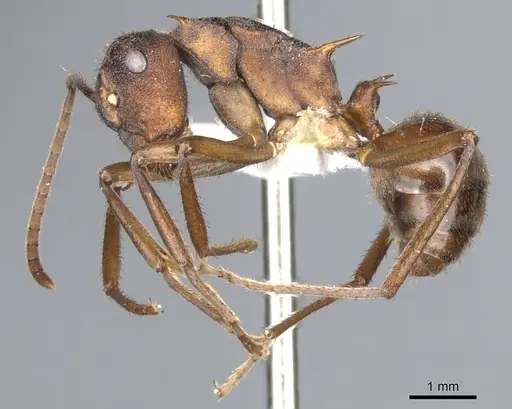
Polyrhachis eremita is a medium-sized Australian ant known for its distinctive bicoloured appearance, medium reddish-brown body with light yellowish-brown markings on the head, pronotal collar, and mesosomal dorsum. Workers measure 6.5-8.7mm with characteristic spines on the pronotum and propodeum. This species is native to Queensland, Australia, specifically found in the Marlborough region. What makes P. eremita particularly unusual is its lifestyle as a social parasite, it invades and lives within colonies of Rhytidoponera ants, using the host workers to raise its own brood [1][2].
Quick Summary
- Difficulty: Expert
- Origin & Habitat: Native to Queensland, Australia. Found in open sclerophyll forest near Marlborough (22°45'S,149°54'E) at elevations around 4-10km north of the town [1][3].
- Colony Type: Social parasite of Rhytidoponera species. Queens invade host colonies and integrate with the host colony structure [2]. This is not a traditionally founding species, parasitic queens require an established host colony to survive.
- Queen: Socially parasitic
- Size & Growth:
- Queen: Approximately 7-8mm (estimated based on worker size and genus patterns)
- Worker: 6.5-8.7mm [1][3]
- Colony: Unknown, likely small given parasitic lifestyle
- Growth: Unknown
- Development: Unknown, would depend on host colony conditions (Development is tied to host colony resources rather than independent growth)
- Antkeeping:
- Temperature: Keep at 24-28°C, mimicking warm Australian conditions. A gentle heat gradient is recommended.
- Humidity: Moderate humidity around 50-70%. These ants come from relatively dry sclerophyll forest habitats.
- Diapause: Likely minimal or none, Queensland has mild winters. Keep at room temperature year-round.
- Nesting: This species cannot be kept independently. They require a host Rhytidoponera colony to survive. Without a host colony, the parasitic queen cannot establish or maintain a functional colony. Naturalistic setups with host colonies are the only viable option, though this is extremely challenging.
- Behavior: As a social parasite, P. eremita workers likely behave similarly to their hosts, active foragers with moderate aggression. Workers are larger (6.5-8.7mm) so escape prevention is important but not due to small size. The species is known for running alongside Rhytidoponera species in the wild, suggesting they may use chemical mimicry to integrate with host colonies [1].
- Common Issues: parasitic lifestyle makes captive keeping extremely difficult, queens cannot found colonies independently, requires a live Rhytidoponera host colony which itself is difficult to maintain, host colony decline in wild due to habitat degradation may affect availability, mixed colonies may experience stress or rejection if integration fails, very limited availability in the antkeeping hobby
Understanding the Parasitic Lifestyle
Polyrhachis eremita is one of the few truly parasitic Polyrhachis species, meaning it cannot establish its own colony. Unlike most ants where a queen founds a colony alone, P. eremita queens must invade an established colony of Rhytidoponera ants. The queen uses chemical mimicry to trick the host workers into accepting her. Once accepted, she either kills the host queen or coexists with her, and the host workers raise the P. eremita brood alongside their own [2]. This makes P. eremita fundamentally different from most ant species in captivity, you cannot simply set up a queen in a test tube and wait for workers. This parasitic relationship is why P. eremita is considered an expert-level species, if not impossible to keep in typical antkeeping setups.
Housing and Nest Requirements
Standard ant keeping setups will not work for P. eremita. This species absolutely requires a host Rhytidoponera colony to survive. The practical implication is that you would need to obtain both the parasite and a compatible Rhytidoponera colony, then successfully introduce the parasite queen. This is extraordinarily difficult because: 1) Rhytidoponera species are themselves not common in the hobby,2) introduction of a parasitic queen often triggers aggression from host workers, and 3) even successful integration is fragile. If you were to attempt this, a naturalistic terrarium-style setup with both species would be necessary, allowing the host colony to establish first before introducing the parasite.
Feeding and Diet
As a member of the Formicinae subfamily, P. eremita likely has an omnivorous diet similar to other Polyrhachis species. They probably consume honeydew from sap-sucking insects, nectar from flowers, and small insects for protein. In a host colony situation, they would share the host's food sources. If you were to maintain a mixed colony, offering standard ant foods like sugar water, honey, and small insects would be appropriate. However, the primary challenge is getting to the point where feeding becomes relevant at all.
Temperature and Seasonal Care
P. eremita comes from Queensland, Australia, which has a warm climate with mild winters. Keep the colony at 24-28°C year-round, with a slight temperature gradient allowing the ants to choose their preferred zone. Unlike temperate species, they do not require a winter diapause period. Room temperature (around 22-24°C) is likely suitable, though a small heating cable on one side of the nest can help maintain optimal temperatures. Avoid temperatures below 20°C for extended periods.
Why This Species Is Not Recommended for Most Keepers
Despite being a fascinating species biologically, P. eremita is essentially impossible to keep for the vast majority of ant enthusiasts. The fundamental reason is its obligate parasitic lifestyle, without a host Rhytidoponera colony, the queen cannot survive. Even if you could obtain both species, introducing a parasitic queen to a host colony is extremely challenging and often results in the queen being killed by aggressive host workers. Additionally, wild populations appear to be declining due to habitat degradation in their limited range near Marlborough, Queensland. For these reasons, P. eremita remains a species best appreciated through scientific literature rather than attempted captivity. [2]
Frequently Asked Questions
Can I keep Polyrhachis eremita in a test tube like other ants?
No. Unlike most ant species, P. eremita cannot be kept in a standard test tube setup. This is a social parasite that requires a host Rhytidoponera colony to survive. A queen alone in a test tube will not found a colony, she will simply die without host workers to support her.
How do I establish a Polyrhachis eremita colony?
You cannot establish an independent P. eremita colony. The queen must invade and integrate with an existing Rhytidoponera colony. This requires obtaining both the parasite queen and a compatible host colony, then successfully introducing the parasite, an extremely difficult process that rarely succeeds.
What do Polyrhachis eremita eat?
Like other Formicinae ants, they are omnivorous, likely feeding on honeydew, nectar, and small insects. In a mixed colony situation, they would share the host colony's food sources. However, feeding is irrelevant without first establishing a host colony.
Are Polyrhachis eremita good for beginners?
No. This species is not suitable for beginners or even experienced antkeepers in most cases. The parasitic lifestyle makes captive keeping extraordinarily difficult, essentially impossible without both specialized knowledge and a pre-established host colony. This is an expert-only species, and even experts would struggle.
How long do Polyrhachis eremita workers live?
This has not been specifically studied. Like most ants, worker lifespans would depend on caste and role within the colony, but without being able to establish a colony, this information is not practically relevant for antkeepers.
Where is Polyrhachis eremita found in the wild?
P. eremita is only known from a very limited range in Queensland, Australia, specifically around 4-10km north of Marlborough (22°45'S,149°54'E). The species was originally collected in open sclerophyll forest at the base of Pine Mountain near Marlborough [1][3].
Why is Polyrhachis eremita so hard to find in the antkeeping hobby?
Because this is a social parasite that cannot establish independent colonies. Unlike most ants where you can catch a queen and raise her to colonyhood, P. eremita requires an existing host colony. This makes them essentially unavailable in the hobby, you cannot simply catch a queen and start a colony.
Do Polyrhachis eremita need hibernation?
No. P. eremita comes from Queensland, Australia, which has mild winters without prolonged cold periods. They should be kept at warm temperatures year-round (24-28°C) and do not require a diapause period.
References

This caresheet is licensed under CC BY-SA 4.0 .
CASENT0903355
View on AntWeb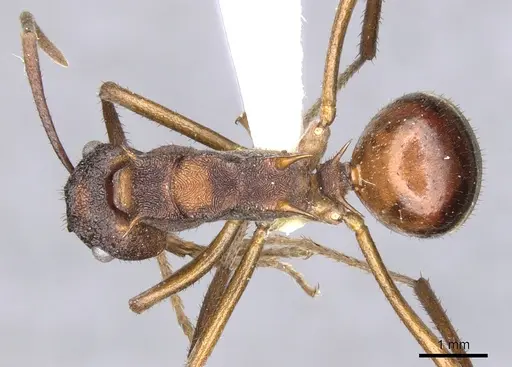
Literature
Loading...Loading products...