

Polyrhachis doudou
- Scientific Name
- Polyrhachis doudou
- Subgenus
- Myrma
- Tribe
- Camponotini
- Subfamily
- Formicinae
- Author
- Rigato, 2016
- Distribution
- Found in 1 countries
Polyrhachis doudou Overview
Polyrhachis doudou is an ant species of the genus Polyrhachis. It is primarily documented in 1 countries , including Gabon. Detailed taxonomic data and occurrence records can be further explored via authoritative databases such as AntWeb or the Global Biodiversity Information Facility (GBIF).
Polyrhachis doudou
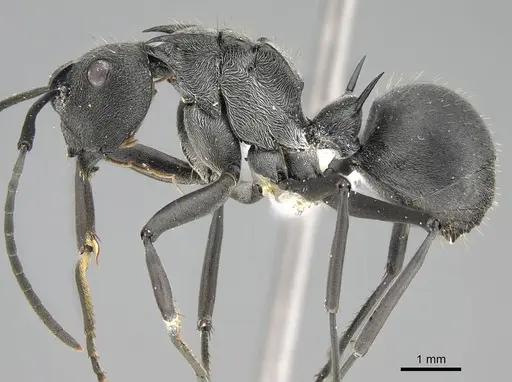
Polyrhachis doudou is a moderately large ant species belonging to the militaris species group, first described in 2016 from Gabon. Workers measure 2.14-2.29mm in head length with a distinctive somewhat rectangular head shape, long pronotal spines, and a petiole featuring a mid pair of long erect spines. The entire body is black with moderately abundant short greyish pubescence, and the appendages lack standing hairs, a key distinguishing feature from similar species like P. schistacea [1]. This species is known only from the coastal lowland rainforests of the Réserve des Monts Doudou in Gabon, where it was collected from the undergrowth of low canopy forest at elevations around 370-600 meters [1].
Quick Summary
- Difficulty: Unknown, no captive husbandry data available
- Origin & Habitat: Endemic to Gabon, specifically the Réserve des Monts Doudou in the Ogooué-Maritime Province. Found in coastal lowland rainforest undergrowth at 370-600m elevation [1].
- Colony Type: Unconfirmed, colony structure has not been documented in scientific literature
- Size & Growth:
- Queen: Unknown, queen caste has not been described
- Worker: 2.14-2.29mm head length, corresponding to approximately 6-8mm total length [1]
- Colony: Unknown, no colony size data available
- Growth: Unknown, no development data available
- Development: Unknown, no direct measurements exist. Based on typical Polyrhachis patterns in tropical settings, estimate 6-10 weeks at optimal temperature. (Development timeline is unconfirmed. Related Polyrhachis species typically require 6-10 weeks for complete development under warm conditions.)
- Antkeeping:
- Temperature: Inferred from tropical rainforest habitat: keep warm at 24-28°C. A gentle gradient allowing cooler areas around 22°C is recommended.
- Humidity: Inferred from coastal lowland rainforest: high humidity around 70-85%. Keep substrate consistently moist but not waterlogged.
- Diapause: Unlikely, as a tropical species from Gabon, they probably do not require a hibernation period. Maintain consistent temperatures year-round.
- Nesting: Inferred from collection method and habitat: they likely nest in rotting wood or under bark in humid forest environments. A naturalistic setup with moist substrate, or a Y-tong/plaster nest with good humidity retention would be appropriate.
- Behavior: Behavior is unstudied in captivity. Based on the militaris group and Polyrhachis genus typical behavior, they are likely moderately active foragers with moderate aggression when defending the colony. Escape prevention should be good, they are moderate-sized ants but not particularly known as escape artists. Sting capability is present in Polyrhachis but varies by species, treat with caution until behavior is better understood.
- Common Issues: no captive husbandry data exists, this is one of the least-studied ant species in the hobby, tropical humidity requirements may be difficult to maintain consistently, unknown colony structure means founding success rates are unpredictable, very limited availability, rarely collected or sold in antkeeping
Species Discovery and Taxonomy
Polyrhachis doudou was formally described in 2016 by Fabrizio Rigato, making it a relatively recently described species. It belongs to the militaris species group within the subgenus Myrma, which is characterized by their moderately large size, distinctive pronotal spines, and often metallic or contrasting coloration. The species name 'doudou' refers to the type locality, the Réserve des Monts Doudou in Gabon. The holotype and paratypes were collected by sweeping in the undergrowth of coastal lowland rainforest, suggesting this species is primarily active in the forest floor layer. The species can be distinguished from its close relative P. militaris by its slightly different head shape and pubescence pattern, and from P. schistacea by its hairless appendages and more rectangular head [1].
Natural Habitat and Distribution
This species is currently known only from Gabon, specifically the Monts Doudou protected area in the Ogooué-Maritime Province. The habitat consists of coastal lowland rainforest at elevations between 370 and 600 meters above sea level. The type specimens were collected from the undergrowth layer of low canopy forest, indicating this species prefers shaded, humid microhabitats typical of intact tropical rainforests. The limited distribution data suggests P. doudou may have a relatively restricted range, possibly endemic to the Monts Doudou region. This makes it a particularly interesting species for those interested in rare and localized African ants [1].
Morphology and Identification
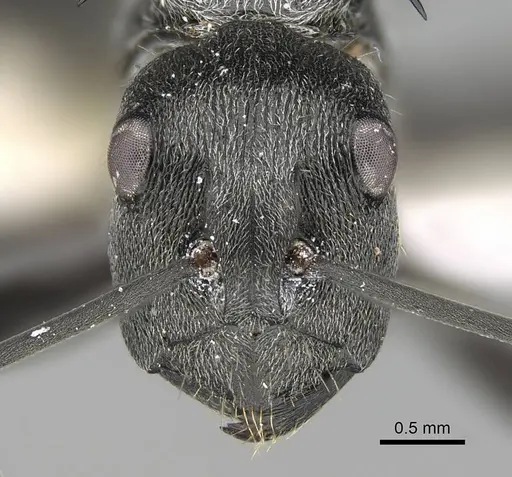
Workers of Polyrhachis doudou are moderately large ants with a head length of 2.14-2.29mm. The head is somewhat rectangular in full-face view with weakly convex sides and a slightly protruding occiput. One of the most distinctive features is the long, moderately anteriorly divergent pronotal spines. The petiole (the narrow waist segment) bears a characteristic mid pair of long, erect, well-separated spines and a lateral pair of small sharp teeth. The entire body is black throughout, including the mandibles, antennae, and tarsi. Short greyish pubescence covers the body, while the appendages lack standing hairs, this hairless condition on the legs and antennae helps distinguish it from similar species like P. schistacea which has hairy appendages [1].
Inferred Care Requirements
Since no captive husbandry information exists for this species, care recommendations must be inferred from its natural habitat and related Polyrhachis species. The coastal lowland rainforest origin suggests they need warm temperatures (24-28°C) and high humidity (70-85%). A naturalistic setup with moist substrate or a Y-tong/plaster nest would likely work well. Based on typical Polyrhachis genus behavior, they are likely omnivorous, accepting both sugar sources and protein foods like small insects. Founding is probably claustral, the queen seals herself in and raises the first workers alone on stored fat reserves. However, these are educated guesses based on genus patterns, not confirmed information specific to P. doudou.
Challenges for Ant Keepers
Polyrhachis doudou presents significant challenges for ant keepers. First, this species is extremely rare in the antkeeping hobby, it was only described in 2016 and has a very limited known distribution in the wild. Second, virtually no captive husbandry data exists, meaning keepers will be pioneers in developing care protocols. Third, the unknown colony structure means keepers may face unexpected challenges during founding. For these reasons, this species is best suited for experienced antkeepers who enjoy the challenge of working with poorly-documented species and who can maintain the warm, humid conditions tropical rainforest ants require. New keepers should consider more established species before attempting P. doudou.
Frequently Asked Questions
How do I keep Polyrhachis doudou ants?
No captive care information exists for this species. Based on its habitat in coastal lowland rainforest in Gabon, it likely needs warm temperatures (24-28°C) and high humidity (70-85%). Use a naturalistic setup or Y-tong nest with consistently moist substrate. This is an expert-level species due to the complete lack of husbandry data.
What do Polyrhachis doudou ants eat?
Diet is unconfirmed for this specific species. Based on typical Polyrhachis genus behavior, they are likely omnivorous, accepting sugar water or honey and small protein sources like insects. Start with standard ant foods and observe acceptance.
Where is Polyrhachis doudou found?
This species is known only from the Réserve des Monts Doudou in Gabon, West Africa. It was collected from the undergrowth of coastal lowland rainforest at elevations of 370-600 meters [1].
How big do Polyrhachis doudou workers get?
Workers measure approximately 6-8mm in total length, with head lengths of 2.14-2.29mm [1].
Is Polyrhachis doudou a good beginner species?
No. This species is not recommended for beginners. It was only described in 2016,has an extremely limited distribution, and no captive husbandry information exists. The complete lack of established care protocols makes it an expert-level project.
How long does it take for Polyrhachis doudou to develop from egg to worker?
Development time is unconfirmed for this species. Based on typical Polyrhachis patterns in tropical conditions, estimate 6-10 weeks from egg to first worker at optimal temperature.
Do Polyrhachis doudou queens need to hibernate?
Unlikely. As a tropical species from Gabon, they probably do not require a hibernation period. Maintain consistent warm temperatures year-round.
What makes Polyrhachis doudou different from other Polyrhachis?
P. doudou belongs to the militaris species group and can be distinguished by its somewhat rectangular head, hairless appendages, and the characteristic long spines on both the pronotum and petiole. It was only described in 2016,making it one of the more recently described Polyrhachis species in Africa [1].
Can I keep multiple Polyrhachis doudou queens together?
Colony structure is unconfirmed for this species. Without data on whether they are monogyne (single queen) or polygyne (multiple queens), combining unrelated queens is not recommended. Wait for documented colony structure information.
References

This caresheet is licensed under CC BY-SA 4.0 .
CASENT0752825
View on AntWeb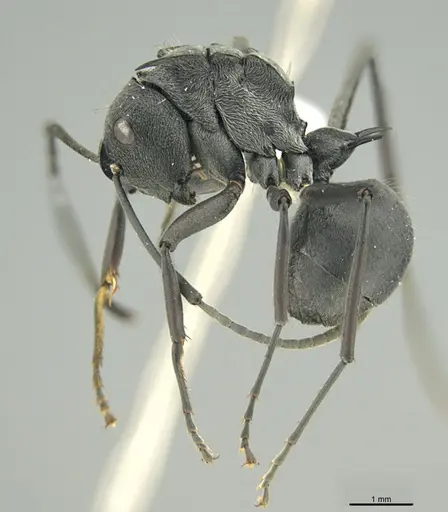
CASENT0919958
View on AntWeb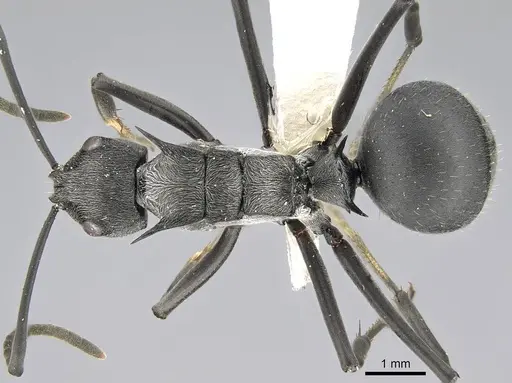
Literature
Loading...Loading products...