

Polyrhachis cryptoceroides
- Scientific Name
- Polyrhachis cryptoceroides
- Subgenus
- Myrmhopla
- Tribe
- Camponotini
- Subfamily
- Formicinae
- Author
- Emery, 1887
- Distribution
- Found in 2 countries
Polyrhachis cryptoceroides Overview
Polyrhachis cryptoceroides is an ant species of the genus Polyrhachis. It is primarily documented in 2 countries , including Indonesia, Malaysia. Detailed taxonomic data and occurrence records can be further explored via authoritative databases such as AntWeb or the Global Biodiversity Information Facility (GBIF).
Polyrhachis cryptoceroides
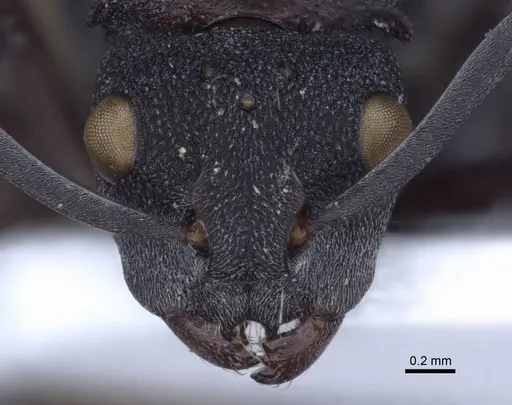
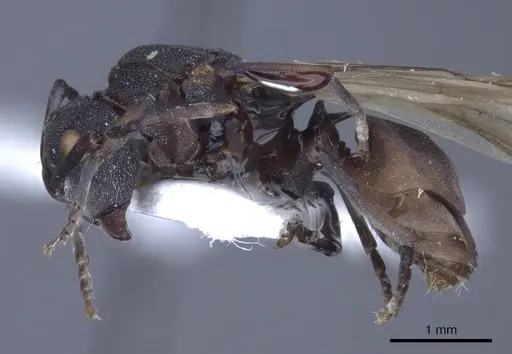
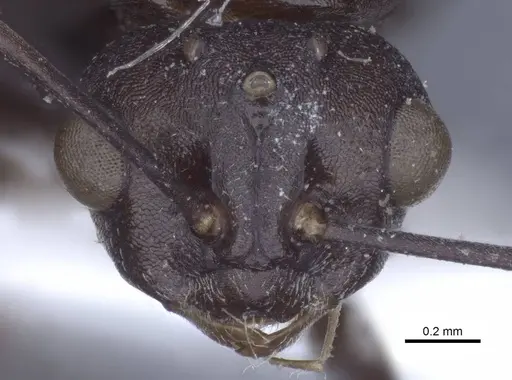
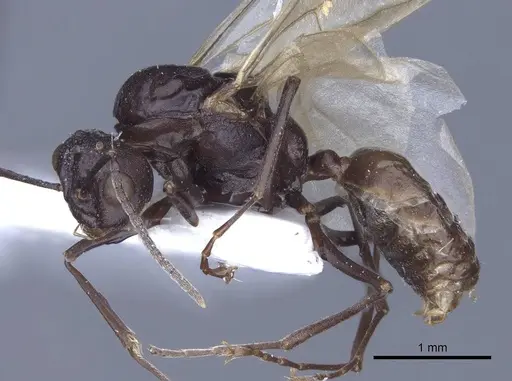
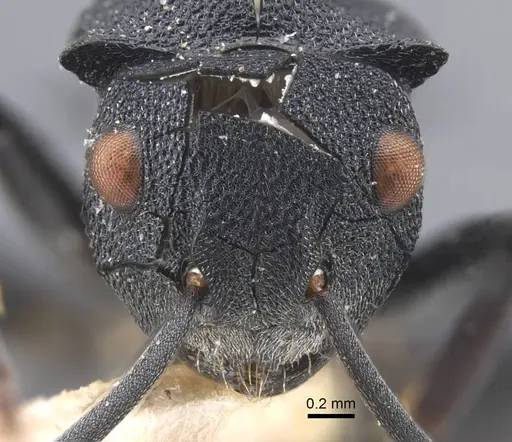
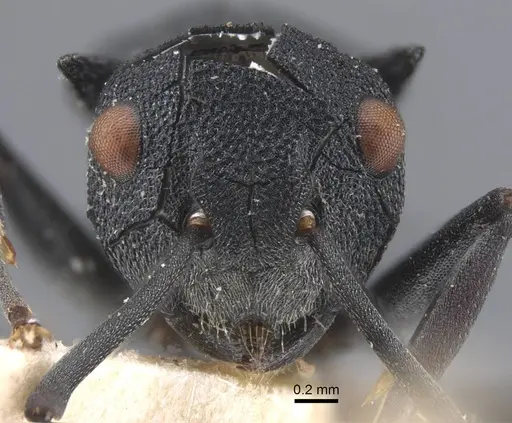
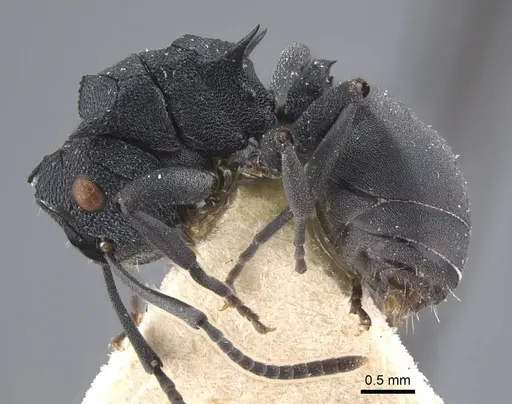
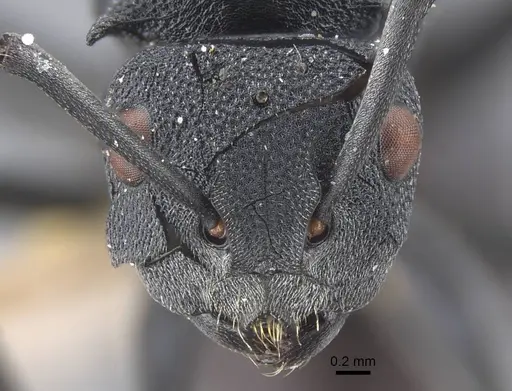
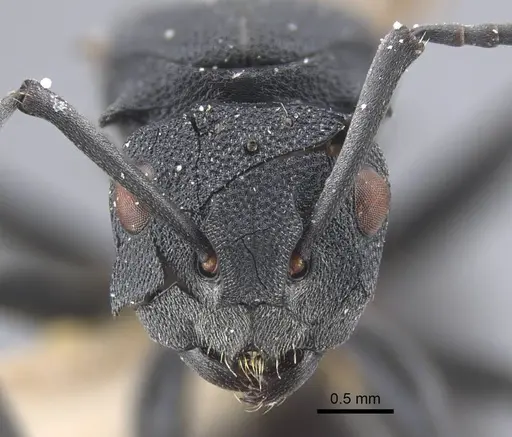
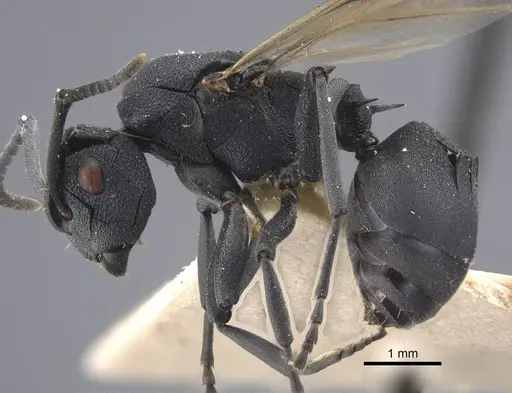
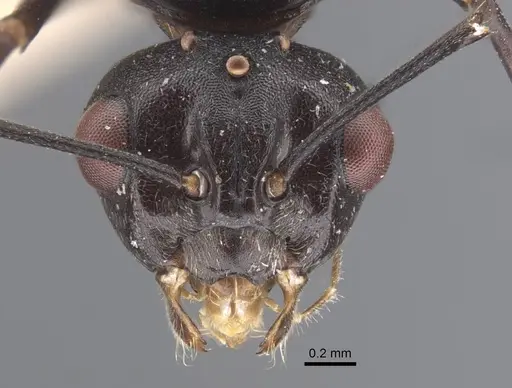
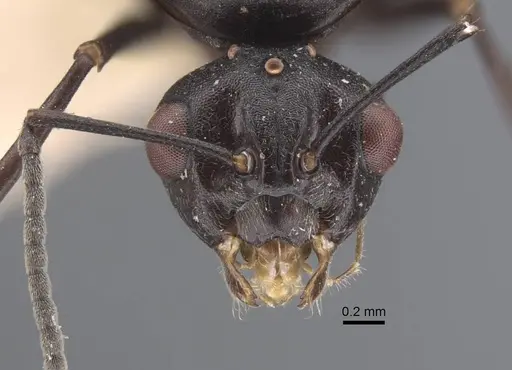
Polyrhachis cryptoceroides is a medium-sized arboreal ant native to Southeast Asia, found across Thailand, Malaysia, Indonesia, Brunei, the Philippines, Borneo, Laos, Singapore, and Sulawesi. Workers measure 4.84-5.59mm and are distinctively black with black or dark reddish-brown legs. Their body shape superficially resembles Cataulacus ants, a genus known for their cryptic, beetle-like appearance. These ants are often found foraging together with Cataulacus on the trunks of rainforest trees, where they build their nests under the bark of living trees using silk and vegetation debris [1].
This species is a member of the Polyrhachis cryptoceroides species-group and is known for being widespread but variable, forming numerous local populations that show slight morphological differences. They are arboreal and lignicolous (wood-nesting) ants that construct silk-reinforced nests, which is a notable trait of the Myrmhopla subgenus. Unlike many ants, they are monogynous (single-queen colonies) and practice independent colony founding, where a queen establishes a new nest on her own after mating [2][3].
Quick Summary
- Difficulty: Medium
- Origin & Habitat: Southeast Asian rainforests, found across the Indomalaya region including Thailand, Malaysia, Indonesia (Sulawesi, Java, Borneo), Brunei, Philippines, Laos, Singapore, and Sulawesi. They are arboreal ants that nest under bark on living rainforest trees and forage on tree trunks [1][4].
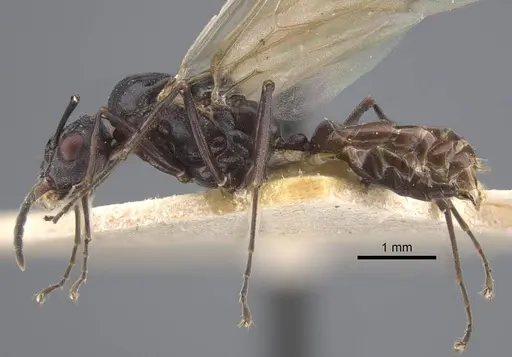
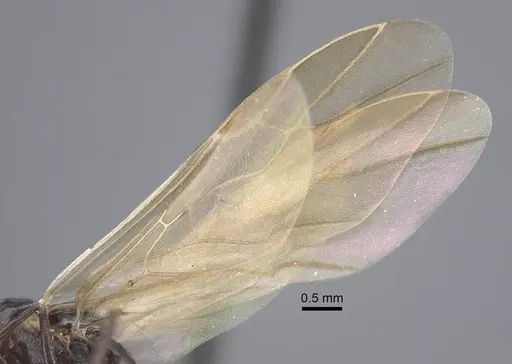
- Colony Type: Monogyne, single-queen colonies. Queens are alate (winged) and the species practices independent colony founding (haplometrosis). Ergatoid (wingless replacement) queens are not documented for this species [2][3].
- Colony: Monogyne
- Founding: Claustral
- Size & Growth:
- Queen: Approximately 6mm (from syntype measurements TL c. 6.00) [1]
- Worker: 4.84-5.59mm [1]
- Colony: Unknown, no colony size data available in research
- Growth: Moderate, estimated based on typical Polyrhachis patterns
- Development: 8-12 weeks (estimated based on typical Polyrhachis development) (Development time is estimated, no specific studies on this species. Polyrhachis species typically take 2-3 months from egg to first worker at tropical temperatures.)
- Antkeeping:
- Temperature: Keep at 24-28°C. As a tropical rainforest species, they need warm, stable temperatures. A heating cable on one side of the nest creates a gentle gradient. Avoid temperatures below 22°C as this is a true tropical species [1].
- Humidity: High humidity required, aim for 70-85%. These arboreal rainforest ants need moist conditions. Keep the nest substrate consistently damp but not waterlogged. Misting the outworld regularly helps maintain humidity. Ensure good ventilation to prevent mold while maintaining moisture.
- Diapause: No, this is a tropical species that does not require hibernation. They remain active year-round in captivity when kept warm.
- Nesting: Arboreal/lignicolous nesting. In captivity, they do well in Y-tong (AAC) nests, plaster nests, or naturalistic setups with bark pieces or cork. They prefer tight, enclosed spaces that mimic their natural nests under tree bark. Provide materials they can incorporate silk into, small pieces of leaves or vegetation work well.
- Behavior: These ants are relatively docile and not aggressive. Workers forage on tree trunks in nature, so they are good climbers. They are not known for stinging and pose no danger to keepers. Their small size (under 6mm) means escape prevention should be taken seriously, use fine mesh and tight-fitting lids. They are active foragers and will explore their outworld regularly. As arboreal ants, they prefer to travel upward and may utilize vertical space effectively.
- Common Issues: tropical temperature requirements mean they cannot tolerate cool conditions, room temperature may be too cold in winter, escape prevention is important due to their small size, they can squeeze through small gaps, high humidity needs can lead to mold problems if ventilation is inadequate, slow colony growth may frustrate beginners expecting fast development, arboreal nesting means they may not accept typical ground-based test tube setups
Nest Preferences and Housing
Polyrhachis cryptoceroides is an arboreal, lignicolous species that naturally nests under the bark of living rainforest trees. In captivity, they do best in setups that mimic this arboreal environment. Y-tong (AAC) nests work well because they provide dark, enclosed chambers. Plaster nests are also suitable as they can maintain humidity. A naturalistic setup with cork bark or pieces of bark arranged vertically can simulate their natural nesting sites. The key is providing tight, enclosed spaces that the ants can seal with silk if they choose. Avoid open test tube setups, these arboreal ants prefer to be enclosed on all sides. The nest should have small passages and chambers scaled to their medium size (5-6mm workers). [1]
Feeding and Diet
In nature, these ants forage on tree trunks and likely feed on honeydew from aphids and scale insects, plus small insects they find while foraging. In captivity, offer a varied diet: sugar water or honey as an energy source, and protein sources like small crickets, mealworms, fruit flies, or other small insects. Feed protein 2-3 times per week and keep a sugar source available constantly. Remove uneaten prey after 24-48 hours to prevent mold. Polyrhachis ants are generally not picky eaters and should accept most standard ant foods. Fresh fruit can also be offered occasionally. [1]
Temperature and Seasonal Care
As a tropical species from Southeast Asian rainforests, P. cryptoceroides requires warm temperatures year-round. Keep the nest area at 24-28°C (75-82°F). A heating cable placed on one side of the nest creates a temperature gradient that allows the ants to regulate their own temperature by moving between warmer and cooler areas. This species does NOT require hibernation or diapause, keeping them cool can slow their metabolism and potentially cause health issues. Room temperature may be acceptable in warm climates, but in cooler environments, supplemental heating is necessary. Avoid temperature drops below 22°C as this species is adapted to constant tropical warmth. [1]
Humidity and Water
These rainforest arboreal ants need high humidity, aim for 70-85% relative humidity in the nest area. Keep the nest substrate consistently moist but never waterlogged. For Y-tong or plaster nests, maintain a water reservoir that provides gentle moisture without flooding. Misting the outworld regularly helps maintain humidity levels. Good ventilation is essential to prevent mold while still retaining moisture. The substrate should feel damp to the touch with some condensation visible occasionally. If you see excessive condensation pooling, increase ventilation. If the nest appears dry and the ants are clustering together, add more moisture. [1]
Behavior and Colony Dynamics
Polyrhachis cryptoceroides is a docile, non-aggressive species that makes a rewarding pet ant. Workers are active foragers that travel along tree trunks in nature, so they are good climbers and will explore vertical space in captivity. They are monogynous, a single queen establishes and leads the colony. Colonies grow through independent founding, where a mated queen seals herself in a chamber and raises her first workers alone using stored fat reserves. This is called haplometrosis. The species is not known for stinging and poses no danger to keepers. Workers may live for several months, and queens can live for many years in captivity with proper care. [2][3][1]
Escape Prevention
While not extreme escape artists, these ants are small (under 6mm) and can squeeze through small gaps. Use tight-fitting lids on all containers. If using an outworld, apply Fluon or another barrier to the upper edges. Fine mesh (at least 0.5mm) should be used for any ventilation. Check for gaps around water tubes and any connections between nest and outworld. Regularly inspect the setup, especially after feeding when ants may be more active and exploratory.
Frequently Asked Questions
Can I keep Polyrhachis cryptoceroides in a test tube?
Test tubes are not ideal for this species. As arboreal ants that naturally nest under bark, they prefer enclosed nests like Y-tong, plaster, or naturalistic setups with bark pieces. A test tube can work for founding queens but should be upgraded to a more appropriate nest once the colony has workers.
How long does it take for first workers to appear?
Expect first workers (nanitics) in about 8-12 weeks after the queen lays her first eggs, assuming optimal temperatures of 24-28°C. This is an estimate based on typical Polyrhachis development, no specific studies exist for this species. Growth is slower than many common ant species.
What temperature do they need?
Keep them at 24-28°C (75-82°F). This is a tropical species that requires warm conditions year-round. A heating cable on one side of the nest creates a gradient. Do not let temperatures drop below 22°C.
Are Polyrhachis cryptoceroides good for beginners?
This species is rated as Medium difficulty. While not aggressive and relatively hardy when conditions are right, their specific humidity and temperature requirements make them better suited for keepers with some experience. Their slower growth and arboreal nesting preferences require more attention than beginner species like Lasius or Messor.
Do they need hibernation?
No, this is a tropical species that does not require hibernation or diapause. Keep them warm year-round. Cooling them down can stress the colony and slow or stop development.
Can I keep multiple queens together?
No. This species is monogynous, colonies have a single queen. Multiple unrelated queens will fight. Only keep one queen per colony. If you find a queen and want to start a colony, house her alone in a founding setup.
How big do colonies get?
Colony size data is not available in scientific literature. Based on related Polyrhachis species, expect moderate-sized colonies of several hundred workers over several years. They are not among the largest ant species.
What do they eat?
Feed them sugar water or honey as an energy source, plus protein like small crickets, mealworms, or fruit flies. Offer protein 2-3 times per week and keep sugar available constantly. Remove uneaten prey after a day or two.
When should I move them to a formicarium?
Move from a founding setup to a proper nest once the colony has 15-30 workers and the founding tube becomes cramped. For arboreal species like this, a Y-tong or plaster nest works well. Make the transition gradual by connecting the old setup to the new nest.
References

This caresheet is licensed under CC BY-SA 4.0 .
CASENT0905591
View on AntWeb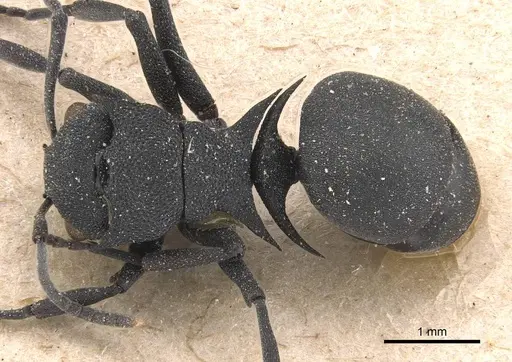
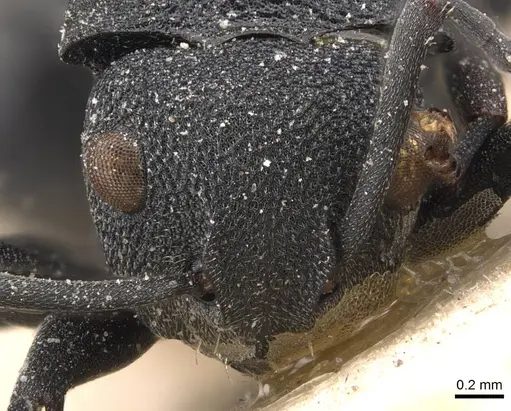
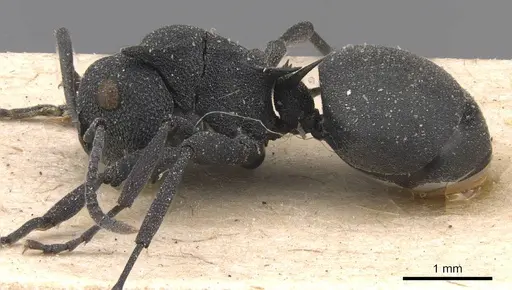
CASENT0906756
View on AntWeb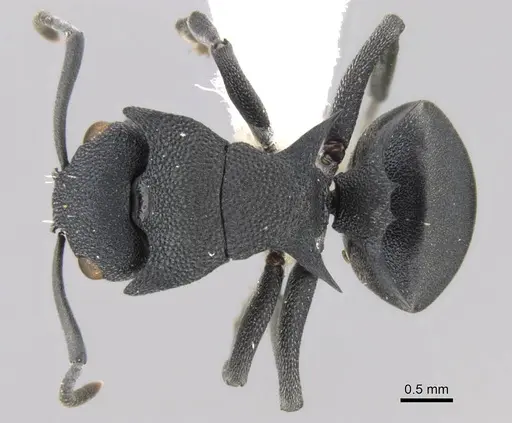
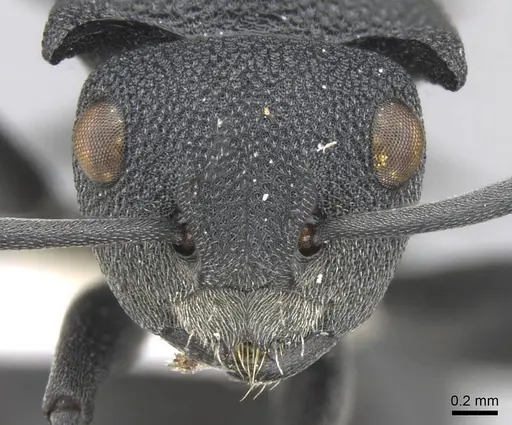
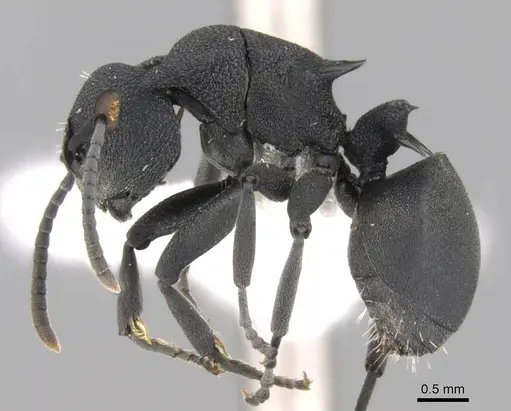
CASENT0912091
View on AntWeb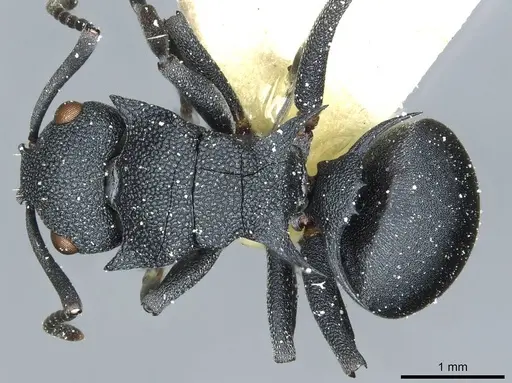
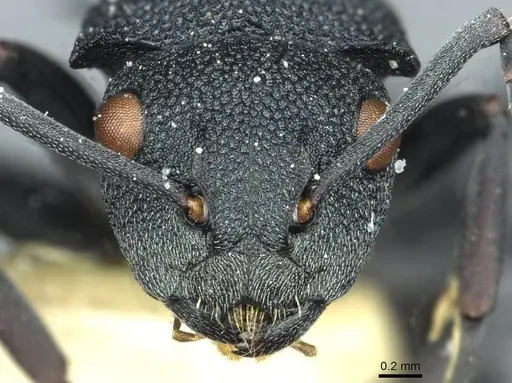
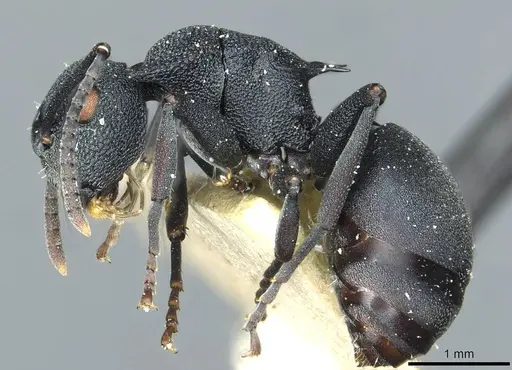
CASENT0916772
View on AntWeb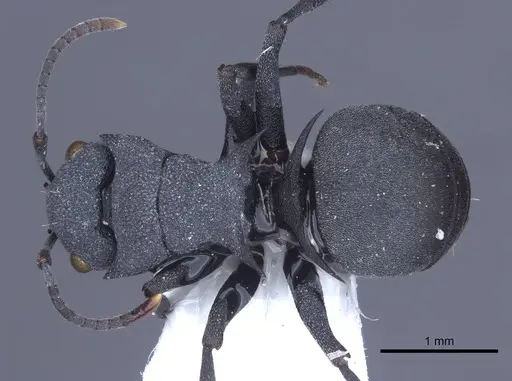
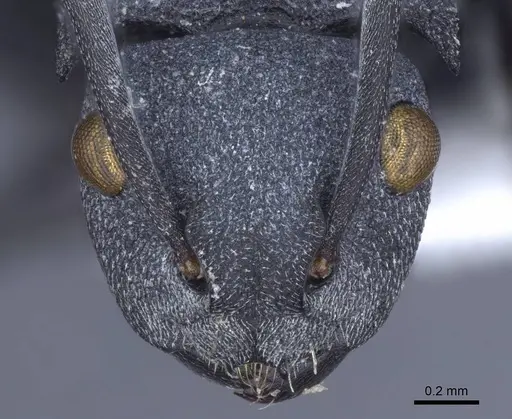
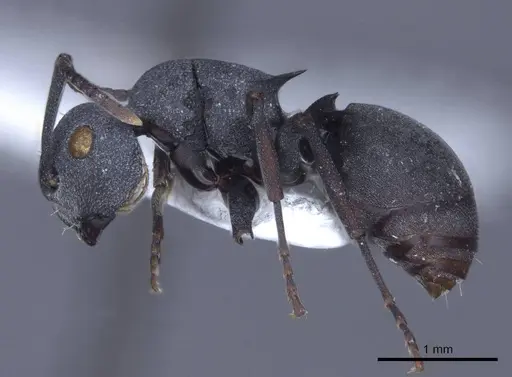
CASENT0916773
View on AntWeb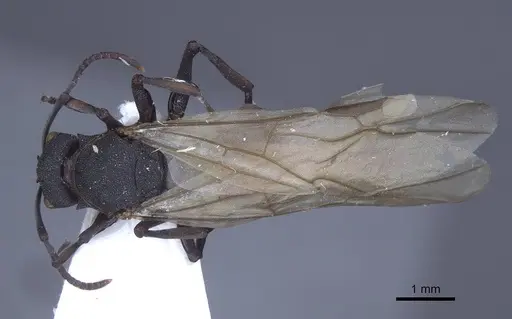
CASENT0916774
View on AntWeb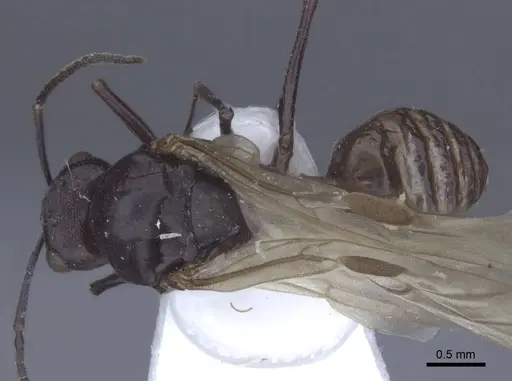
CASENT0917280
View on AntWeb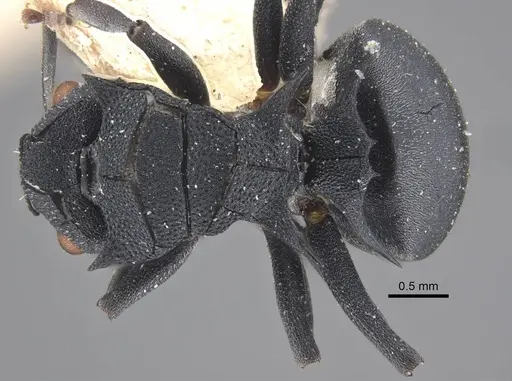
CASENT0917281
View on AntWeb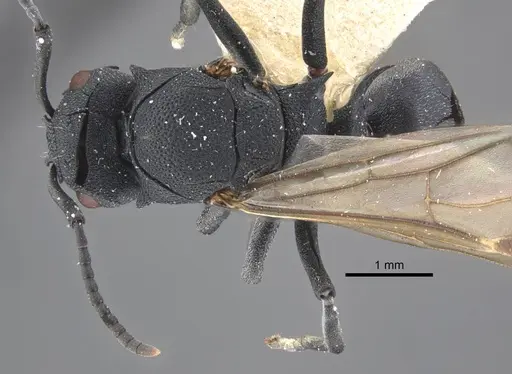
CASENT0917282
View on AntWeb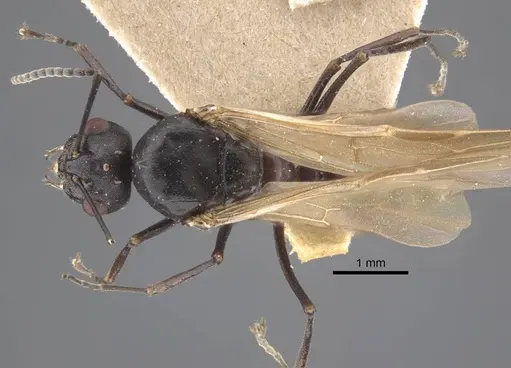
Literature
Loading...Loading products...