

Polyrhachis cleophanes
- Scientific Name
- Polyrhachis cleophanes
- Subgenus
- Myrmhopla
- Tribe
- Camponotini
- Subfamily
- Formicinae
- Author
- Smith, 1861
- Distribution
- Found in 1 countries
Polyrhachis cleophanes Overview
Polyrhachis cleophanes is an ant species of the genus Polyrhachis. It is primarily documented in 1 countries , including Indonesia. Detailed taxonomic data and occurrence records can be further explored via authoritative databases such as AntWeb or the Global Biodiversity Information Facility (GBIF).
Polyrhachis cleophanes
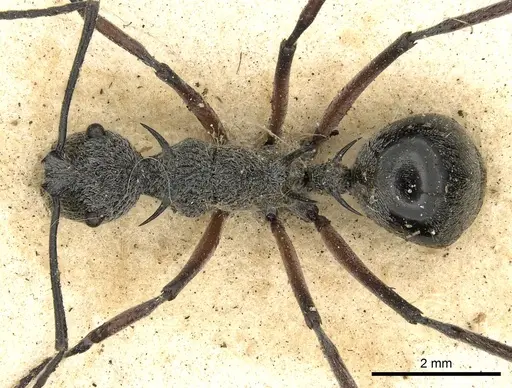
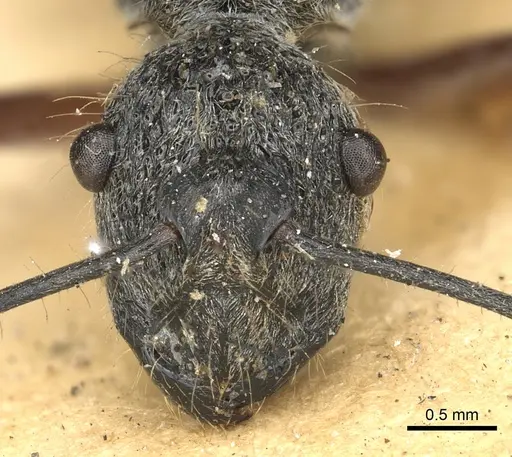
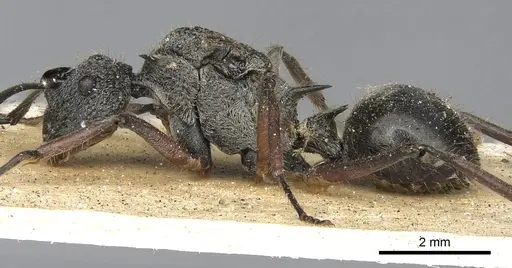
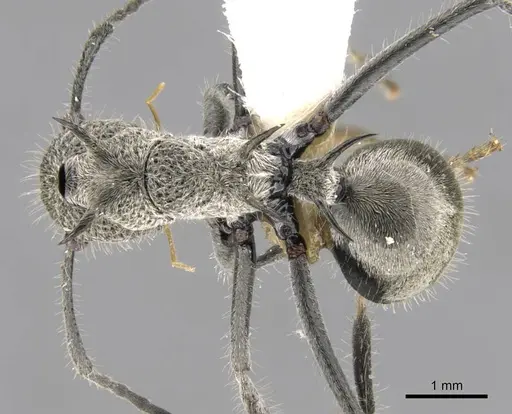
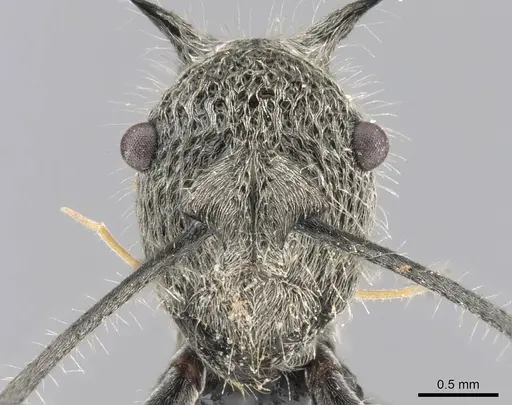
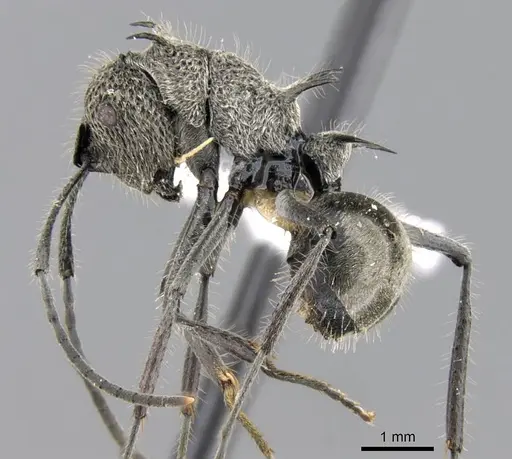
Polyrhachis cleophanes is a medium-sized ant species native to the island of Sulawesi in Indonesia. Workers are characterized by their distinctive hooked spines on the thorax, a trait common to the Polyrhachis genus. They belong to the Myrmhopla subgenus and were originally described by Frederick Smith in 1861. The species has been recorded at elevations between 1000-1260 meters, suggesting they prefer cooler highland conditions. This species remains poorly studied in the scientific literature, with most available information limited to taxonomic descriptions and distribution records from historical collections.
Quick Summary
- Difficulty: Medium
- Origin & Habitat: Sulawesi, Indonesia, found in highland areas at 1000-1260m elevation [1]. The type locality is Tondano, a highland region in North Sulawesi [2].
- Colony Type: Unconfirmed, colony structure has not been documented for this species. Most Polyrhachis species are monogyne (single queen), but this has not been verified for P. cleophanes.
- Founding: Claustral
- Size & Growth:
- Queen: Approximately 8-10mm, estimated from related Polyrhachis species [1]
- Worker: Approximately 6-8mm, based on type description and related species [1]
- Colony: Unknown for this species, related Polyrhachis species typically reach several hundred workers
- Growth: Moderate, estimated based on genus patterns
- Development: 8-12 weeks, estimated based on typical Polyrhachis development at tropical temperatures (Development time is estimated from related species, specific data for P. cleophanes is unavailable)
- Antkeeping:
- Temperature: Keep at 24-28°C, they come from a tropical island but higher elevations suggest they tolerate slightly cooler conditions than lowland species [1]
- Humidity: Moderate humidity around 60-80%, use a moist nest substrate but ensure good ventilation to prevent mold
- Diapause: Unlikely, Sulawesi has no true winter, though colonies may slow slightly during cooler periods
- Nesting: Provide a naturalistic setup with multiple chambers or a Y-tong/plaster nest. Polyrhachis often prefer semi-arboreal nesting sites, so include some vertical space and climbing structures [1]
- Behavior: Polyrhachis ants are generally calm and not particularly aggressive. Workers are active foragers but can be shy. They may show defensive behavior if their nest is disturbed. Escape prevention should be moderate, they are not tiny ants but can climb well. They construct nests in sheltered locations and may accept various nest types in captivity.
- Common Issues: limited availability, this species is rarely available in the antkeeping hobby, lack of species-specific care information means keepers must rely on genus-level guidance, highland origin suggests specific temperature requirements that may differ from lowland relatives, slow colony growth can frustrate beginners who expect rapid development, wild-caught colonies may carry parasites or diseases not yet characterized
Natural History and Distribution
Polyrhachis cleophanes is endemic to Sulawesi, one of the larger islands in Indonesia's archipelago. The species was first described in 1861 by Frederick Smith based on specimens collected by the famous naturalist Alfred Russel Wallace. The type locality is Tondano, a highland area in North Sulawesi, which explains the elevation records of 1000-1260 meters where specimens have been found. This highland origin is notable because it suggests the species may prefer cooler conditions than many other tropical ants. The species was originally described under two different names (P. cleophanes and P. vibidia), with the former being established as the senior synonym. Beyond distribution records, very little biological research has been conducted on this specific species. [2][1]
Identification and Morphology
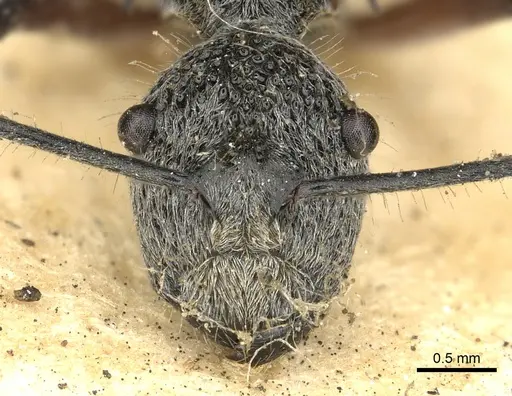
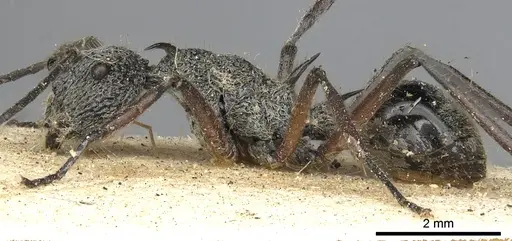
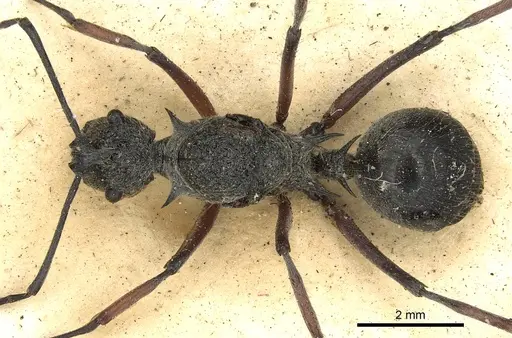
Polyrhachis cleophanes is a member of the Polyrhachis cleophanes species-group, which distinguishes it from other Polyrhachis ants. Workers display the characteristic hooked spines on the promesonotum (the front part of the thorax) that give the genus its common name of 'spiny ants' or 'spider ants.' The spines serve as a defensive adaptation, making the ants appear larger and more threatening to predators. Workers measure approximately 6-8mm in length, making them medium-sized ants. The queen (gyne) is larger at approximately 8-10mm and was originally described as a separate species (Polyrhachis cleophanes) before being recognized as the same species. Both castes have the typical Formicinae feature of a single waist segment (petiole) between the thorax and abdomen. [1]
Housing and Nest Preferences
In captivity, Polyrhachis cleophanes should be provided with a nest that offers moderate humidity and protection from direct light. A Y-tong (acrylic) nest or plaster nest works well for this genus, providing chambers that can be kept slightly moist. Given their highland origin, avoid overheating the nest, stay within the 24-28°C range rather than pushing toward higher temperatures. Include some vertical space or climbing structures in the outworld, as Polyrhachis ants are semi-arboreal and enjoy climbing. The outworld should have moderate humidity (60-80%) and should include a water source. Escape prevention is important but not critical for this species, they are not particularly small or agile escape artists, though standard barriers like Fluon on container rims are still recommended.
Feeding and Diet
Like most Polyrhachis species, P. cleophanes is likely an omnivore that accepts both sugar sources and protein. Offer sugar water, honey, or diluted syrup as a constant energy source. For protein, provide small insects such as fruit flies, small crickets, or mealworms. Some Polyrhachis species also consume nectar from flowers, so occasional offering of sugar water or honeydew substitutes is appropriate. Feed protein prey 2-3 times per week, adjusting based on colony size and consumption. Remove uneaten prey after 24-48 hours to prevent mold. The specific dietary preferences of P. cleophanes have not been studied, so observe your colony's preferences and adjust accordingly.
Temperature and Seasonal Care
Based on their highland Sulawesi origin, Polyrhachis cleophanes likely prefers temperatures in the moderate tropical range of 24-28°C. Avoid temperatures above 30°C, as this species does not come from extremely hot lowland environments. Room temperature within this range is typically suitable. Unlike temperate species, they do not require a winter diapause period. However, if your room temperature drops significantly at night or during winter, the colony may slow its activity temporarily. Do not attempt to cool the colony for hibernation, they are adapted to year-round tropical conditions. Monitor colony behavior: if workers seem sluggish, slightly increasing temperature may help. [1]
Colony Development
The colony development timeline for Polyrhachis cleophanes has not been specifically documented. Based on typical Polyrhachis patterns, expect the following: claustral founding means the queen seals herself in a small chamber and raises the first brood alone without foraging. The first workers (nanitics) will emerge in approximately 8-12 weeks under optimal temperature conditions (around 26°C). These initial workers are typically smaller than mature workers. The colony will grow gradually over several months to a few years, eventually reaching several hundred workers in a mature colony. Growth rate is moderate, faster than some slow-growing Camponotus species but not as rapid as some tropical myrmicines. Patience is essential, as colonies may take 1-2 years to reach 50+ workers.
Frequently Asked Questions
How long does it take for Polyrhachis cleophanes to produce first workers?
Based on typical Polyrhachis development, expect 8-12 weeks from egg to first worker at optimal temperatures (around 26°C). This is an estimate since the specific development time for P. cleophanes has not been documented.
What temperature do Polyrhachis cleophanes ants need?
Keep them at 24-28°C. Their highland origin in Sulawesi suggests they prefer slightly cooler conditions than many tropical ants. Avoid temperatures above 30°C.
Do Polyrhachis cleophanes ants need hibernation?
No, they do not require hibernation. Sulawesi has no winter, so these ants are adapted to year-round activity. Simply maintain stable tropical temperatures.
What do Polyrhachis cleophanes eat?
They are omnivores. Offer sugar water or honey as a constant energy source, and protein prey (small insects like fruit flies or mealworms) 2-3 times per week.
Are Polyrhachis cleophanes good for beginners?
This species is rated as medium difficulty. While not overly demanding, the lack of species-specific care information means keepers should have some experience with tropical ant species. They are not as commonly kept as Lasius or Camponotus, so finding guidance may be harder.
How big do Polyrhachis cleophanes colonies get?
Based on related species, colonies likely reach several hundred workers at maturity. The exact maximum is unknown as this species has not been studied in detail.
Can I keep multiple Polyrhachis cleophanes queens together?
The colony structure of this species is unconfirmed. Most Polyrhachis species are single-queen (monogyne), so it is not recommended to house multiple unrelated queens together without evidence of polygyny.
What type of nest is best for Polyrhachis cleophanes?
A Y-tong (acrylic) nest or plaster nest with moderate humidity works well. Include some vertical climbing space in the outworld since this genus is semi-arboreal.
Where can I find Polyrhachis cleophanes for sale?
This species is rarely available in the antkeeping hobby. It is not commonly traded compared to more popular species. You may need to seek specialty breeders or import from regions where it is permitted.
References

This caresheet is licensed under CC BY-SA 4.0 .
Literature
Loading...Loading products...