

Polyrhachis callima
- Scientific Name
- Polyrhachis callima
- Subgenus
- Hagiomyrma
- Tribe
- Camponotini
- Subfamily
- Formicinae
- Author
- Kohout, 2013
- Distribution
- Found in 1 countries
Polyrhachis callima Overview
Polyrhachis callima is an ant species of the genus Polyrhachis. It is primarily documented in 1 countries , including Australia. Detailed taxonomic data and occurrence records can be further explored via authoritative databases such as AntWeb or the Global Biodiversity Information Facility (GBIF).
Polyrhachis callima
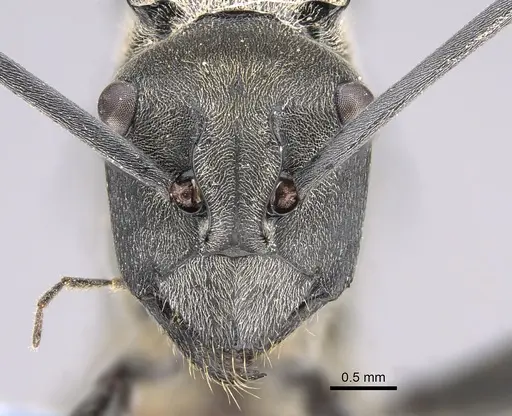
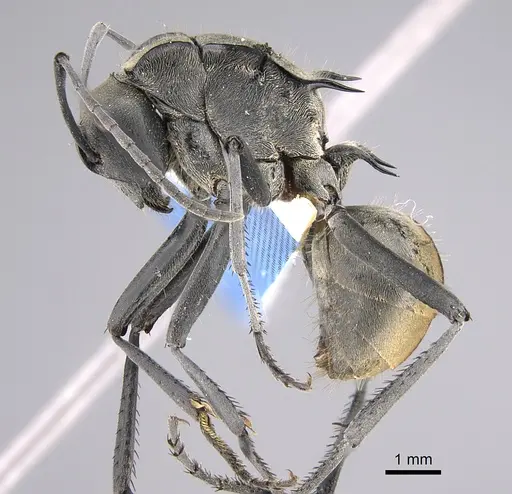
Polyrhachis callima is a large, striking ant species native to Australia, specifically Queensland. Workers reach 10.89-12.20 mm in length, making them one of the larger Polyrhachis species kept in captivity [1]. They are entirely black except for very dark reddish-brown mandibles, and are covered in abundant golden and silvery hairs that give them a distinctive fuzzy appearance, the long hairs on their back actually exceed the diameter of their eyes, which helps distinguish them from the similar P. conciliata [2]. The name 'callima' comes from the Greek word for beautiful, fitting their elegant appearance.
These ants belong to the Hagiomyrma subgenus and nest in soil, typically under pieces of wood, stones, or tufts of grass. The holotype colony contained 129 individuals including a dealate queen and a male, suggesting moderate colony sizes in the wild [2]. As ground-nesting ants, they prefer stable, humid conditions and are relatively calm in temperament compared to some other Polyrhachis species.
Quick Summary
- Difficulty: Medium
- Origin & Habitat: Australia (Queensland), specifically recorded from Expedition Range and Blackdown Tableland. They are ground-nesting ants that excavate nests in soil beneath wood, stones, or grass tufts [1][2].
- Colony Type: Likely monogyne (single queen colonies). The single dealate queen in the excavated holotype colony suggests single-queen colony structure, which is typical for most Polyrhachis species.
- Colony: Monogyne
- Founding: Claustral
- Size & Growth:
- Queen: 12.25-12.60 mm [2]
- Worker: 10.89-12.20 mm [1]
- Colony: At least 129 workers in wild colonies (holotype colony) [2]
- Growth: Moderate, based on typical Polyrhachis development patterns
- Development: Estimated 8-12 weeks at optimal temperature based on genus patterns (Direct development data unavailable, estimate based on related Polyrhachis species. Larger ants typically have longer development times.)
- Antkeeping:
- Temperature: Keep at 24-28°C. As an Australian species, they prefer warm conditions. A heating cable on one side of the nest creates a suitable gradient.
- Humidity: Maintain moderate to high humidity. Keep the nest substrate consistently moist but not waterlogged, these ground-nesting ants need damp soil conditions. Provide a water tube for drinking.
- Diapause: Not required or minimal. Australian species from Queensland experience mild winters and do not require a true hibernation. A brief cool period (15-18°C for 4-6 weeks) during winter months may be beneficial but is not essential.
- Nesting: Y-tong (AAC) nests or plaster nests work well. Because they are ground-nesting, they do well in naturalistic setups with soil substrate. Provide chambers scaled to their large size, avoid cramped spaces.
- Behavior: Generally calm and non-aggressive compared to many Polyrhachis species. Workers are active foragers but not particularly defensive. They are not known to be escape artists despite their size, standard escape prevention measures are sufficient. They may form moderate-sized colonies over time.
- Common Issues: colonies may stall if temperatures drop below 22°C for extended periods, overwatering can lead to mold problems in the nest, wild-caught colonies may have parasites that affect survival in captivity, larger colonies need more space, cramped conditions can lead to stress, they may be harder to find in the antkeeping trade as they are not commonly kept
Housing and Nest Setup
Polyrhachis callima does well in Y-tong (acrylic) nests or plaster formicariums. Because they are ground-nesting ants from Queensland, they prefer nests with some depth and soil-like conditions. A naturalistic setup with a soil chamber works particularly well, this mimics their natural nesting preferences under stones or wood [2]. Ensure the nest has chambers large enough for their 12mm workers to move comfortably. A water tube attached to the nest helps maintain humidity and provides drinking water. Because they are a larger species, avoid overly cramped acrylic nests designed for tiny ants, they need proper chamber dimensions.
Feeding and Diet
Like most Polyrhachis species, these ants are omnivorous. Offer a varied diet including sugar sources (honey water, sugar water) and protein (dead insects, mealworms, small crickets). They are not particularly aggressive hunters but will readily accept protein prey. Feed protein 2-3 times per week and keep sugar water available constantly. Remove uneaten food after 24-48 hours to prevent mold. Their large size means they can handle larger prey items than tiny ant species.
Temperature and Heating
As an Australian species from Queensland, Polyrhachis callima prefers warm conditions. Keep the nest area at 24-28°C for optimal activity and brood development. A small heating cable placed on one side of the nest creates a temperature gradient, allowing ants to regulate their own temperature by moving between warmer and cooler areas. Room temperature (22-24°C) is acceptable but may result in slightly slower activity. Avoid temperatures below 20°C for extended periods as this can stall colony development.
Humidity and Water
These ground-nesting ants need moderate to high humidity. Keep the nest substrate consistently moist, the soil should feel damp but not soggy. A water tube connected to the nest provides both humidity and drinking water. Mist the outworld occasionally but avoid letting water pool in the nest. Good ventilation helps prevent mold while maintaining humidity. If using a Y-tong nest, the sponge insert should be moist but not dripping. [2]
Colony Development
The holotype colony contained 129 individuals including a queen and male, suggesting wild colonies can reach moderate sizes [2]. Queens are large at 12.25-12.60mm, similar in size to workers [2]. Development from egg to worker likely takes 8-12 weeks based on typical Polyrhachis patterns. Larger ant species typically develop more slowly than smaller ones. Colonies should be given space to grow as they expand, a colony of 50+ workers will need more room than a small test tube setup can provide.
Behavior and Temperament
Polyrhachis callima is generally calm and less aggressive than many other Polyrhachis species. Workers are active foragers but typically won't attack aggressively when the nest is disturbed. They are not known for painful stings, while they have a stinger, it is rarely used and the pain is minimal for humans. They are not escape artists despite their size, so standard barrier methods work well. They do well in group housing and can be observed foraging in the outworld during daylight hours.
Frequently Asked Questions
How long does it take for Polyrhachis callima to produce first workers?
Based on typical Polyrhachis development, expect first workers (nanitics) in approximately 8-12 weeks after the queen lays her first eggs. This timeline depends on temperature, warmer conditions (26-28°C) speed development while cooler temperatures (below 22°C) can significantly delay it.
What do Polyrhachis callima ants eat?
They are omnivorous. Offer sugar water or honey water constantly, and protein (dead insects, mealworms, small crickets) 2-3 times per week. Remove uneaten food after 24 hours to prevent mold.
What temperature do Polyrhachis callima need?
Keep them at 24-28°C. A heating cable on one side of the nest creates a gradient. They can tolerate room temperature (22-24°C) but may be less active.
Are Polyrhachis callima good for beginners?
They are rated as medium difficulty. They require warm conditions and moderate humidity, but their calm temperament makes them manageable. They are not as aggressive as some Polyrhachis species.
How big do Polyrhachis callima colonies get?
The holotype colony had 129 workers, and wild colonies likely reach several hundred workers at maturity. They are a moderately sized Polyrhachis species.
Do Polyrhachis callima need hibernation?
No true hibernation is required. As a Queensland species, they experience mild winters. A brief cool period (15-18°C for 4-6 weeks) in winter may be beneficial but is not essential.
What size nest do I need for Polyrhachis callima?
Use a nest with chambers large enough for 12mm ants. Y-tong (AAC) nests or plaster formicariums work well. A naturalistic setup with soil is also suitable. Ensure adequate space for colony growth.
Can I keep multiple queens together?
Polyrhachis callima likely forms single-queen colonies. Combining unrelated queens is not recommended as they may fight. If you obtain multiple foundress queens, house them separately.
Why is my Polyrhachis callima colony not growing?
Check temperature (should be 24-28°C), humidity (should be consistently moist but not wet), and food quality. Low temperatures and poor nutrition are the most common causes of stalled colony development.
References

This caresheet is licensed under CC BY-SA 4.0 .
CASENT0887784
View on AntWeb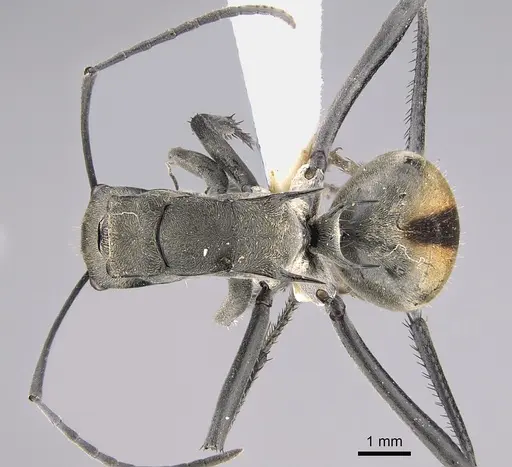
Literature
Loading...Loading products...