

Polyrhachis bugnioni
- Scientific Name
- Polyrhachis bugnioni
- Subgenus
- Hemioptica
- Tribe
- Camponotini
- Subfamily
- Formicinae
- Author
- Forel, 1908
- Distribution
- Found in 1 countries
Polyrhachis bugnioni Overview
Polyrhachis bugnioni is an ant species of the genus Polyrhachis. It is primarily documented in 1 countries , including Sri Lanka. Detailed taxonomic data and occurrence records can be further explored via authoritative databases such as AntWeb or the Global Biodiversity Information Facility (GBIF).
Polyrhachis bugnioni
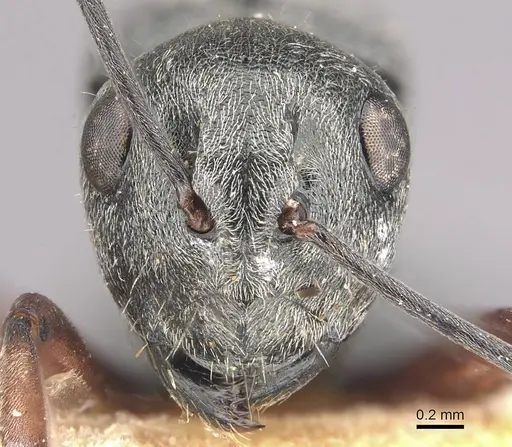
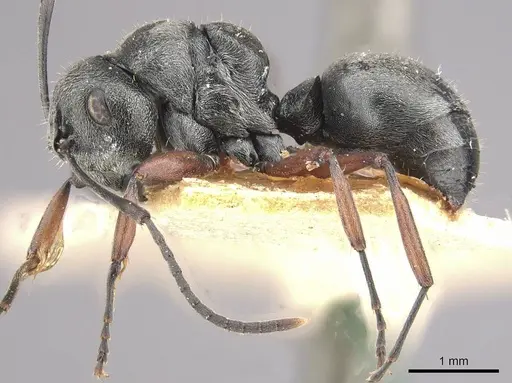
Polyrhachis bugnioni is a small, striking arboreal ant endemic to the primary forests of Sri Lanka. Workers measure 5.5-5.7mm and queens reach 6.5-7mm, making them a moderately-sized species [1]. Their most distinctive feature is the stark contrast between their black body and remarkably pale legs, the femora and tibiae appear white or yellowish in living specimens (though they darken after death) [1]. This species belongs to the subgenus Hemioptica, a group known for their silk-weaving behavior and arboreal lifestyle. They are among the rarer ant species in Sri Lanka, with limited distribution in the island's wet zone forests.
Quick Summary
- Difficulty: Medium
- Origin & Habitat: Endemic to Sri Lanka, found exclusively in primary forest habitats in the wet zone of the island [2]. This is a tropical rainforest environment with high humidity year-round.
- Colony Type: Single-queen colonies (monogyne) based on the single documented colony having one queen. Colonies are monodomous, they maintain just one nest rather than multiple connected nests [3]. The documented colony contained 27 workers plus queen and brood [1].
- Colony: Monogyne
- Size & Growth:
- Queen: 6.5-7mm [1]
- Worker: 5.5-5.7mm [1]
- Colony: Small, documented colonies reach around 30 workers [1]. Estimated maximum likely under 100 workers based on related species.
- Growth: Moderate, no specific data available, likely slower given small colony sizes
- Development: Unknown, no development studies exist for this species. Based on related Polyrhachis species and tropical ant patterns, estimate 6-10 weeks at optimal temperature. (Development timeline is unconfirmed. Related tropical Polyrhachis species typically take 6-8 weeks from egg to worker.)
- Antkeeping:
- Temperature: Keep warm at 24-28°C. As a tropical species from Sri Lanka's wet zone, they need consistently warm conditions [1]. A heating cable on one side of the nest creates a suitable gradient.
- Humidity: High humidity is essential, think tropical rainforest. Keep the nest substrate consistently moist but not waterlogged. Regular misting of the outworld helps maintain humidity. Ensure good ventilation to prevent mold while retaining moisture.
- Diapause: No, as a tropical species from Sri Lanka, they do not require hibernation. Maintain warm conditions year-round.
- Nesting: Arboreal nesters in the wild, they construct nests by weaving silk and debris. In captivity, a Y-tong (AAC) nest or naturalistic setup with vertical structures works well. Provide climbing branches or cork bark for them to establish nest sites. They use silk to seal nest chambers, so include some fine substrate they can work with.
- Behavior: Generally peaceful and non-aggressive. As an arboreal species, they are excellent climbers and will readily traverse branches and vertical surfaces. Workers are active foragers that search for honeydew and small prey. Their small size and climbing ability mean escape prevention is important, they can squeeze through small gaps. The distinctive pale legs make them easy to identify in the outworld.
- Common Issues: small colony size means slow growth, don't overfeed or the colony may struggle with excess food, high humidity requirements can lead to mold if ventilation is poor, arboreal nature means they need vertical space and climbing structures to thrive, escape prevention is important despite their small size, they are agile climbers, limited availability as a rarely collected endemic species makes obtaining colonies difficult
Nesting and Housing
Polyrhachis bugnioni is an arboreal species that nests in unusual locations. In the wild, they have been found nesting in the stipules (leaf-like structures) of the myrmecophyte tree Humboldtia laurifolia. The colony seals together the edges of paired stipules using silk produced by their larvae, creating a protected chamber. They also construct a debris and silk barrier that seals off the top of the nest, with access at the base of the stipules [1]. This silk-weaving behavior is characteristic of the subgenus Hemioptica [3]. In captivity, provide a naturalistic setup with vertical structures like cork bark or branches where they can construct silk nests. A Y-tong (AAC) formicarium also works well if given additional climbing materials. The key is providing vertical space and materials they can manipulate with silk.
Temperature and Humidity
Being a tropical species from Sri Lanka's wet zone, these ants require warm and humid conditions. Maintain temperatures in the range of 24-28°C, which mimics their natural tropical forest habitat. A gentle temperature gradient using a heating cable on one side of the nest allows the colony to self-regulate. For humidity, aim for 70-85% relative humidity within the nest area. This species is accustomed to the constantly moist conditions of primary rainforest. Use a water reservoir in your formicarium and mist regularly, but ensure adequate ventilation to prevent stagnant air and mold growth. The substrate should remain consistently damp but never waterlogged. [1]
Feeding and Diet
Like other Polyrhachis species, these ants are likely omnivorous with a preference for honeydew and small insects. In captivity, offer a consistent sugar source such as sugar water, honey, or diluted maple syrup. For protein, provide small insects like fruit flies, pinhead crickets, or mealworm pieces. Feed protein prey 2-3 times per week, and keep sugar water available at all times. As an arboreal forager, they will readily search for food throughout their territory. Remove any uneaten prey after 24-48 hours to prevent mold. Their small colony size means start with very small portions and adjust based on consumption. [1]
Behavior and Colony Structure
Polyrhachis bugnioni forms small colonies with a single queen. The documented wild colony contained 27 workers plus queen and various brood stages [1]. They are monodomous, meaning they maintain a single nest rather than spreading across multiple locations [3]. Workers are moderate-sized for the genus and are excellent climbers, often traversing vertical surfaces with ease. The species is not particularly aggressive and typically ignores threats rather than engaging. Their most distinctive behavioral trait is the silk-weaving used to construct nests, larvae are actively used to produce silk for sealing nest structures. Colonies grow slowly due to their naturally small size, so patience is essential when keeping this species.
Frequently Asked Questions
How long does it take for Polyrhachis bugnioni to produce first workers?
The exact development timeline is unconfirmed for this species. Based on related Polyrhachis species and typical tropical ant development, expect approximately 6-10 weeks from egg to first worker at optimal warm temperatures. Patience is key as this is a slowly developing species.
Can I keep Polyrhachis bugnioni in a test tube setup?
A test tube can work for founding colonies, but you will need to provide climbing structures and eventually transition to a more naturalistic setup with vertical space. Their arboreal nature means they prefer elevated nest sites. A Y-tong nest with added branches or cork bark is ideal for established colonies.
What makes Polyrhachis bugnioni different from other Polyrhachis?
This species is unique for its extremely pale legs (appearing white in living specimens), its restricted endemic distribution to Sri Lanka's primary forests, and its specific nesting in Humboldtia tree stipules. It belongs to the subgenus Hemioptica, known for silk-weaving behavior.
Are Polyrhachis bugnioni good for beginners?
This species is rated as medium difficulty. While not the hardest ant to keep, their specific humidity requirements, arboreal nature, and slow growth make them better suited for keepers with some experience. Their rarity also makes obtaining a colony challenging.
How big do Polyrhachis bugnioni colonies get?
Based on the single documented colony, maximum size appears to be under 100 workers. This is a small colony species that grows slowly. Expect colonies of 30-80 workers at maturity.
Do Polyrhachis bugnioni need hibernation?
No. As a tropical species from Sri Lanka's wet zone, they do not require hibernation. Maintain warm temperatures year-round (24-28°C) to keep the colony active and healthy.
What do Polyrhachis bugnioni eat?
They are omnivorous like other Polyrhachis species. Offer sugar water, honey, or syrup as a constant energy source. For protein, provide small insects like fruit flies, small crickets, or mealworms. Feed protein 2-3 times per week.
Why are the legs of Polyrhachis bugnioni white?
The distinctive white to yellowish legs are a key identifying feature of this species. The contrast between the black body and pale legs is striking in living specimens. Note that the legs may darken after the ant dies, which is why fresh specimens were described as having white femora and tibiae.
References

This caresheet is licensed under CC BY-SA 4.0 .
CASENT0910965
View on AntWeb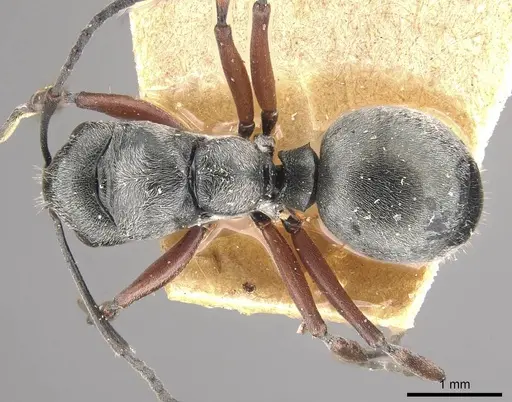
Literature
Loading...Loading products...