

Polyrhachis aurita
- Scientific Name
- Polyrhachis aurita
- Subgenus
- Chariomyrma
- Tribe
- Camponotini
- Subfamily
- Formicinae
- Author
- Emery, 1911
- Distribution
- Found in 1 countries
Polyrhachis aurita Overview
Polyrhachis aurita is an ant species of the genus Polyrhachis. It is primarily documented in 1 countries , including Papua New Guinea. Detailed taxonomic data and occurrence records can be further explored via authoritative databases such as AntWeb or the Global Biodiversity Information Facility (GBIF).
Polyrhachis aurita
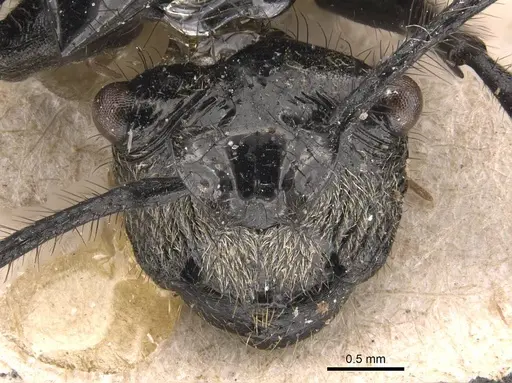
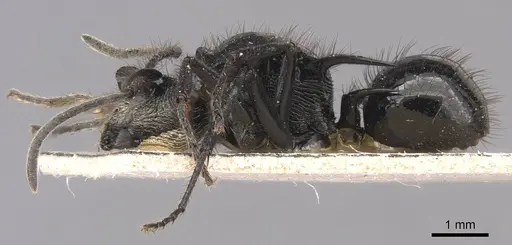
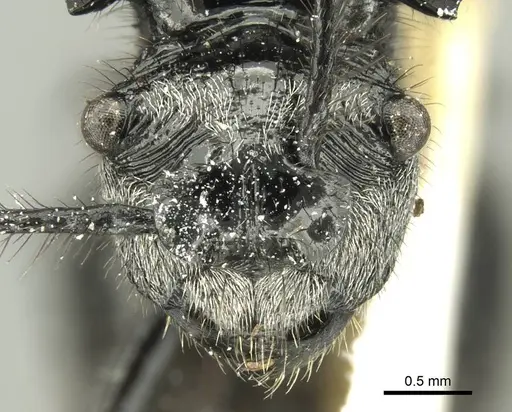
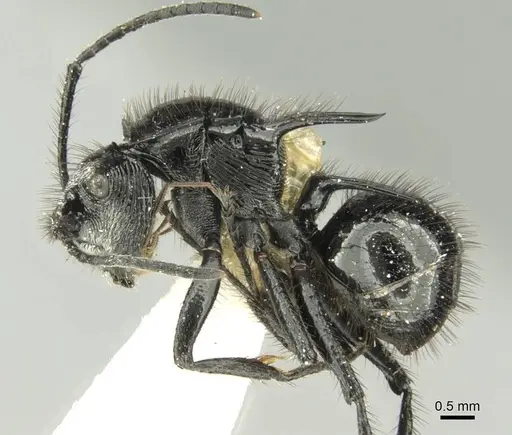
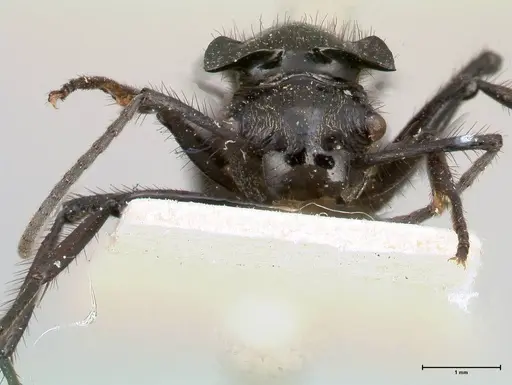
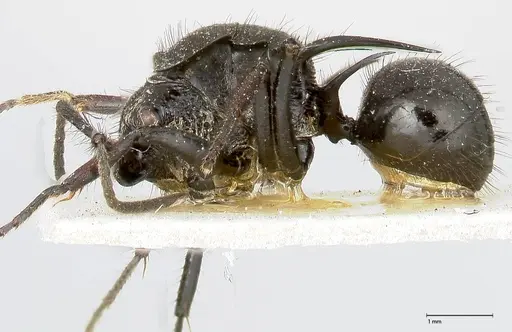
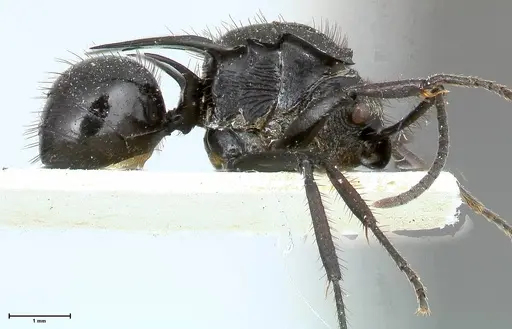
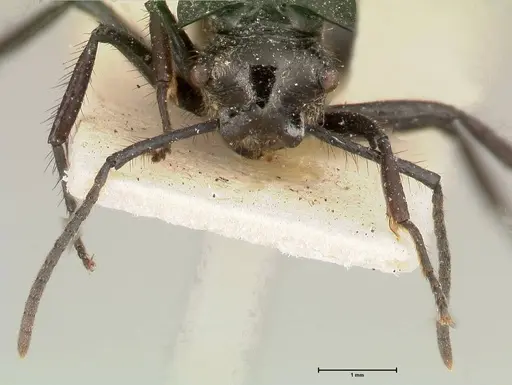
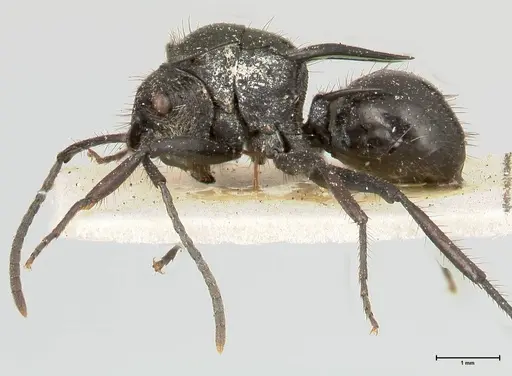
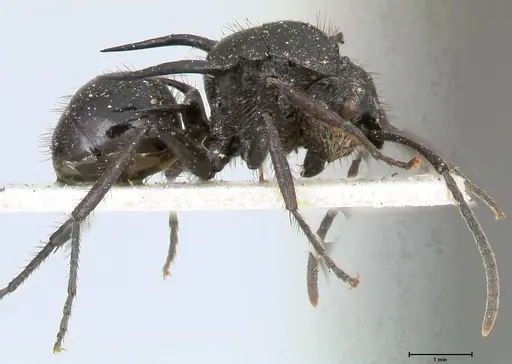
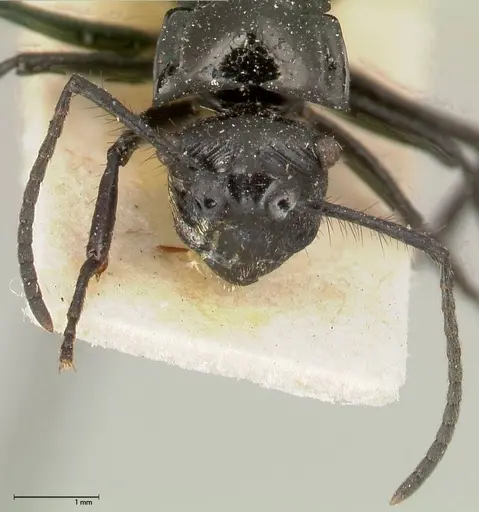
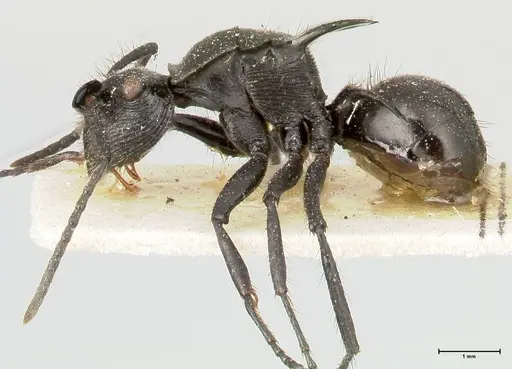
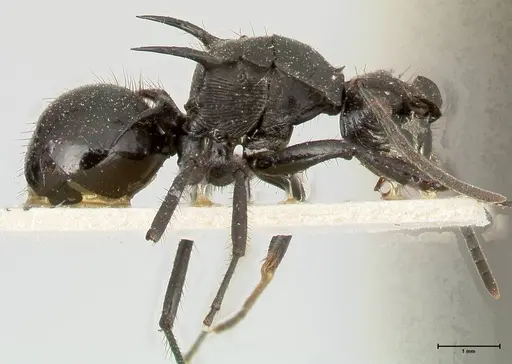
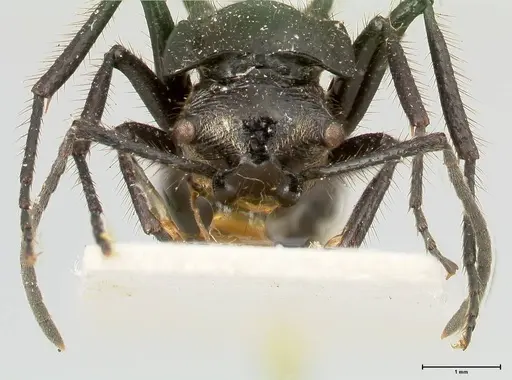
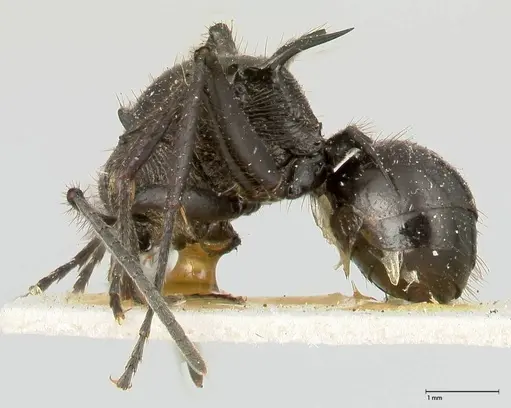
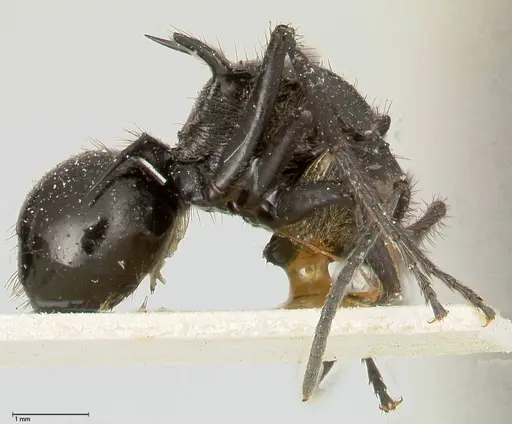
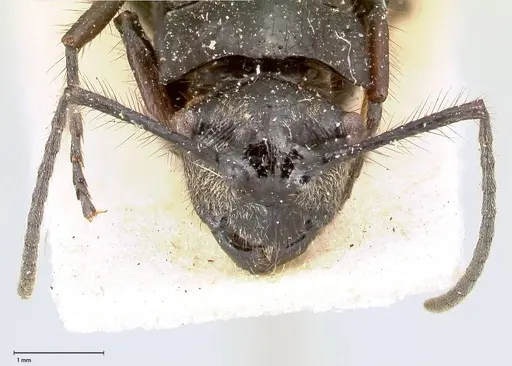
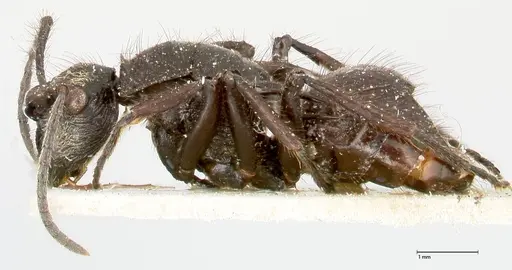
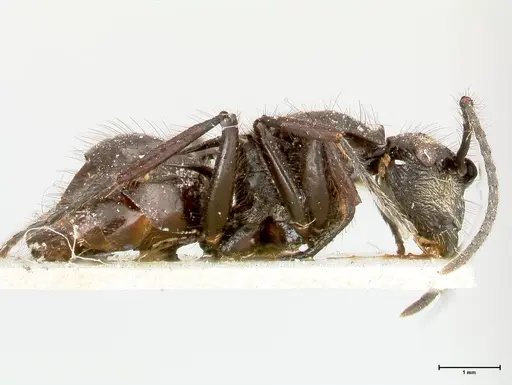
Polyrhachis aurita is a medium-sized ant native to New Guinea. Workers measure 6.5-7mm and are almost entirely black and shiny, with a distinctive pale yellow pubescence covering the cheeks and epistoma (the area around the mouth). Their most notable feature is the raised frontal ridges that give them an appearance of raised ears, along with relatively long, divergent spines on the epinotum (the section behind the thorax). The body is sprinkled with brown erect hairs, particularly on the legs and antennae (scapes). This species belongs to the subgenus Chariomyrma and was originally described by Emery in 1911,with synonymized names including P. schlaginhaufeni [1].
Quick Summary
- Difficulty: Medium
- Origin & Habitat: New Guinea (Australasian region), found in tropical forest environments [1][2]
- Colony Type: Likely single-queen (monogyne) colonies based on typical Polyrhachis patterns. Colony size is unconfirmed but likely reaches several hundred workers given the worker size.
- Colony: Monogyne
- Founding: Claustral
- Size & Growth:
- Queen: Unconfirmed, estimated 8-10mm based on genus patterns
- Worker: 6.5-7mm [1]
- Colony: Unconfirmed, estimated several hundred workers based on related Polyrhachis species
- Growth: Moderate, based on typical tropical Polyrhachis development
- Development: Estimated 6-8 weeks at optimal temperature (25-28°C) based on genus patterns (Development time is inferred from related Polyrhachis species, actual timing may vary)
- Antkeeping:
- Temperature: Keep at 24-28°C (warm tropical conditions). A heating cable on one side of the nest creates a suitable gradient. Avoid temperatures below 22°C as this species is adapted to warm lowland New Guinea habitats.
- Humidity: Maintain moderate to high humidity (70-80%). This species comes from humid tropical forests. Keep the nest substrate consistently moist but not waterlogged. Provide a water tube for drinking access.
- Diapause: No, as a tropical species from New Guinea, they do not require hibernation. Keep them warm year-round.
- Nesting: In nature they likely nest in rotting wood, under bark, or in soil cavities. In captivity, a naturalistic setup with soil/soil-like substrate works well, or a Y-tong/plaster nest with moisture retention. Avoid completely dry setups.
- Behavior: Polyrhachis ants are generally calm and not particularly aggressive, though they can defend their nest if threatened. They are active foragers that search for both protein (insects) and carbohydrate (honeydew, nectar) sources. Workers are agile climbers, escape prevention is important. They may form moderate-sized colonies over time. This species shows typical Formicinae behavior with no major defensive adaptations like stingers.
- Common Issues: escape prevention is critical, they are excellent climbers and will find any gap, tropical species cannot tolerate cold, keep warm year-round, slow founding phase means patience is required, claustral queens take time to raise first workers, wild-caught colonies may carry parasites that can devastate captive colonies, overfeeding can lead to mold problems in the nest
Housing and Nest Setup
Polyrhachis aurita does well in a naturalistic setup that mimics their natural tropical forest habitat. Use a mix of soil and organic material as substrate, keeping it consistently moist but not waterlogged. A layer of leaf litter on top helps maintain humidity and gives foragers cover. You can also use a Y-tong (acrylic) nest with a water reservoir or a plaster nest that holds moisture well. Because they are good climbers, apply Fluon or use a barrier to prevent escapes. A test tube setup can work for founding colonies, but transfer to a larger naturalistic setup once the colony reaches 15-20 workers. [2]
Feeding and Diet
Like most Polyrhachis species, these ants are omnivorous. Offer protein sources like small insects (fruit flies, small crickets, mealworms) every few days. They also accept sugar sources, a drop of honey or sugar water should be available at all times. In the wild, they likely forage for honeydew from aphids and other small invertebrates. Remove uneaten food after 24-48 hours to prevent mold. Fresh water should always be available.
Temperature and Heating
As a New Guinea tropical species, Polyrhachis aurita requires warm conditions year-round. Maintain temperatures between 24-28°C. A small heating cable placed on one side of the nest creates a temperature gradient that lets the ants choose their preferred spot. Room temperature alone may be too cool, especially in colder climates. Monitor with a thermometer and adjust heating accordingly. Never let temperatures drop below 22°C for extended periods.
Humidity and Moisture
These ants need moderate to high humidity to thrive. Keep the nest substrate damp to the touch, and provide a water tube or small water dish for drinking. Mist the outworld occasionally but avoid letting water pool. A humidity range of 70-80% is ideal. In naturalistic setups, the soil should not dry out completely between waterings. Poor humidity can lead to failed molts and colony decline.
Colony Development
A claustral queen will seal herself in a chamber and survive on stored fat reserves while raising the first brood. The first workers (nanitics) will be smaller than normal workers and typically emerge after 6-8 weeks at optimal temperature. After the nanitics harden, the queen resumes normal egg-laying and the colony grows. Growth is moderate, expect several months before you have a established colony with 20-30 workers. Full maturity with hundreds of workers may take a year or more depending on conditions.
Frequently Asked Questions
How long does it take for Polyrhachis aurita to raise first workers?
Expect 6-8 weeks from egg to first worker at optimal temperature (25-28°C). This is based on typical Polyrhachis development patterns since specific timing for P. aurita has not been documented.
Can I keep multiple Polyrhachis aurita queens together?
This species is likely single-queen (monogyne) based on typical Polyrhachis behavior. Combining unrelated queens is not recommended as they likely will fight. Only keep one queen per colony.
What temperature do Polyrhachis aurita ants need?
Keep them warm at 24-28°C. This tropical species cannot tolerate cold and needs year-round warmth. A heating cable on part of the nest creates a suitable gradient.
How big do Polyrhachis aurita colonies get?
Colony size is unconfirmed for this specific species, but based on related Polyrhachis species, they likely reach several hundred workers over time.
Does Polyrhachis aurita need hibernation?
No. As a tropical species from New Guinea, they do not require hibernation. Keep them warm year-round at 24-28°C.
What do Polyrhachis aurita eat?
They are omnivorous. Offer small insects (fruit flies, small crickets, mealworms) for protein and a constant source of sugar (honey water or sugar water). They likely also collect honeydew in the wild.
Are Polyrhachis aurita good for beginners?
This species is rated as medium difficulty. They require warm, humid conditions year-round and need good escape prevention due to their climbing ability. They are not as hardy as some common pet species.
When should I move my Polyrhachis aurita to a formicarium?
Keep founding colonies in a test tube setup until they have 15-20 workers. Then you can move them to a larger naturalistic setup or formicarium with proper humidity control.
Why are my Polyrhachis aurita dying?
Common causes include: temperatures below 22°C, low humidity causing desiccation, mold from overfeeding, or escapes due to poor barrier maintenance. Check all three environmental factors first.
References

This caresheet is licensed under CC BY-SA 4.0 .
CASENT0905588
View on AntWeb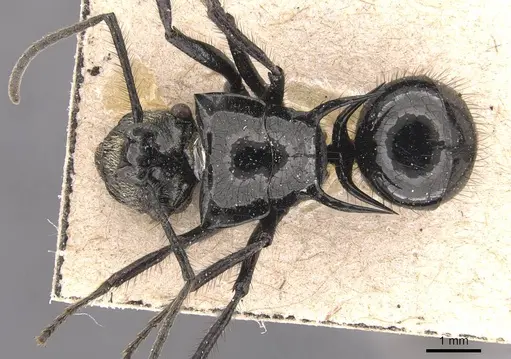
CASENT0906738
View on AntWeb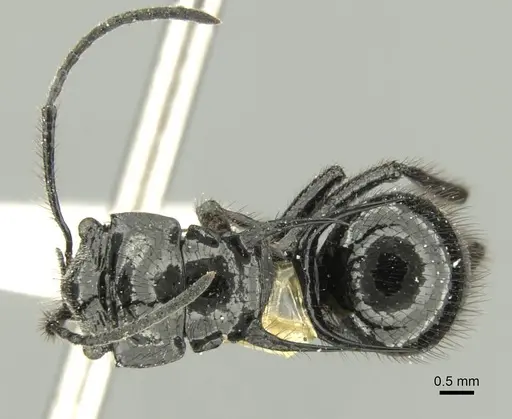
FOCOL0448
View on AntWeb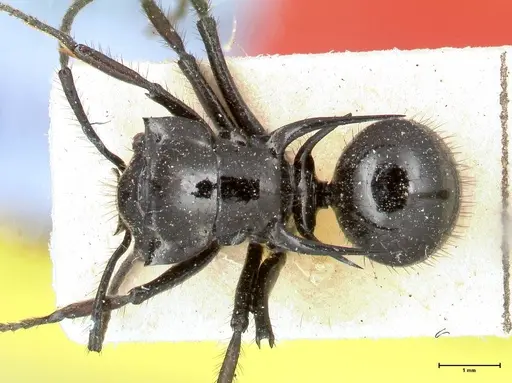
FOCOL0449
View on AntWeb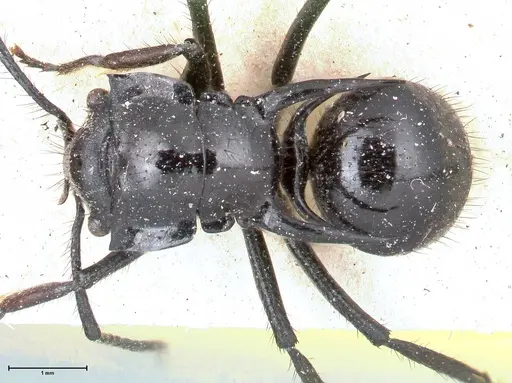
FOCOL0454
View on AntWeb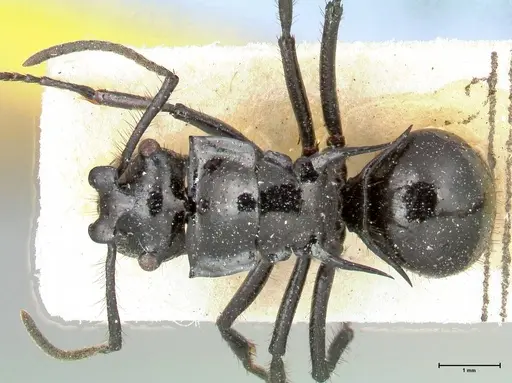
FOCOL0455
View on AntWeb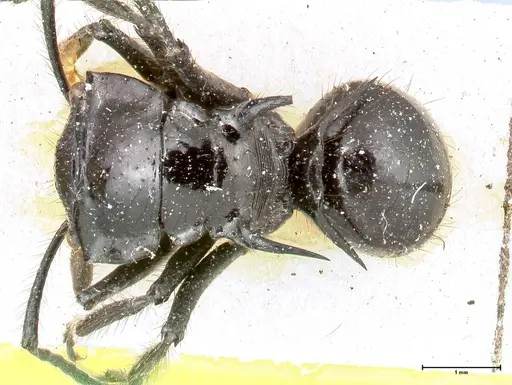
FOCOL0456
View on AntWeb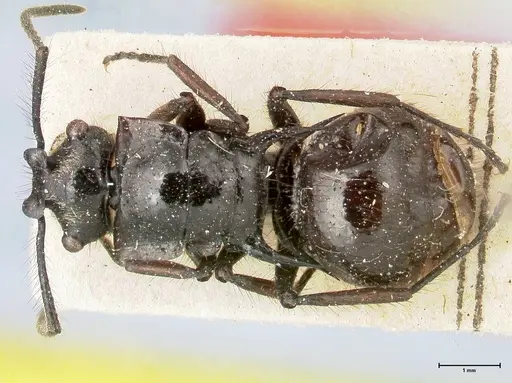
Literature
Loading...Loading products...