

Polyrhachis argentosa
- Scientific Name
- Polyrhachis argentosa
- Subgenus
- Hedomyrma
- Tribe
- Camponotini
- Subfamily
- Formicinae
- Author
- Forel, 1902
- Distribution
- Found in 1 countries
Polyrhachis argentosa Overview
Polyrhachis argentosa is an ant species of the genus Polyrhachis. It is primarily documented in 1 countries , including Australia. Detailed taxonomic data and occurrence records can be further explored via authoritative databases such as AntWeb or the Global Biodiversity Information Facility (GBIF).
Polyrhachis argentosa
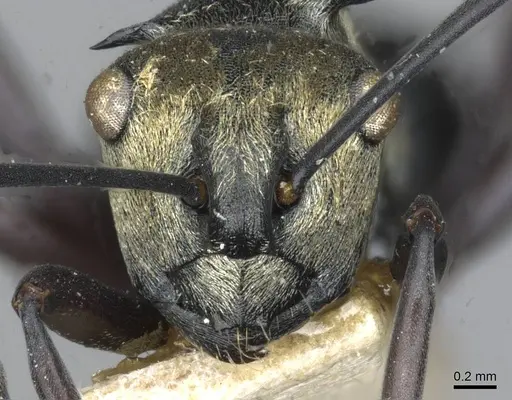
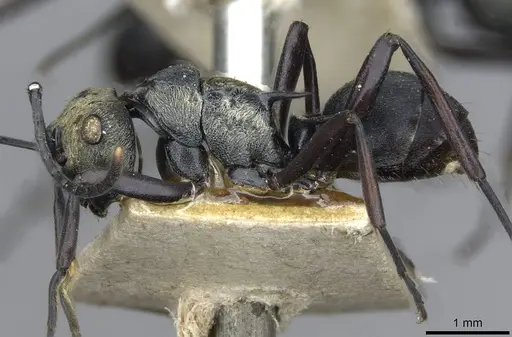
Polyrhachis argentosa is a slender arboreal ant native to the rainforests of central and northern Queensland, Australia. Workers are smaller and more finely built compared to the similar Polyrhachis daemeli, with a convex mesonotal and propodeal dorsum visible in profile. The body has virtually no hairs on the dorsal surfaces, giving it a smooth appearance. These ants nest exclusively in plant cavities, typically occupying small hollow branches and bamboo internodes [1][2].
This species represents an interesting evolutionary case, it has reverted to arboreal nesting but uses a different method than other Polyrhachis ants. Unlike weaver ants that use larval silk to construct nests, P. argentosa simply occupies existing hollow spaces in plants without adding silk. This makes them a more passive nesting species compared to their silk-weaving relatives.
Quick Summary
- Difficulty: Medium
- Origin & Habitat: Central and northern Queensland, Australia, found in rainforest habitats from Proserpine south to Rundle Range, northwest of Gladstone. They live in humid forest environments at elevations around 200m [3].
- Colony Type: Colony structure is not well documented in scientific literature. Based on related Polyrhachis species, they likely form moderate-sized colonies with single queens.
- Colony: Monogyne
- Founding: Claustral
- Size & Growth:
- Queen: Unknown, not directly measured in available literature
- Worker: Smaller and more slender than P. daemeli (which is approximately 6-7mm), estimated 5-6mm based on genus [3]
- Colony: Unknown, likely moderate, similar to related Polyrhachis species
- Growth: Moderate, based on typical Formicinae development patterns
- Development: Estimated 6-8 weeks at optimal temperature based on related Formicinae species (Development time is inferred from genus-level data since species-specific timing is not documented)
- Antkeeping:
- Temperature: Keep around 24-28°C, they are tropical rainforest ants from Queensland and need warmth. A gentle gradient allowing cooler areas around 22°C is recommended [3].
- Humidity: High humidity is essential, these are rainforest ants that naturally live in humid hollow branches. Keep nest substrate consistently moist but not waterlogged. Provide a water tube for drinking access.
- Diapause: Likely minimal or no true diapause, Queensland is tropical/subtropical with mild winters. However, reduce feeding and lower temperatures slightly (around 20°C) during winter months to simulate seasonal slowdown.
- Nesting: Arboreal specialists, they need vertical or elevated nesting options. Bamboo tubes, hollow branches, or acrylic nests with narrow chambers work well. Avoid fully horizontal test tube setups, they prefer to nest elevated like they would in tree branches [1][2].
- Behavior: Generally calm and non-aggressive compared to many ant species. Workers are active foragers that search for food in the upper regions of their enclosure. They do not have a painful sting, making them safe for handling. Escape prevention is important, while not tiny, they are adept at finding small gaps. They are arboreal by nature so they will climb readily on any surface.
- Common Issues: dry conditions kill colonies quickly, rainforest species need constant humidity, wrong nest orientation, they prefer vertical/elevated nests, not horizontal test tubes, temperature too low causes sluggish behavior and poor brood development, mold problems from overwatering or poor ventilation, wild-caught colonies may have parasites that are difficult to treat
Nest Preferences and Housing
Polyrhachis argentosa is an arboreal species that naturally nests in hollow plant cavities, small branches, bamboo internodes, and similar structures [1][2]. In captivity, you should replicate this by providing vertical or elevated nesting options rather than horizontal test tubes. Acrylic nests with narrow chambers, bamboo sections, or custom-made arboreal setups work well. The nest should be positioned so the ants can climb up into it, mimicking their natural height preference. Avoid deep soil nests, they are lignicolous (wood-dwelling), not ground-nesting ants. Provide some climbing structures in the outworld so workers can explore vertically.
Temperature and Heating
These Queensland rainforest ants need warm conditions year-round. Maintain temperatures between 24-28°C during the active season, with a slight gradient allowing workers to move to cooler areas if needed. A small heating cable on one side of the nest can help maintain warmth without drying out the colony. During winter, you can reduce temperatures slightly to around 20-22°C to simulate their mild subtropical winter, but avoid cold temperatures below 18°C. Unlike temperate species, they do not require true hibernation, just a slight reduction in activity during the cooler months. [3]
Humidity Requirements
High humidity is critical for this species, they naturally live in humid rainforest environments inside hollow branches. Keep the nest substrate consistently moist but never waterlogged. The nest area should show some condensation, indicating proper humidity. A water tube connected to the nest helps maintain moisture and provides drinking water. Mist the outworld occasionally, but avoid letting water pool in the nest chambers. Poor humidity leads to colony decline and death, so this is one of the most important factors for success. [3]
Feeding and Diet
Like most Polyrhachis species, P. argentosa is omnivorous and will accept a variety of foods. Offer sugar water or honey as a constant energy source. For protein, provide small insects like fruit flies, small crickets, or mealworms. They are foragers that search actively, so place food in accessible locations in the outworld. Feed protein 2-3 times per week, and keep sugar water available at all times. Remove uneaten prey after 24 hours to prevent mold. Fresh fruit can occasionally be offered as well. [3]
Behavior and Temperament
Polyrhachis argentosa workers are generally calm and less aggressive than many ant species. They are active foragers that will explore their environment, particularly in the upper regions of the enclosure. Unlike some Polyrhachis species that use larval silk to construct nests, this species simply occupies existing cavities, they are passive nesters rather than builders. Workers are adept climbers and will readily scale surfaces. They do not possess a painful sting, making them safe for antkeepers who want to observe their colonies without risk. They are diurnal and most active during daylight hours. [1][2][3]
Frequently Asked Questions
Can I keep Polyrhachis argentosa in a test tube?
Standard horizontal test tubes are not ideal, these are arboreal ants that prefer vertical or elevated nesting. Use bamboo sections, acrylic nests with narrow vertical chambers, or custom arboreal setups instead. They need to feel like they are nesting up high, like in tree branches.
What temperature do Polyrhachis argentosa ants need?
Keep them warm at 24-28°C during the active season. They are tropical Queensland ants and need consistent warmth. A slight temperature gradient allowing cooler areas around 22°C is helpful. Reduce to around 20°C in winter.
How long does it take for Polyrhachis argentosa to produce first workers?
Estimated 6-8 weeks from egg to first worker at optimal temperature. This is inferred from related Formicinae species since specific development timing for this species is not documented.
Are Polyrhachis argentosa good for beginners?
They are rated as medium difficulty. The main challenges are maintaining high humidity and providing proper arboreal nesting. If you can meet their humidity and nesting requirements, they are manageable for intermediate antkeepers.
What do Polyrhachis argentosa eat?
They are omnivorous. Offer sugar water or honey constantly for energy, and protein sources like small insects (fruit flies, small crickets, mealworms) 2-3 times per week. Remove uneaten food after 24 hours.
Do Polyrhachis argentosa need hibernation?
No true hibernation is required, they come from subtropical Queensland with mild winters. Simply reduce temperatures slightly to around 20°C in winter and reduce feeding to match their lower activity level.
Why is my Polyrhachis argentosa colony dying?
The most common cause is low humidity, these rainforest ants die quickly in dry conditions. Check that the nest is consistently moist and shows condensation. Other issues include temperatures below 18°C, improper horizontal-only nesting, and mold from overwatering.
When should I move my Polyrhachis argentosa to a formicarium?
Move them once the colony reaches around 20-30 workers and you see they are active and healthy in their founding setup. Ensure the new setup provides proper vertical nesting space and humidity control.
How big do Polyrhachis argentosa colonies get?
Colony size is not well documented, but based on related Polyrhachis species, they likely reach several hundred workers at maturity. Growth is moderate, expect several months to a year to establish a solid colony.
References

This caresheet is licensed under CC BY-SA 4.0 .
CASENT0906600
View on AntWeb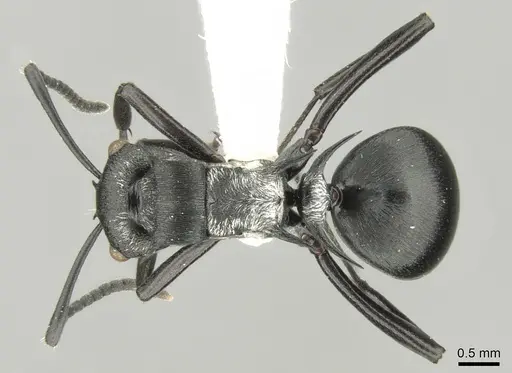
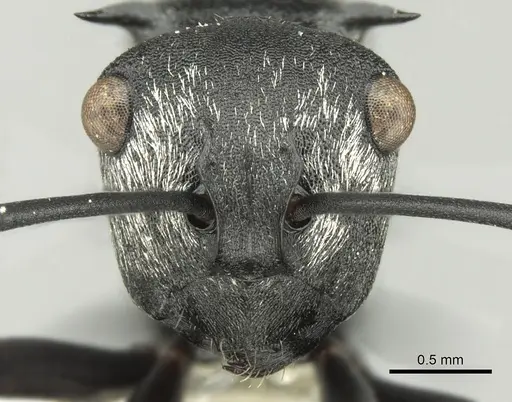
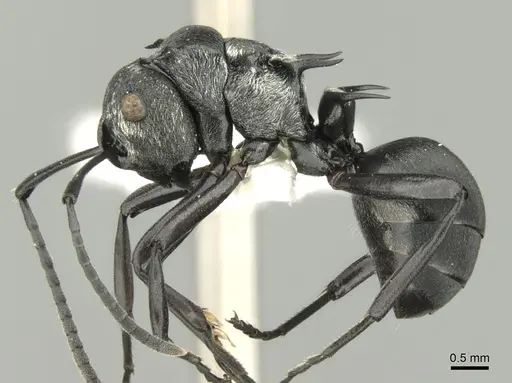
CASENT0910844
View on AntWeb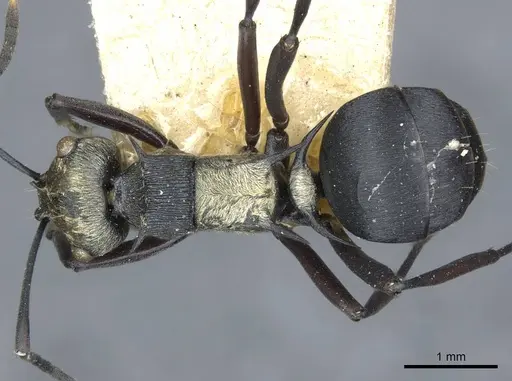
Literature
Loading...Loading products...