

Pogonomyrmex sylvestris
- Scientific Name
- Pogonomyrmex sylvestris
- Tribe
- Pogonomyrmecini
- Subfamily
- Myrmicinae
- Author
- Lattke, 1991
- Distribution
- Found in 2 countries
Pogonomyrmex sylvestris Overview
Pogonomyrmex sylvestris is an ant species of the genus Pogonomyrmex. It is primarily documented in 2 countries , including Argentina, Venezuela, Bolivarian Republic of. Detailed taxonomic data and occurrence records can be further explored via authoritative databases such as AntWeb or the Global Biodiversity Information Facility (GBIF).
Pogonomyrmex sylvestris
Pogonomyrmex sylvestris is a small, dark brown ant native to the cloud forests of Venezuela's eastern Andes. Workers measure just over 1mm in body length, making them one of the smaller Pogonomyrmex species. They feature six mandibular teeth, distinctive hairs between their eye facets, and a uniquely shaped postpetiole that overhangs the connection to the helcium. This species inhabits premontane cloud forests at elevations between 1000-1300 meters, where humidity remains consistently high [1].
This species belongs to a rare group of South American Pogonomyrmex that inhabit mesophilic forests rather than the arid habitats typical of most genus members. Only the worker caste has been described, and remarkably little is known about their biology. Based on related species, colonies are expected to remain small, likely just several hundred workers, and they appear to prefer dead arthropods and plant material over seeds, unlike many of their seed-harvesting cousins.
Quick Summary
- Difficulty: Unknown
- Origin & Habitat: Cloud forests of eastern Venezuelan Andes near Boconó, at elevations of 1000-1300 meters. Inhabits premontane rain forest and has been found nesting in rotten logs on the ground [1][2].
- Colony Type: Unconfirmed, only worker caste has been documented. Based on related species like P. mayri, colonies likely consist of several hundred workers with a single queen.
- Size & Growth:
- Queen: Unknown, queen caste has not been described in scientific literature
- Worker: 1.24-1.32mm head length,1.16-1.20mm head width
- Colony: Estimated several hundred workers based on P. mayri biology comparison
- Growth: Unknown
- Development: Unknown, no development data exists for this species (No direct measurements available. Related Pogonomyrmex species in the genus typically require 6-10 weeks for complete development at optimal temperatures.)
- Antkeeping:
- Temperature: Based on cloud forest habitat, aim for 20-24°C with moderate humidity. Avoid temperatures above 28°C.
- Humidity: High humidity required, think damp forest floor. Keep nest substrate consistently moist but not waterlogged.
- Diapause: Unknown, no documented winter dormancy period. Cloud forest species may have reduced activity during drier seasons rather than true hibernation.
- Nesting: One documented nest was in a rotten log on the ground [1]. In captivity, a naturalistic setup with moist substrate or a plaster/acrylic nest with high humidity would be appropriate. Provide small chambers scaled to their tiny worker size.
- Behavior: Behavior is unstudied in captivity. Based on genus patterns, they are likely less aggressive than typical desert Pogonomyrmex and may be more docile. Workers are small and their sting is likely too weak to penetrate human skin. Escape prevention should be adequate for their small size, standard barriers should work well.
- Common Issues: No captive keeping information exists, this is an essentially unstudied species in the hobby, Colony foundation may be difficult since queens have never been documented, Growth rates and dietary preferences are unknown, making proper care challenging, High humidity requirements may promote mold in captive setups, Wild-caught colonies may have parasites or diseases with no documented treatment
Natural History and Distribution
Pogonomyrmex sylvestris is one of the rarest Pogonomyrmex species in captivity, known only from cloud forests in the eastern Venezuelan Andes. This species was first described in 1991 and has been collected several times since in the same general area near Boconó in Venezuela's Lara state [1]. Unlike most Pogonomyrmex species that inhabit arid regions, P. sylvestris is adapted to the cool, humid conditions of premontane cloud forests at elevations between 1000-1300 meters.
The species is part of the sylvestris-group, which is sister to all other Pogonomyrmex species, making them evolutionarily distinct from the more familiar seed-harvesting desert ants. This phylogenetic position means their biology may differ significantly from typical Pogonomyrmex behavior. Only the worker caste has ever been documented, and nests are rarely found, one was discovered in a rotten log on the forest floor [1].
Identification and Distinguishing Features
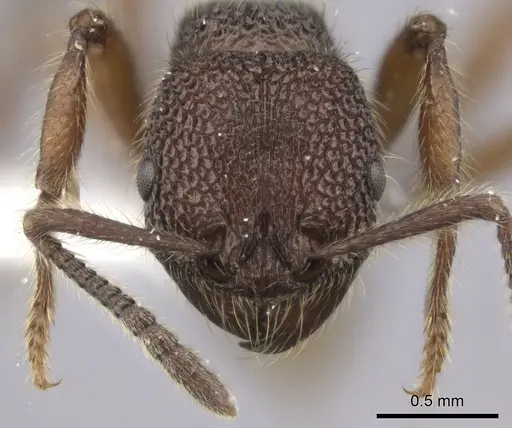
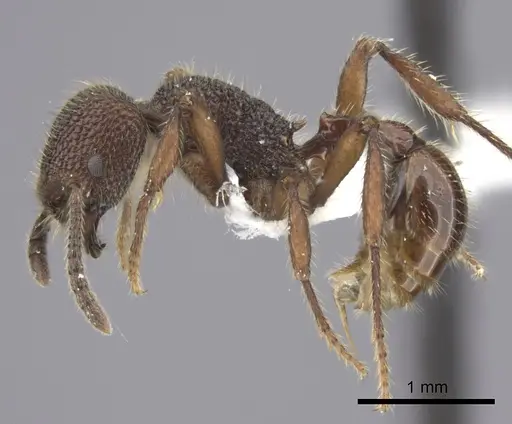
Identifying Pogonomyrmex sylvestris requires attention to several key features. Workers have six mandibular teeth (most Pogonomyrmex have three), and they possess distinctive hairs between their eye ommatidia, a unique trait shared with only a few related species. The postpetiole has a characteristic triangular shape in dorsal view with an anterior margin that overhangs the helcium connection.
In the field, P. sylvestris can be distinguished from the similar P. striatinodus by the presence of eye hairs, lack of a medial clypeal carina, and the postpetiole shape. From P. naegelii, which occupies drier habitats, P. sylvestris differs in having an elongate triangular postpetiole and a flattened to weakly convex petiolar node with an elevated crest. Their small size (around 1.2mm head width) and dark brown coloration also help distinguish them from larger, lighter-colored relatives. [1]
Housing and Nesting
Since P. sylvestris nests in rotten logs in humid cloud forests, they need a setup that mimics these conditions. A naturalistic terrarium-style setup with moist substrate and decaying wood material would be most appropriate. The substrate should remain consistently damp but never waterlogged, think the conditions of a forest floor after rain.
For practical keeping, a plaster or acrylic nest with a water reservoir or hydration system works well. Keep humidity high by misting regularly or using a moist cotton plug in a test tube setup. Temperature should be kept cool compared to typical ant keeping, aim for room temperature around 20-24°C, avoiding any heating that would push them above 28°C. Their tiny worker size means chambers and passages should be appropriately scaled, though this is less critical than for even smaller species. [2]
Feeding and Diet
The diet of P. sylvestris is not directly documented, but based on comparison with the related P. mayri, they likely prefer dead arthropods and plant material over seeds. This makes them different from most Pogonomyrmex, which are famous seed harvesters.
In captivity, you should offer small protein sources like small insects (fruit flies, pinhead crickets, small mealworms), along with sugar water or honey as an energy source. Given their small size, prey items should be appropriately sized. Since their mouthparts are designed for handling soft-bodied prey rather than hard seeds, focus on offering small arthropods. Observe whether they accept different foods and adjust accordingly, without documented captive care, you may need to experiment to determine preferences. [1][2]
Challenges and Considerations
Keeping Pogonomyrmex sylvestris presents significant challenges because so little is known about them. No queen has ever been documented, meaning captive breeding from wild-caught colonies may not be possible. If you obtain workers, expect that you are working with an essentially unknown species in terms of captive requirements.
The biggest risks include: inability to establish colonies long-term due to unknown founding requirements, potential sensitivity to temperature and humidity extremes, and the likelihood that wild-caught colonies may carry parasites or diseases with no documented treatment. This species is best considered a collector's species for advanced antkeepers willing to experiment and document their findings. If you do keep them, your observations could contribute valuable knowledge to the antkeeping community. [2]
Frequently Asked Questions
Is Pogonomyrmex sylvestris available in the antkeeping hobby?
No, this species is extremely rare in captivity. It has rarely been collected even in the wild, and no queen has ever been documented. You are unlikely to find them for sale.
How long do Pogonomyrmex sylvestris workers live?
Worker lifespan has not been studied for this species. Typical Pogonomyrmex workers live several months to over a year, but this may vary for cloud forest species.
What temperature should I keep Pogonomyrmex sylvestris at?
Keep them cool compared to typical ants, around 20-24°C. This matches their cloud forest origin in the Venezuelan Andes. Avoid temperatures above 28°C.
Can I keep multiple Pogonomyrmex sylvestris queens together?
This is unknown. No queen has ever been documented for this species, so colony structure is completely unstudied. Do not attempt combining unrelated queens without documented evidence of success.
How big do Pogonomyrmex sylvestris colonies get?
Based on comparison with the related P. mayri, colonies likely reach several hundred workers at most. They are not large colony builders like some Pogonomyrmex species.
What do Pogonomyrmex sylvestris eat?
Based on related species, they likely prefer dead arthropods and plant material rather than seeds. Offer small insects and sugar sources. Their diet in captivity has not been documented.
Are Pogonomyrmex sylvestris good for beginners?
No. This is an essentially unstudied species with no documented captive care requirements. They are not recommended for beginners and may not even be available in the hobby.
Where is Pogonomyrmex sylvestris found in the wild?
Only in cloud forests of the eastern Venezuelan Andes near Boconó, at elevations between 1000-1300 meters. Their range is extremely limited.
Do Pogonomyrmex sylvestris need hibernation?
This is unknown. Cloud forest species often experience year-round mild conditions rather than distinct winters. Do not assume they need hibernation without evidence.
How do I identify Pogonomyrmex sylvestris?
Look for six mandibular teeth, hairs between the eye ommatidia, and a distinctive triangular postpetiole that overhangs the helcium. Workers are dark brown and only about 1.2mm wide at the head.
Why is Pogonomyrmex sylvestris important to study?
This species belongs to a group that is sister to all other Pogonomyrmex, making them evolutionarily primitive within the genus. Understanding their biology would help researchers understand how Pogonomyrmex evolved.
References

This caresheet is licensed under CC BY-SA 4.0 .
LACMENT273795
View on AntWeb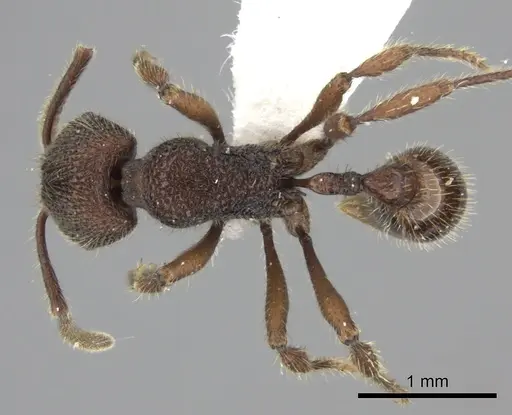
Literature
Loading...Loading products...