

Pogonomyrmex mohavensis
- Scientific Name
- Pogonomyrmex mohavensis
- Tribe
- Pogonomyrmecini
- Subfamily
- Myrmicinae
- Author
- Johnson, 2009
- Distribution
- Found in 1 countries
Pogonomyrmex mohavensis Overview
Pogonomyrmex mohavensis is an ant species of the genus Pogonomyrmex. It is primarily documented in 1 countries , including United States of America. Detailed taxonomic data and occurrence records can be further explored via authoritative databases such as AntWeb or the Global Biodiversity Information Facility (GBIF).
Pogonomyrmex mohavensis
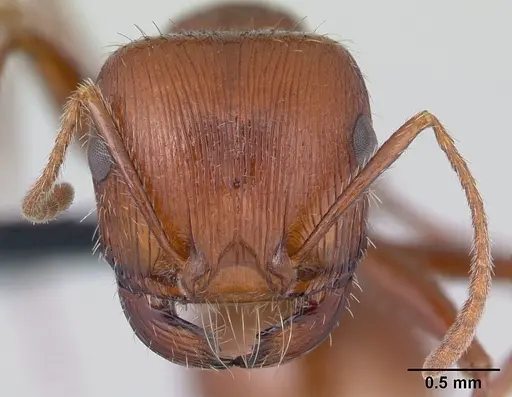
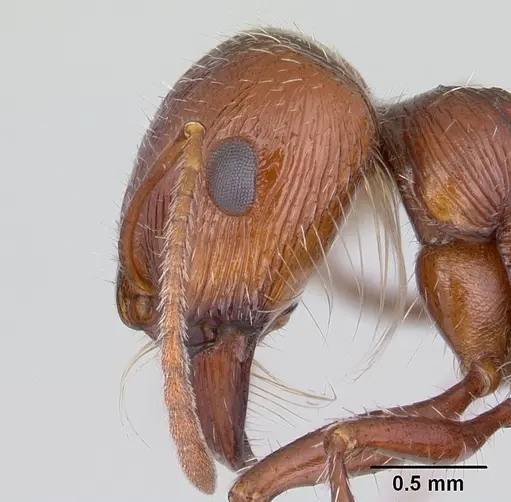
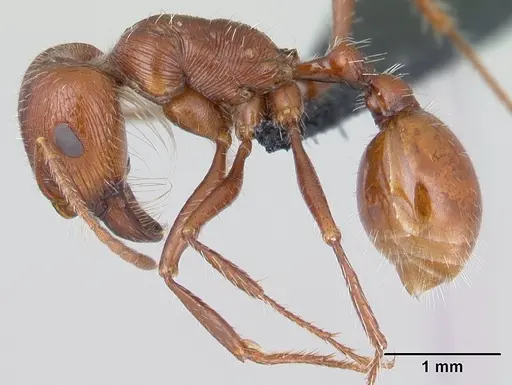
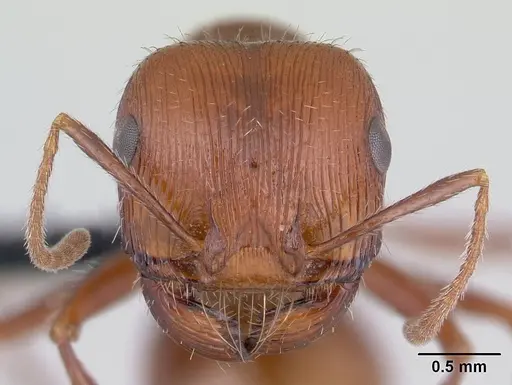
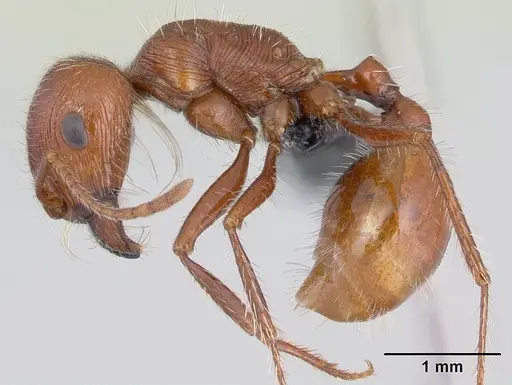
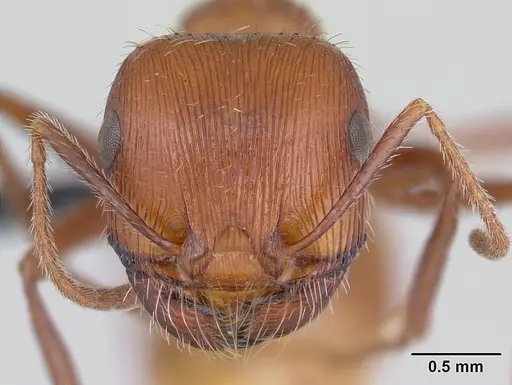
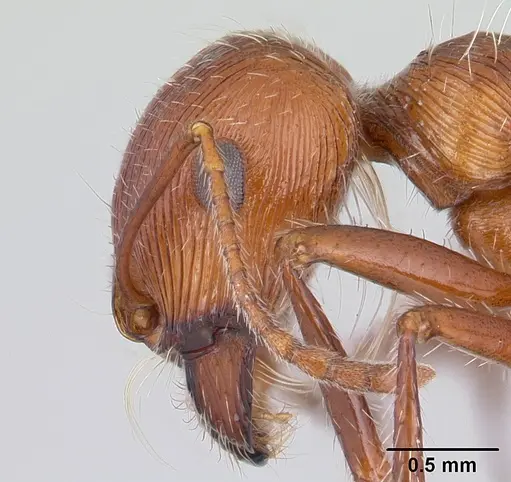
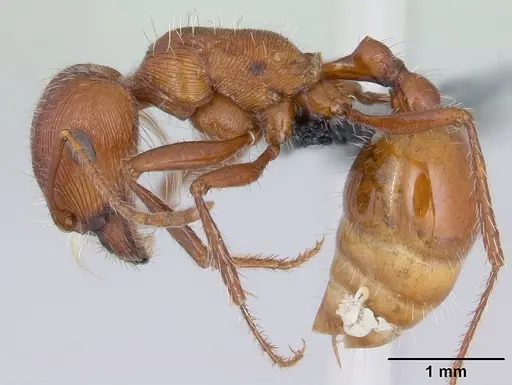
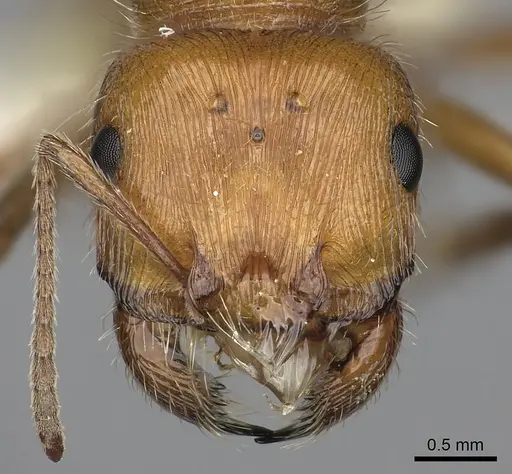
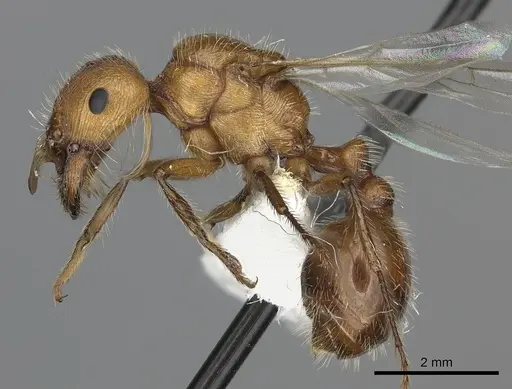
Pogonomyrmex mohavensis is a medium-sized seed-harvester ant native to the Mohave Desert of eastern California and western Nevada. Workers measure 1.31-1.67mm in head width and have a distinctive rusty orange (ferruginous) body color that is uniform across the head, mesosoma, and gaster, unlike some related species that have darker gasters. The workers are characterized by having six mandibular teeth (some specimens show a tiny seventh tooth as a denticle), and the rugae (ridges) on the head extend directly to the vertex rather than forming the circular patterns seen in related species like P. californicus [1]. This desert-dwelling species builds small circular nest mounds called tumuli, typically 7.5-13cm in diameter, and workers forage solitarily during daylight hours harvesting seeds [1].
What makes P. mohavensis particularly interesting is its relatively recent scientific description (2009) and its phylogenetic relationship to other desert specialists. It belongs to a clade of three hot-desert species restricted to North American deserts, closely related to P. snellingi from Baja California and P. magnacanthus [1]. Colonies reach approximately 600-700 workers, making them moderate-sized for the genus. The species is sympatric (overlaps in range) with both P. californicus and P. rugosus in different locations, demonstrating its ability to coexist with other Pogonomyrmex species in harsh desert environments [1].
Quick Summary
- Difficulty: Medium
- Origin & Habitat: Mohave Desert of eastern California and western Nevada, elevations 245-1540 meters. Found in mixed Mohavean Desert woody scrub habitat with plants like Acamptopappus, Atriplex, and Coleogyne [1]. Nests placed in various situations including open exposed sites, under bush edges, and under dried cow dung [1].
- Colony Type: Monogyne (single queen) colonies. Each colony has one queen that initiates the nest. Colonies reach approximately 600-700 workers at maturity [1].
- Colony: Monogyne
- Founding: Claustral
- Size & Growth:
- Queen: 2.01-2.08mm head width [2]
- Worker: 1.31-1.67mm head width [1]
- Colony: Approximately 600-700 workers at maturity [1]
- Growth: Moderate, based on related Pogonomyrmex species, expect 6-10 weeks from egg to first worker
- Development: 6-10 weeks (estimated based on related Pogonomyrmex species) (Sexual larvae and pupae appear by late May, indicating reproductive development completes by early summer. Mating flights occur over 2-3 weeks during early summer, triggered by photoperiod rather than rainfall [1].)
- Antkeeping:
- Temperature: Keep at 24-30°C during active season. This species is adapted to hot desert conditions and tolerates higher temperatures than many Pogonomyrmex. Provide a temperature gradient allowing workers to self-regulate.
- Humidity: Low to moderate. Desert species, keep nest substrate dry to moderately moist. Avoid damp conditions that can lead to mold. Provide a water source separately rather than saturating the nest.
- Diapause: Yes, requires a winter rest period. Similar to other Pogonomyrmex, they likely enter diapause during winter months. Reduce temperature to 10-15°C for 2-3 months.
- Nesting: Y-tong (acrylic) nests work well for this species. Provide compact chambers scaled to their medium size. They prefer干燥 (dry) to moderately moist conditions. A small sand area for foraging is appreciated since they naturally harvest seeds.
- Behavior: Workers are active foragers that harvest seeds and related items. They forage solitarily during the day rather than in large raiding parties [1]. They have a potent sting, Pogonomyrmex ants are known for their painful sting, so handle with caution. Workers are moderately aggressive when defending the nest. Escape risk is moderate, they are medium-sized ants but good climbers. Use standard barrier methods like Fluon on test tube rims.
- Common Issues: desert species prone to mold if kept too damp, use dry nesting conditions, potent sting causes painful welts, handle carefully and avoid direct contact, colonies reach only ~700 workers, moderate size means they won't become massive display colonies, foraging workers may escape if barriers are inadequate, use fluon and tight-fitting lids, slow founding phase, claustral queens may take months to produce first workers
Nest Preferences and Housing
Pogonomyrmex mohavensis naturally nests in desert soils, building small circular tumuli (mounds) that are 7.5-13cm in diameter. These mounds are evenly symmetrical and lack the crescent shape seen in some related species like P. californicus. In the wild, they nest in varied locations including open exposed sites, under the edges of small bushes, and even under dried cow dung [1].
For captive care, Y-tong (acrylic) nests work well for this species. Provide chambers scaled to their medium size (workers are 1.31-1.67mm). They prefer dry to moderately moist nesting conditions, this is a desert species that is prone to mold problems if kept too damp. A small outworld area with sand or fine soil allows natural foraging behavior since they naturally harvest seeds. Test tube setups can work for founding colonies, but plan to move them to a formicarium as the colony grows.
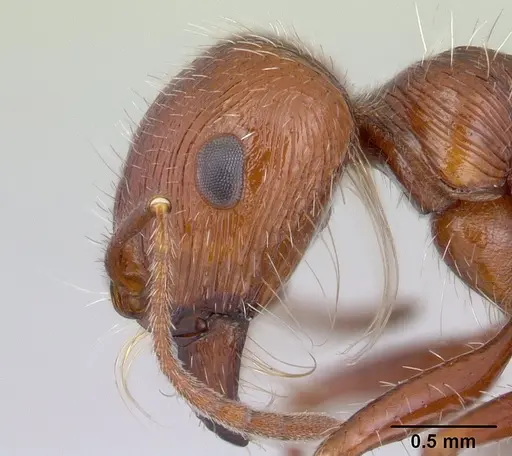
The psammophore (a basket of hairs around the mouth used for carrying sand and seeds) is well-developed in this species [1], indicating they are adapted to moving substrate particles, a naturalistic setup with a digging chamber will be appreciated.
Feeding and Diet
Pogonomyrmex mohavensis is a seed-harvester ant, in the wild, workers forage solitarily during the day harvesting seeds and related items [1]. This makes them similar to other Pogonomyrmex species in their dietary preferences.
In captivity, offer a varied diet including: seeds (millet, chia, flax, small bird seed mixes), protein sources (dead insects like mealworms, crickets, or fruit flies), and occasional sugar water or honey for energy. The seed-harvesting behavior means they will actively collect and store seeds in their nest, this is natural behavior and not a sign of problems.
Provide protein roughly twice weekly during the active growing season, and ensure seeds are always available in the outworld. Remove any uneaten seeds that could mold. Fresh water should always be available, a small water tube or cotton ball in a dish works well.
Temperature and Seasonal Care
As a Mohave Desert species, P. mohavensis is adapted to hot conditions. Keep the nest at 24-30°C during the active season, with a temperature gradient allowing workers to self-regulate. They can tolerate higher temperatures than many temperate ant species.
Like other Pogonomyrmex species, they require a winter rest period (diapause). Reduce temperatures to 10-15°C for 2-3 months during winter. This mimics natural seasonal cycles and supports colony health. Do not feed during diapause, but ensure water is available.
The mating flight timing is triggered by photoperiod (day length) rather than rainfall, unlike many other Pogonomyrmex species. Sexual larvae and pupae appear by late May, indicating reproductive development completes by mid-June, with mating flights predicted to occur over a 2-3 week period during early summer [1].
Behavior and Temperament
Workers of P. mohavensis are active daytime foragers that operate solitarily rather than in groups [1]. They are not overly aggressive but will defend their nest vigorously if threatened. The most important consideration for keepers is that Pogonomyrmex ants have a potent sting, these ants are known for causing painful welts, and the sting can cause allergic reactions in sensitive individuals. Handle with caution and avoid direct hand contact with workers or the nest.
Escape prevention is important, while not the smallest ants, they are good climbers and can escape through small gaps. Use standard barrier methods like Fluon on test tube rims and formicarium edges. Tight-fitting lids are essential.
The colony reaches approximately 600-700 workers at maturity [1], which is moderate for the genus. This means they won't become massive display colonies, but they are substantial enough to observe interesting behaviors.
Colony Founding and Development
Pogonomyrmex mohavensis follows the typical claustral founding pattern for the genus. A newly mated queen seals herself in a small chamber and raises her first brood alone, living entirely on her stored fat reserves until the nanitic (first) workers emerge. This founding process can take several months.
The queen is relatively large at 2.01-2.08mm head width [2], which suggests she has substantial energy reserves for claustral founding. After the first workers (nanitics) emerge, they will begin foraging to support the growing colony.
Based on related Pogonomyrmex species, expect 6-10 weeks from egg to first worker at optimal temperatures (around 26-28°C). Growth is moderate, colonies reach approximately 600-700 workers at maturity [1]. The sexual brood (alates) develops in spring, with larvae and pupae present by late May in wild colonies.
Frequently Asked Questions
How long does it take for Pogonomyrmex mohavensis to produce first workers?
Based on related Pogonomyrmex species, expect 6-10 weeks from egg to first worker at optimal temperatures (around 26-28°C). Claustral founding queens seal themselves in and raise the first brood alone, so this initial phase requires patience.
What do Pogonomyrmex mohavensis eat?
They are seed-harvester ants. In captivity, offer seeds (millet, chia, flax, small bird seed mixes), protein sources (dead insects like mealworms or fruit flies), and occasional sugar water or honey. They naturally forage for seeds and will store them in the nest.
How big do Pogonomyrmex mohavensis colonies get?
Colonies reach approximately 600-700 workers at maturity [1]. This is moderate for the genus, they won't become massive display colonies but are substantial enough for interesting observation.
Do Pogonomyrmex mohavensis need hibernation?
Yes, they require a winter rest period. Reduce temperatures to 10-15°C for 2-3 months during winter. This diapause period mimics natural seasonal cycles and supports colony health.
Can I keep multiple Pogonomyrmex mohavensis queens together?
No, this is a monogyne (single-queen) species. Each colony has one queen. Combining unrelated queens is not recommended and would likely result in fighting.
What temperature do Pogonomyrmex mohavensis need?
Keep them at 24-30°C during the active season. This desert species tolerates higher temperatures than many ants. Provide a temperature gradient so workers can self-regulate.
Are Pogonomyrmex mohavensis good for beginners?
They are rated as medium difficulty. While not the most challenging species, the potent sting and specific humidity requirements (dry desert conditions) make them better suited for keepers with some experience. Beginners should start with easier species.
When do Pogonomyrmex mohavensis have mating flights?
Mating flights occur during early summer over a 2-3 week period, triggered by photoperiod (day length) rather than rainfall. Sexual larvae and pupae appear by late May, indicating development completes by mid-June [1].
How do I identify Pogonomyrmex mohavensis?
Workers have six mandibular teeth (some have a tiny seventh as a denticle), rusty orange body color that is uniform across all body parts, and rugae on the head that extend directly to the vertex rather than forming circular whorls around the eyes [1]. The gaster is never dark brown to black.
References

This caresheet is licensed under CC BY-SA 4.0 .
CASENT0188646
View on AntWeb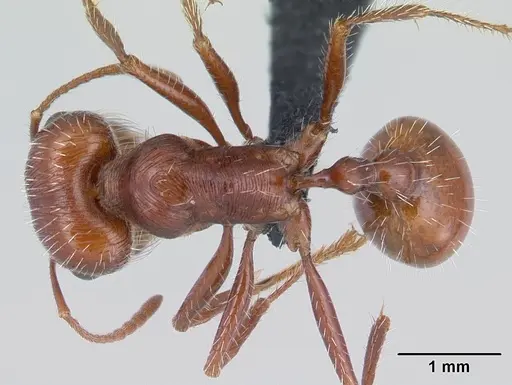
CASENT0188647
View on AntWeb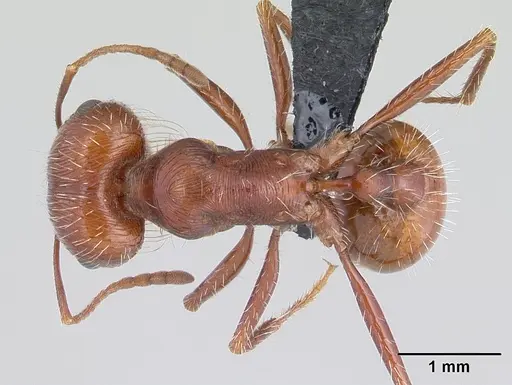
CASENT0188651
View on AntWeb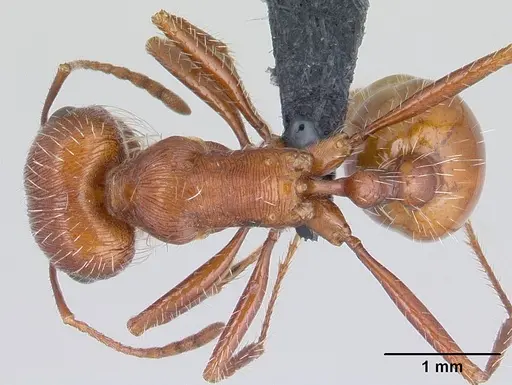
CASENT0249119
View on AntWeb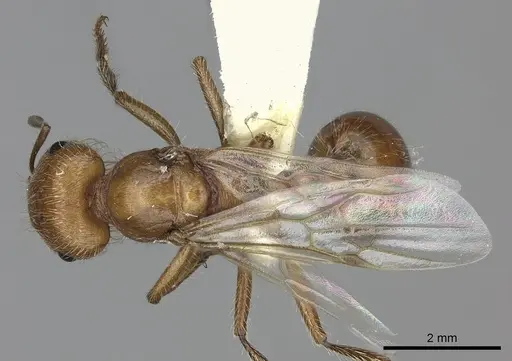
CASENT0914104
View on AntWeb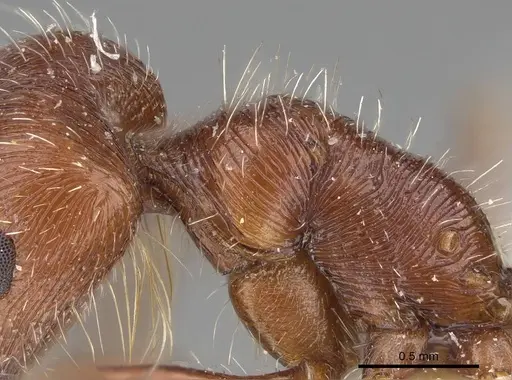
Literature
Loading...Loading products...