
Pogonomyrmex badius shows a May to July flight window. Peak activity occurs in June, with nuptial flights distributed across 3 months.
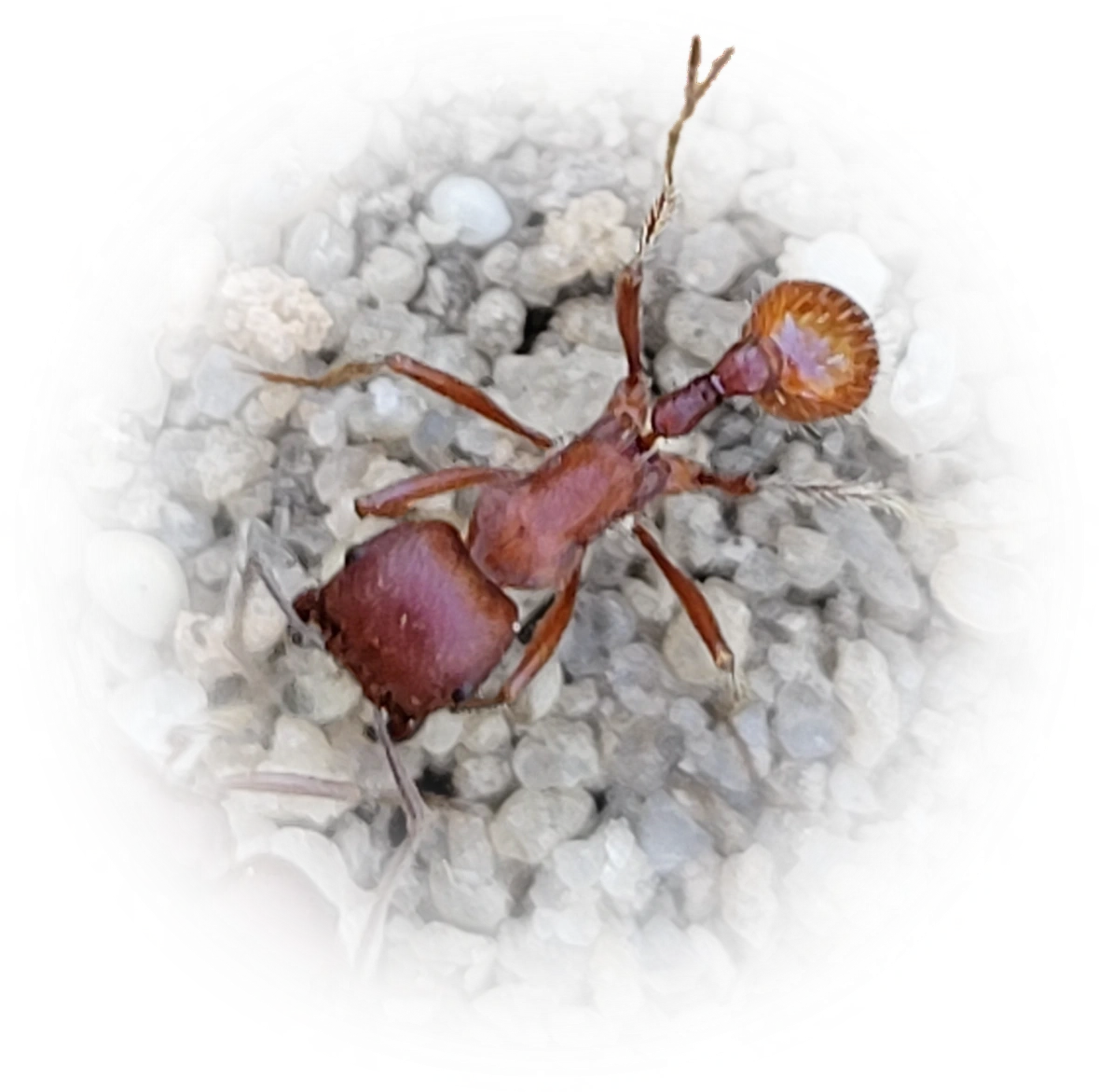
Pogonomyrmex badius
- Scientific Name
- Pogonomyrmex badius
- Tribe
- Pogonomyrmecini
- Subfamily
- Myrmicinae
- Author
- Latreille, 1802
- Common Name
- Florida Harvester Ant
- Distribution
- Found in 1 countries
- Nuptial Flight
- from May to July, peaking in June
AI Identifiable
try →
Pogonomyrmex badius Overview
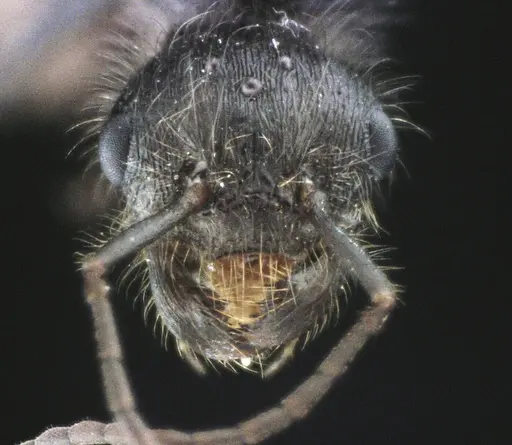
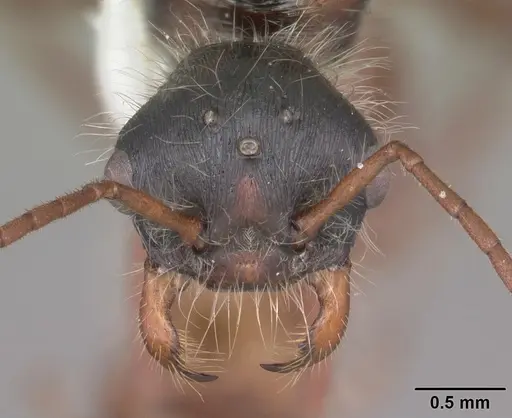
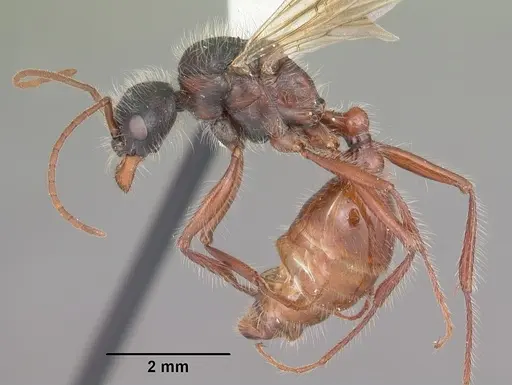
Pogonomyrmex badius (commonly known as the Florida Harvester Ant) is an ant species of the genus Pogonomyrmex. It is primarily documented in 1 countries , including United States of America. Detailed taxonomic data and occurrence records can be further explored via authoritative databases such as AntWeb or the Global Biodiversity Information Facility (GBIF).
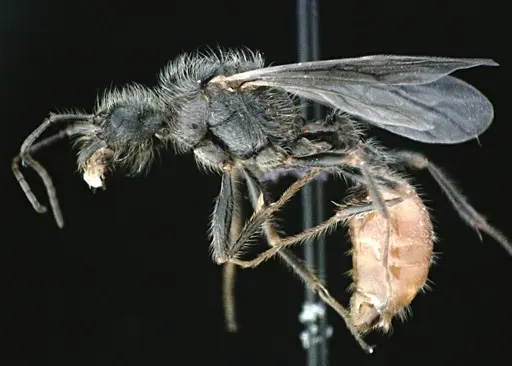
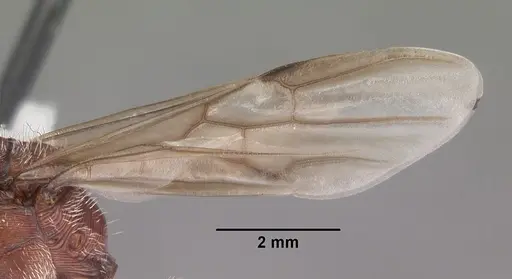
The nuptial flight of Pogonomyrmex badius is a significant biological event, typically occurring from May to July, peaking in June. During this time, winged queens and males leave the nest to mate and establish new colonies.
Pogonomyrmex badius - "Florida Harvester Ant"
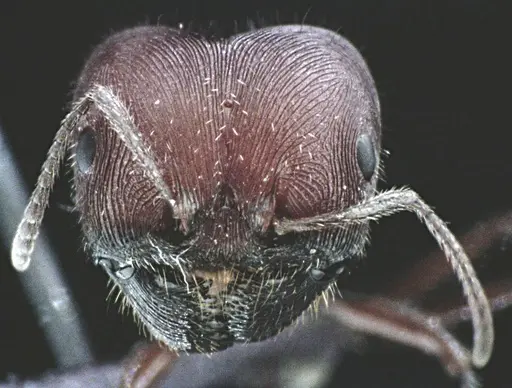
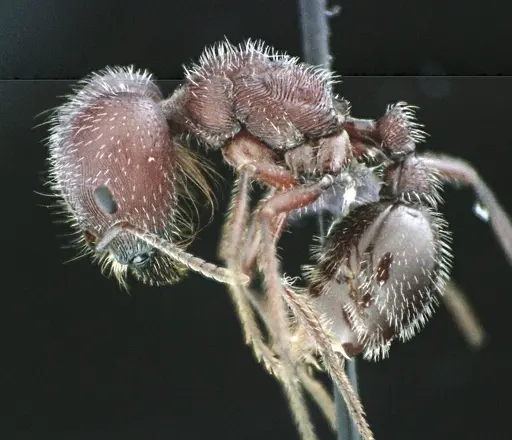
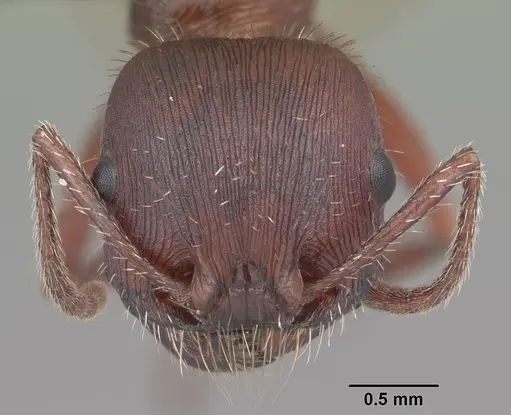
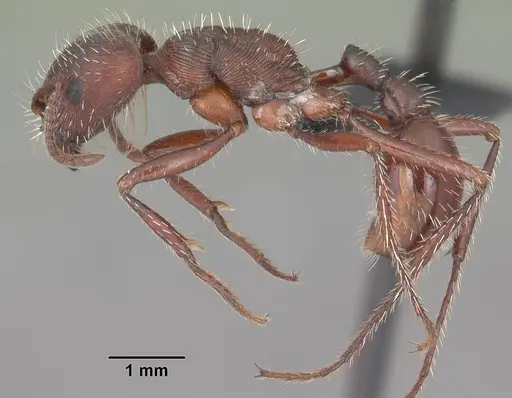
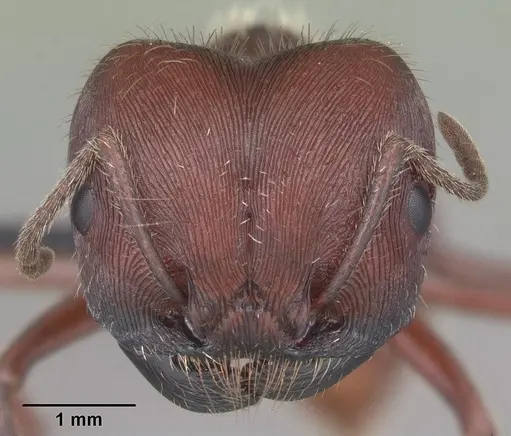
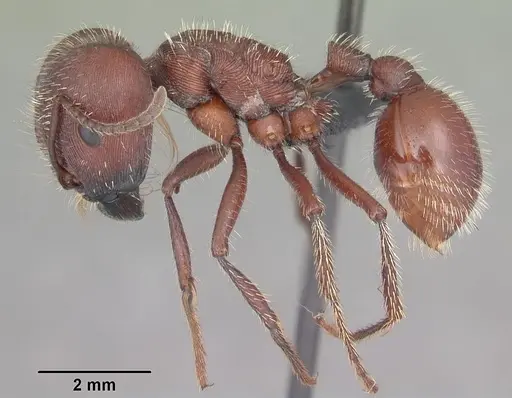
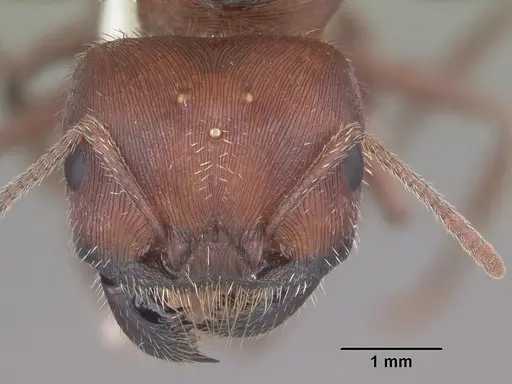
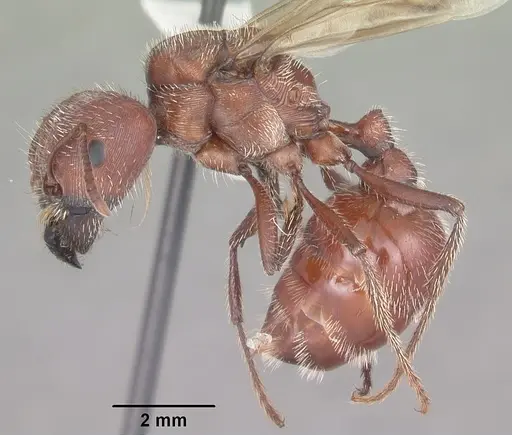
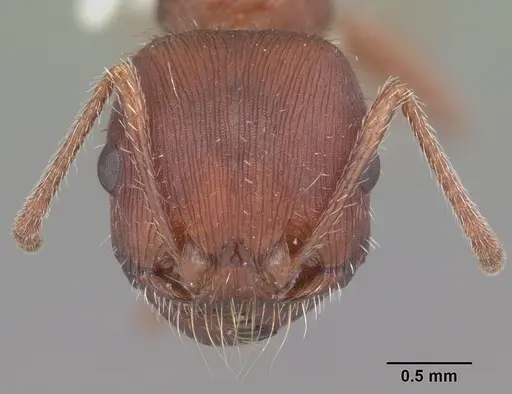
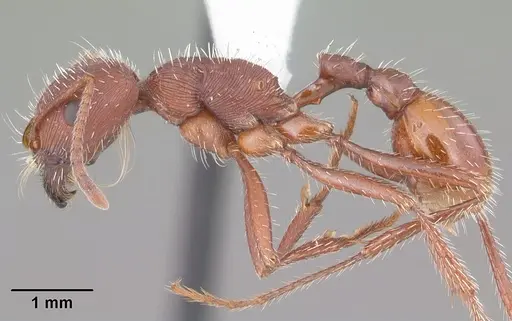
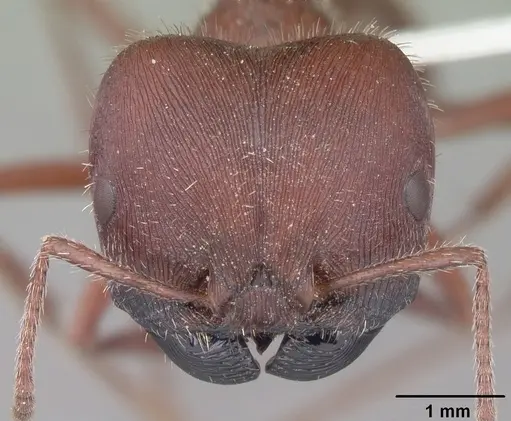
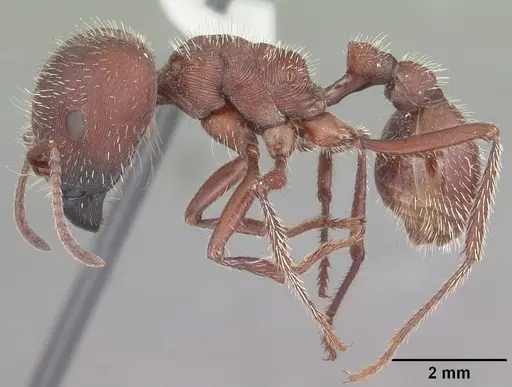
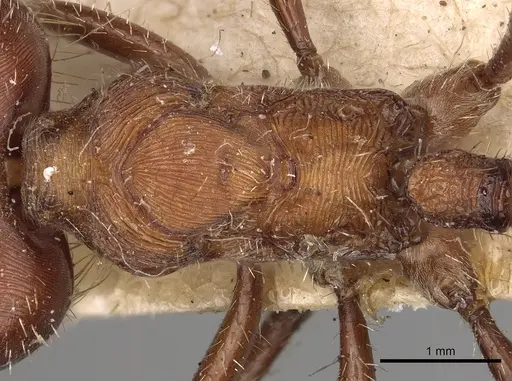
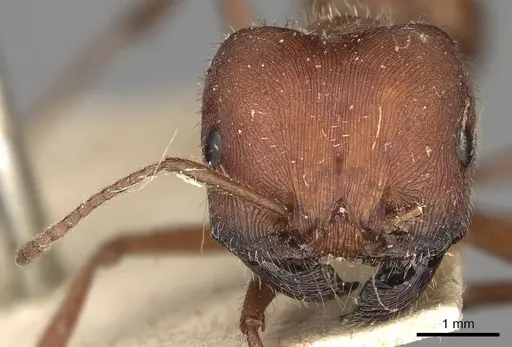
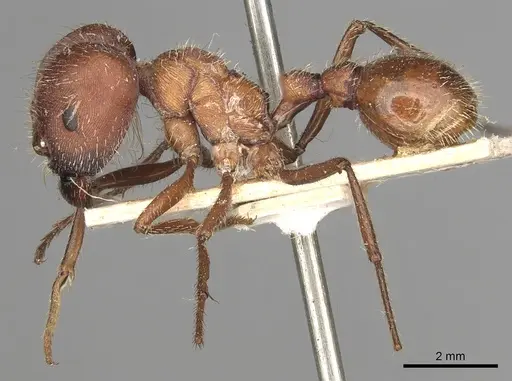
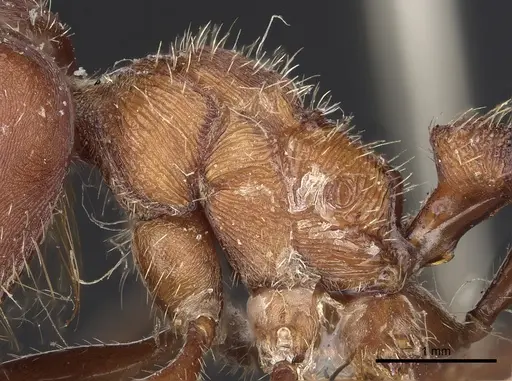
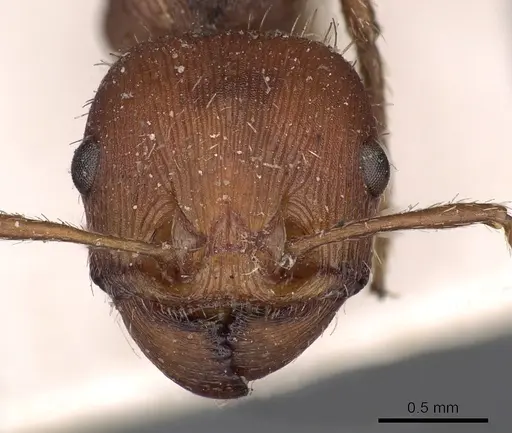
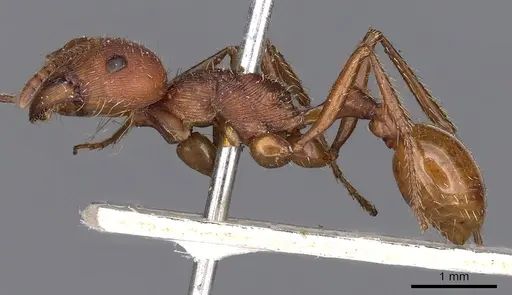
The Florida harvester ant is the only Pogonomyrmex species found east of the Mississippi River, making it a unique member of a genus otherwise dominated by western desert species. These ants are immediately recognizable by their polymorphic worker castes, minor workers are small and slender, while major workers have dramatically enlarged heads and powerful mandibles adapted for cracking seeds. Workers range from about 4mm (minors) to 10-12mm (majors), with a rich reddish-brown coloration. Queens are large and chunky, capable of living 18 years or more. Colonies are monogyne (single queen) but the queen mates with an extraordinary number of males, research shows 9-10+ mates per queen, one of the highest recorded mating frequencies in ants. This species builds remarkably deep nests (up to 3 meters) in well-drained sandy soils, with a distinctive architecture of helical shafts connecting horizontal chambers. The nest entrance is surrounded by a large, flattened crater decorated with charcoal pieces, a behavior unique among harvester ants. Their sting is among the most painful of any North American ant, delivering potent venom that ranks high on the Schmidt pain index.
Quick Summary
- Difficulty: Expert
- Origin & Habitat: Native to the southeastern United States, ranging from North Carolina south to Florida and west to Louisiana. Found in open, xeric natural communities including sand barrens, sandy ridges along streams, and longleaf pine sandhills. Requires deep, well-drained sandy soils for nesting [1][2].
- Colony Type: Monogyne (single queen) colonies with extremely high polyandry (queen mates with 9-10+ males). Colonies reach 11,000 workers at maturity, with major workers comprising about 7% of the workforce. Queen-worker thorax volume ratio is approximately 12:1 [3][4].
- Colony: Monogyne
- Founding: Claustral
- Size & Growth:
- Queen: 12-15 mm
- Worker: Minor: 4-6 mm, Major: 8-12 mm
- Colony: Up to 11,000 workers at maturity
- Growth: Moderate
- Development: 6-8 weeks (larval development 25 days + pupal development 14 days at optimal temperature) (Larvae develop for approximately 25 days, then pupate for about 14 days. First major workers appear in colonies with as few as 14-25 workers. Colonies reach maturity at approximately 700 workers and take about 6 years to reach full size [5].)
- Antkeeping:
- Temperature: Keep around 24-30°C. Colonies are active from March to November in their native range and require a winter diapause (colony becomes inactive December-February). Provide a temperature gradient allowing workers to self-select their preferred zone [4].
- Humidity: Low to moderate. Native to dry, well-drained sandy habitats. Keep nest substrate dry to moderately moist, avoid excessive moisture. Colonies decorate their nest discs with charcoal, which may help regulate surface temperature and moisture [6][7].
- Diapause: Yes, colonies become inactive during winter (December to February in temperate climates). Reduce temperature to 10-15°C during this period and do not feed. Activity resumes in March or April [4].
- Nesting: Requires deep, sandy nesting material, this is critical. Provide at least 30-40 cm of depth, preferably more (up to 60+ cm for mature colonies). Use coarse, well-drained sand or a sandy soil mix. The nest architecture is top-heavy with largest chambers near the surface, so provide multiple chamber levels. Y-tong or plaster nests work well, but must accommodate deep excavation. The unique helical shaft structure cannot be replicated in captivity, but deep chambers at various levels satisfy their behavioral requirements [8][9].
- Behavior: Highly defensive with a painful sting, this species should only be kept by experienced antkeepers. Workers are dimorphic with major workers serving as seed-crackers and defenders. Foraging peaks in summer when 35-41% of the colony is actively foraging. Foragers live only about 27 days, turnover is extremely rapid. Workers are age-polyethic: young workers (callows) remain deep in the nest with brood, while older workers patrol and forage near the surface. Colonies relocate approximately once per year, moving an average of 4 meters to excavate a completely new nest. This species collects charcoal pieces for their nest middens, the function is unclear but may relate to temperature regulation or chemical deterrence. They are aggressive defenders and will readily sting handlers who disturb the nest [4][10][2].
- Common Issues: Sting severity, this species has one of the most painful stings among North American ants. Handle with extreme caution and wear protection., Deep nesting requirement, inadequate depth leads to stress and abnormal behavior. Provide minimum 30-40 cm of sandy substrate., Annual colony relocation, colonies will dig new nests nearby each year, requiring space and potentially disturbing setup., Winter dormancy, colonies must be cooled (10-15°C) for 2-3 months or they will decline. This is non-negotiable., Low flexibility in labor allocation, if foragers are removed, colonies cannot replace them quickly, leading to larval starvation. Maintain stable colony populations., Colony relocation stress, moving can cause significant mortality. Allow colonies to excavate naturally and minimize disturbance during this period.
Nuptial Flight Activity Analysis 124 observations
Flight Activity by Hour 124 observations
Pogonomyrmex badius nuptial flight activity peaks around 10:00 during the late morning to early afternoon. Activity is spread across a 12-hour window (08:00–19:00). A secondary activity peak occurs around 12:00. Times may be influenced by human observation patterns.
Housing and Nest Setup
Pogonomyrmex badius presents unique housing challenges due to its deep nesting requirements and annual relocation behavior. In the wild, colonies excavate nests 2-3 meters deep with helical shafts and horizontal chambers. In captivity, provide at least 30-40 cm of depth, though 50-60 cm is ideal for established colonies. Use a coarse, sandy substrate (play sand or a sandy soil mix works well) that drains quickly. Avoid compacted or clay-heavy soils. Y-tong (acrylic) nests with deep chambers or custom-built deep formicaria work best. Plaster nests can work but may need reinforcement. The outworld should include a foraging area with a sand substrate where workers can search for seeds and insects. Because colonies relocate annually (typically excavating a new nest nearby), leave adequate space in the setup for this behavior. Expect the colony to dig extensively, this is normal and healthy. The distinctive charcoal-decorated crater at the nest entrance cannot be replicated in captivity but indicates their preference for open, sandy nesting areas [8][9][6].
Feeding and Diet
As seed harvesters, these ants primarily collect and process seeds, but also supplement their diet with insects. In captivity, offer a mix of grass seeds, millet, sunflower seeds (cracked), and other small seeds. Major workers can crack larger seeds that minors cannot, but even they struggle with very large seeds, the largest seeds accumulate unused in seed stores. Importantly, these ants have a unique relationship with germinating seeds: they store seeds in damp underground chambers where germination occurs, then preferentially feed germinating seeds to larvae. You can simulate this by occasionally offering seeds that have been soaked and allowed to sprout slightly. Protein should be provided as small insects (fruit flies, small crickets, mealworms) approximately twice weekly. Sugar water or honey can be offered occasionally but is not a primary food source. Workers will take liquid foods via trophallaxis. The colony maintains seed stores that can number over 300,000 seeds in large colonies, this is a long-term strategy, not emergency food. When colonies were experimentally prevented from foraging, they did NOT access their seed stores, leading to larval starvation [11][12][2].
Temperature and Seasonal Care
Keep colonies at 24-30°C during the active season (March through November). A temperature gradient is ideal, allowing workers to self-regulate their body temperature. In the wild, foragers are active when surface temperatures exceed 25°C but cease activity above 45°C. During summer peaks, you may see reduced midday foraging as temperatures climb. Starting in late November or early December, the colony enters winter dormancy. Reduce temperature to 10-15°C and stop feeding entirely for 2-3 months. This diapause period is essential for colony health, without it, reproduction and development become abnormal. In 2011 (an extreme drought year), early pupation failure was observed, demonstrating how environmental conditions affect their cycle. Resume normal temperatures and feeding in March or April when you see increased activity. The colony's annual cycle is remarkably predictable: foraging begins in early spring, peaks in midsummer when 35-41% of workers are foraging, then declines through autumn to zero by December [4][13]
Behavior and Defense
This is an advanced species requiring experienced handling due to its potent sting. Pogonomyrmex badius venom ranks among the most painful of North American ants, the Schmidt sting pain index gives it a high rating, and the venom contains phospholipases, hyaluronidase, and other potent compounds. When disturbed, workers readily sting, and the pain can last for hours. Major workers are rarely seen outside the nest except during territorial conflicts or colony relocation, they primarily serve as seed processors and defenders within the nest. Workers are highly stratified by age within the nest: the youngest workers (callows) remain deep with brood, middle-aged workers handle nest maintenance and seed transport, and the oldest workers become foragers near the surface. This age-based stratification means foragers are always found in the top 12 cm of even the deepest nests. Forager turnover is extremely rapid, workers live only about 27 days once they begin foraging. The colony maintains a roughly constant ratio of 1.6 foragers per larva, and this allocation follows a predictable seasonal pattern regardless of conditions [4][10][14]
Colony Relocation
One of the most fascinating behaviors of P. badius is annual colony relocation. In the wild, colonies move approximately once per year, excavating an entirely new nest nearby (average distance 4 meters) and moving the entire colony into it over 4-6 days. This process involves massive excavation, a mature colony may move 3-4 liters of sand during relocation. Workers transport brood, seeds, and charcoal to the new nest in a carefully organized sequence. In captivity, expect your colony to attempt this behavior. Provide adequate space for excavation, and resist the urge to interfere. The colony will dig extensively during relocation, which is stressful but normal. After relocation, the new nest is typically larger than the old one. Studies show colonies that move more frequently tend to be smaller, suggesting relocation carries costs. The direction of each move is random, over multiple moves, colonies perform a random walk around their original location [15][16]
Growth and Development
Colony growth follows a predictable pattern tied to the annual cycle. Eggs are laid in spring, and larvae develop through summer. The first new workers (callows) appear in late May or June. These summer-born workers develop rapidly, becoming foragers at just 43 days of age, remarkably fast. In contrast, workers born in autumn overwinter and don't become foragers until the following July, making them 210-360 days old. This dual development rate creates two distinct 'cohorts' of workers with very different lifespans. The colony reaches maturity at approximately 700 workers, and maximum size of about 11,000 workers. Sexual alates (new queens and males) are produced in spring and released in June. The queen mates with many males (9-10+ on average), and there is a genetic component to worker caste determination, different patrilines have different tendencies to develop as major or minor workers. Major workers typically appear when colonies reach 14-25 workers [4][3][5]
Frequently Asked Questions
How deep does Pogonomyrmex badius need to nest?
In the wild, colonies dig nests 2-3 meters deep. In captivity, provide at least 30-40 cm of depth, though 50-60 cm is much better for established colonies. Use coarse, well-drained sandy substrate. Without adequate depth, colonies become stressed and may exhibit abnormal behavior [8][9].
Do Florida harvester ants need hibernation?
Yes, they require a winter dormancy period. In their native range, colonies become inactive from December through February. Reduce temperatures to 10-15°C and stop feeding during this period. This diapause is essential for normal colony development and reproduction [4].
What do Pogonomyrmex badius eat?
They are seed harvesters, offer various small seeds (grass, millet, cracked sunflower). They also need protein from insects (fruit flies, small crickets, mealworms) offered 1-2 times weekly. They have a unique behavior of storing seeds in damp chambers where germination occurs, germinating seeds are preferentially fed to larvae [11][12].
How big do colonies get?
Mature colonies reach 11,000 workers at maximum size. They reach maturity at approximately 700 workers and take about 6 years to reach full size. Major workers comprise about 7% of the workforce [4][3].
How often do colonies relocate?
Approximately once per year on average. Colonies excavate an entirely new nest nearby (average 4 meters away) and move the entire colony into it over 4-6 days. This is normal behavior, provide space for excavation and minimize disturbance during relocation [15].
Can I keep multiple queens together?
No. This is a monogyne species with a single queen per colony. Unlike some Pogonomyrmex species, they do not form multi-queen colonies. Introducing additional queens will result in fighting and likely death [3].
Why do they collect charcoal?
The function of charcoal collection is not fully understood. It may help regulate soil temperature, deter other ant species from entering their territory, or serve some other adaptive purpose. This behavior is unique among Pogonomyrmex species and is a distinctive trait of P. badius [6][7].
How long does it take for first workers to appear?
As a claustral founder, the queen seals herself in and raises first workers alone. Development takes approximately 6-8 weeks from egg to worker (25 days larval + 14 days pupal). First major workers appear when colonies reach 14-25 workers [5].
Are these ants good for beginners?
No. This is an expert-level species due to several factors: (1) extremely painful sting requiring careful handling, (2) deep nesting requirements, (3) annual relocation behavior, (4) mandatory winter dormancy, and (5) low flexibility in labor allocation meaning colonies are sensitive to disturbance. Only experienced antkeepers should attempt this species [10][4].
References

This caresheet is licensed under CC BY-SA 4.0 .
ANTWEB1041486
View on AntWeb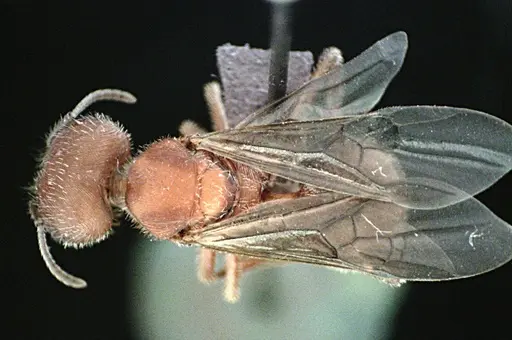
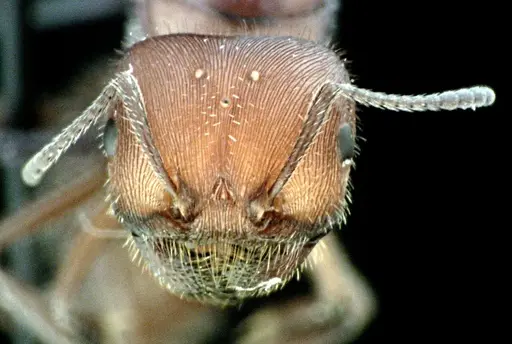
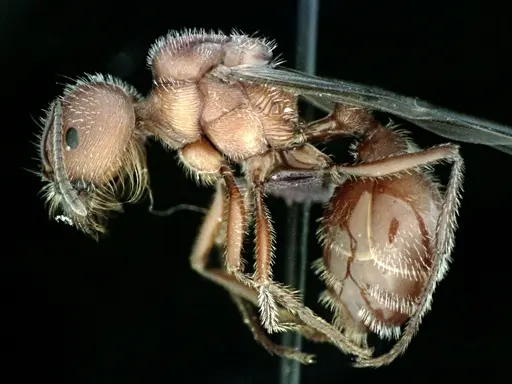
ANTWEB1041487
View on AntWeb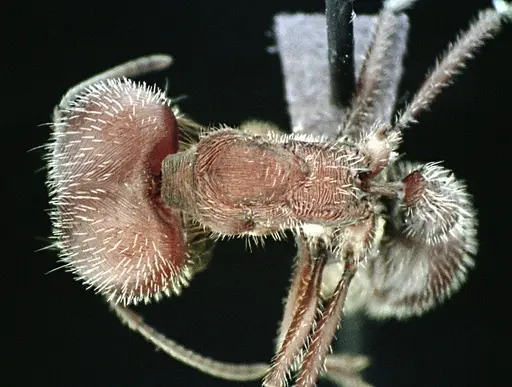
ANTWEB1041488
View on AntWeb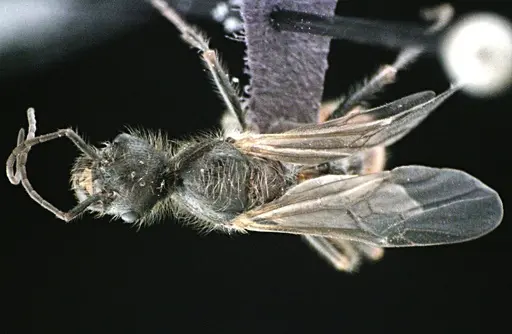
CASENT0103056
View on AntWeb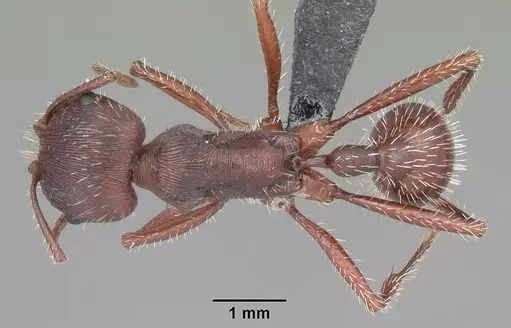
CASENT0103057
View on AntWeb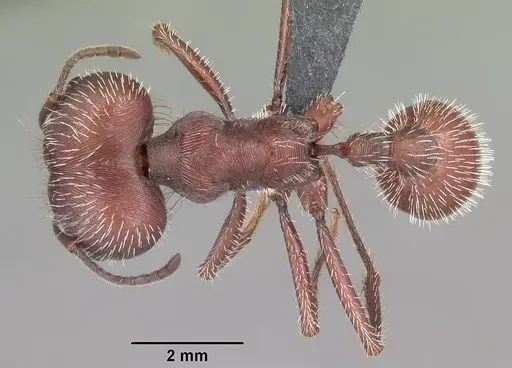
CASENT0104421
View on AntWeb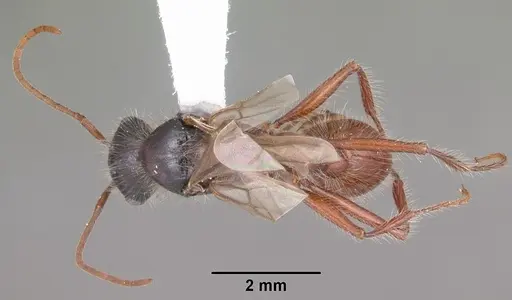
CASENT0104422
View on AntWeb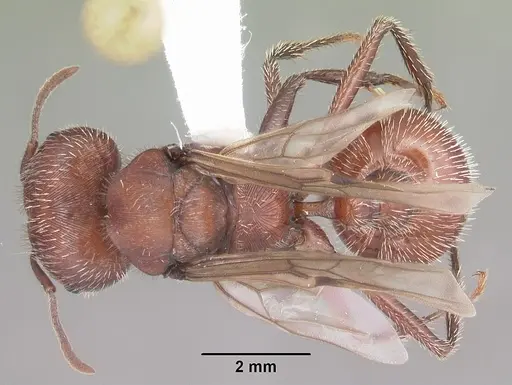
CASENT0104423
View on AntWeb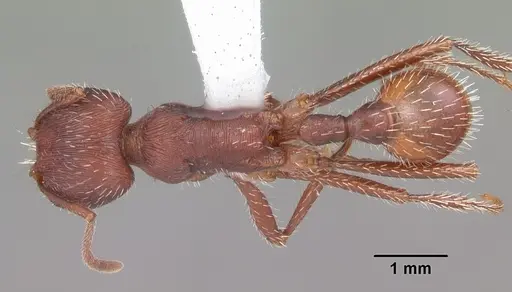
CASENT0104424
View on AntWeb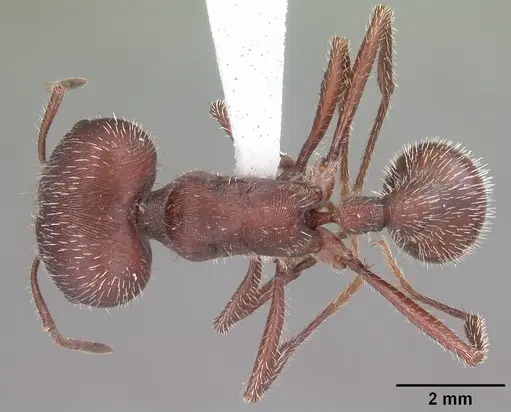
CASENT0281110
View on AntWeb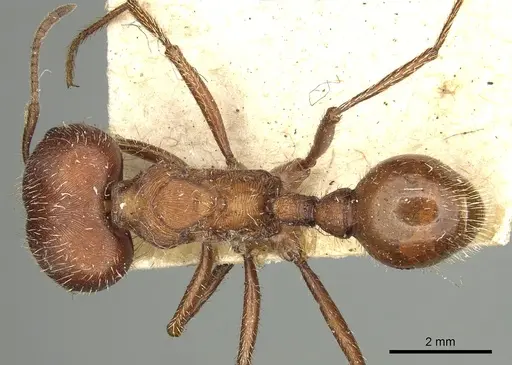
CASENT0900375
View on AntWeb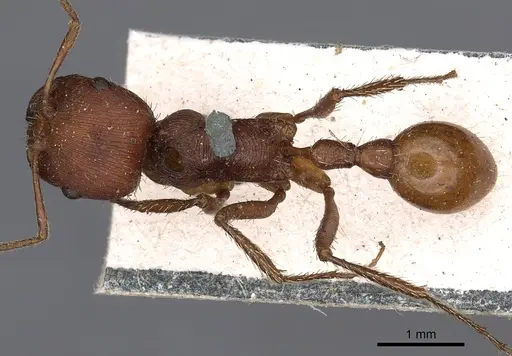
Literature
Loading...Loading products...