

Podomyrma abdominalis
- Scientific Name
- Podomyrma abdominalis
- Tribe
- Crematogastrini
- Subfamily
- Myrmicinae
- Author
- Emery, 1887
- Distribution
- Found in 1 countries
Podomyrma abdominalis Overview
Podomyrma abdominalis is an ant species of the genus Podomyrma. It is primarily documented in 1 countries , including Papua New Guinea. Detailed taxonomic data and occurrence records can be further explored via authoritative databases such as AntWeb or the Global Biodiversity Information Facility (GBIF).
Podomyrma abdominalis
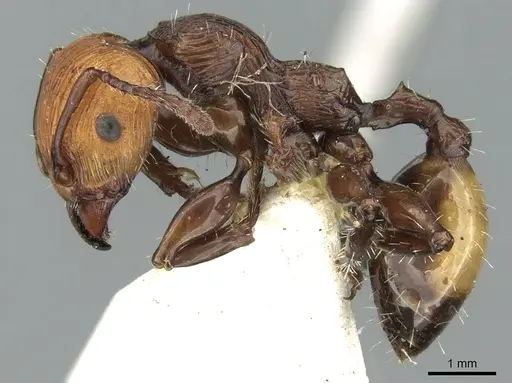
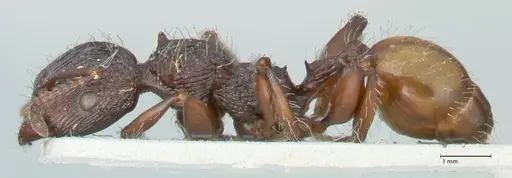
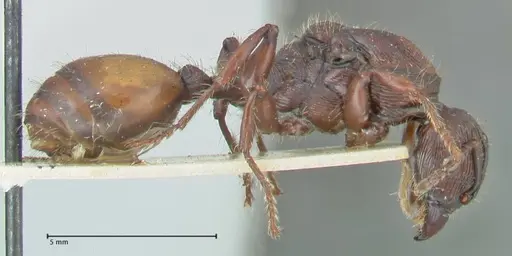
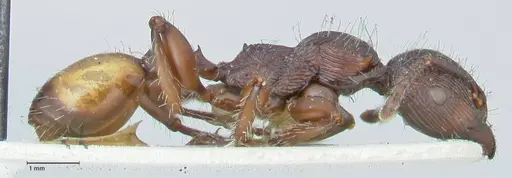
Podomyrma abdominalis is a medium-sized ant species native to the Australasian region, found throughout Indonesia and northern Australia. Workers measure 8.5-11mm and have a distinctive dark brown to black body (fusco-nigra) with notably pale abdominal segments, the first abdominal segment and often the entire abdomen is yellowish-testaceous, giving them a striking two-toned appearance. The head is roughly square with rounded corners, and the thorax bears distinct pronotal teeth. This species belongs to the ruficeps species group and was originally described by Emery in 1887 from Ternate in the Moluccas Islands [1][2].
The biology and colony structure of this species remain poorly documented in scientific literature. As a Podomyrma species, they are likely ground-nesting ants found in tropical and subtropical habitats across their range. The limited available information makes this a species best suited for experienced antkeepers who enjoy documenting and discovering behaviors through observation.
Quick Summary
- Difficulty: Medium
- Origin & Habitat: Native to the Australasian region, found throughout Indonesia (particularly Ternate in the Moluccas) and northern Australia. They inhabit tropical and subtropical environments, likely nesting in soil or under stones in ground-level habitats [1][2].
- Colony Type: Unconfirmed colony structure. The colony type (single queen vs multiple queens) has not been documented in scientific literature for this species.
- Size & Growth:
- Queen: Unknown, queen size has not been documented in available literature
- Worker: 8.5-11mm [1]
- Colony: Unknown, no colony size data available
- Growth: Unknown
- Development: Unknown, development timeline has not been studied for this species (Based on typical Myrmicinae patterns, expect 6-10 weeks at optimal temperature, but this is an estimate)
- Antkeeping:
- Temperature: Likely 22-28°C based on their tropical/subtropical distribution. Start in this range and observe colony activity. Related Podomyrma species from similar habitats suggest they prefer warm, stable conditions.
- Humidity: Likely moderate to high humidity (60-80%) reflecting their tropical origin. Keep substrate consistently moist but not waterlogged.
- Diapause: Unknown, tropical species may not require true hibernation, but may show reduced activity during cooler months.
- Nesting: Likely ground-nesting based on typical Podomyrma behavior. A naturalistic setup with soil substrate or a Y-tong/plaster nest with moisture retention would likely work well. Provide a moisture gradient so ants can self-regulate.
- Behavior: Behavior is not well documented. As a medium-sized Myrmicinae, they likely have moderate foraging activity and may be somewhat aggressive in defending their nest. Their large size (up to 11mm workers) suggests they could accept a variety of protein foods. Escape prevention should be moderate, their size makes them less likely to escape through tiny gaps compared to very small ants, but standard barrier methods are still recommended.
- Common Issues: limited availability, this species is rarely available in the antkeeping hobby, no documented colony structure makes it difficult to know optimal founding conditions, behavior and exact dietary preferences are unknown, requiring experimentation, growth rate and development timeline are unconfirmed, making it hard to track colony health, tropical origin means they may be sensitive to temperature drops
Appearance and Identification
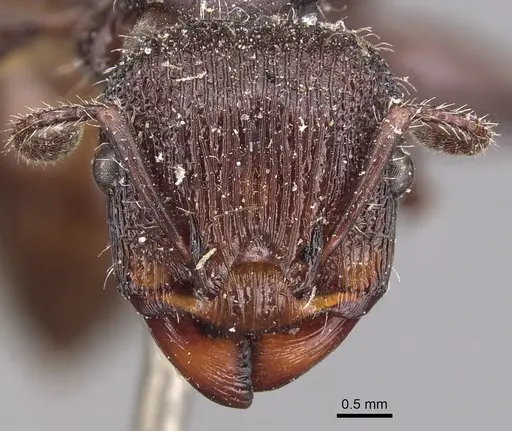
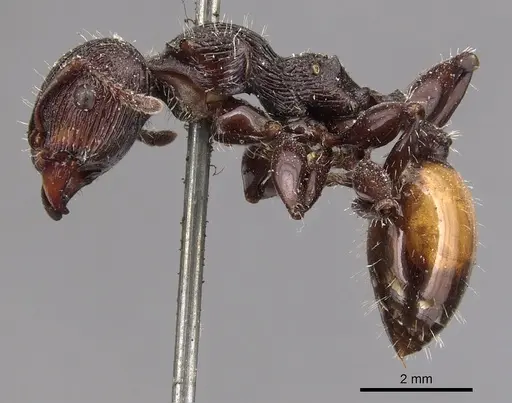
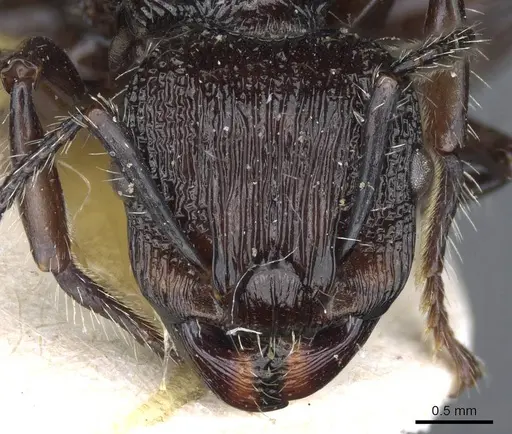
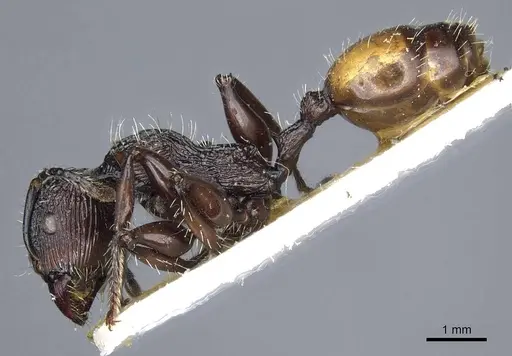
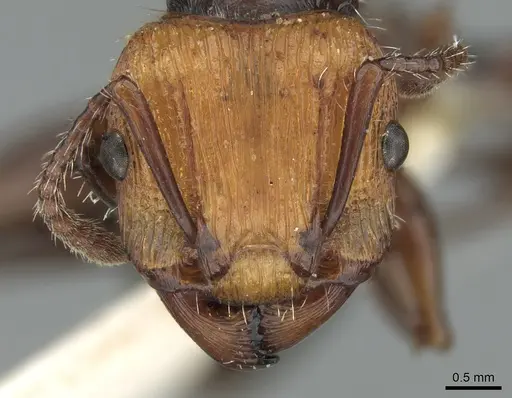
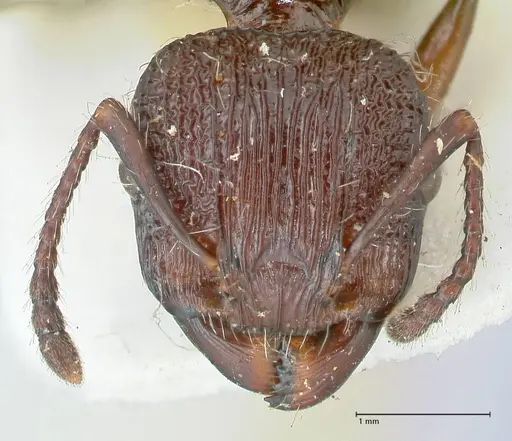
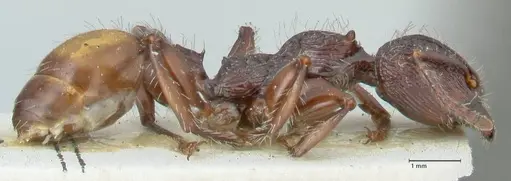
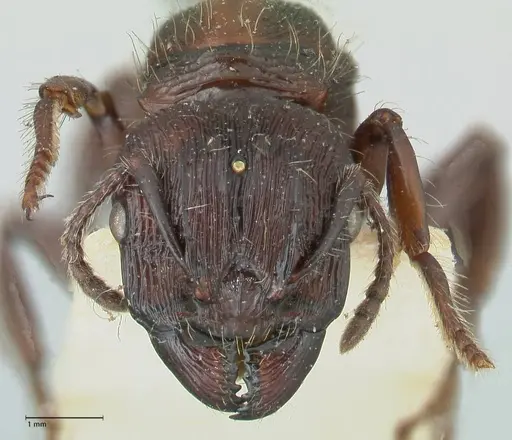
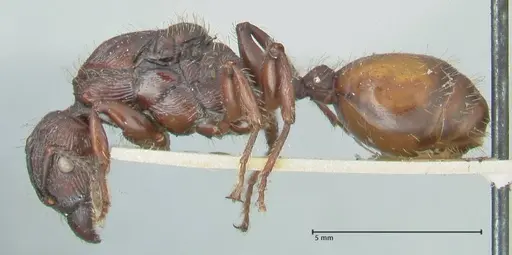
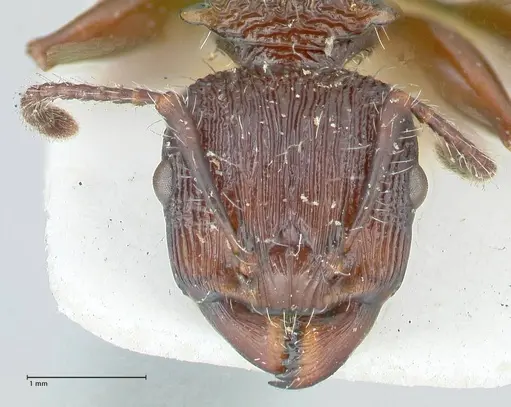
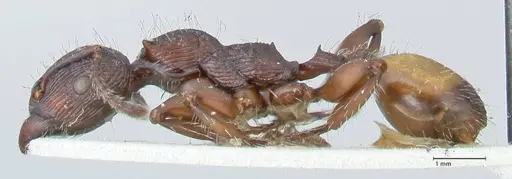
Podomyrma abdominalis workers are relatively large for a Myrmicinae ant, measuring 8.5-11mm. They have a distinctive color pattern: the body is dark brown to black (fusco-nigra) with the mouthparts, antennae, trochanters, and tarsi being rusty (ferrugineous). Most notably, the first abdominal segment and often the entire abdomen is yellowish-testaceous, creating a striking contrast that makes them easily identifiable. The head is roughly square with rounded posterior corners, and the thorax bears distinct pronotal teeth. The petiole (waist) has characteristic features with an elongated first segment that is smooth at the front and rugose in the middle, often with a small tubercle or transverse carina. This species can be distinguished from related species like P. striata by the lack of acute teeth on the first peduncular segment [1].
Distribution and Habitat
This species has a broad distribution across the Australasian region, found in both Indonesia (particularly the Moluccas Islands including Ternate) and northern Australia. As a tropical to subtropical species, they likely inhabit warm, relatively humid environments. In their natural range, they probably nest in soil or under stones in ground-level habitats. The variation in color and sculpture noted in original descriptions suggests some geographic variation across their range. The metanotal rugosity varies significantly between specimens, sometimes longitudinal, other times irregular or even transverse [1].
Housing and Nesting
Since specific nesting requirements are not documented, use standard approaches for medium-sized tropical Myrmicinae ants. A naturalistic setup with a soil substrate works well for observing natural behaviors, or a Y-tong/plaster nest with moisture retention for easier maintenance. Provide a moisture gradient within the nest so ants can self-regulate their humidity needs. Given their size (up to 11mm), chambers and passages should be appropriately scaled. Include an outworld area for foraging. Since their exact humidity needs are unknown, start with moderate-high humidity (around 60-80%) and observe colony behavior, if workers cluster in damp areas, increase moisture, if they avoid certain areas, reduce accordingly.
Feeding and Diet
Dietary preferences are not documented for this species. As medium-sized Myrmicinae ants, they likely have omnivorous tendencies typical of the genus. Offer a variety of foods including protein sources (small insects like fruit flies, mealworms, or crickets) and sugar sources (honey water or sugar water). Start with protein foods and observe acceptance. Since their natural diet is unknown, you may need to experiment to determine preferences. Feed protein 2-3 times per week and keep sugar water available continuously. Remove uneaten prey after 24-48 hours to prevent mold.
Temperature Requirements
As a tropical/subtropical species from Indonesia and Australia, Podomyrma abdominalis likely prefers warm conditions. Based on their geographic distribution, aim for temperatures in the 22-28°C range. Start around 24-26°C and observe colony activity, if workers become sluggish, increase slightly, if they avoid heated areas, reduce temperature. Use a heating cable on one side of the nest to create a gentle gradient, allowing ants to self-regulate. Avoid temperature extremes and sudden fluctuations. Room temperature within this range may be sufficient in warmer climates.
Colony Establishment
Since the colony type and founding behavior are unconfirmed, establishing a colony will require some experimentation. If you obtain a queen, provide her with a claustral setup (dark, quiet environment) with a small moisture source. Do not disturb her during the founding phase, queens of many Myrmicinae seal themselves in and survive on stored fat reserves until first workers emerge. Expect 4-8 weeks for eggs to develop into workers at warm temperatures, though exact timeline is unknown for this species. Once workers emerge, gradually introduce small prey items and expand care as the colony grows.
Frequently Asked Questions
How long does it take for Podomyrma abdominalis to go from egg to worker?
The exact development timeline has not been documented for this species. Based on typical Myrmicinae patterns, expect approximately 6-10 weeks at optimal warm temperatures (around 24-26°C), but this is an estimate rather than a confirmed value.
What do Podomyrma abdominalis ants eat?
Their exact dietary preferences are unknown. As medium-sized Myrmicinae, they likely accept protein sources like small insects (fruit flies, mealworms, small crickets) and sugar sources (honey water, sugar water). Start with protein foods and experiment to see what they accept best.
Are Podomyrma abdominalis good for beginners?
This species is not recommended for beginners. It is rarely available in the antkeeping hobby, and the lack of documented care information means keepers must experiment with temperature, humidity, and diet. Experienced antkeepers who enjoy discovering behaviors through observation will have better success.
How big do Podomyrma abdominalis colonies get?
Colony size data is not available for this species. Based on worker size (8.11mm), colonies likely reach moderate sizes, but exact maximums are unknown.
Do Podomyrma abdominalis ants sting?
Stinging behavior has not been documented for this species. As a Myrmicinae, they likely have a stinger, but given their size, any sting would likely be mild. Handle gently regardless.
What temperature should I keep Podomyrma abdominalis at?
Based on their tropical distribution, aim for 22-28°C. Start around 24-26°C and adjust based on colony activity. Use a heating cable on one side of the nest to create a gradient.
Can I keep multiple Podomyrma abdominalis queens together?
Colony structure (monogyne vs polygyne) has not been documented for this species. Until more information is available, it is not recommended to combine unrelated queens.
Do Podomyrma abdominalis need hibernation?
Diapause requirements are unknown. As a tropical species from Indonesia and northern Australia, they likely do not require true hibernation. They may show reduced activity during cooler months but probably do not need cold treatment.
Where is Podomyrma abdominalis found?
This species is native to the Australasian region, found throughout Indonesia (particularly Ternate in the Moluccas) and northern Australia [1][2].
References

This caresheet is licensed under CC BY-SA 4.0 .
CASENT0904705
View on AntWeb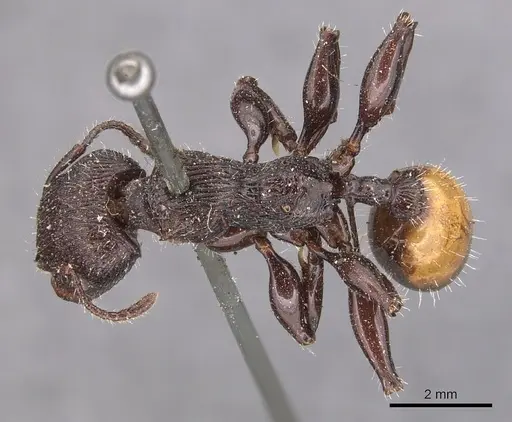
CASENT0905750
View on AntWeb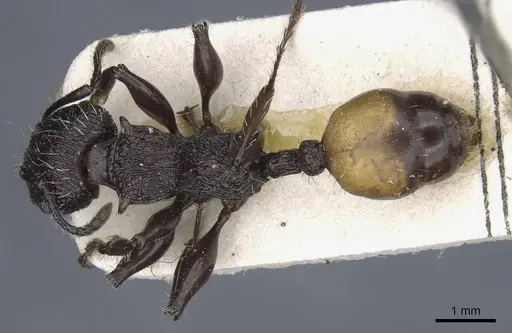
CASENT0906188
View on AntWeb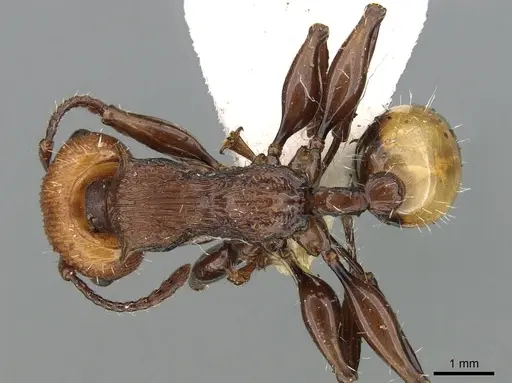
FOCOL1999
View on AntWeb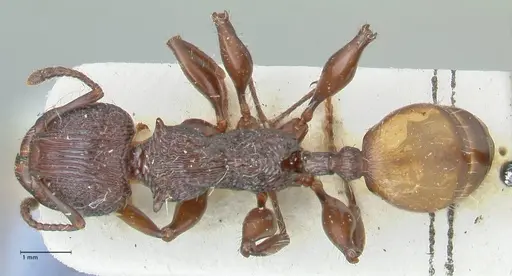
FOCOL2000
View on AntWeb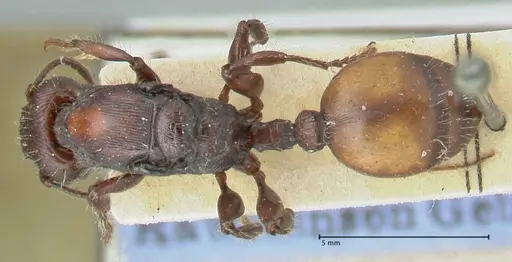
FOCOL2001
View on AntWeb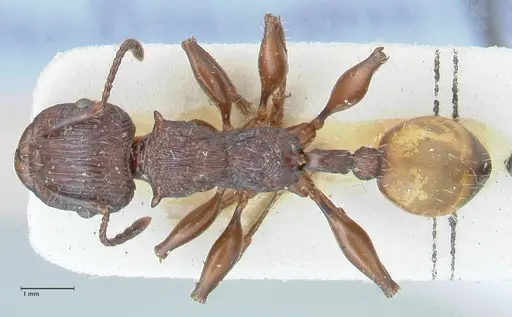
Literature
Loading...Loading products...