

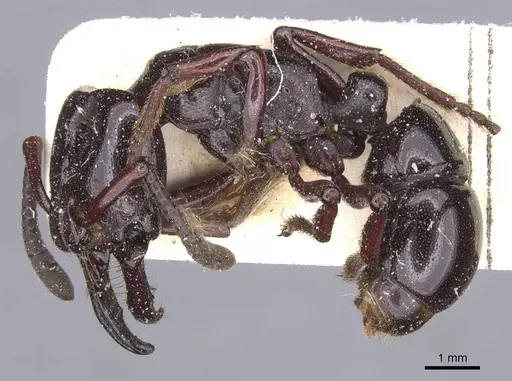
Plectroctena latinodis
- Scientific Name
- Plectroctena latinodis
- Tribe
- Ponerini
- Subfamily
- Ponerinae
- Author
- Santschi, 1924
- Distribution
- Found in 1 countries
Plectroctena latinodis Overview
Plectroctena latinodis is an ant species of the genus Plectroctena. It is primarily documented in 1 countries , including Congo, Democratic Republic of the. Detailed taxonomic data and occurrence records can be further explored via authoritative databases such as AntWeb or the Global Biodiversity Information Facility (GBIF).
Plectroctena latinodis
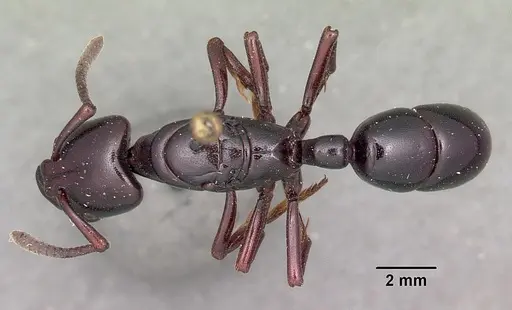
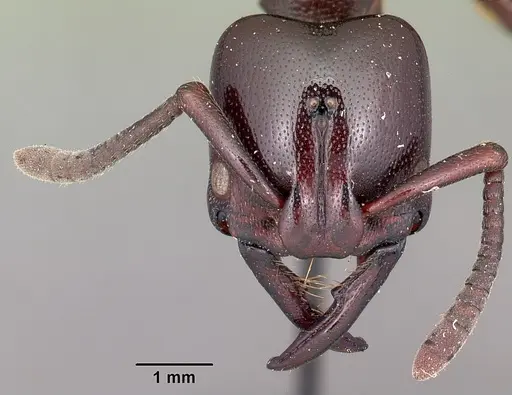
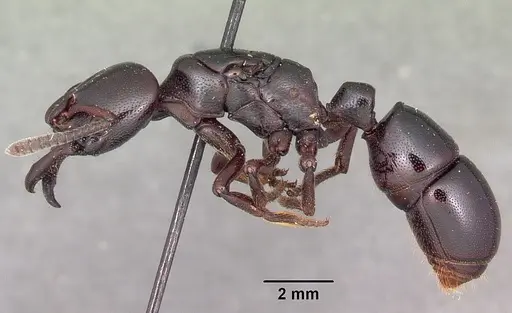
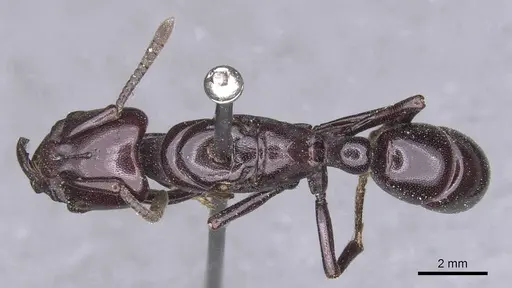
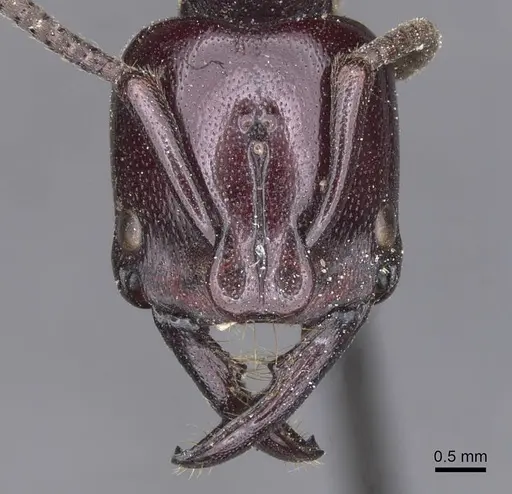
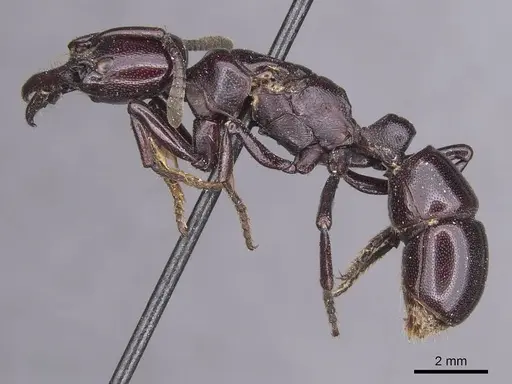
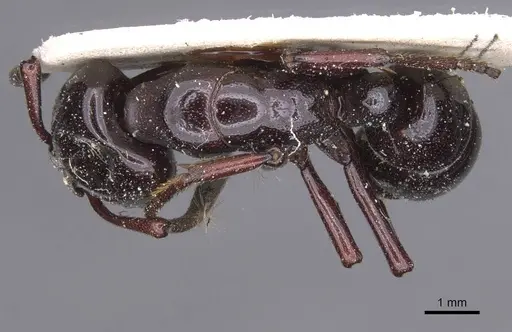
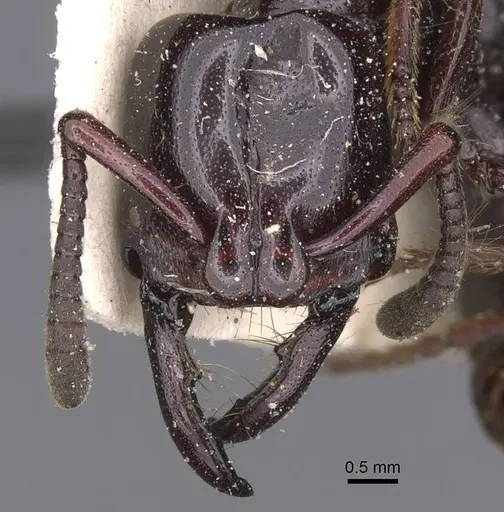
Plectroctena latinodis is a predatory ant species native to the Democratic Republic of Congo in Central Africa. These ants belong to the subfamily Ponerinae, known for their powerful mandibles and potent stings. Workers are medium-sized and robust, typically measuring 12-18mm. The genus Plectroctena is characterized by distinctive elongated mandibles adapted for capturing prey, and this species exhibits the typical genus morphology with a sleek, dark body and well-developed sting apparatus. In their natural habitat of tropical African forests, these ants are active predators that hunt insects and other small arthropods.
Quick Summary
- Difficulty: Medium
- Origin & Habitat: Democratic Republic of Congo, Central Africa. Found in tropical forest habitats in the Kasai-Oriental region (Province KN) [1].
- Colony Type: Colony structure is unconfirmed. Based on typical Ponerinae patterns, likely monogyne (single queen) with moderate colony size.
- Size & Growth:
- Queen: Estimated 18-22mm based on genus Plectroctena morphology
- Worker: Estimated 12-18mm based on genus Plectroctena morphology
- Colony: Estimated several hundred workers based on related Ponerine ants
- Growth: Moderate, estimated based on typical Ponerinae development
- Development: Estimated 8-12 weeks at tropical temperatures (25-28°C) based on related Ponerinae species (Development time is inferred from genus-level data, direct measurements for this specific species are not available)
- Antkeeping:
- Temperature: Keep at 24-28°C (tropical conditions). A gentle gradient allowing workers to self-regulate is ideal. Room temperature in heated homes often works well.
- Humidity: Moderate humidity around 60-80%. These forest-dwelling ants prefer moist substrate but not waterlogged conditions.
- Diapause: Unlikely, as a tropical species from Central Africa, they probably do not require a hibernation period. Activity may slow slightly during cooler months.
- Nesting: In captivity, they do well in naturalistic setups with moist substrate (soil/peat mix) or in plaster/acrylic nests that retain humidity. They prefer dark, enclosed spaces for the nest chamber.
- Behavior: These ants are predatory and active hunters. Workers are aggressive toward prey and will readily attack insects. They have a potent sting and can deliver a painful wound if handled carelessly. They are moderately defensive of their nest. Escape prevention is important, while not the smallest ants, they are strong climbers and can escape through small gaps. They are primarily nocturnal or crepuscular in activity patterns, becoming more active during dim light conditions.
- Common Issues: tropical species may struggle in cool, dry environments without heating, predatory diet means colonies need regular live prey, failure to provide adequate protein leads to colony decline, potent sting makes them a handling risk, use caution when servicing nests, slow founding phase, claustral queens may take months to raise first workers without supplemental feeding in semi-claustral species, wild-caught colonies may have parasites or disease that causes captive failures
Housing and Nest Setup
Plectroctena latinodis does well in naturalistic setups that mimic their forest floor habitat. Use a moist substrate mixture of soil and peat (or coco fiber) at least 5-10cm deep. This allows the ants to dig chambers and maintain humidity. A Y-tong or acrylic nest with a water reservoir also works well, provided humidity is maintained. The nest area should be dark, these ants prefer enclosed spaces and will often seal off bright areas. Include a shallow water dish in the outworld. Escape prevention is important, use a barrier like fluon on the rim of the formicarium and ensure all openings are sealed. A foraging area with natural decorations (leaves, twigs, stones) encourages natural hunting behavior.
Feeding and Diet
As predatory ants, Plectroctena latinodis requires a protein-rich diet of live or killed insects. Offer small to medium insects such as fruit flies, small crickets, mealworms, and waxworms. Feed prey items roughly twice weekly, adjusting based on colony size and consumption. Remove uneaten prey after 24-48 hours to prevent mold. While not typically sugar-dependent, they may occasionally accept a drop of honey or sugar water, but this should not be a primary food source. Fresh water must always be available. A varied diet helps ensure colony health.
Temperature and Heating
These tropical ants need warm conditions to thrive. Maintain temperatures between 24-28°C in the nest area. A heating cable or mat placed on one side of the nest creates a temperature gradient that allows workers to self-regulate. Place the heat source on top of the nest, not underneath, to avoid drying out the substrate too quickly. Room temperature (around 22-24°C) may be sufficient in well-heated homes, but monitor colony activity, if workers seem sluggish, increase temperatures slightly. Avoid temperatures below 20°C for extended periods.
Behavior and Temperament
Plectroctena latinodis is an active, predatory ant with strong hunting instincts. Workers are robust and can deliver a painful sting if threatened. They are moderately defensive and will attack intruders that come too close to the nest. Workers forage individually rather than in raiding parties. They are primarily crepuscular or nocturnal, becoming most active during dim lighting conditions. In captivity, they will establish clear foraging routes and may become more diurnal if food is consistently offered at certain times. Their powerful mandibles allow them to tackle prey much larger than themselves.
Frequently Asked Questions
How long does it take for Plectroctena latinodis to raise first workers?
Based on related Ponerinae species, expect 8-12 weeks from egg to first worker at optimal temperatures (25-28°C). The exact timeline for this species is unconfirmed.
What do Plectroctena latinodis eat?
They are predatory ants that need live or killed insects. Feed small insects like fruit flies, pinhead crickets, and mealworms. They may occasionally accept honey but protein (insects) should be the primary food.
Are Plectroctena latinodis good for beginners?
This species is rated as medium difficulty. While not the most challenging ant, they require consistent heating, humidity maintenance, and a predatory diet. They are not recommended as a first ant but are manageable for keepers with some experience.
Do Plectroctena latinodis need hibernation?
No, as a tropical African species they do not require hibernation. Keep them at warm tropical temperatures year-round (24-28°C).
How big do Plectroctena latinodis colonies get?
Based on related species, colonies likely reach several hundred workers at maturity. Exact maximum size is unconfirmed for this species.
Can I keep multiple Plectroctena latinodis queens together?
Colony structure is unconfirmed for this species. Based on typical Ponerinae patterns, they are likely monogyne (single queen). Combining unrelated queens is not recommended without documented evidence of polygyny.
What temperature is ideal for Plectroctena latinodis?
Keep nest temperatures between 24-28°C. A slight gradient allowing workers to choose their preferred temperature is ideal.
When should I move Plectroctena latinodis to a formicarium?
Wait until the colony has at least 20-30 workers before moving to a formicarium. A founding setup (test tube or small container) works well for the initial claustral phase. Ensure the formicarium has appropriate humidity and escape prevention.
Why is my Plectroctena latinodis colony declining?
Common causes include: insufficient heat (below 24°C), lack of adequate prey/protein, too dry or too wet substrate, parasites, or stress from excessive disturbance. Review all care parameters and ensure the colony has consistent access to live prey and fresh water.
References

This caresheet is licensed under CC BY-SA 4.0 .
Literature
Loading...Loading products...