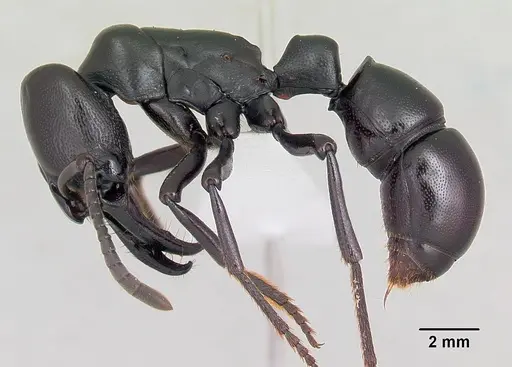
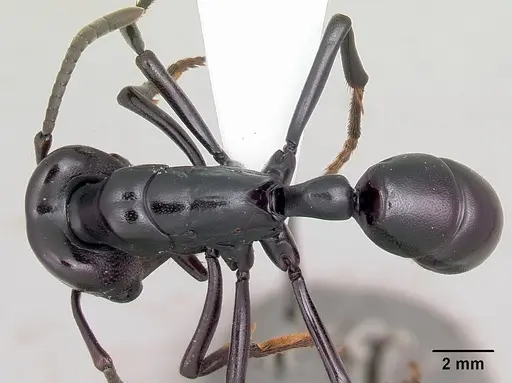
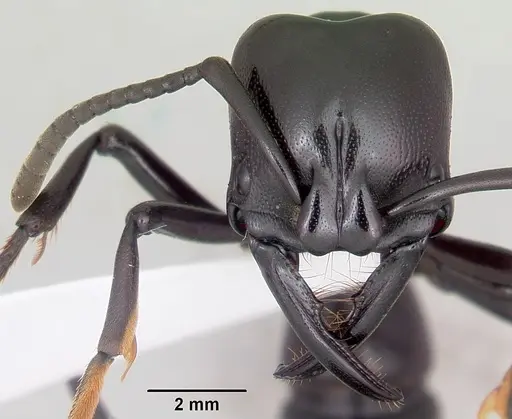
Plectroctena cristata - "Crested Millipede Killer Ant"
Plectroctena cristata is a striking ant species from Sub-Saharan Africa, known for its large size and unique linear mandibles that are capable of snapping to stun or kill prey. These ants are primarily cryptobiotic, meaning they live in hidden environments like soil or rotting wood, and are specialist predators, mainly preying on millipedes and their eggs. Their bodies are typically shining, punctate, and can range in color from red to black, with some striations on the sides of the mesosoma. Queens can be either winged (alate) or ergatoid (wingless, worker-like in appearance). Workers of this genus are notable for their ability to retrieve prey weighing over 100 times their own weight.
- Difficulty: Hard
- Origin & Habitat: Sub-Saharan Africa, including Cameroon, Central African Republic, Democratic Republic of Congo, Equatorial Guinea, Kenya, Nigeria, Togo, and Uganda. in Hypogaeic (underground) in soil or rotting wood, abandoned termitaries, and leaf litter. Some species may forage in open grassland terrain..
- Colony Type: Monogyne, though some Plectroctena species can be facultatively polygynous with ergatoid queens., semi-claustral founding.
- Size & Growth:
- Queen: 21.6-23.2mm
- Worker: 5.6-23.5mm
- Colony: Small (hundreds). Slow, due to specialized diet and predatory nature. growth.
- Antkeeping:
- Temperature: Maintain a warm environment, ideally between 24-28°C (75-82°F) for optimal development and activity. Consistency is key for these tropical ants..
- Humidity: High humidity is crucial, around 70-90%, especially within the nesting area, to mimic their natural cryptobiotic and subterranean habitats. Keep the substrate consistently moist but not waterlogged..
- Diapause: Not required. Not specified at Not specified.
- Nesting: These ants prefer nests that mimic their natural subterranean or rotting wood environments. Plaster, Ytong, or natural setups with deep substrate are ideal. Ensure good ventilation in the outworld while maintaining high humidity in the nest chambers. Nests should be designed with chambers that can be specialized for brood or prey..
- Behavior: Medium aggressiveness.
- Common Issues: Sourcing specialized diet (millipedes), Maintaining high humidity levels, Ensuring proper ventilation to prevent mold, Colony stalling due to inadequate diet or environment.
Plectroctena cristata are fascinating ants with a unique predatory strategy. Their long, linear mandibles are not just for show; they can snap with considerable force to incapacitate their prey, a behavior quite distinctive among ponerine ants. This snapping mechanism is not only used for hunting but also in territorial defense, making them quite formidable despite their cryptic nature. Observers might witness this behavior when introducing live prey, offering a glimpse into their specialized hunting techniques.
One of the most critical aspects of keeping Plectroctena cristata is their specialized diet. They are primarily myrmecophagous, meaning they prey on millipedes and their eggs, though they will also accept termites and other small arthropods. Sourcing a consistent and varied supply of appropriate live prey, especially millipedes, will be paramount to the success and health of the colony. Without the correct diet, particularly millipedes, a colony may struggle to produce reproductive females and worker production could be hindered.
Colony foundation for Plectroctena cristata queens can be semi-claustral, especially for ergatoid queens, meaning they may forage for food during the founding stage rather than relying solely on stored energy. This implies that new queens will require regular, small offerings of appropriate prey to successfully establish their colony. Providing a secure, moist founding setup with easy access to a small foraging area will be beneficial for these queens.
Given their large size and predatory habits, Plectroctena cristata can be quite aggressive towards other ants and larger prey, especially when defending their nest or securing a meal. When handling or introducing food, caution is advised. While they are not typically aggressive towards keepers without provocation, their sting can be potent, similar to other ponerines, so direct contact should be avoided. Always use appropriate tools for maintenance and feeding.