

Platythyrea brunnipes
- Scientific Name
- Platythyrea brunnipes
- Tribe
- Platythyreini
- Subfamily
- Ponerinae
- Author
- Clark, 1938
- Distribution
- Found in 1 countries
Platythyrea brunnipes Overview
Platythyrea brunnipes is an ant species of the genus Platythyrea. It is primarily documented in 1 countries , including Australia. Detailed taxonomic data and occurrence records can be further explored via authoritative databases such as AntWeb or the Global Biodiversity Information Facility (GBIF).
Platythyrea brunnipes
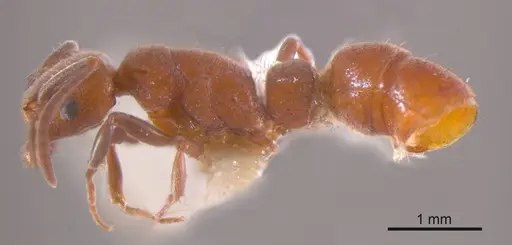
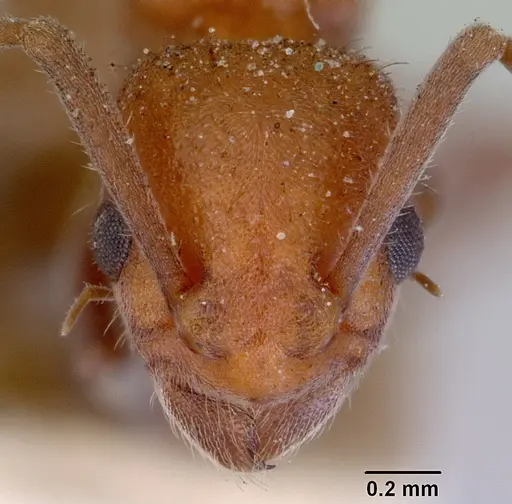
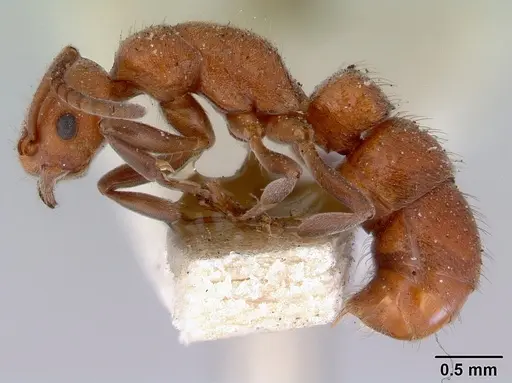
Platythyrea brunnipes is a small to medium-sized ant species native to southern Australia, specifically found in the wetter southwestern regions of Western Australia and South Australia, including Reevesby Island in the Sir Joseph Banks Group [1][2]. Workers are relatively small ants with a reddish-brown to ferruginous coloration, the original description noted the antennae, mandibles, and legs as brown against this lighter body color [2]. This species belongs to the subfamily Ponerinae and the tribe Platythyreini. Very little has been documented about this species in the scientific literature, it was originally described in 1938 by Clark and later transferred to Platythyrea by Brown in 1975,but the original description was noted as inadequate with sketchy details about sculpture and pilosity [2]. As a result, much of the biology and behavior of this species remains poorly understood.
Quick Summary
- Difficulty: Unknown, likely Medium to Hard due to limited documented information
- Origin & Habitat: Southern Australia, found in the wetter southwest of Western Australia and South Australia, particularly coastal island environments like Reevesby Island [1][2]
- Colony Type: Unconfirmed, colony structure has not been documented in scientific literature
- Size & Growth:
- Queen: Undocumented, no measurements available for queens
- Worker: Undocumented, original worker description lacks precise measurements [2]
- Colony: Unknown, no colony size data available
- Growth: Unknown, no development data available
- Development: Unknown, no direct measurements available. Based on typical Ponerinae patterns, expect 6-10 weeks at optimal temperature, but this is an estimate. (Development timeline is unconfirmed for this species. Related Platythyrea species suggest a moderate development period, but specific data is lacking.)
- Antkeeping:
- Temperature: Unconfirmed, no specific thermal data exists. Based on the wet southwestern Australian habitat, aim for moderate temperatures around 20-24°C with stable humidity. Monitor colony activity to find the ideal range.
- Humidity: Likely moderate to high, the species is documented from wetter regions of southwestern Australia. Maintain nest substrate consistently moist but not waterlogged, with some drier areas available.
- Diapause: Unknown, no documented hibernation or winter behavior. Southern Australia experiences mild winters, so a reduced activity period may occur but has not been studied.
- Nesting: Unconfirmed, no natural nesting observations documented. Based on habitat data, they likely nest in soil or under stones in shaded, moist areas. Test tube setups or plaster nests with good moisture retention would likely work well.
- Behavior: Behavior is undocumented in scientific literature. As a Ponerinae species, they are likely predatory or omnivorous, potentially hunting small invertebrates. Escape risk cannot be assessed without worker size data, assume moderate escape prevention measures are needed. Temperament is unknown.
- Common Issues: limited documented care information makes proper husbandry challenging, specific temperature and humidity requirements are unknown and must be determined through observation, no documented feeding preferences, likely need small live prey like other Ponerinae, colony development timeline is unknown making it difficult to assess if colony is progressing normally, no information on whether this species stings, handle with caution as a precaution
Species Overview and Identification
Platythyrea brunnipes is a poorly documented Australian ant species originally described in 1938 from Reevesby Island off the coast of South Australia. The species was originally placed in the genus Eubothroponera and later transferred to Platythyrea by Brown in 1975. The original description by Clark was noted as inadequate, his use of "castaneous" for the color actually describes a reddish-brown or ferruginous tone rather than the darker chestnut typically meant by that term. Workers have brown antennae, mandibles, and legs against this lighter reddish-brown body. The sculpture and pilosity (hair patterns) were not described in sufficient detail to confidently determine relationships with other Platythyrea species. This species is part of the tribe Platythyreini within the subfamily Ponerinae. [1][2]
Distribution and Habitat
P. brunnipes is found in the wetter southwestern regions of Western Australia as well as South Australia. The type locality is Reevesby Island in the Sir Joseph Banks Group off the South Australian coast. This suggests a preference for coastal or near-coastal environments in the southern part of Australia. The "wetter south-west" reference indicates they inhabit regions with higher rainfall, likely avoiding the arid interior of Australia. This habitat preference suggests they need more humid conditions than many arid-zone Australian ants. [1][2]
Keeping Considerations
This species is not recommended for beginners due to the complete lack of documented care information. There are no published studies on colony size, development time, temperature preferences, humidity requirements, or feeding behavior. Keepers interested in this species will need to approach husbandry experimentally, starting with conditions suitable for other Ponerinae ants from similar habitats. A test tube setup with moist cotton and a separate foraging area works as a starting point. Temperature in the low-to-mid 20s Celsius with moderate to high humidity is a reasonable starting hypothesis based on the documented wet habitat preference. Feed small live prey items (fruit flies, small crickets, mealworms) and observe acceptance. Sugar water may be accepted but is not guaranteed, Ponerinae ants are often more predatory than other subfamilies.
Behavior and Temperament
Behavior has not been documented for this species. As a member of Ponerinae, they likely exhibit typical traits of this subfamily: relatively large stingers (though the sting may not be potent in this small species), predatory or omnivorous diets, and potentially more primitive colony structure than advanced ants like Formicinae or Myrmicinae. Ponerine ants often have more direct communication between individuals and may show individual aggression rather than the coordinated colony responses seen in more derived ants. Handle with caution until sting potency is known. Escape prevention should be moderate until worker size is documented.
Frequently Asked Questions
How do I care for Platythyrea brunnipes?
Care is unconfirmed as this species has not been documented in scientific literature or antkeeping hobby. Start with moderate temperatures (20-24°C), moderate to high humidity, and offer small live prey. Monitor colony behavior and adjust conditions based on activity levels.
What do Platythyrea brunnipes eat?
Feeding preferences are unconfirmed. As a Ponerinae species, they are likely predatory or omnivorous. Offer small live invertebrates (fruit flies, small crickets, springtails) and observe acceptance. Sugar water may be accepted but is not guaranteed.
How long does it take for Platythyrea brunnipes to develop from egg to worker?
The development timeline is completely undocumented. Based on typical Ponerinae patterns, expect 6-10 weeks at optimal temperature, but this is a rough estimate with low confidence.
Are Platythyrea brunnipes good for beginners?
No, this species is not recommended for beginners due to the complete lack of documented care information. The husbandry requirements are essentially unknown, making successful keeping very challenging.
How big do Platythyrea brunnipes colonies get?
Maximum colony size is unknown, no colony size data has been documented in scientific literature.
What is the colony structure of Platythyrea brunnipes?
Colony structure (single queen vs multiple queen) is unconfirmed. No research has documented the colony organization of this species.
Do Platythyrea brunnipes need hibernation?
Diapause requirements are unknown. Southern Australia has mild winters, so a pronounced hibernation may not be necessary, but this has not been studied.
What temperature should I keep Platythyrea brunnipes at?
Optimal temperature is unconfirmed. Based on the wet southwestern Australian habitat, start around 20-24°C and observe colony activity to find the ideal range.
Can I keep multiple Platythyrea brunnipes queens together?
This is unconfirmed, no research has examined colony founding or queen relationships in this species. Combining unrelated queens is not recommended without documented evidence of acceptance.
References

This caresheet is licensed under CC BY-SA 4.0 .
ANTWEB1008179
View on AntWeb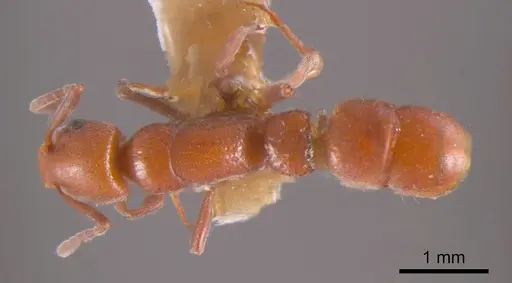
CASENT0172406
View on AntWeb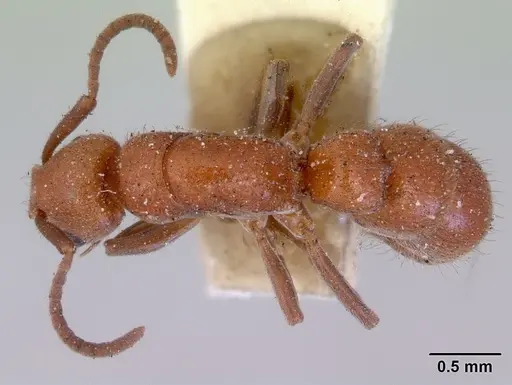
Literature
Loading...Loading products...