

Plagiolepis pallescens
- Scientific Name
- Plagiolepis pallescens
- Tribe
- Plagiolepidini
- Subfamily
- Formicinae
- Author
- Forel, 1889
- Distribution
- Found in 15 countries
Plagiolepis pallescens Overview
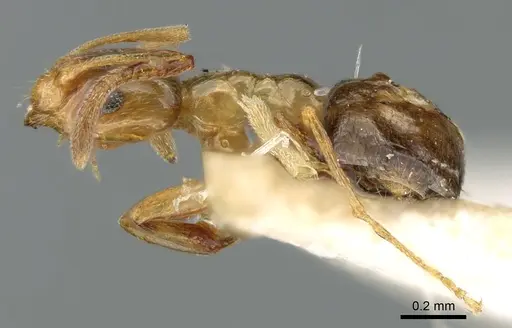
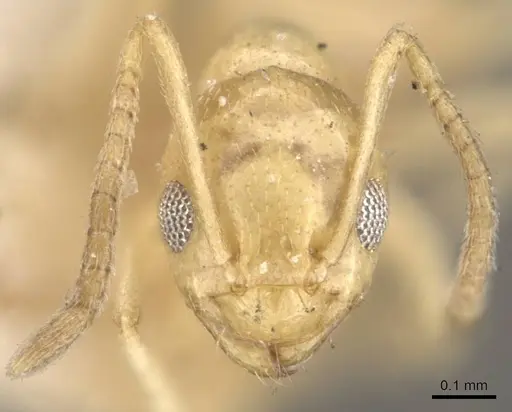
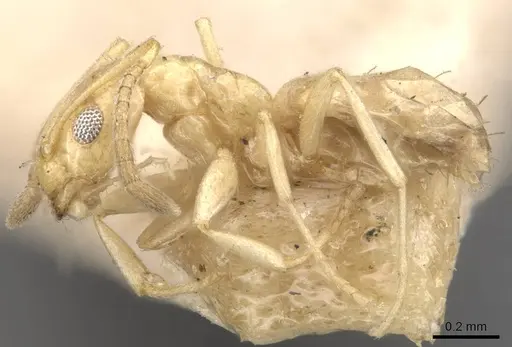
Plagiolepis pallescens is an ant species of the genus Plagiolepis. It is primarily documented in 15 countries , including Azerbaijan, Belgium, Cyprus. Detailed taxonomic data and occurrence records can be further explored via authoritative databases such as AntWeb or the Global Biodiversity Information Facility (GBIF).
Plagiolepis pallescens
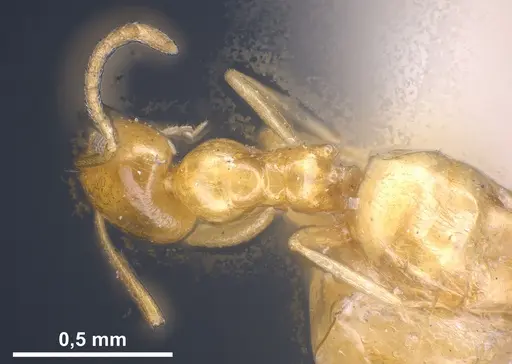
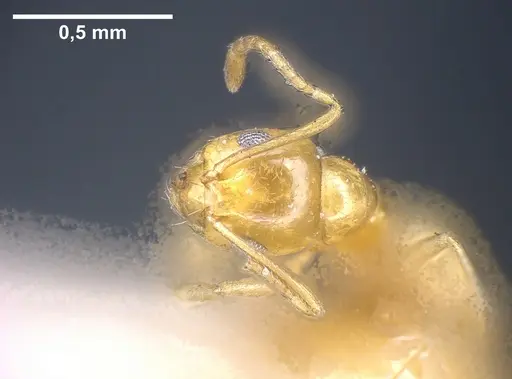
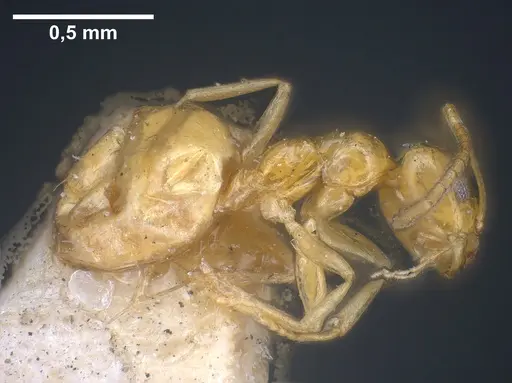
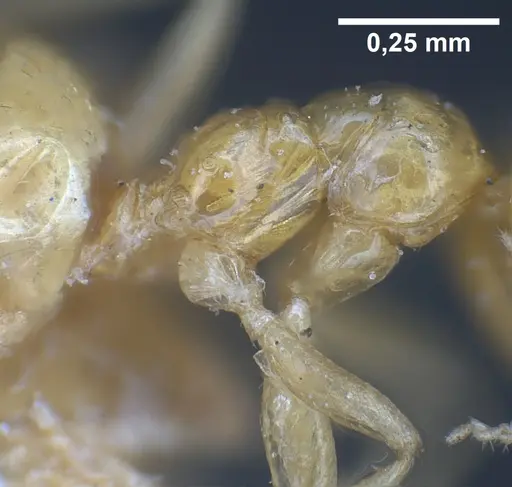
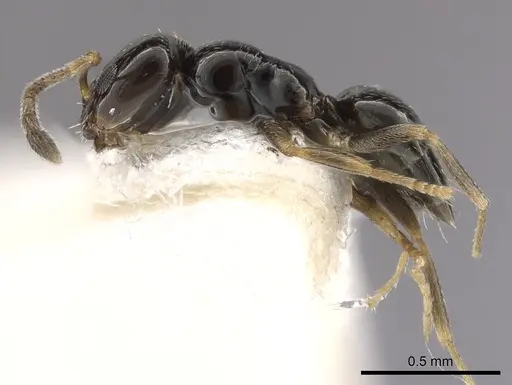
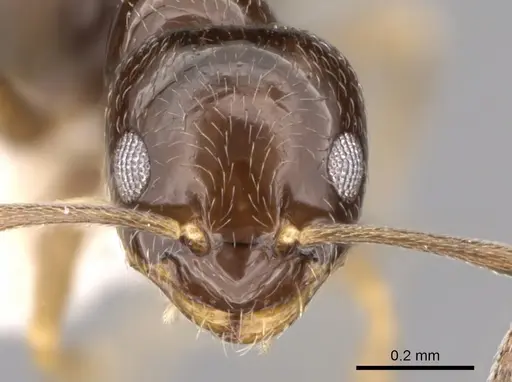
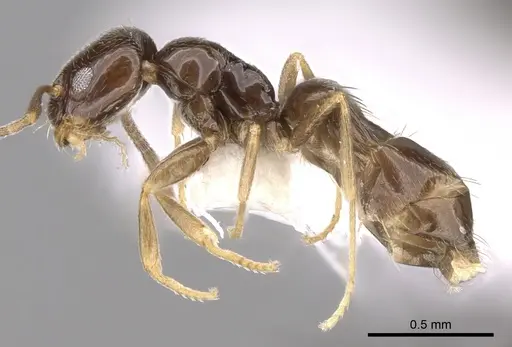
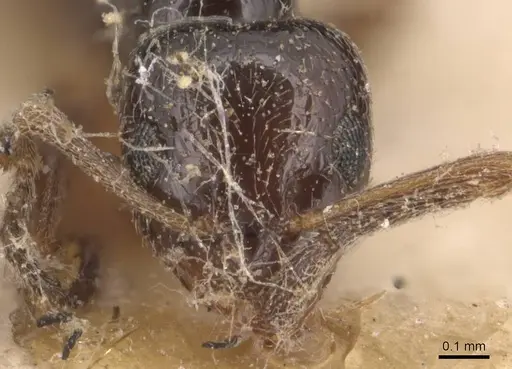
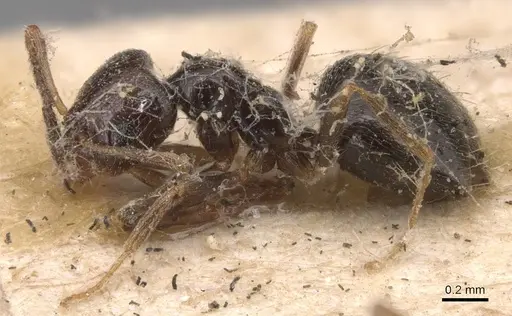
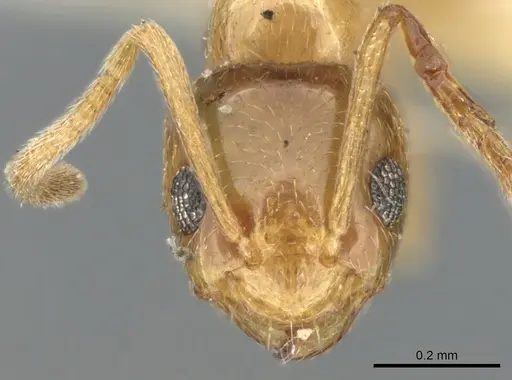
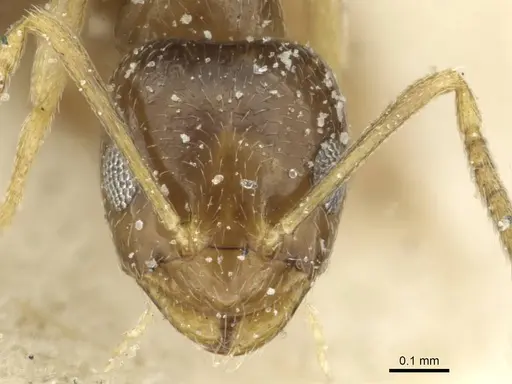
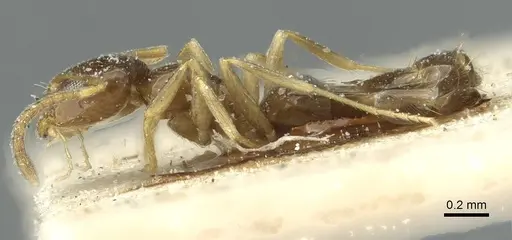
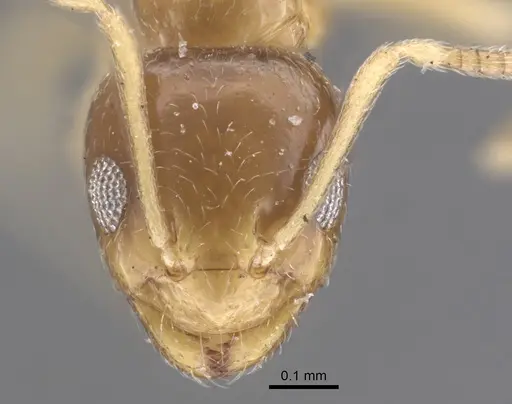
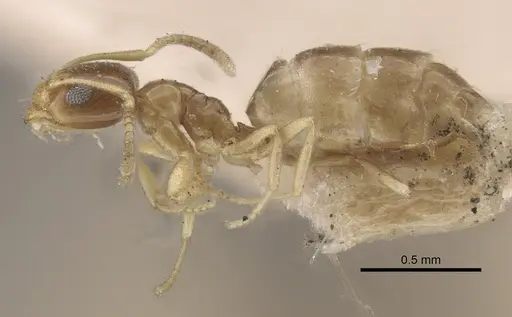
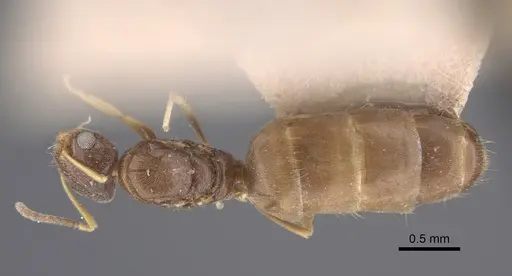
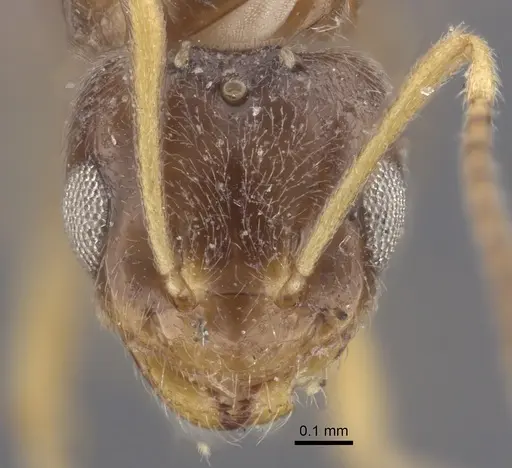
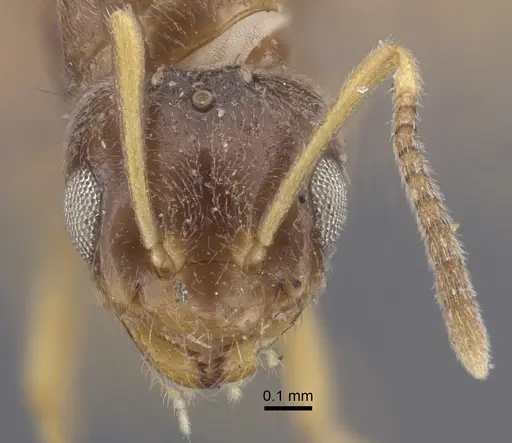
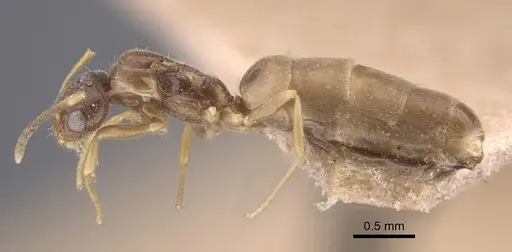
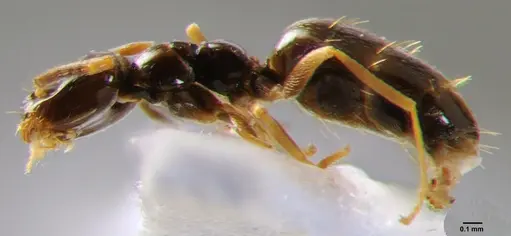
Plagiolepis pallescens is a tiny Mediterranean ant species, measuring just 1.5mm for workers, with a yellowish-brown to brown body and notably pale gaster. This warmth-loving species nests in soil under small stones across the Palaearctic region, from Greece and Turkey east to Iran and the Caucasus. Colonies are polygynous, meaning they have multiple queens, and workers are small enough to squeeze through tiny gaps. They are prolific aphid farmers, tending various aphid species for honeydew. This species has been confused taxonomically with Plagiolepis perperamus and Plagiolepis taurica, which were recently separated as distinct species [1].
Quick Summary
- Difficulty: Easy
- Origin & Habitat: Mediterranean region and Palaearctic, found across Southern Europe, Turkey, the Caucasus, Iran, and the Middle East. In Greece, they inhabit diverse warm habitats including forests, stream valleys, olive plantations, mountain pastures, and urban gardens from sea level to 1450m altitude [2][3].
- Colony Type: Polygynous (multiple-queen) colonies with ergatoid (wingless) replacement queens documented. Colonies are also polydomous, meaning they nest in multiple connected locations [1][4][3].
- Colony: Polygyne
- Size & Growth:
- Queen: Approximately 0.63mm head length, queens are only slightly larger than workers [5].
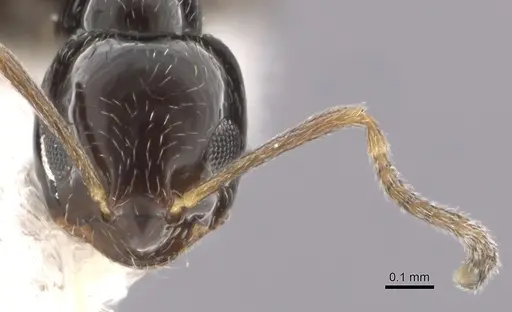
- Worker: 1.49mm total length (very small), with head 0.45mm and scape 0.39mm [5].
- Colony: Small colonies, typical of tiny ant species, likely under a few hundred workers based on related Plagiolepis species.
- Growth: Moderate, development timeline is unconfirmed but likely 6-8 weeks from egg to worker at optimal temperature based on genus patterns.
- Development: Estimated 6-8 weeks at 24-26°C based on related Plagiolepis species development. (Development time is not directly documented for this species, estimates based on genus-level patterns for small Formicinae ants.)
- Antkeeping:
- Temperature: Keep at 24-28°C, they are thermophilous (warmth-loving) and thrive in warm conditions. Room temperature (20-24°C) is acceptable, but warmer conditions will boost activity and growth. A heating cable on one side of the nest creates a suitable gradient.
- Humidity: Moderate humidity, keep the nest substrate lightly moist but not waterlogged. These ants prefer dry to moderately damp conditions, reflecting their Mediterranean origins. Allow the substrate to dry partially between waterings.
- Diapause: Not required, as a Mediterranean species, they do not need formal hibernation. However, a slight cool period (15-18°C) during winter months may slow activity naturally.
- Nesting: Best kept in a Y-tong (AAC) nest or plaster nest with narrow chambers scaled to their tiny size. They nest naturally under stones in soil, so a naturalistic setup with a thin soil layer and flat stones on top works well. Test tubes are suitable for founding colonies.
- Behavior: Workers are tiny, fast-moving, and not aggressive. They are excellent escape artists due to their small size, use fine mesh barriers and tight-fitting lids. They are epigeic (ground-dwelling) foragers with a foraging distance of about 2 meters. Colonies are subordinate in ant communities and may be outcompeted by larger ants. They farm aphids intensively and will tend honeydew-producing insects [6][7].
- Common Issues: escape prevention is critical, their tiny size allows them to squeeze through standard barrier gaps, colonies are small and slow-growing, which can frustrate beginners expecting rapid development, they are vulnerable to larger, more aggressive ant species, keep them isolated from other ant colonies, test tube setups must have very small water reservoirs to prevent flooding of tiny chambers, wild-caught colonies may carry parasites that can decimate captive colonies
Housing and Nest Setup
Plagiolepis pallescens is a tiny ant that needs appropriately scaled housing. For founding colonies, a standard test tube setup works well, just ensure the water reservoir is small to prevent flooding. As the colony grows, transfer to a Y-tong (AAC) nest or plaster nest with narrow chambers and passages. Their small size means standard formicarium chambers may feel oversized, so consider using multiple small test tube connections or a custom acrylic setup with tight chambers. Always use excellent escape prevention, these ants can squeeze through gaps smaller than 0.5mm. Apply Fluon or similar barriers to all escape points. A naturalistic setup with a thin soil layer and flat stones on top mimics their natural nesting under stones in soil. [1][6]
Feeding and Diet
These ants are omnivores with a strong preference for honeydew. They actively tend aphids and will farm them aggressively in captivity if given the opportunity. Offer sugar water or honey water regularly, they will readily accept it. For protein, provide small prey items like fruit flies, pinhead crickets, or tiny mealworms. They are classified as omnivores in trophic studies and have been recorded tending at least 10 different aphid species including Acyrthosiphon pisum, Aphis craccivora, and Brachycaudus tragopogonis [7]. In captivity, you can offer both sugar sources and small protein prey. Feed protein 2-3 times per week and keep sugar water available constantly. Remove uneaten prey after 24 hours to prevent mold.
Temperature and Seasonal Care
As a thermophilous (warmth-loving) Mediterranean species, Plagiolepis pallescens prefers warm conditions. Keep the nest at 24-28°C for optimal growth and activity. They can tolerate room temperature (20-24°C) but will be less active and grow more slowly. A small heating cable on one side of the nest creates a temperature gradient allowing workers to self-regulate. Place the heating on top of the nest to avoid drying out the substrate. Unlike temperate species, they do not require a formal hibernation period. However, in winter you might allow temperatures to drop slightly to 15-18°C, which may reduce activity naturally without triggering true diapause. This cool period is optional but can help synchronize colony cycles. [2][1]
Colony Structure and Multi-Queen Care
This species is polygynous, meaning colonies naturally have multiple reproductive queens. This makes them different from many common ant species like Lasius or Camponotus. In the wild, ergatoid (wingless) queens have been documented, which can serve as replacement reproductives if the primary queen dies [4]. When keeping this species, you may receive colonies with multiple queens, this is normal and they should be kept together. Do not attempt to separate queens as this is unnecessary and may harm the colony. The polygynous structure means colonies can grow more quickly than single-queen species once established. However, colony size remains relatively small compared to larger ant species.
Behavior and Temperament
Workers are tiny, fast-moving, and generally non-aggressive. They are epigeic, meaning they forage on the ground surface rather than in trees or underground. Their small size makes them vulnerable, they are considered uncommon or rare in ant communities and are classified as subordinate, meaning they are often outcompeted by larger ant species [6]. They are not particularly aggressive toward humans and rarely sting. However, their tiny size makes them excellent escape artists, always use fine mesh (at least 0.5mm or smaller) for any ventilation and apply barrier gels or Fluon around all potential escape points. They form foraging trails and will aggressively tend any aphids they find.
Taxonomic Note
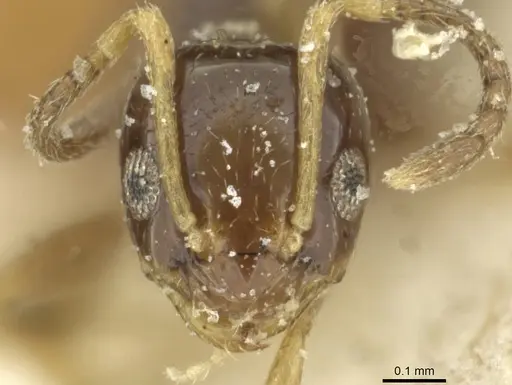
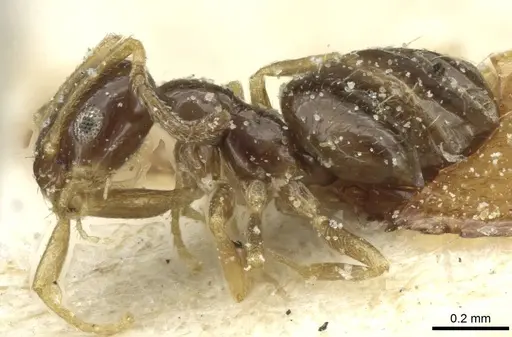
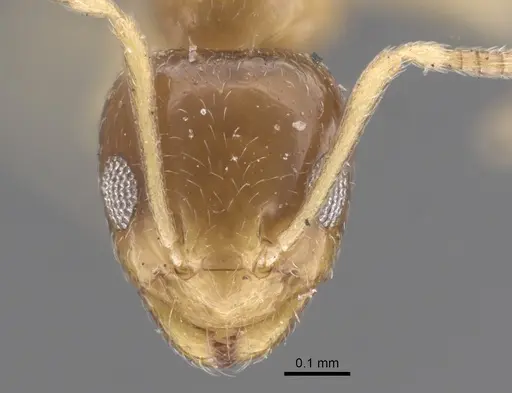
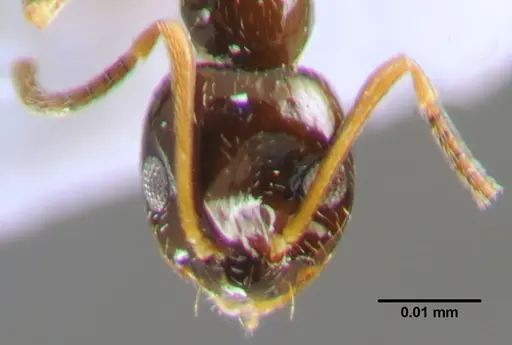
Plagiolepis pallescens has a complicated taxonomic history. It was previously confused with Plagiolepis taurica and Plagiolepis perperamus, which were recently recognized as separate species [1]. The true Plagiolepis pallescens (as redescribed by Salata et al. in 2018) has sparse pilosity (hairs) on the first segment of the gaster, the distance between hairs equals the full or half the length of the hairs. This distinguishes it from the densely haired P. perperamus. When acquiring this species, verify the identification uses these diagnostic features. Many ant vendors may still list related species under older names.
Frequently Asked Questions
Can I keep Plagiolepis pallescens in a test tube?
Yes, test tubes work well for founding colonies. Use a small water reservoir to prevent flooding, and ensure the cotton stopper is tight-fitting since these tiny ants can squeeze through small gaps. Transfer to a larger setup once the colony reaches 30-50 workers.
How long until first workers in Plagiolepis pallescens colonies?
Estimated 6-8 weeks from egg to worker at optimal temperature (24-28°C). This is based on related Plagiolepis species development patterns since specific development data is not available for this species.
Are Plagiolepis pallescens good for beginners?
Yes, they are relatively easy to care for. They are not aggressive, don't require hibernation, and tolerate a range of conditions. The main challenges are their tiny size (escape prevention is critical) and slower colony growth compared to faster-developing species.
Can I keep multiple queens together in Plagiolepis pallescens?
Yes, this is normal and expected. Plagiolepis pallescens is naturally polygynous, meaning colonies have multiple queens. Unlike single-queen species, you do not need to separate or remove extra queens, they coexist peacefully.
What do Plagiolepis pallescens eat?
They are omnivores with a strong sweet tooth. They readily accept sugar water, honey, or nectar. They also need protein from small insects like fruit flies, pinhead crickets, or tiny mealworms. They are prolific aphid farmers and will tend any aphids you provide.
Do Plagiolepis pallescens need hibernation?
No, they do not require formal hibernation. As a Mediterranean species, they prefer warm conditions year-round. You can keep them at room temperature or slightly warmer throughout the year. A slight winter cool period (15-18°C) is optional but not necessary.
Why are my Plagiolepis pallescens escaping?
Their tiny size makes them excellent escape artists. Use fine mesh (0.5mm or smaller) on all ventilation, apply Fluon or similar barriers around the nest opening, and check for any gaps larger than 1mm. Even standard ant barriers may not stop these tiny ants.
How big do Plagiolepis pallescens colonies get?
Colonies remain relatively small, likely under a few hundred workers. This is typical for tiny ant species. They are polydomous in the wild, meaning they may spread across multiple connected nesting sites, which can make the colony appear more extensive.
When should I move Plagiolepis pallescens to a formicarium?
Move them when the test tube becomes crowded or the colony reaches 30-50 workers. A Y-tong (AAC) nest or plaster nest with small chambers works well. They prefer tight spaces scaled to their tiny body size.
References

This caresheet is licensed under CC BY-SA 4.0 .
ANTWEB1041459
View on AntWeb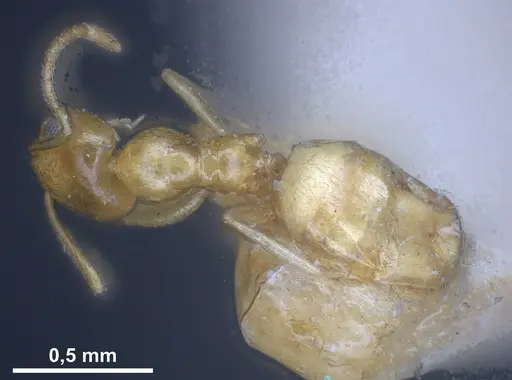
CASENT0249417
View on AntWeb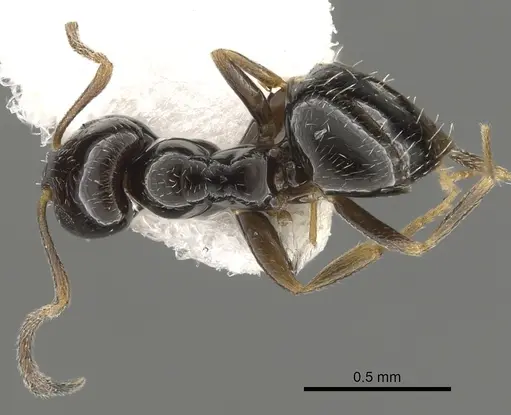
CASENT0281165
View on AntWeb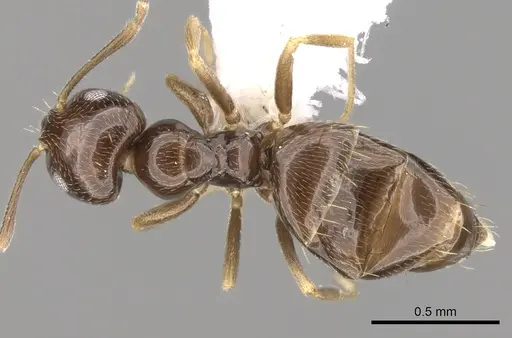
CASENT0905139
View on AntWeb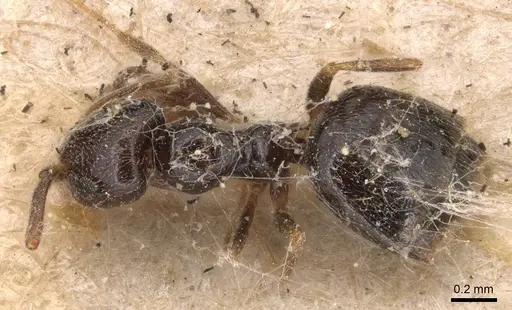
CASENT0906253
View on AntWeb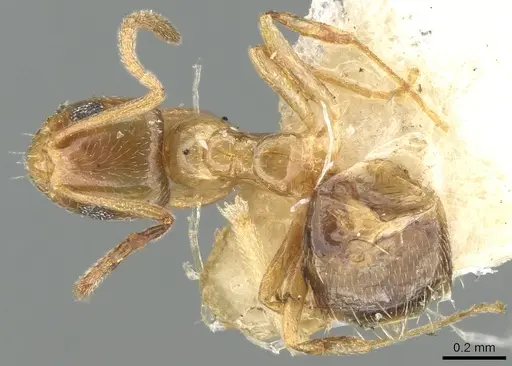
CASENT0909854
View on AntWeb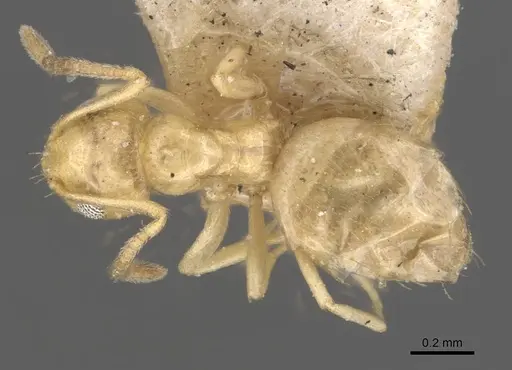
CASENT0912415
View on AntWeb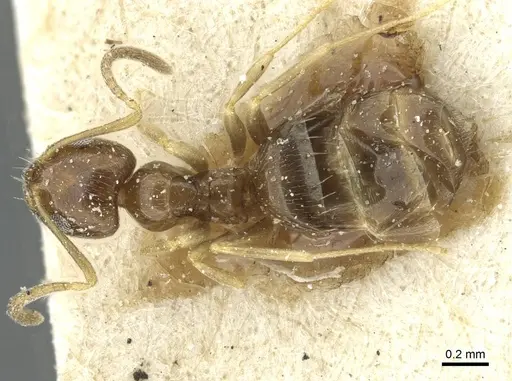
CASENT0912433
View on AntWeb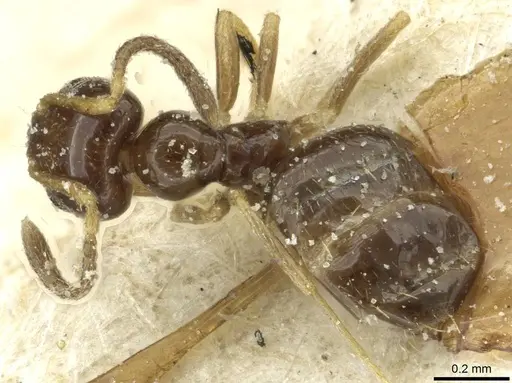
CASENT0917314
View on AntWeb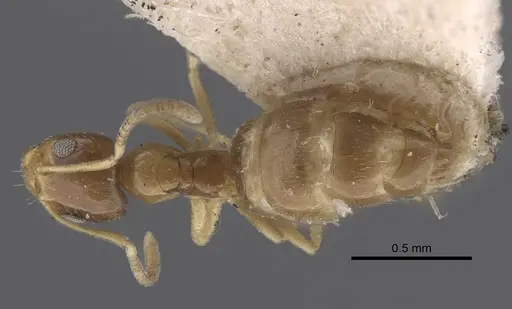
CASENT0917315
View on AntWeb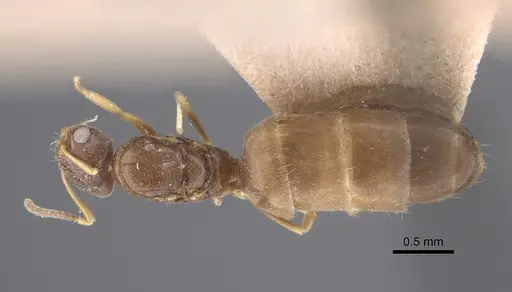
CFH000040
View on AntWeb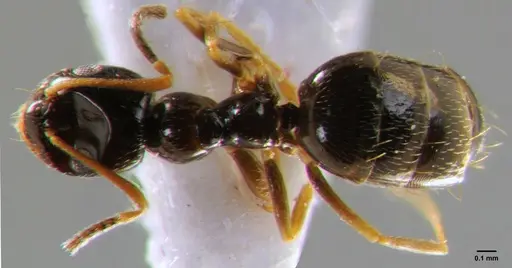
Literature
Loading...Loading products...