

Plagiolepis juddi
- Scientific Name
- Plagiolepis juddi
- Tribe
- Plagiolepidini
- Subfamily
- Formicinae
- Author
- Sharaf & Aldawood, 2011
- Distribution
- Found in 1 countries
Plagiolepis juddi Overview
Plagiolepis juddi is an ant species of the genus Plagiolepis. It is primarily documented in 1 countries , including Yemen. Detailed taxonomic data and occurrence records can be further explored via authoritative databases such as AntWeb or the Global Biodiversity Information Facility (GBIF).
Plagiolepis juddi
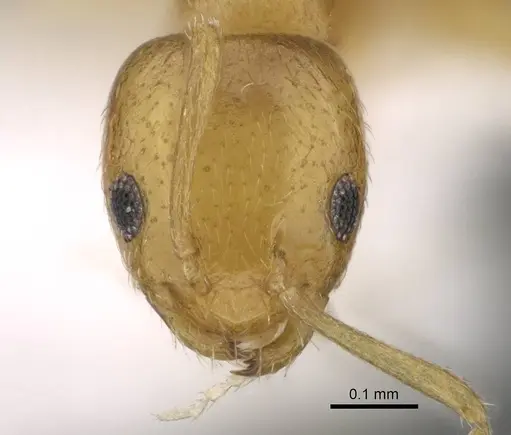
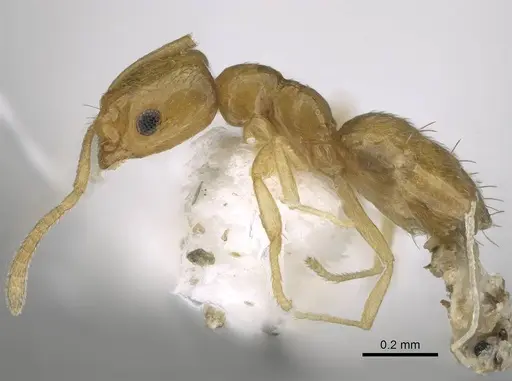
Plagiolepis juddi is a minute yellow ant described from Yemen in 2011. Workers measure barely 1 mm in total length, making them among the smallest ants in the genus and a significant challenge for antkeepers due to their size [1]. The species is currently known only from a single worker specimen collected in Lahj, Yemen, and virtually nothing is known about their biology, colony structure, or breeding habits [2]. Their bright yellow coloration and extremely small size distinguish them from similar species like Plagiolepis exigua, which is noticeably larger and more robust [1].
These ants represent the extreme end of miniaturization in ant keeping. At just over 1 mm long, they can slip through gaps that would contain much larger ants, and their care requirements remain largely speculative based on genus patterns and their Yemen origin [1][3]. You should consider this species impossible to keep successfully until more biological data emerges or captive breeding is documented.
Quick Summary
- Difficulty: Expert
- Origin & Habitat: Yemen (Lahj region), collected in May 2002 from an unspecified habitat in the Afrotropical region [1][3].
- Colony Type: Unknown, no queens have been described and colony structure remains completely unconfirmed [2].
- Size & Growth:
- Queen: Unknown, queens have never been described [2].
- Worker: Approximately 1.0 mm total length (TL 1.02 mm) [1].
- Colony: Unknown [2].
- Growth: Unknown.
- Development: Unknown, likely 4-8 weeks based on typical small Formicinae patterns at 25-28°C, but completely unconfirmed. (Development time is speculative, no breeding data exists for this species.)
- Antkeeping:
- Temperature: Warm and stable, roughly 25-30°C inferred from Yemen's hot climate, though exact needs are unconfirmed.
- Humidity: Unknown, start with moderate humidity (nest material damp but not wet) and observe colony response.
- Diapause: Unknown, likely unnecessary given Yemen's tropical climate, but unconfirmed.
- Nesting: Unknown, extremely small chambers would be needed given the 1 mm worker size.
- Behavior: Unknown, extreme escape risk due to 1 mm size, temperament and foraging habits undocumented [2].
- Common Issues: extremely small size (1 mm) means they can escape through gaps in standard mesh and loose-fitting lids., no biological data available, feeding preferences, nesting habits, and social structure are completely unknown., only known from a single specimen, establishing captive colonies would require wild collection with unknown feasibility., prey items must be microscopic, standard fruit flies and crickets are too large for these tiny workers.
Identification and Size Challenges
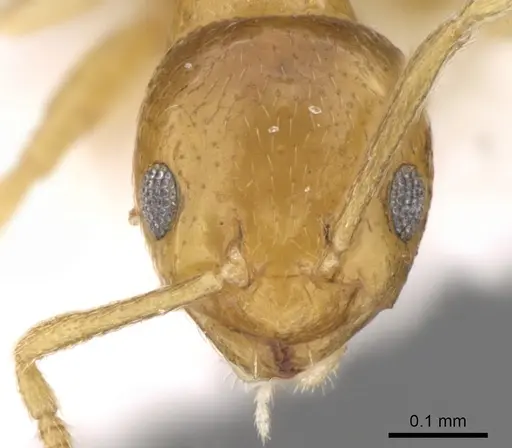
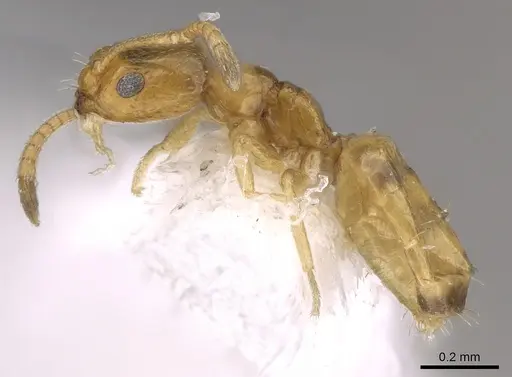
Plagiolepis juddi workers measure just 1.02 mm in total length, making them exceptionally small even among ants [1]. They show bright yellow coloration with slightly darker brown tips on the mandibles and rear margins of the abdomen [1]. You can distinguish them from the similar Plagiolepis exigua by their smaller size, larger eyes relative to head width, and sparser hair coverage [1].
Their minute size creates immediate practical problems for captivity. Standard insect mesh (typically 1 mm openings) may be too large to contain them. You would need extremely fine barriers such as PTFE (Fluon) coated surfaces or specialized micron mesh to prevent escapes. Even tiny gaps in test tube cotton or between formicarium joints could allow workers to slip through.
Natural History and Distribution
This species is known only from the holotype worker collected in Lahj, Yemen in May 2002 [1]. Yemen sits at the southern end of the Arabian Peninsula and features hot, arid climates in lowland areas with more moderate conditions in highlands. The specific habitat where this ant was found remains undocumented [2].
The lack of additional specimens suggests either extreme rarity, cryptic habits, or limited survey effort in the region. Without knowledge of their preferred microhabitat, whether they nest in soil, leaf litter, or vegetation, you cannot easily replicate their natural conditions in captivity.
Housing Requirements
Standard ant keeping equipment poses significant challenges for ants this small. Test tubes with cotton plugs may allow escapes through gaps in the cotton fibers. You would need specialized small containers with secure, fine-mesh lids or complete PTFE barrier systems.
If attempting to house them, use the smallest available chambers, even mini-hearth style nests may be too large. Consider modified petri dishes or small plastic containers with plaster floors. Any ventilation holes must be covered with extremely fine mesh (less than 0.5 mm aperture) or fine metal screening. Avoid tall outworlds where tiny workers could be lost to static electricity or air currents.
Feeding and Diet
The natural diet of Plagiolepis juddi is completely unknown. Based on typical Plagiolepis genus patterns, they likely feed on honeydew from sap-sucking insects and tiny prey items [2]. However, this is speculative.
If attempting to feed a colony, you would need microscopic prey such as springtails (Collembola), mites, or possibly dissolved protein solutions. Standard prey items like fruit flies (Drosophila) are roughly 3 mm long, three times the size of these workers, and would be too large to handle. Sugar water or honey solutions provided in tiny drops might be accepted, but you should observe carefully to confirm feeding.
Temperature and Climate
Without specific thermal tolerance data, you must infer needs from their Yemen origin. Yemen experiences hot temperatures year-round in lowland areas, often exceeding 30°C. You should maintain them at warm room temperatures around 25-28°C with a gentle gradient available.
Hibernation is likely unnecessary given the tropical origin, but this remains unconfirmed. Keep humidity moderate, Yemen has varied microclimates, but many regions are dry. Start with nest material that is lightly damp to the touch rather than wet, and adjust based on whether workers cluster near moist areas or avoid them. [1]
Frequently Asked Questions
Can I keep Plagiolepis juddi in captivity?
You should not attempt to keep Plagiolepis juddi currently. They are known only from a single specimen, their biology is completely unknown, and their 1 mm size makes escape prevention nearly impossible with standard equipment [1][2].
How big are Plagiolepis juddi workers?
Workers are extremely small, measuring approximately 1.02 mm in total length, smaller than a grain of rice and among the tiniest ants suitable for keeping [1].
Where are Plagiolepis juddi found?
They are only known from Yemen, specifically the Lahj region in the southern part of the country [1][3].
What do Plagiolepis juddi eat?
Their diet is unknown. Based on related Plagiolepis species, they likely feed on honeydew and microscopic insects, but this is speculative [2].
Do Plagiolepis juddi need hibernation?
Probably not, given their tropical Yemen origin, but this is unconfirmed. You should keep them at stable warm temperatures year-round unless you observe specific seasonal behaviors [1].
How long until Plagiolepis juddi get their first workers?
The egg-to-worker timeline is completely unknown. Based on similar small ants, it might take 4-8 weeks at warm temperatures, but this is purely an estimate [2].
Are Plagiolepis juddi good for beginners?
No. They are unsuitable for beginners due to their unknown biology, extreme rarity in collections, and the technical challenges of containing 1 mm ants [2].
How do I prevent Plagiolepis juddi from escaping?
You would need specialized barriers. Standard mesh is too large. Use PTFE (Fluon) coated surfaces on all container walls and lids with mesh smaller than 0.5 mm aperture. Even tiny gaps in cotton plugs or between formicarium parts could allow escape [1].
References

This caresheet is licensed under CC BY-SA 4.0 .
CASENT0906471
View on AntWeb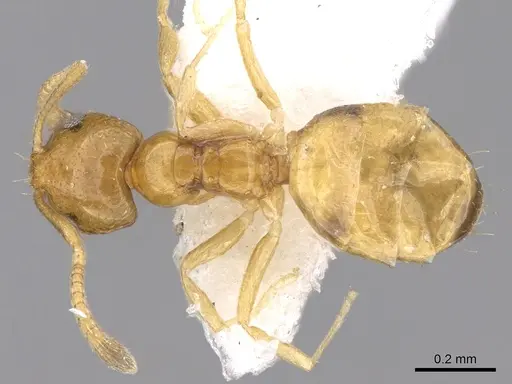
CASENT0919816
View on AntWeb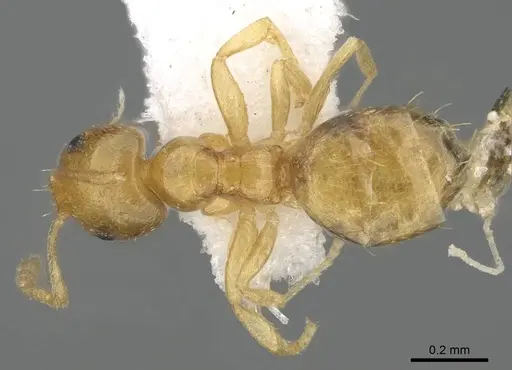
Literature
Loading...Loading products...