

Plagiolepis jerdonii
- Scientific Name
- Plagiolepis jerdonii
- Tribe
- Plagiolepidini
- Subfamily
- Formicinae
- Author
- Forel, 1894
- Distribution
- Found in 1 countries
Plagiolepis jerdonii Overview
Plagiolepis jerdonii is an ant species of the genus Plagiolepis. It is primarily documented in 1 countries , including India. Detailed taxonomic data and occurrence records can be further explored via authoritative databases such as AntWeb or the Global Biodiversity Information Facility (GBIF).
Plagiolepis jerdonii
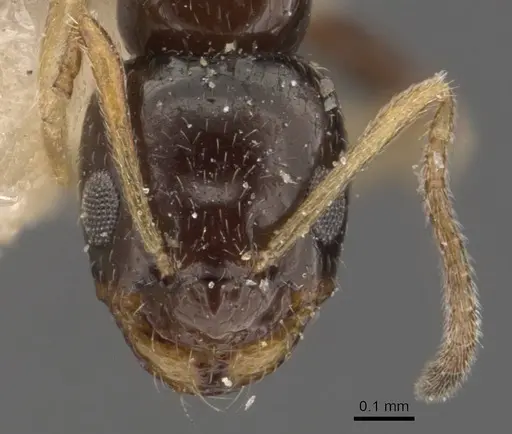
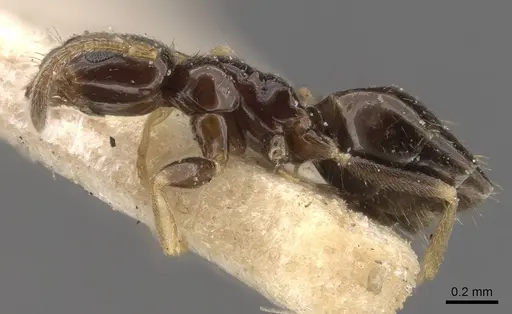
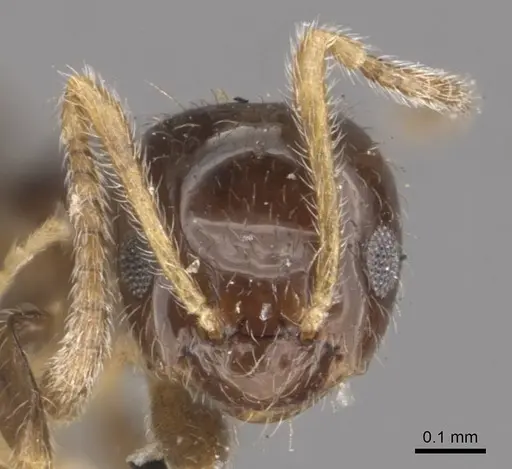
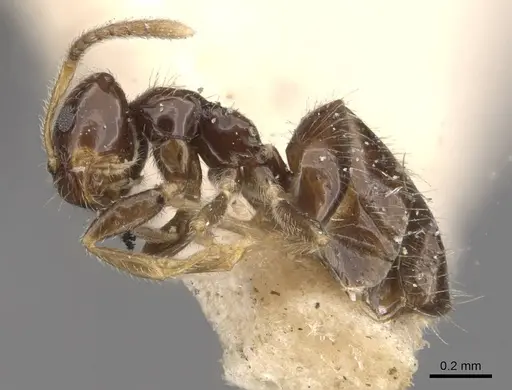
Plagiolepis jerdonii workers are tiny, measuring just 1.3 to 1.5 millimeters long [1][2]. They appear dark brown to black with pale yellowish-brown antennae, legs, and tarsi that contrast sharply against their dark bodies [1][3]. Their bodies are smooth and shiny with sparse hairs [3]. These ants live across India, Nepal, Sri Lanka, and China [3][4], where researchers find them in forest soils and coconut plantations at elevations between 750 and 2000 meters [5][6][7].
Researchers collect them using honey baiting and soil sifting, which tells us they forage for sweet liquids and nest in soil or leaf litter [8][7]. They belong to the cryptic functional group, meaning they stay hidden in soil and debris rather than foraging openly on the surface [6].
Quick Summary
- Difficulty: Medium
- Origin & Habitat: India, Nepal, Sri Lanka, and China [3][4]. Found in forest soils and coconut plantations at elevations of 750-2000 meters [5][6][7].
- Colony Type: Unconfirmed, colony structure has not been documented.
- Size & Growth:
- Antkeeping:
- Temperature: Likely 22-26°C based on their distribution in tropical and subtropical regions, but specific requirements are unconfirmed [5][6].
- Humidity: Moderate to high, keep nest substrate damp to match their forest soil habitat [7][8].
- Diapause: Unknown.
- Nesting: Use small-chambered nests with very narrow passages to accommodate their tiny size.
- Behavior: Cryptic soil-dwelling species that avoids open foraging [6]. Non-aggressive due to small size, but excellent escape artists.
- Common Issues: workers measure only 1.3-1.5mm and escape through the tiniest gaps in mesh or lids., founding behavior is unconfirmed, queens may be difficult to establish successfully., optimal care parameters are unknown due to limited research, requiring careful observation.
Nest Preferences
In nature, researchers collect Plagiolepis jerdonii by sifting soil and leaf litter, indicating they nest in the ground layer [8][7]. They are also found in coconut plantation soils [7]. This suggests they prefer dark, humid environments with soil or decaying organic matter. In captivity, you should provide small-chambered nests such as Y-tong (AAC) or plaster nests with very narrow tunnels and chambers scaled to their 1.5mm size. Avoid tall, open spaces that feel insecure to such small ants. A soil-based naturalistic setup with leaf litter would also work well.
Feeding and Diet
Researchers successfully use honey baiting to collect these ants in the field [8][7]. This indicates they seek out sweet liquids and honeydew. You should offer sugar water or honey diluted with water. Like most ants, they likely need protein for brood development, so provide small live prey such as springtails, fruit flies, or tiny pieces of mealworm. However, their exact protein preferences are unconfirmed.
Temperature and Humidity
These ants live in the Himalayan foothills and tropical regions at elevations of 750-2000 meters [5][6]. This suggests they tolerate a range of temperatures but likely prefer moderate warmth. Start with temperatures around 22-26°C and observe their activity levels. Keep the nest substrate damp but not waterlogged, matching the humid forest soils where they are found [7][8]. If they appear sluggish, increase heat slightly, if they avoid the warm side, reduce it.
Behavior and Temperament
Plagiolepis jerdonii belongs to the cryptic functional group, meaning they live hidden in soil and leaf litter rather than foraging in the open [6]. They are not aggressive and pose no sting risk due to their minute size. However, their tiny 1.3-1.5mm workers can escape through gaps that would contain larger ants. You must use excellent escape prevention such as Fluon barriers on outworld rims and fine mesh ventilation.
Frequently Asked Questions
Can I keep Plagiolepis jerdonii in a test tube?
Yes, test tubes work well for founding and small colonies. Use a standard 15mm or smaller diameter tube with a tight cotton plug. Because workers are only 1.3-1.5mm, ensure the cotton is packed firmly to prevent escapes [1].
How long until Plagiolepis jerdonii gets its first workers?
The egg-to-worker timeline is unconfirmed. Based on typical Formicinae development, expect roughly 6-10 weeks at 25°C, but this is an estimate only.
Do Plagiolepis jerdonii need hibernation?
It is unknown whether they require a winter rest period. Their distribution includes Himalayan foothills where temperatures drop, but specific diapause requirements are unconfirmed. You may try keeping them at room temperature year-round or provide a slight cooling period in winter if they slow down.
What do Plagiolepis jerdonii eat?
They are attracted to honey and sugar water based on successful honey baiting in field studies [8][7]. Offer diluted honey or sugar water constantly, and provide small protein sources like springtails or fruit flies.
Are Plagiolepis jerdonii good for beginners?
No. Their extremely small size makes escapes likely, and their founding behavior and care requirements are unconfirmed. They are better suited to experienced keepers comfortable with tiny species.
How do I prevent Plagiolepis jerdonii from escaping?
Use Fluon or talcum powder barriers on all outworld rims. Ensure ventilation mesh is fine enough to stop 1.3mm ants. Check that lids fit tightly without gaps.
How big do Plagiolepis jerdonii colonies get?
Colony size is unknown. Based on related Plagiolepis species, they likely remain small to moderate, but maximum size has not been documented.
Can I keep multiple Plagiolepis jerdonii queens together?
Not recommended. Whether they accept multiple queens is unconfirmed. Most Plagiolepis species are single-queen, so combine queens only if you are experimenting and prepared for fighting.
What is the ideal temperature for Plagiolepis jerdonii?
Specific requirements are unknown. Start with 22-26°C based on their tropical and subtropical distribution [5][6]. Adjust based on colony activity.
Why are my Plagiolepis jerdonii dying?
Common causes include escapes (they desiccate quickly outside the nest), incorrect humidity (they need damp substrate), or founding failure (if the queen was not fertilized or requires specific conditions we don't yet know).
References

This caresheet is licensed under CC BY-SA 4.0 .
CASENT0909851
View on AntWeb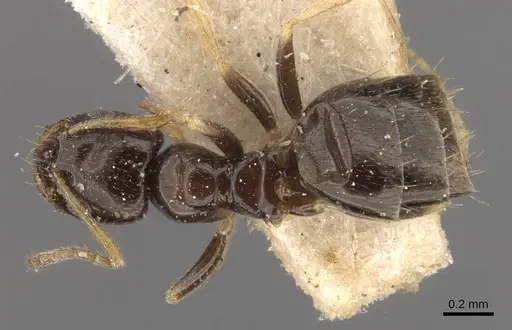
CASENT0909852
View on AntWeb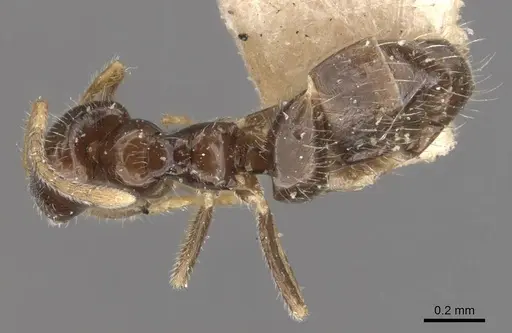
Literature
Loading...Loading products...