

Plagiolepis dichroa
- Scientific Name
- Plagiolepis dichroa
- Tribe
- Plagiolepidini
- Subfamily
- Formicinae
- Author
- Forel, 1902
- Distribution
- Found in 1 countries
Plagiolepis dichroa Overview
Plagiolepis dichroa is an ant species of the genus Plagiolepis. It is primarily documented in 1 countries , including India. Detailed taxonomic data and occurrence records can be further explored via authoritative databases such as AntWeb or the Global Biodiversity Information Facility (GBIF).
Plagiolepis dichroa
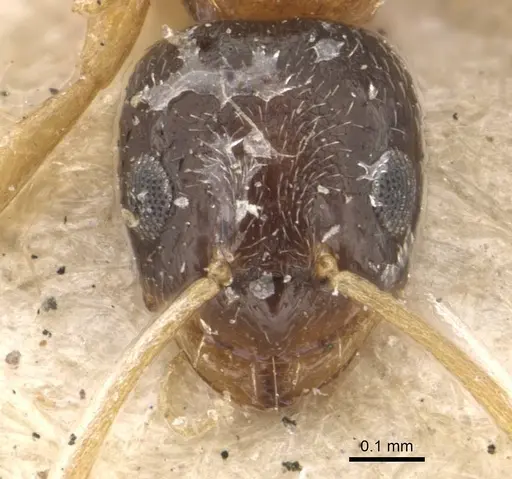
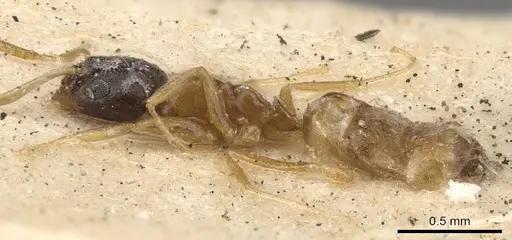
Plagiolepis dichroa is a tiny yellow ant species native to India and surrounding regions in the Indomalaya zone. Workers measure just 2mm in length and have a distinctive appearance, they're yellow with the head shading to light or dark brown, and their body is smooth and shiny with very sparse hair [1]. These ants belong to the Formicinae subfamily and are classified as a cryptic species, meaning they tend to nest in hidden, concealed locations rather than obvious above-ground structures [2].
This species is found across much of northern and eastern India, from the Himalayan foothills (up to 1500m elevation) through the Western Ghats and into West Bengal [3][4]. Their small size and cryptic nesting habits make them a challenging but rewarding species for experienced antkeepers who can provide the careful attention these tiny ants require.
Quick Summary
- Difficulty: Medium
- Origin & Habitat: Native to India and surrounding Indomalaya regions. Found across Himachal Pradesh, Jammu & Kashmir, Karnataka, Meghalaya, Sikkim, and West Bengal at elevations up to 1500 meters [3][4]. As a cryptic species, they likely nest in hidden microhabitats like under stones, in soil crevices, or within rotting wood in forested areas [2].
- Colony Type: Colony structure is unconfirmed. Based on typical Plagiolepis patterns, likely single-queen colonies, though this requires verification.
- Size & Growth:
- Queen: Unconfirmed, no documented queen measurements available. Estimated 4-5mm based on genus patterns.
- Worker: 2mm [1]
- Colony: Unconfirmed, likely small colonies typical of the genus, possibly under 500 workers.
- Growth: Unknown, likely moderate growth typical of small Formicinae.
- Development: Unconfirmed. Based on related Formicinae species, estimate 6-8 weeks at optimal temperature. (Development timeline has not been directly studied. Estimates based on genus-level patterns for small tropical/subtropical ants.)
- Antkeeping:
- Temperature: Keep at 22-26°C. Being from India with populations up to 1500m elevation, they likely tolerate a range from 20-28°C. A gentle temperature gradient allows ants to self-regulate [3].
- Humidity: Moderate humidity around 60-70%. Provide a moist nest area with some drier areas available. Their cryptic nature suggests they prefer stable, moderately humid conditions.
- Diapause: Likely required. Based on Himalayan distribution (up to 1500m), they probably experience seasonal cooling. Provide a winter rest period of 2-3 months at 10-15°C.
- Nesting: Use small, tight-fitting chambers scaled to their tiny 2mm size. Test tubes work well for founding colonies. For established colonies, Y-tong nests or acrylic setups with narrow passages prevent escape. Provide dark, concealed nesting areas, these cryptic ants prefer privacy.
- Behavior: These are tiny, docile ants that are not aggressive and unlikely to sting. They are cryptic by nature, preferring to stay hidden within their nest rather than forage openly. Their small 2mm size means they are excellent escape artists, they can squeeze through remarkably small gaps. Foraging style is likely generalist omnivorous, similar to other Plagiolepis species. Activity level is moderate, they maintain visible foraging trails but are not overly active outside the nest.
- Common Issues: escape prevention is critical, their tiny 2mm size means they can slip through standard barrier setups, use fine mesh and tight-fitting lids, cryptic nesting means they may seem inactive or hidden, don't assume the colony is struggling just because they're not visible, slow growth compared to larger species can frustrate beginners, patience is essential, wild-caught colonies may harbor parasites that can devastate captive populations, overfeeding leads to mold in small setups, remove uneaten food promptly
Housing and Escape Prevention
Plagiolepis dichroa presents significant housing challenges due to its extremely small worker size of just 2mm [1]. Standard ant keeping equipment often has gaps that these tiny ants can slip through with ease. For founding colonies, use test tubes with cotton plugs that are packed firmly, the gap between the cotton and the tube wall must be minimal. For larger colonies, Y-tong (Asian Arrow) nests work well because the tight chambers are scaled to small ants. Alternatively, acrylic nests with passages sized at 2-3mm work effectively.
Escape prevention is non-negotiable. Apply Fluon (liquid PTFE) to all rim edges and consider using a double barrier system, a moat of water or oil around the outworld, plus fine mesh covering any ventilation holes. Even a 0.5mm gap is enough for these ants to escape. The outworld should be relatively small and enclosed, an open foraging area invites escape attempts. Place the nest in a dark location since these cryptic ants prefer dim conditions and will be more active and visible when the nest is covered or the setup is in a low-light area.
Feeding and Diet
Based on genus-level patterns for Plagiolepis, these ants are generalist omnivores. They likely consume honeydew from aphids and scale insects, small insects, and various sugar sources. In captivity, offer a varied diet: sugar water or honey water (changed every 2-3 days), small protein sources like fruit flies, tiny crickets, or mealworm pieces.
Feed small amounts initially and observe what the colony accepts. Remove uneaten food within 24-48 hours to prevent mold, which is particularly dangerous in small setups. A feeding schedule of sugar water constantly available plus protein prey once or twice weekly works well for established colonies. During founding, the queen will not eat, claustral queens (if applicable) rely on stored fat reserves until the first workers emerge. Once workers are present, they will begin foraging for food.
Temperature and Seasonal Care
Plagiolepis dichroa originates from India and surrounding regions at elevations up to 1500 meters [3][4]. This suggests they prefer warm conditions with moderate humidity. Maintain nest temperatures between 22-26°C year-round, with slight drops acceptable during a winter rest period.
Based on their Himalayan distribution (found at 500m and 1000m elevation in the Himalayas) [2], they likely experience seasonal temperature variations. Provide a diapause period of 2-3 months during winter, lowering temperatures to 10-15°C. This can be achieved by moving the colony to a cooler room or unplugging any heating elements. Do not feed during diapause, but ensure water access through a moist cotton ball. Resume normal feeding and temperatures gradually in spring.
Colony Establishment and Growth
Starting a Plagiolepis dichroa colony requires patience. If you obtain a founding queen, she should be placed in a test tube setup with a water reservoir (standard test tube setup) and kept in a dark, quiet location. The claustral founding process (if confirmed) means she will seal herself in a chamber and not leave to forage, she survives on stored body fat while laying eggs and raising the first brood.
First workers (nanitics) will be smaller than normal workers and may take 6-10 weeks to emerge, depending on temperature [3]. Do not disturb the queen during this period, checking too frequently can cause her to abandon or consume her brood. Once the first workers emerge, they will gradually begin foraging and the colony can be transitioned to a larger setup if needed.
Growth is likely slow compared to larger ant species. Colonies probably remain small (under a few hundred workers) based on typical Plagiolepis patterns. This species is best suited for antkeepers who enjoy observing small, cryptic colonies rather than those seeking rapid colony expansion.
Frequently Asked Questions
How long does it take for Plagiolepis dichroa to produce first workers?
The exact timeline is unconfirmed, but based on related Formicinae species, expect 6-10 weeks from egg to first worker at optimal temperatures (22-26°C). First workers (nanitics) will be smaller than fully grown workers.
Are Plagiolepis dichroa ants good for beginners?
No, their tiny 2mm size makes escape prevention challenging, and their cryptic nature means colonies can appear inactive even when healthy. They require experienced antkeepers who understand small ant husbandry.
What size colony do Plagiolepis dichroa colonies reach?
Colony size is unconfirmed, but based on typical Plagiolepis patterns, they likely reach a few hundred workers at most. They are not large colony builders.
Can I keep multiple Plagiolepis dichroa queens together?
Colony structure is unconfirmed. Combining unrelated queens has not been documented for this species. Based on typical ant behavior, this is not recommended as queens may fight.
What temperature do Plagiolepis dichroa ants need?
Keep nest temperatures between 22-26°C. They originate from India and the Himalayan region, so they prefer warm, stable conditions. A slight temperature gradient allows self-regulation.
Do Plagiolepis dichroa ants need hibernation?
Likely yes. Based on their distribution in Himalayan regions up to 1500m elevation, they probably experience seasonal cooling. Provide a winter rest period of 2-3 months at 10-15°C.
Why are my Plagiolepis dichroa ants escaping?
At just 2mm, they are excellent escape artists. Use fine mesh barriers, apply Fluon to rim edges, and ensure all connections are tight. Even tiny gaps around tubing or ventilation can allow escape.
What do Plagiolepis dichroa ants eat?
Based on genus patterns, they are omnivorous. Offer sugar water or honey water, plus small protein sources like fruit flies or tiny crickets. Remove uneaten food promptly to prevent mold.
When should I move Plagiolepis dichroa to a formicarium?
Wait until the colony has at least 20-30 workers and the test tube setup shows signs of crowding (workers clustering on the cotton, condensation gone). Moving too early can stress the colony.
References

This caresheet is licensed under CC BY-SA 4.0 .
CASENT0909848
View on AntWeb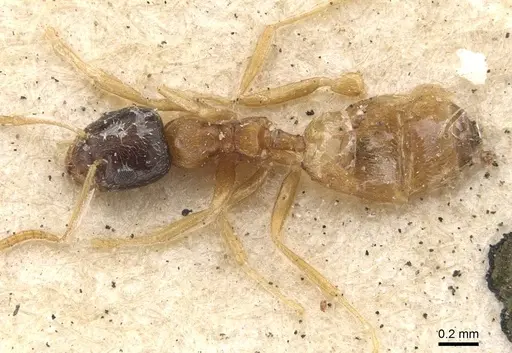
Literature
Loading...Loading products...