

Plagiolepis boltoni
- Scientific Name
- Plagiolepis boltoni
- Tribe
- Plagiolepidini
- Subfamily
- Formicinae
- Author
- Sharaf & Aldawood, 2011
- Distribution
- Found in 2 countries
Plagiolepis boltoni Overview
Plagiolepis boltoni is an ant species of the genus Plagiolepis. It is primarily documented in 2 countries , including United Arab Emirates, Saudi Arabia. Detailed taxonomic data and occurrence records can be further explored via authoritative databases such as AntWeb or the Global Biodiversity Information Facility (GBIF).
Plagiolepis boltoni
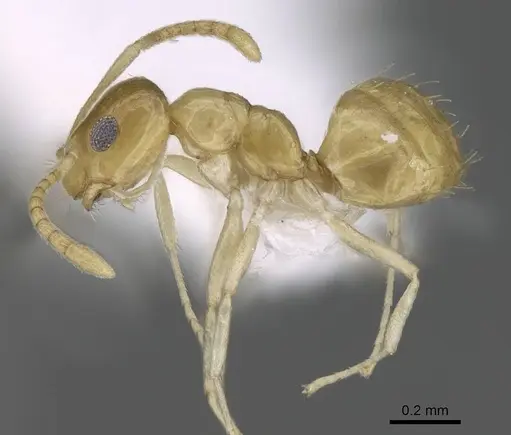
Plagiolepis boltoni is a tiny yellow ant species native to the Arabian Peninsula, specifically found in Saudi Arabia and Oman. Workers measure just 1.35-1.60mm in length, making them one of the smaller ant species you'll encounter. They have a distinctive yellow body with black eyes and a black tip on the abdomen, along with relatively large eyes compared to other Plagiolepis species [1]. These ants were discovered in 2011 and named in honor of the renowned ant taxonomist Barry Bolton [1].
In the wild, P. boltoni prefers arid areas around date palm trees, nesting in soil either near the base of trees or under stones. They've been found coexisting with several other ant species including Brachyponera sennaarensis, Camponotus sericeus, and Cardiocondyla emeryi [1]. This species is newly described and poorly studied in the wild, so much of its biology remains unknown. For antkeepers, this means you'll be pioneering its care in captivity.
Quick Summary
- Difficulty: Unknown, too little data to assess
- Origin & Habitat: Saudi Arabia and Oman, arid areas with date palm trees, nesting in soil near tree bases or under stones [1]
- Colony Type: Unknown, colony structure has not been documented
- Size & Growth:
- Queen: Not fully described in available literature, estimated similar to worker proportions [1]
- Worker: 1.35-1.60mm [1]
- Colony: Unknown, only small colonies observed in the wild [1]
- Growth: Unknown
- Development: Unknown, no development data available (No direct studies on development timeline exist for this species. Related Plagiolepis species typically develop from egg to worker in 4-8 weeks at warm temperatures, but this is an estimate.)
- Antkeeping:
- Temperature: Likely tolerates warm conditions given arid origin, suggest starting around 22-26°C and observing colony activity [1]
- Humidity: Prefers drier conditions typical of arid habitats, keep nest substrate lightly moist but not wet. Provide some dry areas within the setup [1]
- Diapause: Unknown, no data on overwintering requirements. Given Arabian origin, may not require true hibernation but may show reduced activity in cooler months [1]
- Nesting: Natural nesting: soil under stones or near palm tree roots. In captivity, a small test tube setup or Y-tong nest with tight chambers scaled to their tiny size works well. Avoid large open spaces, these ants are very small [1]
- Behavior: These are tiny, non-aggressive ants that likely form small colonies. They forage near the bases of trees in the wild, suggesting they may be ground-foraging and possibly tend aphids for honeydew. Their small size means excellent escape prevention is critical, they can squeeze through tiny gaps. No sting is documented, and given their size, they pose no danger to keepers [1].
- Common Issues: escape prevention is critical due to their tiny 1.5mm size, use fine mesh and tight-fitting barriers, colony size is unknown, expect small colonies based on limited wild observations, no established care guidelines exist, you're pioneering their husbandry, humidity balance is tricky, too wet may be harmful given arid origin, limited availability, this is a rarely kept species
Appearance and Identification
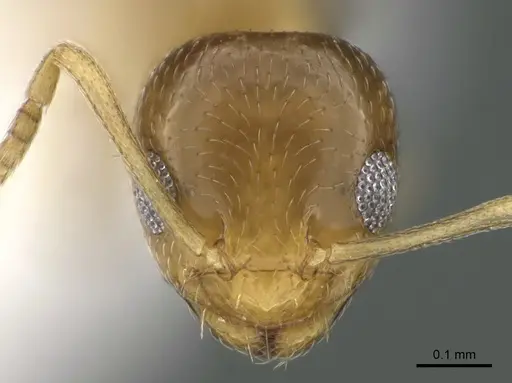
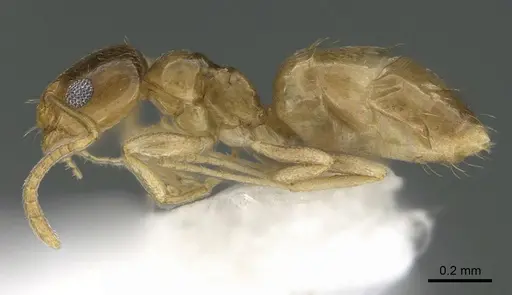
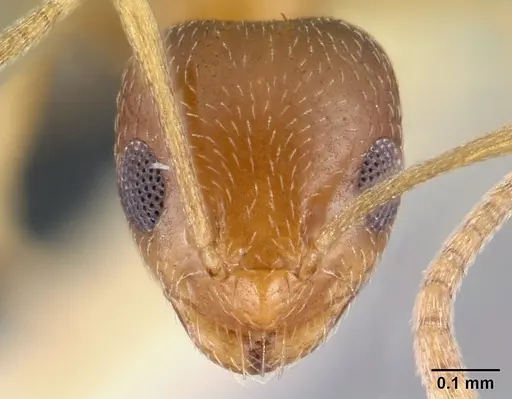
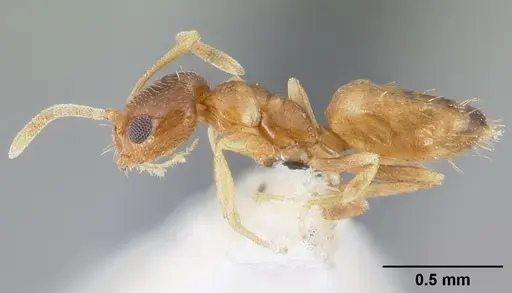
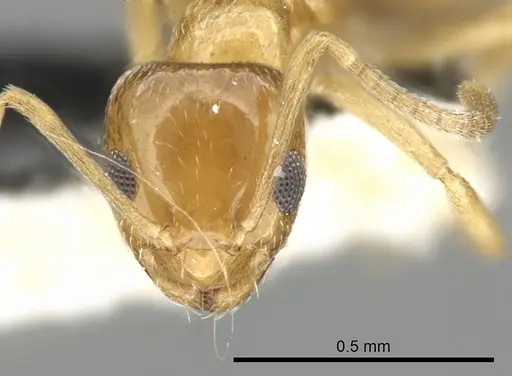
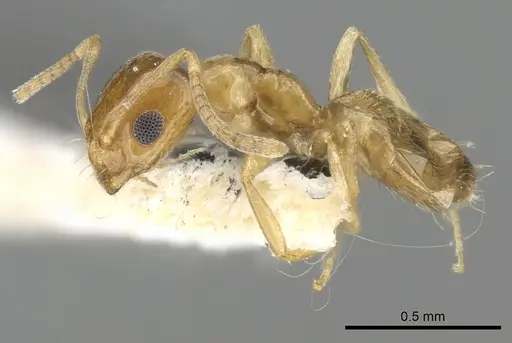
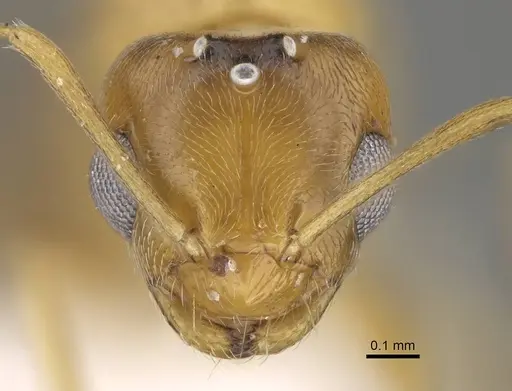
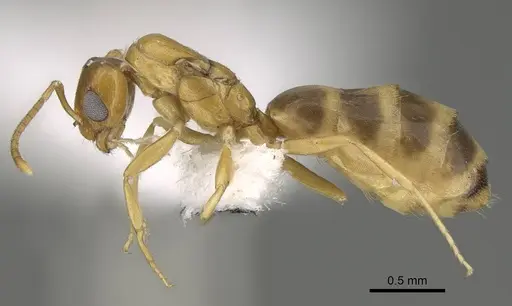
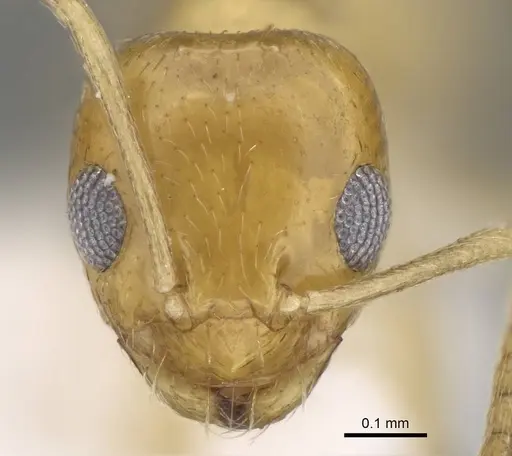
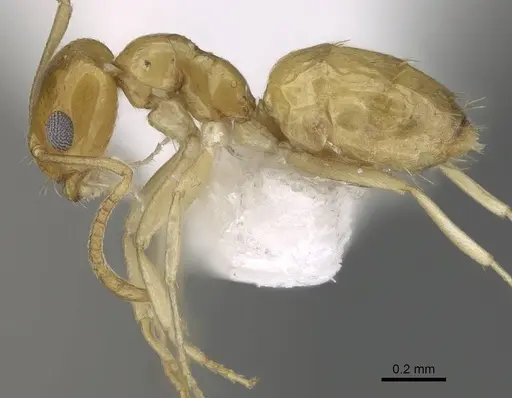
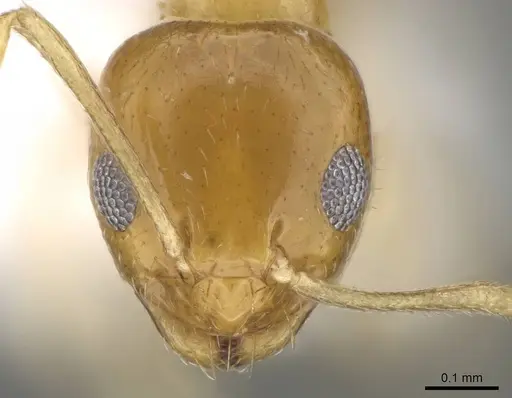
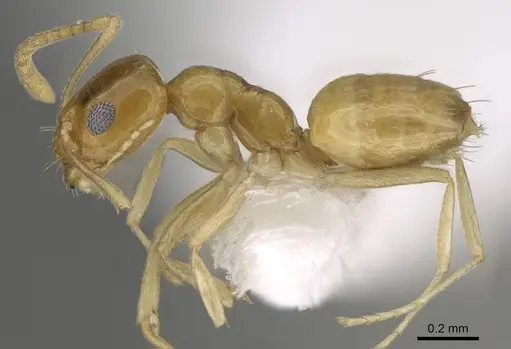
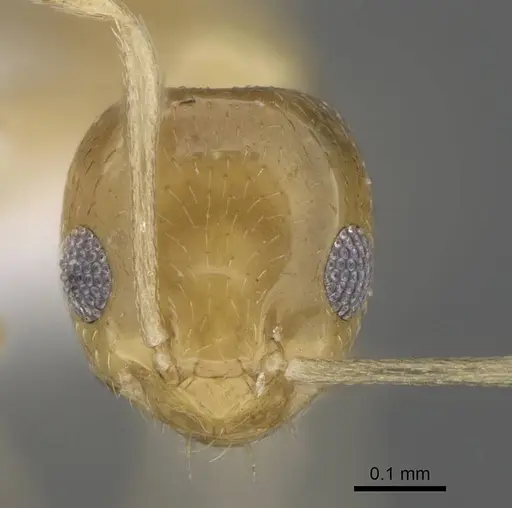
Plagiolepis boltoni workers are tiny ants measuring just 1.35-1.60mm in total length [1]. Their body is a uniform yellow color, but they have striking black eyes and a black tip on their abdomen (gaster) [1]. The head is longer than it is wide, with convex sides when viewed from above. Their antennae have scapes that extend past the back of the head by about one-quarter of their length, a key identification feature [1]. They have relatively large eyes compared to similar species, with 12 ommatidia in the longest row [1]. The body is smooth and shiny with some short hairs. Queens have similar coloration but are slightly larger in the head and have notably large eyes [1].
Natural Habitat and Distribution
This species is known from Saudi Arabia and Oman in the Arabian Peninsula [2]. In the wild, they've been collected from arid areas planted with small date palm trees, where they forage near the bases of the trees [1]. Nests are found in soil, sometimes in moist soil due to irrigation, sometimes in dry soil under stones [1]. They've been found coexisting with other ant species including Brachyponera sennaarensis, Camponotus sericeus, Cataglyphis abyssinica, and Cardiocondyla emeryi [1]. The areas they inhabit also have springtails and various beetles, suggesting they prefer microhabitats with some moisture and organic matter [1]. This is a newly described species (2011), so its full distribution and ecology are still being learned [1].
Housing and Nesting
Because P. boltoni is so small and newly described, there are no established captive care guidelines. Based on their natural habitat, provide a small, dry nest setup. Test tubes work well for founding colonies, but ensure the cotton is packed tightly, these tiny ants can slip through gaps that seem insignificant. A Y-tong or acrylic nest with very small chambers scaled to their 1.5mm size would be ideal for established colonies. The nest should have areas of varying humidity, keep part lightly moist but provide dry zones as well. Avoid large, open foraging areas, these tiny ants do best in compact spaces. Escape prevention is absolutely critical, use fine mesh (at least 0.5mm or smaller) on any openings [1].
Feeding and Diet
The specific diet of P. boltoni has not been documented, but related Plagiolepis species are generalist feeders that consume honeydew from aphids and small insects. In the wild, they've been found foraging near date palm trees, which suggests they may tend sap-sucking insects for honeydew. For captivity, offer small protein sources like fruit flies, pinhead crickets, or small mealworm pieces. Sugar water or honey water should be available, especially for workers. Given their tiny size, food items must be appropriately sized, what seems like a crumb to you is a full meal to them. Observe what your colony accepts and adjust accordingly.
Temperature and Seasonal Care
Given their origin in the arid Arabian Peninsula, P. boltoni likely tolerates warm temperatures. Start around 22-26°C and monitor colony behavior, if workers are active and foraging, the temperature is suitable. No specific data exists on diapause or hibernation requirements. Based on their geographic origin, they probably don't require a true hibernation period, but may show reduced activity during cooler months. If your colony becomes less active in winter, reduce feeding and keep them in a slightly cooler area (around 18-20°C) rather than allowing them to become too cold. Avoid temperature extremes in either direction. [1]
Challenges and Unknowns
Plagiolepis boltoni is one of the least-studied ant species available in the antkeeping hobby. Almost nothing is known about their colony structure, founding behavior, development timeline, or specific care requirements. What you're doing is pioneering work, your observations could contribute to our understanding of this species. Start with conservative care parameters and adjust based on how your colony responds. The biggest challenges are: preventing escapes due to their minute size, providing appropriately-sized food, and balancing humidity without specific guidance. If your colony thrives, your experience could help future keepers develop better care guidelines for this species.
Frequently Asked Questions
How long does it take for Plagiolepis boltoni to produce first workers?
The development timeline is completely unknown for this species. No scientific studies have documented their egg-to-worker time. Based on related Plagiolepis species, estimate 4-8 weeks at warm temperatures, but this is just an educated guess.
What do Plagiolepis boltoni ants eat?
Their specific diet hasn't been studied, but related species eat honeydew and small insects. Feed small protein sources like fruit flies, tiny mealworm pieces, or sugar water. Offer appropriately-sized items since these ants are only 1.5mm long.
Are Plagiolepis boltoni good for beginners?
This species is not recommended for beginners. It's newly described with almost no established care guidelines, rarely available, and so small that escape prevention is challenging. Try more common species first.
How big do Plagiolepis boltoni colonies get?
Unknown, only small colonies have been observed in the wild. Related species typically form colonies of several hundred workers at most. Expect smaller colonies than species like Camponotus or Formica.
What temperature do Plagiolepis boltoni need?
No specific data exists. Based on their Arabian origin, try 22-26°C and adjust based on colony activity. They likely prefer warmer conditions but avoid overheating.
Do Plagiolepis boltoni need hibernation?
Unknown, no data on overwintering behavior exists. Given their origin in Saudi Arabia and Oman, they probably don't require true hibernation but may reduce activity in cooler months.
Can I keep multiple Plagiolepis boltoni queens together?
Unknown, colony structure has not been documented. Without data on whether they're single-queen or multi-queen colonies, combining unrelated queens is not recommended.
Why are my Plagiolepis boltoni escaping?
These ants are extremely tiny (1.35-1.60mm) and can squeeze through gaps that seem insignificant. Use fine mesh (0.5mm or smaller), check all lid seams, and ensure any tubing connections are secure. Escape prevention must be excellent.
Where can I get Plagiolepis boltoni?
This is a rarely kept species with limited availability. You may need to find a specialized ant seller or breeder who works with less common Middle Eastern species. Check antkeeping forums and specialty vendors.
References

This caresheet is licensed under CC BY-SA 4.0 .
ANTWEB1041929
View on AntWeb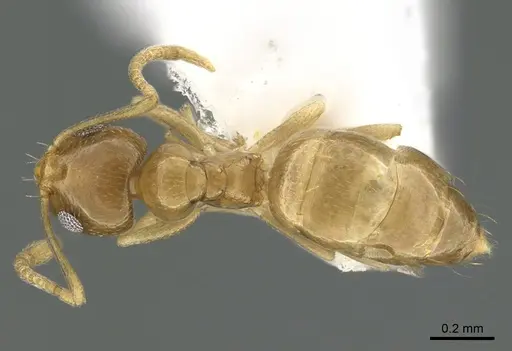
CASENT0217200
View on AntWeb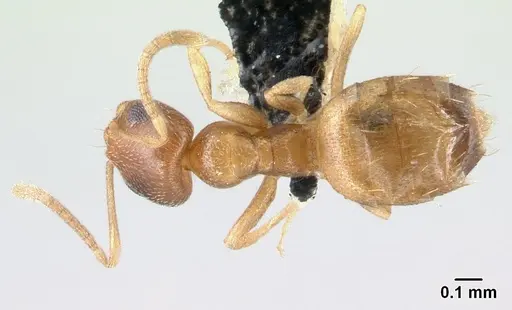
CASENT0249867
View on AntWeb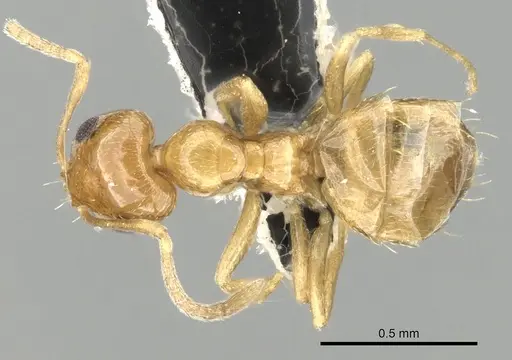
CASENT0919950
View on AntWeb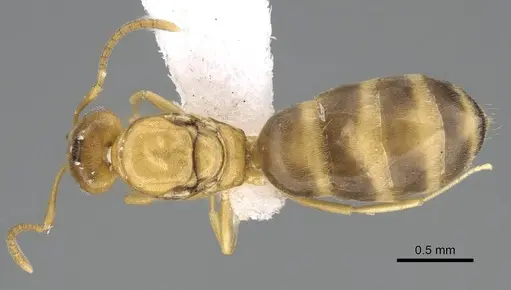
CASENT0919951
View on AntWeb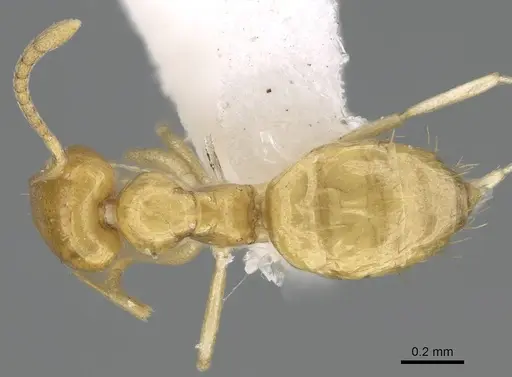
CASENT0919952
View on AntWeb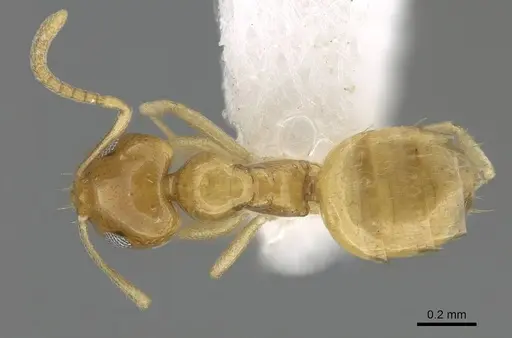
CASENT0922271
View on AntWeb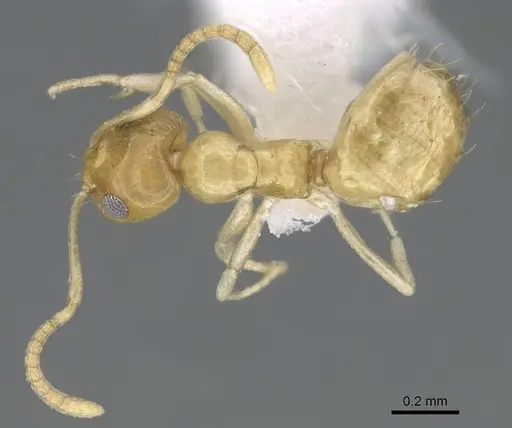
Literature
Loading...Loading products...