

Plagiolepis arnoldii
- Scientific Name
- Plagiolepis arnoldii
- Tribe
- Plagiolepidini
- Subfamily
- Formicinae
- Author
- Dlussky, 1990
- Distribution
- Found in 1 countries
Plagiolepis arnoldii Overview
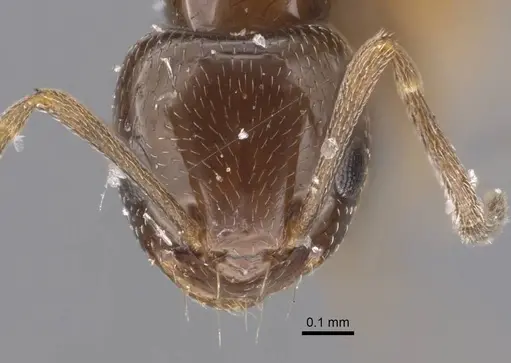
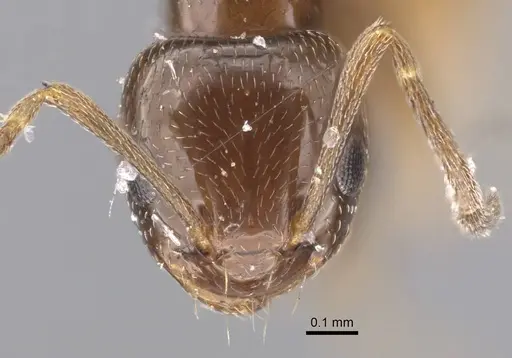
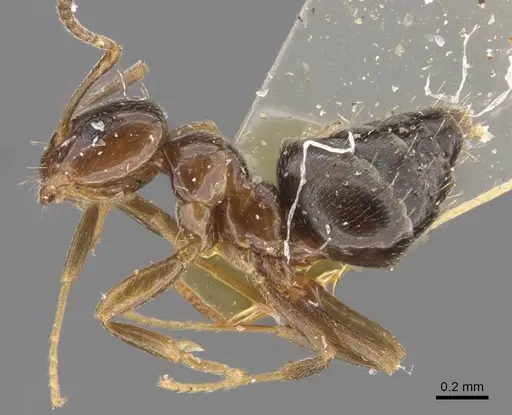
Plagiolepis arnoldii is an ant species of the genus Plagiolepis. It is primarily documented in 1 countries , including Azerbaijan. Detailed taxonomic data and occurrence records can be further explored via authoritative databases such as AntWeb or the Global Biodiversity Information Facility (GBIF).
Plagiolepis arnoldii
Plagiolepis arnoldii is a tiny ant species native to the Palaearctic region, specifically found in Azerbaijan and Turkmenistan [1]. Workers are small, typically measuring 2-3mm, with the genus characterized by pale to yellowish-brown coloration and relatively smooth body surfaces. This species was originally described from Turkmenistan and represents one of the less-studied members of the Plagiolepis genus, which contains over 80 species across Africa, Europe, and Asia [1]. The genus is known for its small worker size and tendency to form moderate colonies, though specific details for P. arnoldii remain limited.
Quick Summary
- Difficulty: Medium
- Origin & Habitat: Native to the Palaearctic region, specifically Azerbaijan and Turkmenistan [1]. In Azerbaijan, specimens have been collected from Khizi, Khachmaz, Ismailly, Oguz, and Sabirabad regions [1]. Based on typical Plagiolepis habitat preferences, this species likely inhabits warm, dry to semi-arid areas, often found in open habitats, under stones, or in decaying wood.
- Colony Type: Colony structure is unconfirmed for this species. Many Plagiolepis species are monogyne (single queen), though some can form polygyne colonies. No documented ergatoid (wingless queen) replacement systems have been observed for P. arnoldii specifically [1].
- Size & Growth:
- Queen: Estimated 4-5mm based on genus Plagiolepis patterns [2]
- Worker: Estimated 2-3mm based on genus Plagiolepis patterns [2]
- Colony: Likely reaches several hundred workers based on typical Plagiolepis colony sizes [2]
- Growth: Moderate, likely similar to other Plagiolepis species
- Development: Estimated 6-8 weeks at optimal temperature based on related Plagiolepis species [2] (Development time is inferred from genus-level data, species-specific measurements are unavailable)
- Antkeeping:
- Temperature: Keep at 22-26°C based on typical Plagiolepis preferences for warm conditions. A gentle temperature gradient allows workers to self-regulate. Avoid temperatures below 18°C or above 30°C [2].
- Humidity: Moderate humidity around 50-60%. Plagiolepis species typically prefer drier conditions compared to tropical ants. Provide a water tube but avoid overly damp nesting areas [2].
- Diapause: Likely requires a winter diapause period of 2-3 months at 10-15°C, given its temperate origin in Turkmenistan and Azerbaijan [2]. Reduce feeding and activity during this period.
- Nesting: Small test tubes or acrylic nests work well given their tiny worker size. Provide narrow chambers and passages scaled to their small body size. Naturalistic setups with small rocks or decaying wood also suit this species [2].
- Behavior: Plagiolepis arnoldii workers are small and active, typically foraging for honeydew and small insects. They are not aggressive and rarely sting. However, their tiny size means escape prevention is critical, they can squeeze through remarkably small gaps. Workers likely use chemical trails to recruit nestmates to food sources, similar to other Plagiolepis species [2]. The colony may show moderate activity levels throughout the day.
- Common Issues: escape prevention is critical due to their very small size, use fine mesh barriers and tight-fitting lids, limited species-specific data means care is based on genus-level inference rather than direct observation, winter diapause is likely required but timing and duration specifics are unconfirmed, slow colony growth compared to larger ant species may frustrate beginners, test tube setups must have properly sized water reservoirs to avoid flooding small colonies
Housing and Nest Setup
Plagiolepis arnoldii requires careful housing due to its very small worker size. Test tube setups work well for founding colonies, use small-diameter tubes (10-12mm) with a water reservoir filled with cotton. The small size means you should use fine mesh on any ventilation holes. For established colonies, acrylic nests with narrow chambers (3-5mm passage width) work better than larger formicarium designs. Avoid setups with large open spaces where tiny workers can get lost or overwhelmed. A small outworld area connected to the nest makes feeding easier. Always apply fluon or other barrier solutions to prevent escapes, these tiny ants will find gaps you didn't know existed [2].
Feeding and Diet
Plagiolepis arnoldii workers are omnivorous, similar to other members of the genus. They readily accept sugar sources including honey water, sugar water, and ripe fruit. For protein, offer small insects like fruit flies, small mealworms, or cricket pieces. In the wild, they likely tend aphids and collect honeydew, so occasional sweet treats are appreciated. Feed small amounts every 2-3 days, removing uneaten protein within 24 hours to prevent mold. A constant sugar water supply in a test tube cap or small container works well. Because of their tiny size, even very small prey items are appropriate, avoid anything larger than their body size [2].
Temperature and Seasonal Care
Maintain temperatures between 22-26°C for optimal colony health and development. Plagiolepis species originate from warm temperate to subtropical regions, so they handle moderate heat well but struggle in cool conditions. A heating cable on one side of the nest creates a temperature gradient that workers will use to regulate their environment. During winter (October-March), reduce temperature to 10-15°C to provide a diapause period. During diapause, reduce feeding to once weekly or less and minimize disturbance. Do not feed during the deepest winter rest. Resume normal feeding and warming when temperatures increase in spring. This seasonal cycle supports healthy colony development and reproduction [2].
Colony Growth and Development
Plagiolepis arnoldii colonies grow moderately compared to faster-developing genera like Lasius or Tapinoma. A newly mated queen will lay her first eggs within days of sealing into a founding chamber. Eggs develop through larval and pupal stages over approximately 6-8 weeks at optimal temperature, producing the first nanitic (first generation) workers. These initial workers are typically smaller than mature workers. Colony growth accelerates as more workers hatch, but Plagiolepis colonies generally remain smaller than many common hobby species, expect several hundred workers at maturity rather than thousands. Patience is key with this species, significant growth takes months to years rather than weeks [2].
Behavior and Observation
Plagiolepis arnoldii workers are active foragers, typically running in characteristic rapid, erratic patterns when searching for food. They communicate through chemical pheromones and will recruit nestmates to good food sources using trail-laying behavior. Workers are not particularly aggressive and rarely attempt to sting, making them safe to observe without protective gear. However, their small size makes them easy to lose track of, they can disappear into substrate, behind background items, or simply vanish from view. Observation is best done using a magnifying glass or macro lens. The colony will establish defined foraging patterns once established, often concentrating activity in certain areas of the outworld [2].
Frequently Asked Questions
How long does it take for Plagiolepis arnoldii to produce first workers?
Expect first workers (nanitics) approximately 6-8 weeks after the queen lays her eggs, assuming optimal temperatures around 24°C. This timeline is estimated from related Plagiolepis species since species-specific development data is unavailable. The queen will remain sealed in her founding chamber until the first workers emerge [2].
Can I keep multiple Plagiolepis arnoldii queens together?
Not recommended without specific evidence. While some Plagiolepis species can be polygynous, colony structure for P. arnoldii specifically is unconfirmed. Starting with a single queen is the safest approach for successful colony founding. Multiple unrelated queens will likely fight rather than cooperate [1].
How often should I feed Plagiolepis arnoldii?
Feed small amounts of protein (small insects or protein jelly) every 2-3 days. Keep a constant sugar water supply available in a small container. Remove uneaten protein within 24 hours to prevent mold. During winter diapause, reduce feeding to once weekly or stop entirely depending on colony activity level [2].
Does Plagiolepis arnoldii need hibernation?
Yes, likely requires a winter diapause period of 2-3 months. Given their origin in Turkmenistan and Azerbaijan (temperate regions with cold winters), they need a rest period at reduced temperatures (10-15°C) from approximately October through March. Reduce feeding, minimize disturbance, and allow the colony to slow down naturally [2].
Why are my Plagiolepis arnoldii escaping?
Their tiny size allows them to squeeze through incredibly small gaps. Check all enclosure seams, lid edges, and ventilation holes. Apply fluon or another barrier to all potential escape routes. Even a 1mm gap is enough for these small workers to escape. Consider upgrading to containers with tighter seals and finer mesh [2].
Are Plagiolepis arnoldii good for beginners?
They are moderate difficulty, not the easiest but not the hardest species. The main challenges are their tiny size (requiring excellent escape prevention), slower growth than beginner-friendly species, and the need for winter diapause. They are rewarding to watch but require more attention to housing than larger ant species. Beginners should be prepared for their specific needs before acquiring this species [2].
How big do Plagiolepis arnoldii colonies get?
Based on typical Plagiolepis patterns, colonies likely reach several hundred workers at maturity rather than thousands. This is a moderately sized colony compared to genera like Lasius (thousands) or Pheidole (hundreds to thousands). Expect 1-3 years to reach significant colony size under good care [2].
What temperature range is best for Plagiolepis arnoldii?
Keep the nest area between 22-26°C, with 24°C being ideal. They can tolerate brief periods up to 30°C and down to 18°C, but prolonged exposure outside this range causes stress. A temperature gradient allowing workers to choose their preferred zone is ideal. Room temperature within this range is often sufficient without additional heating [2].
References

This caresheet is licensed under CC BY-SA 4.0 .
CASENT0917582
View on AntWeb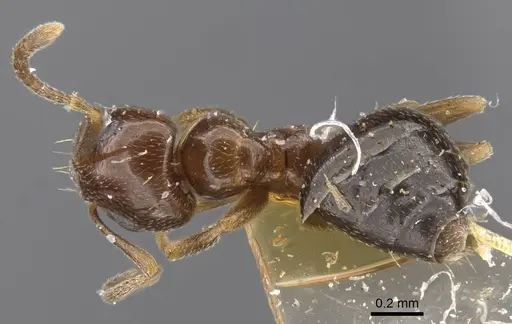
Literature
Loading...Loading products...