

Phrynoponera sveni
- Scientific Name
- Phrynoponera sveni
- Tribe
- Ponerini
- Subfamily
- Ponerinae
- Author
- Forel, 1916
- Distribution
- Found in 2 countries
Phrynoponera sveni Overview
Phrynoponera sveni is an ant species of the genus Phrynoponera. It is primarily documented in 2 countries , including Congo, Zambia. Detailed taxonomic data and occurrence records can be further explored via authoritative databases such as AntWeb or the Global Biodiversity Information Facility (GBIF).
Phrynoponera sveni
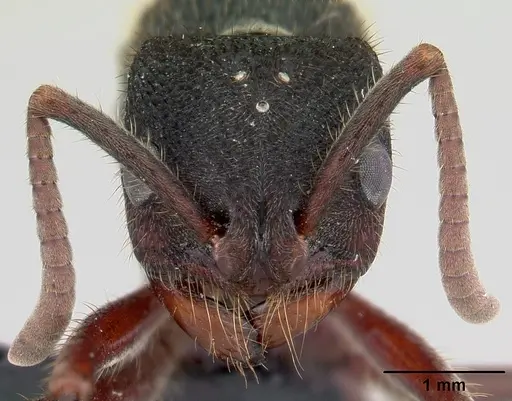
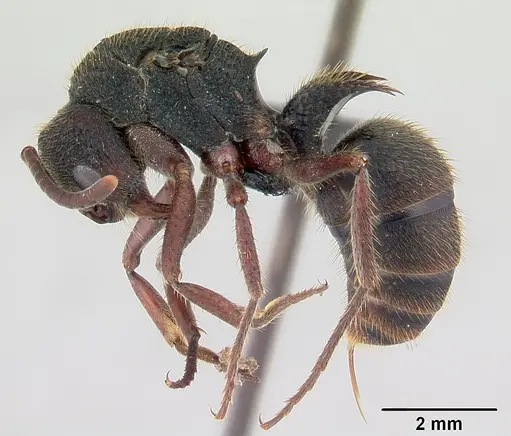
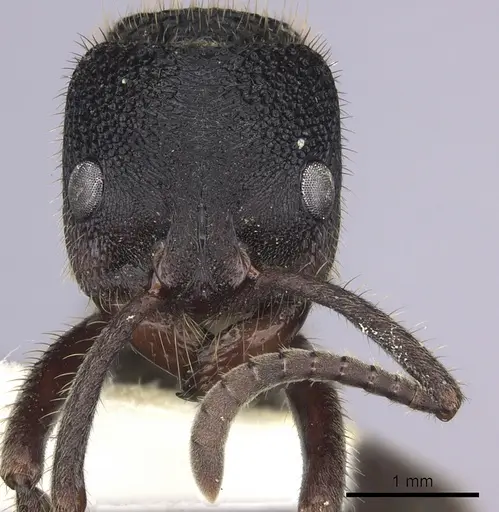
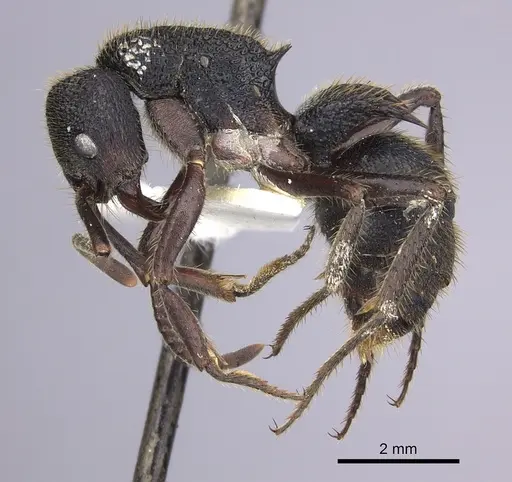
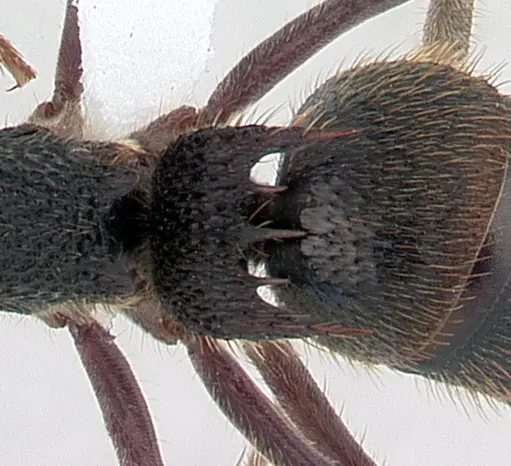
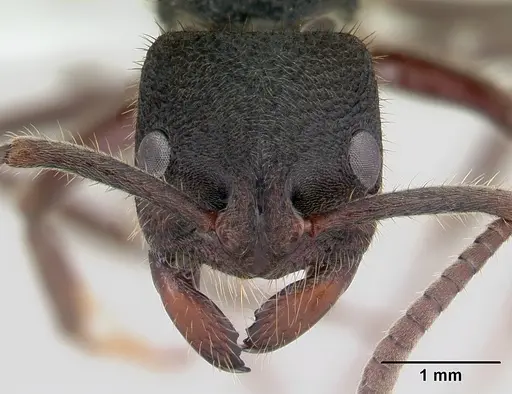
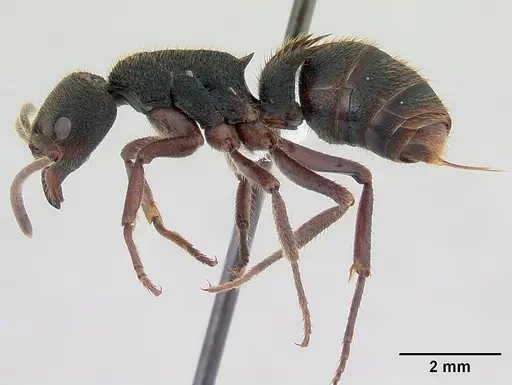
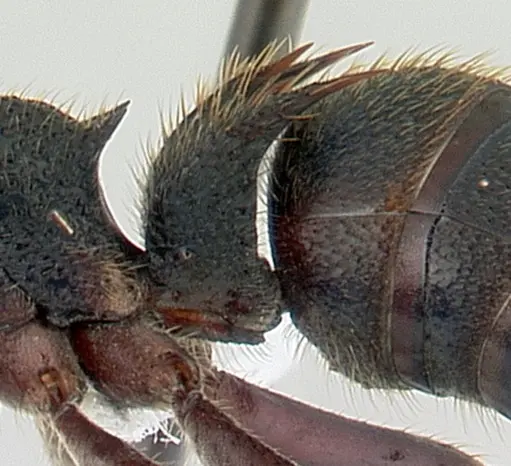
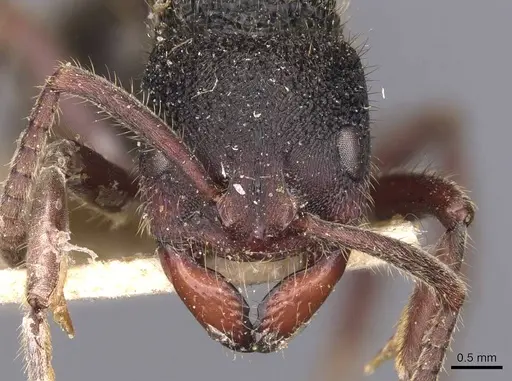
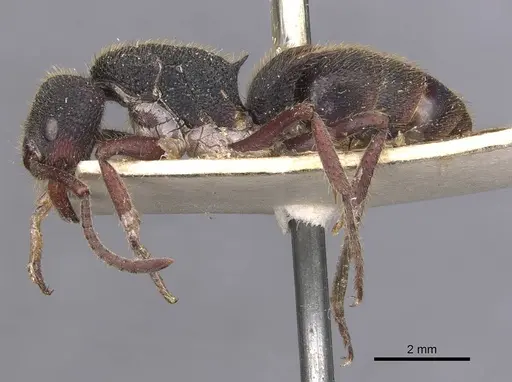
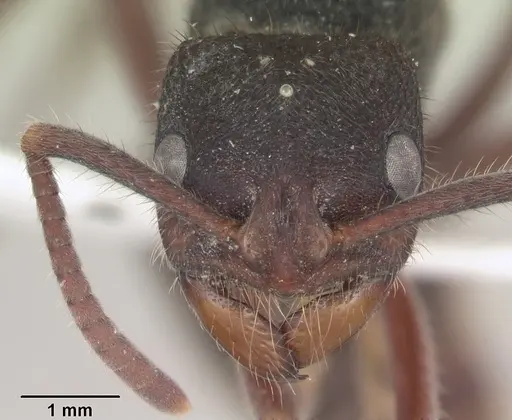
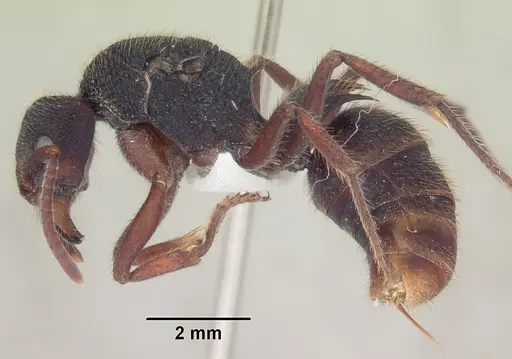
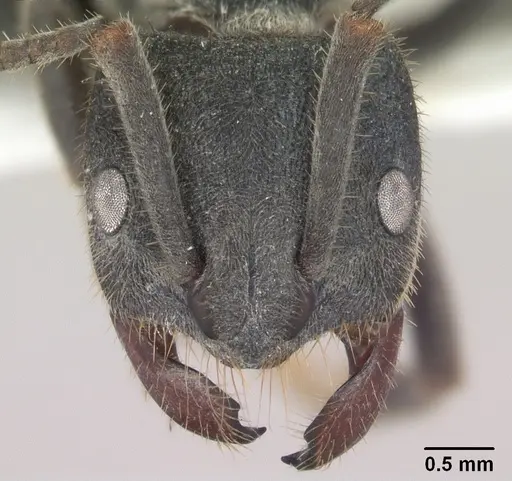
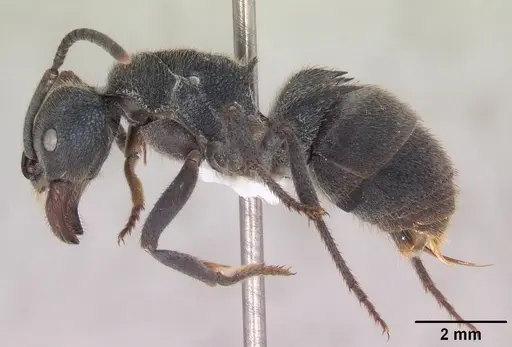
Phrynoponera sveni is a medium-sized ponerine ant native to Central African rainforests. Workers measure 10.5-11.4mm in total length, making them relatively large for the subfamily [1]. They have a distinctive appearance featuring coarse, chaotic rugose sculpture on the head and four teeth on the mandible [1]. The most striking feature is the presence of dull metallic blue reflections scattered across the mesosoma, petiole, and gaster, giving them an iridescent quality unusual among ants [1]. The petiole bears three pairs of spines, with the outer pair notably longer than the median spine [1].
These ants inhabit the rainforest leaf litter layer across several Central African countries including Gabon, Cameroon, the Democratic Republic of Congo, and the Central African Republic [1]. They are collected primarily from rotting logs, leaf litter samples, and occasionally from termitaries, indicating they nest in damp, decaying wood material on the forest floor [1]. This species is a member of the Ponerinae subfamily, known for their relatively primitive social structure and often potent stings.
Quick Summary
- Difficulty: Medium
- Origin & Habitat: Rainforests of Central Africa (Gabon, Cameroon, DRC, Central African Republic, Tanzania). Found at low elevations around 110m in Gabon. Inhabits the leaf litter layer, nesting in rotting logs and decaying wood material [1][2].
- Colony Type: Colony structure is unconfirmed. No data available on queen number or colony size in wild colonies.
- Size & Growth:
- Queen: Unknown, queen measurements not documented in available literature
- Worker: 10.5-11.4mm total length [1]
- Colony: Unknown, no colony size data available
- Growth: Unknown, no development data available
- Development: Unknown, no direct development studies available. Based on typical Ponerine patterns, estimate 8-12 weeks at optimal temperature. (Development timeline is unconfirmed. Ponerine ants typically have slower development than more advanced ant genera.)
- Antkeeping:
- Temperature: Keep around 24-28°C. Based on their Central African rainforest origin, they require warm, stable temperatures [2]. A heating cable on one side of the nest creates a gradient allowing the colony to self-regulate.
- Humidity: High humidity required. They naturally inhabit damp leaf litter and rotting wood [1]. Keep the nest substrate consistently moist but not waterlogged. Provide a water reservoir and mist occasionally to maintain humidity levels similar to tropical forest floor conditions.
- Diapause: Unknown, no specific data on overwintering requirements. Given their Central African origin, they likely do not require a true diapause period but may reduce activity during cooler periods.
- Nesting: Best kept in naturalistic setups that mimic their natural habitat. A Y-tong or plaster nest with damp substrate works well. Provide rotting wood pieces or cork as nesting material. They prefer tight, humid chambers rather than open spaces. Avoid dry, airy setups.
- Behavior: These ants are likely predatory like other Ponerines, using their sting to subdue prey. Workers are moderately sized and relatively robust. They probably forage individually in the leaf litter layer rather than using chemical recruitment trails. Escape prevention should be moderate, while not tiny, they are agile and can climb smooth surfaces. They likely have a potent sting typical of Ponerinae, so handle with caution. Activity level is probably moderate, with workers actively hunting during warmer periods.
- Common Issues: high humidity requirements can lead to mold growth if ventilation is poor, no available data on their exact dietary needs makes feeding challenging, slow development may cause keepers to lose patience and overfeed, escape prevention is needed despite their larger size, they can climb glass, lack of available care information means keepers are essentially pioneering captive husbandry
Housing and Nest Setup
Phrynoponera sveni requires a setup that recreates their natural rainforest floor habitat. A naturalistic terrarium-style formicarium works best, with a deep layer of moist substrate (at least 5-8cm) composed of a mixture of soil, sand, and rotting wood fragments. The substrate should remain damp but not waterlogged, aim for the consistency of a wrung-out sponge. Include pieces of rotting wood, cork, or hollow twigs as nesting material, as they naturally nest in decaying wood [1]. A Y-tong or plaster nest with a water reservoir can also work if you provide a humid outworld with leaf litter and hiding spots. Avoid dry setups or nests with excessive ventilation that would dry out the substrate.
Feeding and Diet
As a Ponerine ant, P. sveni is likely primarily predatory, hunting small invertebrates in the leaf litter. Based on typical Ponerine behavior, they probably accept small live prey such as fruit flies, small crickets, mealworms, and other appropriately-sized insects. They may also scavenge on dead insects. Sugar sources like honey water or sugar water may be accepted but should not be the primary food source. Feed protein-rich prey 2-3 times per week, offering prey items roughly the size of the ant's head. Remove any uneaten prey after 24-48 hours to prevent mold. Since there is no specific dietary data for this species, keepers should experiment with various small invertebrates to determine preferences.
Temperature and Humidity
These ants require warm, humid conditions reflecting their Central African rainforest origin. Maintain temperatures between 24-28°C consistently, they do not tolerate cool conditions well. A heating cable placed on one side of the nest creates a temperature gradient allowing the colony to regulate their own exposure. Humidity is critical: keep the substrate consistently moist with periodic misting. The air humidity should be high (70-85%). Using a water reservoir in the nest helps maintain stable humidity. Avoid placing the setup near air conditioning or heating vents that could cause temperature fluctuations or dry air. Monitor for condensation on the nest walls, some condensation is normal and indicates good humidity. [2][1]
Behavior and Handling
Ponerine ants are generally more primitive in their social structure and often possess functional stings. P. sveni likely has a potent sting, so handle them with caution, use gentle coaxing rather than direct handling. They probably forage individually rather than in groups, scanning the leaf litter for prey. Workers are moderately sized at around 11mm and relatively robust. They are likely more active during warmer, humid periods and may reduce movement when conditions are cooler or drier. When threatened, they may use their sting as a defense. Provide plenty of cover and hiding spots in the outworld to reduce stress. They are not aggressive toward the colony but will defend if provoked. [1]
Colony Establishment
Establishing a colony of P. sveni will require patience since there is no documented captive breeding information available. If obtaining a wild-caught colony, collect from leaf litter or rotting wood in their natural range. Queens can be difficult to locate as they likely found nests in concealed locations within decaying wood. Semi-claustral founding is typical for Ponerines, meaning the queen may need to leave the nest occasionally to hunt during the founding stage. However, this behavior is unconfirmed for this specific species. Expect slow growth, Ponerine development is generally slower than more advanced ant genera. The first workers (nanitics) will likely be smaller than mature workers. Do not disturb the founding chamber excessively during the first few months.
Frequently Asked Questions
How long does it take for Phrynoponera sveni to produce first workers?
The exact development timeline is unknown as no captive breeding studies exist. Based on typical Ponerine ant development, expect 8-12 weeks from egg to first worker at optimal temperature (around 26°C). Growth is likely slower than more common captive species.
What do Phrynoponera sveni ants eat?
They are likely predatory like other Ponerines. Feed small live insects such as fruit flies, small crickets, mealworms, and other appropriately-sized invertebrates. They probably also scavenge on dead insects. Sugar water may be accepted occasionally but protein prey should be the primary food.
What temperature do Phrynoponera sveni ants need?
Keep them warm at 24-28°C consistently. Their Central African rainforest origin means they require stable, warm conditions. A heating cable on part of the nest creates a gradient. They do not tolerate cool temperatures well.
Are Phrynoponera sveni good for beginners?
No, they are not recommended for beginners. There is very little available care information, they require high humidity and warm temperatures, and they likely have a potent sting. They are best suited for experienced antkeepers willing to experiment with husbandry.
How big do Phrynoponera sveni colonies get?
The maximum colony size is unknown. No data exists on wild colony sizes. Based on their size and typical Ponerine patterns, colonies probably reach several hundred workers at most, likely smaller than many common ant species.
Can I keep multiple Phrynoponera sveni queens together?
Unknown. No data exists on colony structure or queen behavior for this species. Combining unrelated queens is not recommended due to lack of information about their tolerance.
Do Phrynoponera sveni ants need hibernation?
No, hibernation is not required. Their Central African origin means year-round warm conditions. They may reduce activity during cooler periods but do not enter true diapause. Maintain consistent temperatures year-round.
Why are my Phrynoponera sveni dying?
Common causes include: too dry conditions (they require high humidity), temperatures below 24°C, mold from overwatering without ventilation, stress from excessive disturbance, or unsuitable prey. Review humidity, temperature, and disturbance levels. Lack of available care information means troubleshooting requires experimentation.
References

This caresheet is licensed under CC BY-SA 4.0 .
CASENT0081254
View on AntWeb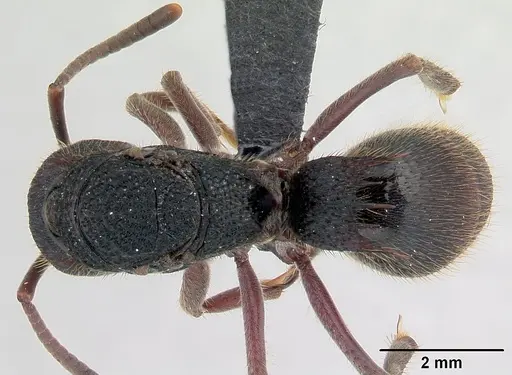
CASENT0249213
View on AntWeb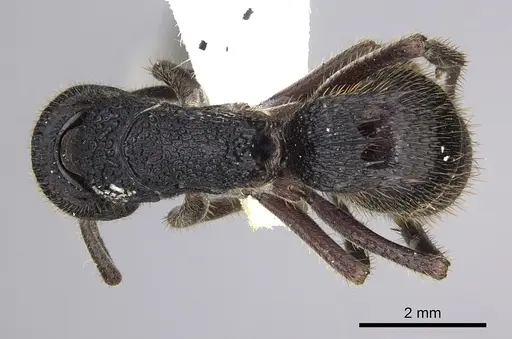
CASENT0417555
View on AntWeb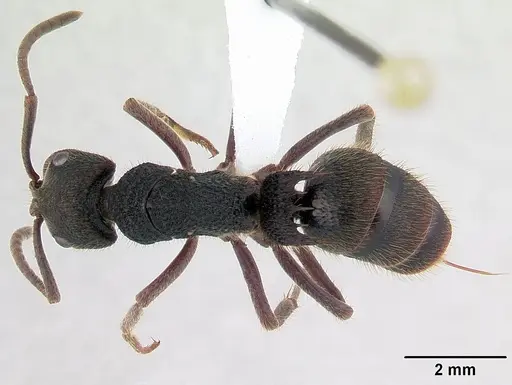
CASENT0907267
View on AntWeb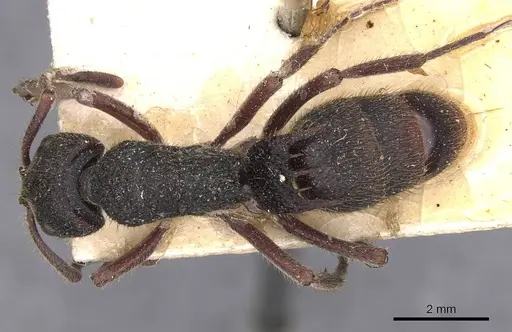
SAM-HYM-C007465
View on AntWeb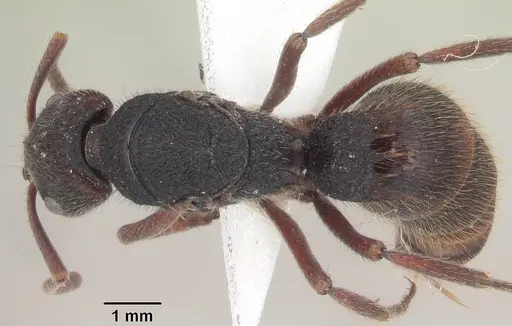
SAM-HYM-C010477
View on AntWeb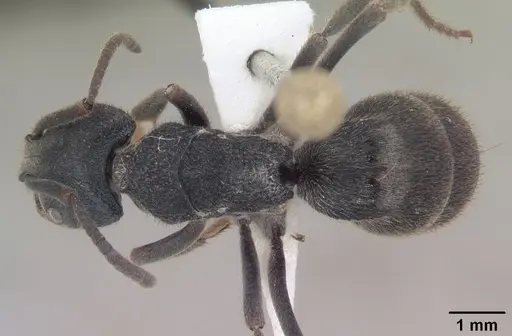
Literature
Loading...Loading products...