

Philidris myrmecodiae
- Scientific Name
- Philidris myrmecodiae
- Tribe
- Leptomyrmecini
- Subfamily
- Dolichoderinae
- Author
- Emery, 1887
- Distribution
- Found in 3 countries
Philidris myrmecodiae Overview
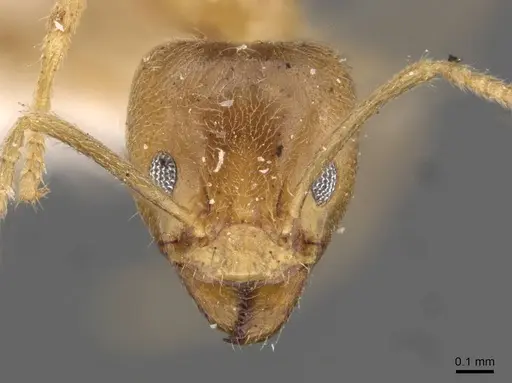
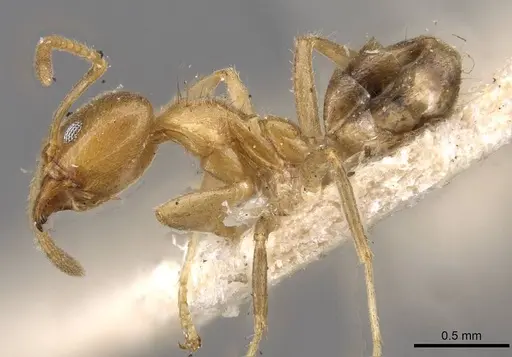
Philidris myrmecodiae is an ant species of the genus Philidris. It is primarily documented in 3 countries , including Indonesia, Papua New Guinea, Solomon Islands. Detailed taxonomic data and occurrence records can be further explored via authoritative databases such as AntWeb or the Global Biodiversity Information Facility (GBIF).
Philidris myrmecodiae
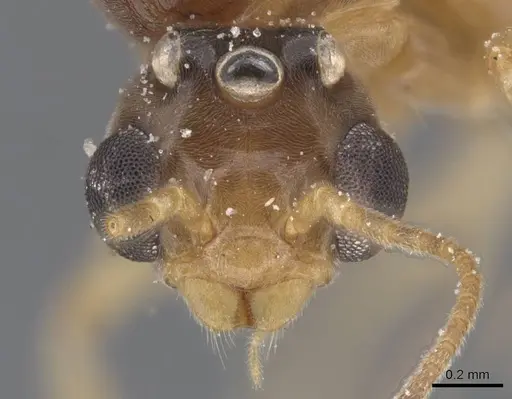
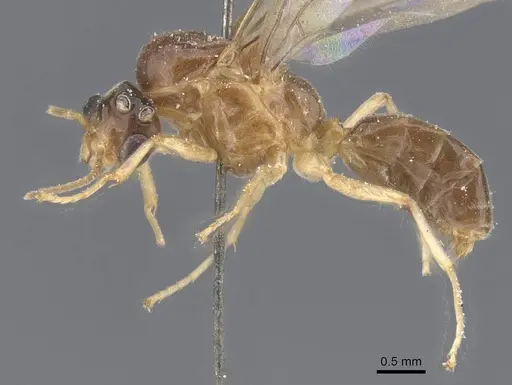
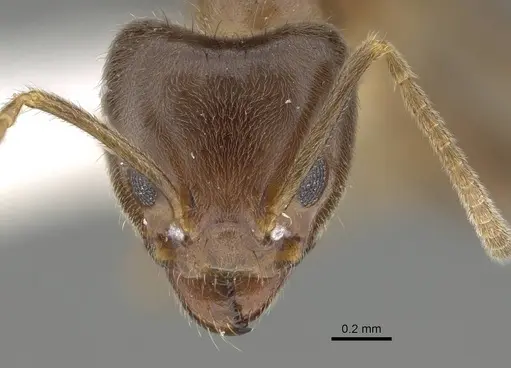
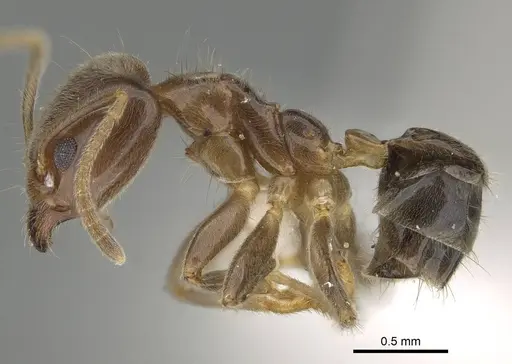
Philidris myrmecodiae is a small, dark-colored ant belonging to the Dolichoderinae subfamily. Originally described by Emery in 1887,this species has a broad distribution across the Indomalaya region, from India through Southeast Asia to the Solomon Islands [1][2]. They are best known for their symbiotic relationship with ant-plants (Myrmecodia and Dischidia species), where they inhabit the bulbous stems and help the plant by depositing nutrients through their excreta [3]. Workers are small and aggressive, at the slightest disturbance, they swarm out and deliver unpleasant bites [4]. This species is also notable as a key seed disperser for Dischidia plants, actively transporting seeds to suitable germination sites [4].
Quick Summary
- Difficulty: Medium
- Origin & Habitat: Native to the Indomalaya region spanning from India through Borneo, the Philippines, Malaysia, Singapore, Indonesia, and the Solomon Islands [1][2]. In the wild, they inhabit epiphytic ant-plants (Myrmecodia and Dischidia species) in tropical forest canopies, and have been collected in lowland dipterocarp forest in Brunei [1]. They also nest in rotting wood, tree hollows, and between branches and roots [4].
- Colony Type: Single-queen colonies (monogyne). Studies in Sarawak found each of 14 colonies had a single physogastric queen with a distended abdomen [5]. Queens are known to be physogastric, their abdomens swell significantly to hold many eggs.
- Colony: Monogyne
- Size & Growth:
- Queen: Estimated 6-8mm based on genus typical sizes
- Worker: Small, approximately 3-4mm based on descriptions of 'small ants' [4]
- Colony: Likely moderate, several hundred workers based on related Dolichoderines
- Growth: Moderate, growth tied to warm tropical conditions
- Development: Estimated 6-8 weeks at optimal tropical temperatures (25-28°C) (Development timeline is inferred from related Dolichoderine ants, direct measurements not available for this species)
- Antkeeping:
- Temperature: Keep at 24-28°C. As a tropical species from Southeast Asia, they require warm, stable temperatures typical of rainforest environments [1]. A gentle gradient allowing workers to self-regulate is beneficial.
- Humidity: High humidity (70-85%) is essential. These ants naturally live in epiphytic plants that retain moisture. Keep the nest substrate consistently damp but not waterlogged. Provide a water source.
- Diapause: No, this is a tropical species that does not hibernate. Maintain warm temperatures year-round.
- Nesting: Best kept in setups that mimic their natural epiphytic habitat. Y-tong (AAC) nests or plaster nests with high humidity work well. They prefer tight, enclosed chambers similar to the interior of Myrmecodia bulbs. Provide climbing structures and branches as they are arboreal.
- Behavior: These ants are aggressive defenders of their nest. Workers will readily bite when disturbed, swarming out in large numbers [4]. They are arboreal by nature, spending much of their time climbing on plants and structures. As seed dispersers for Dischidia, they show active foraging behavior and will transport items across distances. Escape prevention is important though they are not particularly strong climbers compared to some Dolichoderines. They are active foragers that will explore their outworld thoroughly.
- Common Issues: tropical humidity requirements mean mold can be a problem if ventilation is poor, aggressive biting behavior makes them harder to handle than passive species, they may chew through soft materials when building nests, wild-caught colonies may carry parasites from their native habitats, slow colony establishment in captivity compared to faster-growing genera
Natural History and Symbiosis
Philidris myrmecodiae has a fascinating relationship with ant-plants in the genus Myrmecodia and Dischidia. These epiphytic plants have specialized bulbous stems with hollow chambers that provide ideal nesting sites for the ants. The ants benefit from shelter, while the plant benefits from nutrients deposited in the cavities through the ants' waste (excreta), this is sometimes called a 'nidus formicarum vegetans' or 'ant-nest plant' by botanists [3]. The ants also serve as important seed dispersers for Dischidia plants. When Dischidia seeds land on a tree where these ants are present, the ants actively pull the seeds by their pappus hairs and drag them to suitable locations like existing Dischidia plants or bark fissures [4]. This mutualistic relationship has made these ants important for the dispersal of their host plants across their range.
Housing and Nest Setup
For captive care, provide a setup that mimics their natural epiphytic habitat. A Y-tong (AAC) nest or plaster formicarium with narrow chambers works well, these ants prefer tight, enclosed spaces similar to Myrmecodia bulb interiors. Keep the nest humid (70-85% humidity) by moistening the substrate or using a water reservoir. Because they are arboreal, include climbing structures like branches, cork bark, or artificial plants in the outworld. Test tube setups can work for founding colonies but may need upgrading as the colony grows. Ensure excellent escape prevention, while not the smallest ants, they can squeeze through small gaps.
Feeding and Diet
In the wild, these ants tend mealybugs, scale insects, and other homopterans for honeydew, and hunt small insects. They also consume plant secretions from their host Dischidia plants. In captivity, offer a varied diet including sugar water or honey as an energy source, and protein sources like small crickets, mealworms, fruit flies, or other small insects. Given their arboreal nature and relationship with plants, they may also accept small amounts of nectar or fruit. Feed protein 2-3 times per week and keep sugar water available at all times. [4]
Temperature and Seasonal Care
As a tropical species from Southeast Asia and the Solomon Islands, Philidris myrmecodiae requires warm conditions year-round. Maintain temperatures between 24-28°C (75-82°F). They do not require hibernation or diapause, keeping them at room temperature within this range is appropriate. Avoid temperatures below 22°C as this may slow their metabolism and colony growth. A slight temperature gradient in the nest allows workers to choose their optimal zone. Because they come from humid tropical forests, avoid placing their setup near air conditioning or heating vents that might cause drying. [1][2]
Behavior and Handling
Be prepared for defensive behavior. These ants are known to be aggressive biters, at the slightest disturbance to their nest, workers will swarm out in large numbers and deliver painful bites [4]. This makes routine colony inspections more challenging than with passive species. When working with them, use gentle, slow movements and consider using a red light or dark observation mode to minimize disturbance. They are active foragers and will explore their outworld thoroughly. Their arboreal nature means they are comfortable climbing on various surfaces and may attempt to explore beyond their enclosure if given the opportunity.
Frequently Asked Questions
Is Philidris myrmecodiae good for beginners?
This species is not ideal for complete beginners due to its aggressive biting behavior and specific humidity requirements. The ants will readily swarm and bite when the nest is disturbed, making routine care more challenging. Additionally, they require high humidity and warm tropical conditions year-round. If you're experienced with tropical ants and comfortable with defensive species, this can be a rewarding species to keep.
How long does it take for the first workers to emerge?
Based on typical Dolichoderine development, expect approximately 6-8 weeks from egg to first worker at optimal temperatures (25-28°C). This is an estimate since the specific development timeline for this species has not been directly documented. The physogastric queen produces eggs rapidly once she establishes, which can accelerate early colony growth.
Can I keep multiple queens together?
This species is documented as monogyne (single-queen) in wild populations, with studies in Sarawak finding single physogastric queens in all 14 colonies examined [5]. Combining unrelated queens is not recommended and would likely result in fighting. Only a single queen should be kept per colony.
What should I feed Philidris myrmecodiae?
Offer a balanced diet including sugar water or honey for energy, and protein sources like small crickets, mealworms, fruit flies, or other small insects. They may also accept nectar or small amounts of fruit. In the wild, they also consume honeydew from sap-sucking insects. Keep sugar water available at all times and provide protein 2-3 times per week.
Do they need hibernation?
No. As a tropical species from Southeast Asia and the Solomon Islands, they do not require hibernation or winter cooling [1]. Keep them warm year-round at 24-28°C. Temperatures below 22°C may slow their metabolism and should be avoided.
Why are my ants dying?
Common causes include: low humidity (they need 70-85% consistently), temperatures below 22°C, improper feeding, or stress from excessive disturbance. Their aggressive nature means they may be more prone to self-stress through excessive nest inspection. Also check for parasites if the colony was wild-caught. Ensure the nest has adequate moisture without being waterlogged.
When should I move them to a formicarium?
Start with a test tube setup for the founding queen. Once the colony reaches 20-30 workers and you see active foraging, you can consider moving them to a more elaborate setup. However, these ants often do well in humid plaster or Y-tong nests even at smaller colony sizes. The key trigger is when the test tube becomes crowded or the water reservoir runs low frequently.
References

This caresheet is licensed under CC BY-SA 4.0 .
CASENT0219904
View on AntWeb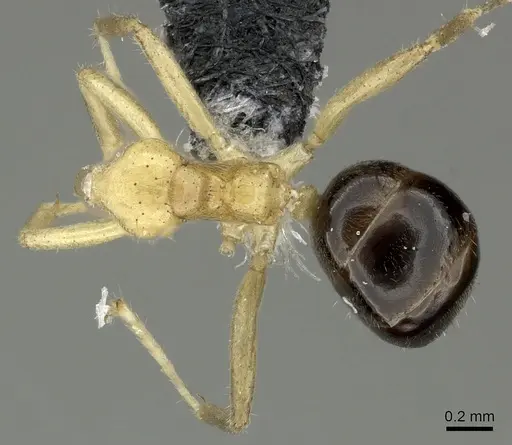
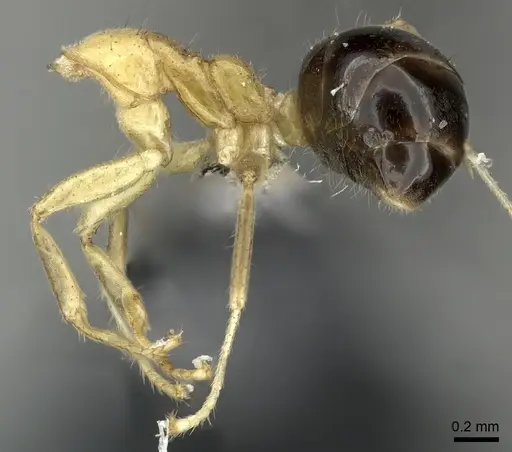
CASENT0903000
View on AntWeb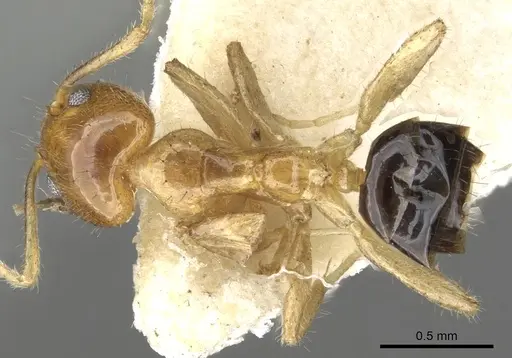
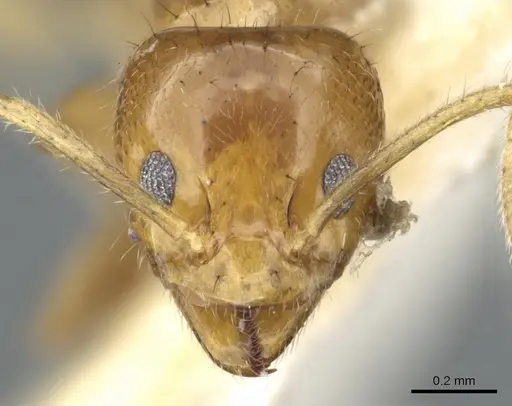
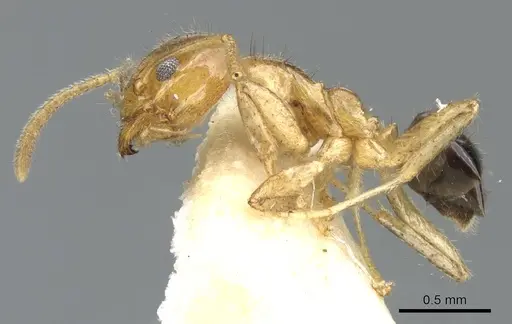
CASENT0905058
View on AntWeb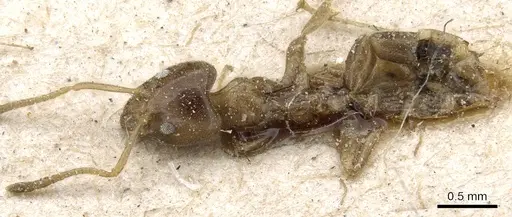
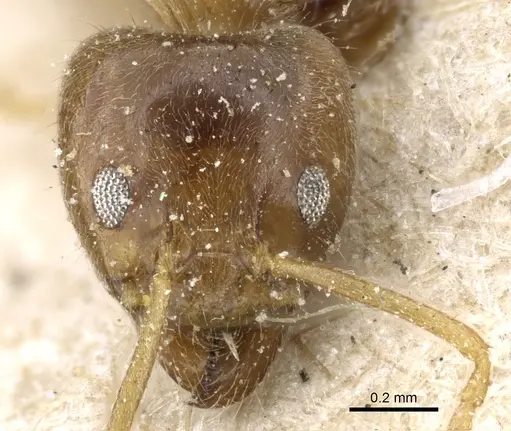
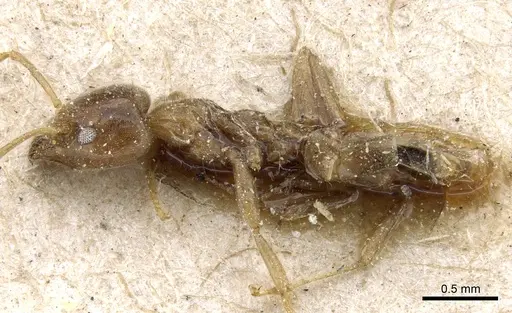
CASENT0909550
View on AntWeb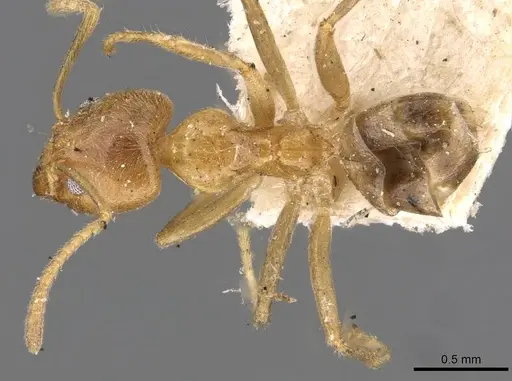
CASENT0911567
View on AntWeb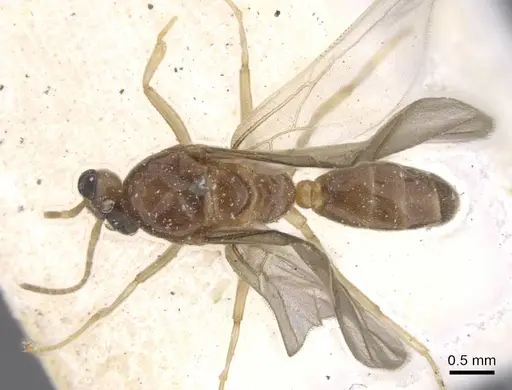
CASENT0919859
View on AntWeb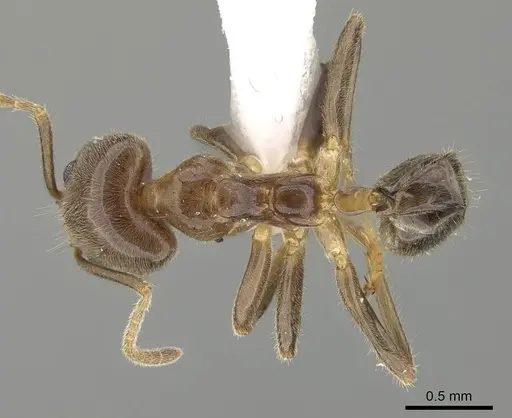
Literature
Loading...Loading products...