

Pheidole xyston
- Scientific Name
- Pheidole xyston
- Tribe
- Attini
- Subfamily
- Myrmicinae
- Author
- Wilson, 2003
- Distribution
- Found in 2 countries
Pheidole xyston Overview
Pheidole xyston is an ant species of the genus Pheidole. It is primarily documented in 2 countries , including Guatemala, Mexico. Detailed taxonomic data and occurrence records can be further explored via authoritative databases such as AntWeb or the Global Biodiversity Information Facility (GBIF).
Pheidole xyston
Pheidole xyston is a small dimorphic ant native to the cloud forests of southern Mexico and Guatemala. Majors measure around 0.70mm in head width while minors are much smaller at 0.42mm [1]. The species gets its name 'xyston' from the Greek word for spear shaft, referring to the notably long propodeal spine on the minor workers [2]. They have a medium brown body with yellowish brown legs and antennae. This ant is a forest specialist, found at elevations between 1280-1400m in the Mexican Transition Zone [1]. The species was described by E.O. Wilson in 2003 and is one of two forest-specialist ant species that dominate restored tropical cloud forests even after 23 years of recovery [3].
Quick Summary
- Difficulty: Unknown, limited data available
- Origin & Habitat: Cloud forests of southern Mexico (Veracruz, Puebla, Oaxaca, Chiapas) and Guatemala at 1280-1400m elevation [1][3]
- Colony Type: Likely single-queen colonies based on typical Pheidole patterns, colony structure is unconfirmed for this species
- Size & Growth:
- Queen: Unconfirmed, estimated 5-7mm based on genus patterns
- Worker: Minor: 0.42mm HW [1], Major: 0.70mm HW [1]
- Colony: Unknown, no colony size data available
- Growth: Unknown, no development data available
- Development: Estimated 6-8 weeks based on typical Pheidole development at warm temperatures (Development timeline is unconfirmed for this species, estimates based on genus patterns)
- Antkeeping:
- Temperature: Keep around 22-26°C, this range supports typical Pheidole brood development. Cloud forest origin suggests they prefer stable, moderate temperatures with some humidity. A gentle gradient allows ants to self-regulate.
- Humidity: Maintain moderate to high humidity (60-80%). Their cloud forest origin means they prefer damp conditions. Keep nest substrate consistently moist but not waterlogged.
- Diapause: Unknown, no data on overwintering requirements. Cloud forest species from southern Mexico may have minimal or no diapause needs, but this is unconfirmed.
- Nesting: In nature they nest in rotting wood and forest floor debris [2]. For captivity, a Y-tong or plaster nest with moisture reservoirs works well. Provide tight chambers scaled to their small minor worker size.
- Behavior: Behavior is unstudied in captivity. Based on typical Pheidole, they are likely active foragers with majors specializing in seed processing and defense. Minor workers will handle most colony tasks including foraging, brood care, and nest maintenance. Major workers may respond defensively if the nest is disturbed. Escape prevention should be moderate, their small size means minor workers can slip through small gaps.
- Common Issues: Limited data makes care recommendations uncertain, proceed with caution and observe colony behavior, Humidity control is important, too dry can stress colonies given their cloud forest origin, Small minor worker size means standard test tube setups may need additional escape prevention, Growth rate is unknown so patience may be required during founding, No captive breeding data available, wild-caught colonies may have collection-related stress
Natural History and Distribution
Pheidole xyston is endemic to the cloud forests of southern Mexico and Guatemala, specifically found in Veracruz, Puebla, Oaxaca, and Chiapas states [1]. The type specimens were collected at 1280m elevation near Huatusco, Veracruz, from a cloud forest environment [2]. A second series was collected at 1400m elevation 11 km north of San Andrés Tuxtla, also in Veracruz [2]. This species is classified as a forest specialist, meaning it prefers intact forest habitats rather than disturbed areas. Studies in Mexican cities found them only in green spaces in Xalapa and Coatepec, not in urban gray spaces [4]. Their presence as one of only two forest-specialist ant species dominating restored forests after 23 years suggests they can recover when habitat improves [3]. The cloud forest environment at these elevations provides consistent moisture and moderate temperatures year-round.
Identification and Morphology
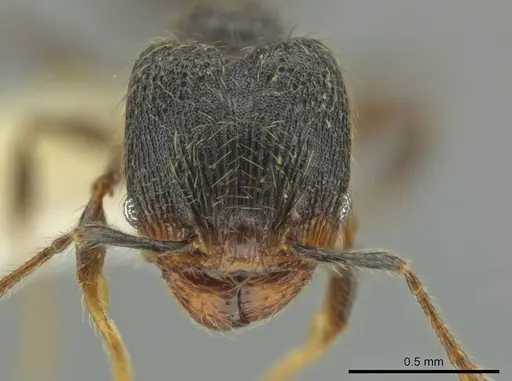
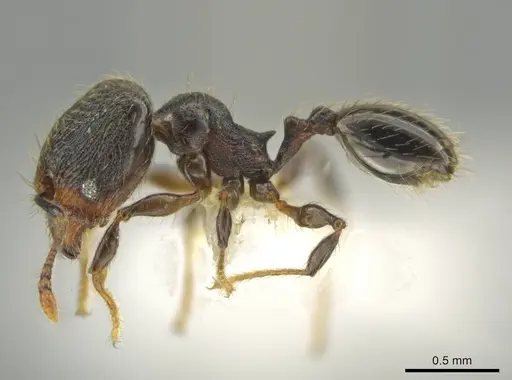
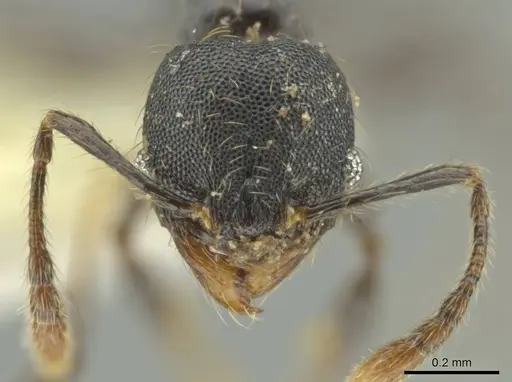
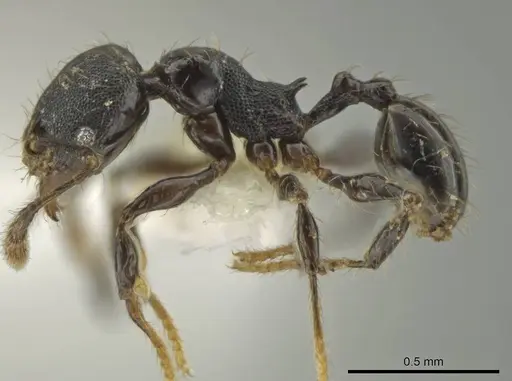
Pheidole xyston is a dimorphic species with distinct major and minor worker castes. Major workers have a head width of 0.70mm and feature distinctive rugoreticulate (wrinkled network) patterns on the occipital lobes, a shallowly concave posterior cephalic profile, and cornulate (horn-like) humeral angles with posteriorly curving propodeal spines [1]. Minor workers are much smaller at 0.42mm head width and have a smooth, shiny pronotum with a toothed humerus and relatively long, straight propodeal spine [1]. The species name 'xyston' refers to the spear shaft, describing the notably long propodeal spine of the minor worker [2]. Coloration is medium brown for the mandibles and body, with yellowish brown appendages [2]. This combination of features distinguishes P. xyston from similar species like P. ceibana, P. lemnisca, and P. perkinsi.
Housing and Nesting
In their natural cloud forest habitat, Pheidole xyston nests in rotting wood and forest floor debris [2]. For captive care, provide a nest that maintains consistent humidity, a Y-tong (acrylic) nest or plaster nest with water reservoirs works well. The nest should have chambers scaled appropriately for their tiny minor workers (around 0.42mm body width). Because they are small ants, ensure any connections between nest and outworld are snug to prevent escapes. Provide a moisture gradient within the nest so workers can choose their preferred humidity zone. The outworld can be kept at room humidity with a shallow water source for drinking. Avoid overly dry conditions, their cloud forest origin indicates they prefer damp environments.
Feeding and Diet
Pheidole species are typically granivorous and omnivorous, harvesting seeds and collecting honeydew from aphids and scale insects, while also opportunistically predating small insects. While specific diet data for P. xyston is unavailable, offer a varied diet similar to other Pheidole species: protein sources like small insects (fruit flies, small mealworms, crickets), seeds appropriate to their size, and sugar sources like honey water or sugar water. Feed protein 2-3 times per week and keep sugar water available continuously. Remove uneaten prey after 24-48 hours to prevent mold. Seed acceptance is likely given typical Pheidole behavior, but observe your colony's preferences.
Temperature and Seasonal Care
As a cloud forest species from 1280-1400m elevation in southern Mexico, Pheidole xyston likely prefers moderate, stable temperatures in the low-to-mid 20s Celsius. Start with a range of 22-26°C and observe colony activity, workers clustering near warmth suggests they prefer it warmer, while avoiding heated areas suggests lowering temperature. Provide a temperature gradient using a heating cable on one side of the nest, placed on top to warm the nest gently. Unlike temperate species, their cloud forest origin suggests they may not require a true hibernation diapause. However, cooler winter temperatures (18-20°C) may slow activity naturally. Monitor for signs of stress if temperatures drop significantly below their preferred range.
Colony Development and Growth
No specific development data exists for Pheidole xyston. Based on typical Pheidole genus patterns, expect claustral founding where the queen seals herself in a chamber and raises the first brood alone on stored fat reserves. First workers (nanitics) will be smaller than normal workers. Development from egg to worker likely takes 6-8 weeks at optimal warm temperatures (around 24-26°C). Colony growth will be gradual during the founding phase, then accelerate once the first major workers emerge. Pheidole colonies can live for many years with the queen producing workers continuously. Patience is essential during the founding stage, do not disturb the queen or overfeed during this critical period.
Frequently Asked Questions
How long does it take for Pheidole xyston to produce first workers?
The egg-to-worker timeline is unconfirmed for this species. Based on typical Pheidole development patterns, expect around 6-8 weeks at optimal temperatures (24-26°C). The queen will remain sealed in her founding chamber until nanitic workers emerge.
What do Pheidole xyston ants eat?
While not specifically studied, Pheidole species are typically omnivorous. Offer small protein sources (fruit flies, tiny mealworms), seeds, and constant sugar water or honey water. Remove uneaten food after 24-48 hours to prevent mold.
Are Pheidole xyston ants difficult to keep?
Difficulty level is unknown due to limited captive data. Their cloud forest origin suggests they need consistent humidity and moderate temperatures. Start with standard Pheidole care and adjust based on colony response. Their small size requires attention to escape prevention.
Do Pheidole xyston ants need hibernation?
Diapause requirements are unknown. As a cloud forest species from southern Mexico, they likely have minimal overwintering needs. Cooler winter temperatures (18-20°C) may slow activity naturally but a full hibernation may not be necessary.
What size nest do Pheidole xyston ants need?
Use a nest with small chambers scaled to their tiny minor workers (around 0.42mm). Y-tong or plaster nests with moisture reservoirs work well. Ensure all connections are snug to prevent escapes given their small size.
Can I keep multiple Pheidole xyston queens together?
Colony structure is unconfirmed for this species. Most Pheidole are single-queen (monogyne), but combining unrelated foundresses has not been documented. It is not recommended based on typical genus behavior.
How big do Pheidole xyston colonies get?
Maximum colony size is unknown. Pheidole colonies can reach thousands of workers in some species, but no data exists for this specific species. Expect gradual growth over several years.
What temperature should I keep Pheidole xyston at?
Aim for 22-26°C initially. Their cloud forest origin suggests preference for moderate, stable temperatures. Use a gentle heat gradient and adjust based on colony behavior, workers clustering near warmth indicates they prefer it warmer.
Where is Pheidole xyston found in the wild?
This species is native to cloud forests in southern Mexico (Veracruz, Puebla, Oaxaca, Chiapas) and Guatemala at elevations of 1280-1400m. They are forest specialists found in intact and restored cloud forest habitats.
References

This caresheet is licensed under CC BY-SA 4.0 .
CASENT0640897
View on AntWeb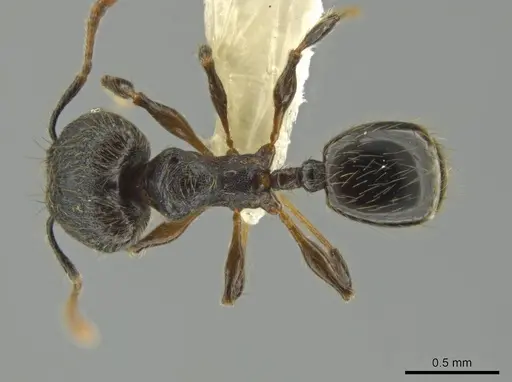
CASENT0640900
View on AntWeb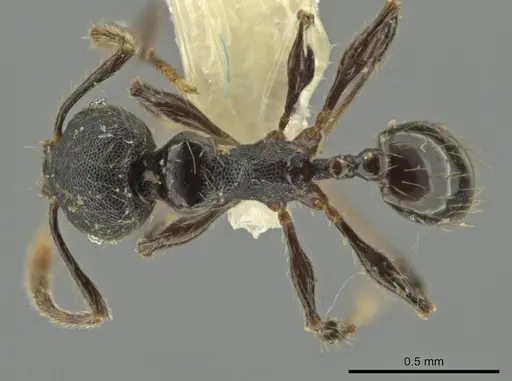
Literature
Loading...Loading products...