

Pheidole viserion
- Scientific Name
- Pheidole viserion
- Tribe
- Attini
- Subfamily
- Myrmicinae
- Author
- Sarnat <i>et al.</i>, 2016
- Distribution
- Found in 1 countries
Pheidole viserion Overview
Pheidole viserion is an ant species of the genus Pheidole. It is primarily documented in 1 countries , including Papua New Guinea. Detailed taxonomic data and occurrence records can be further explored via authoritative databases such as AntWeb or the Global Biodiversity Information Facility (GBIF).
Pheidole viserion
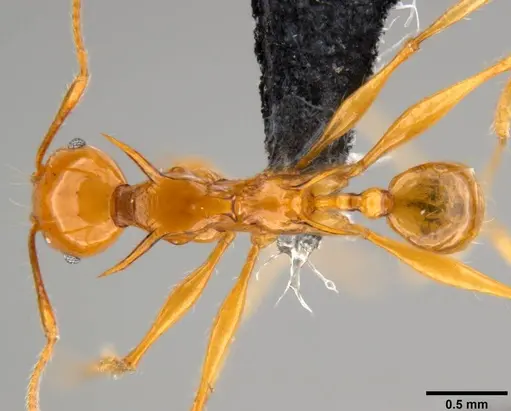
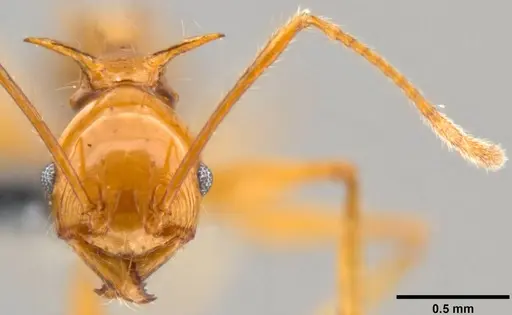
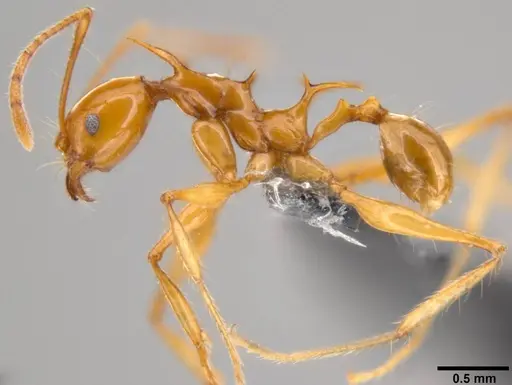
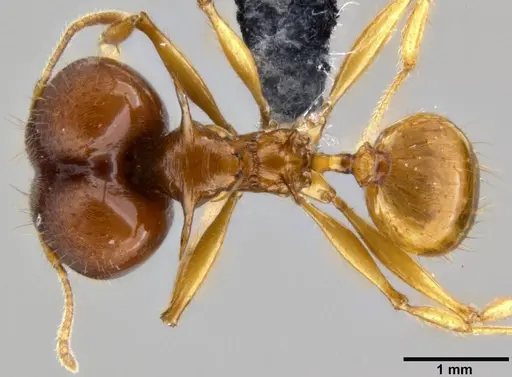
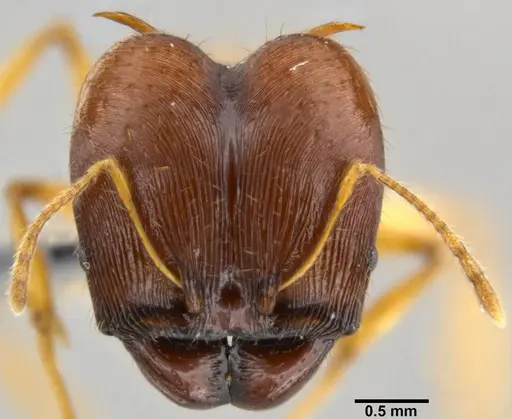
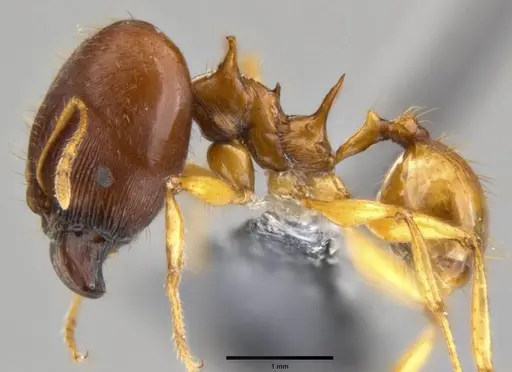
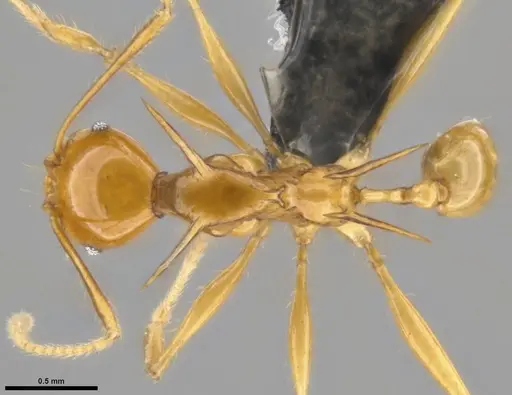
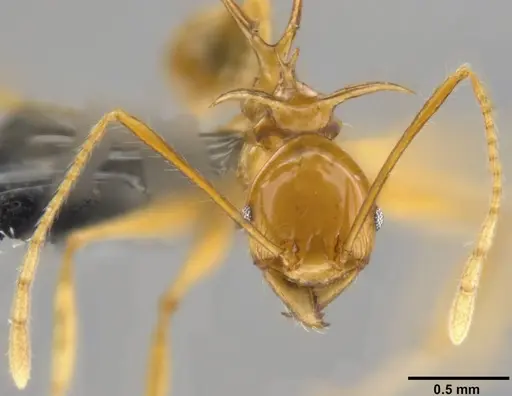
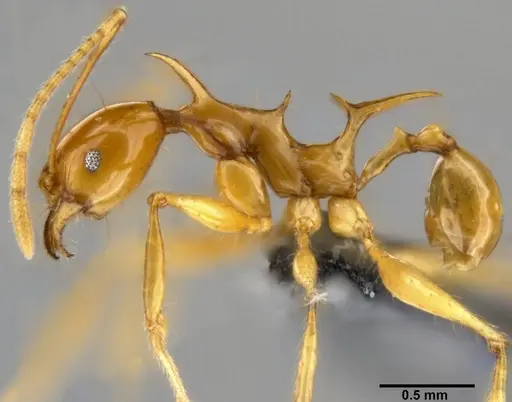
Pheidole viserion is a striking yellow ant native to Papua New Guinea, named after Viserion, the cream and gold dragon from Game of Thrones. This species belongs to the cervicornis group and is the only member uniformly yellow in color, making it easily identifiable. Majors have distinctive enlarged heads with long spines protruding from the pronotum, mesonotum, and propodeum, while minors are smaller with extremely long pronotal spines that nearly match their body length. The species was discovered in montane primary forests and lowland areas transitioning between primary and secondary forest, found both in leaf litter and foraging in hollow tree trunks above ground [1].
Quick Summary
- Difficulty: Medium
- Origin & Habitat: Papua New Guinea, from montane primary forests and lowland habitats transitioning between primary and secondary forest at elevations of 160-1600m [1].
- Colony Type: Likely monogyne (single queen) based on typical Pheidole patterns. Colony structure is unconfirmed for this species.
- Colony: Monogyne
- Founding: Claustral
- Size & Growth:
- Queen: Undescribed, estimated 8-12mm based on genus patterns
- Worker: Majors: 2.06-2.13mm head width, Minors: 0.62-0.68mm head width [1]
- Colony: Unknown, likely several hundred workers based on related Pheidole species
- Growth: Moderate, estimated based on genus patterns
- Development: Estimated 6-8 weeks at tropical temperatures (25-28°C) (Timeline inferred from typical Pheidole development, specific data for this species unavailable)
- Antkeeping:
- Temperature: Keep at 24-28°C. Being from tropical Papua New Guinea, they prefer warm conditions. A heating cable on one side of the nest creates a gradient [1].
- Humidity: Moderate to high, they naturally inhabit leaf litter and forest floors in humid tropical environments. Keep substrate moist but not waterlogged.
- Diapause: Unlikely, as a tropical species from Papua New Guinea, they probably do not require a hibernation period. However, a slight cool-down period during winter months may be beneficial.
- Nesting: Y-tong (AAC) nests or plaster nests work well. They naturally nest in leaf litter and hollow trunks, so provide a nest with chambers sized appropriately for their majors. The extremely long spines on workers mean they need space to move freely without getting tangled.
- Behavior: Pheidole viserion is a peaceful species. Like other Pheidole, they have major workers with enlarged heads that specialize in seed processing and defense. They are not aggressive and rarely sting. Foraging occurs both on the ground and in elevated areas (hollow trunks), suggesting they will explore multiple levels of their enclosure. Escape risk is moderate, minors are small (under 1mm) so fine mesh barriers are recommended.
- Common Issues: tropical species may struggle in cool, dry environments, monitor temperature closely, long spines can get tangled in cotton or fabric, use water reservoirs with glass wool barriers instead, small minor workers can escape through standard mesh, use fine mesh or fluon barriers, colonies may be slow to establish, patience is required during founding phase, wild-caught colonies may carry parasites that affect captive survival
Appearance and Identification
Pheidole viserion is one of the most visually striking Pheidole species due to its uniformly bright yellow coloration, the only member of the cervicornis group with this trait [1]. Major workers have enlarged heads (2.09-2.13mm width) and extremely long spines protruding from the pronotum, mesonotum, and propodeum. The pronotal spines are roughly equal in length to the propodeal spines and point forward and downward. Minor workers are much smaller (0.62-0.68mm head width) but equally spiny, with pronotal spines nearly as long as their tibiae. The species was named after Viserion, the cream and gold dragon from Game of Thrones, referencing its distinctive golden-yellow coloring [1].
Natural Habitat and Distribution
This species is endemic to Papua New Guinea, where it has been collected from three sites spanning montane primary forests to lowland areas transitioning between primary and secondary forest [1]. The elevation range of 160-1600m suggests adaptability to different altitudes. In the wild, they are found in leaf litter and have been observed foraging in hollow tree trunks above ground, indicating some arboreal tendencies. The Kutubu area in the Southern Highlands is one known locality, at approximately 451m elevation [1]. This tropical rainforest environment is warm and humid year-round.
Nest Preferences and Housing
In captivity, Y-tong (AAC) nests or plaster nests work well for this species. The natural nesting in leaf litter and hollow trunks suggests they prefer enclosed spaces with some humidity. The extremely long spines on both majors and minors mean the nest chambers and passages need adequate space to prevent workers from getting tangled or stuck. Avoid nests with tight passages or cotton that can catch on spines. A water reservoir with a glass wool barrier provides moisture without entanglement risk. Since they foraged in elevated hollow trunks in the wild, adding some vertical structure or cork bark pieces to the outworld can encourage natural foraging behavior.
Feeding and Diet
Like other Pheidole species, P. viserion is likely a generalist omnivore that feeds on seeds, dead insects, and honeydew in the wild. Offer a varied diet including: protein sources like fruit flies, small crickets, or mealworms, seeds (millet, chia, or grass seeds), and sugar sources like honey water or sugar water. Pheidole majors use their enlarged heads to process seeds, so offering small seeds provides enrichment. Feed protein 2-3 times per week and keep sugar water available at all times. Remove uneaten prey after 24-48 hours to prevent mold.
Temperature and Seasonal Care
As a tropical species from Papua New Guinea, Pheidole viserion requires warm temperatures. Keep the nest area at 24-28°C for optimal brood development. A heating cable placed on one side of the nest creates a temperature gradient allowing ants to self-regulate. Room temperature may be sufficient if your home is naturally warm, but monitor with a thermometer. Since they come from a tropical environment without distinct seasons, they likely do not require true hibernation. However, a slight reduction in temperature during winter months (down to around 20-22°C) may simulate natural seasonal patterns and encourage colony health.
Behavior and Colony Structure
Pheidole viserion is a peaceful species with typical Pheidole social structure. Colonies contain both major and minor workers, majors specialize in seed processing and colony defense, while minors handle most foraging and brood care. The species is not aggressive and major workers use their spines for defense rather than biting. Queens are likely claustral founders who seal themselves in a chamber and raise the first brood alone on stored fat reserves, as is typical for the genus. Colonies likely reach several hundred workers over time, though specific colony size data is not available for this species.
Frequently Asked Questions
How long does it take for Pheidole viserion to produce first workers?
Based on typical Pheidole development, expect first workers (nanitics) in approximately 6-8 weeks at optimal tropical temperatures (25-28°C). The exact timeline for this species has not been documented.
What do Pheidole viserion ants eat?
They are omnivores. Offer protein (fruit flies, small crickets, mealworms) 2-3 times per week, seeds for the majors to process, and keep sugar water (honey water or sugar water) available at all times.
What temperature do Pheidole viserion ants need?
Keep them at 24-28°C. Being from tropical Papua New Guinea, they need warm conditions. A heating cable on one side of the nest creates a gradient for self-regulation.
Are Pheidole viserion good for beginners?
They are rated as Medium difficulty. While not as challenging as some species, they do require warm, humid conditions typical of tropical ants. Their long spines require careful nest design to prevent entanglement.
How big do Pheidole viserion colonies get?
Colony size is unconfirmed for this species, but based on related Pheidole species, colonies likely reach several hundred workers over time.
What type of nest is best for Pheidole viserion?
Y-tong (AAC) nests or plaster nests work well. The chambers should be spacious enough to accommodate their long spines. Avoid cotton and tight passages that can catch on their spines.
Do Pheidole viserion need hibernation?
Unlikely, as a tropical species from Papua New Guinea, they probably do not require true hibernation. A slight cool-down in winter (to around 20-22°C) may be beneficial but is not required.
Can I keep multiple queens together?
Not recommended. While colony structure is unconfirmed for this species, Pheidole typically form single-queen colonies. Combining unrelated queens has not been documented and may result in fighting.
Why are my Pheidole viserion dying?
Common causes include: temperatures below 24°C (tropical species need warmth), low humidity (they prefer humid conditions), poor escape prevention (minors are small), or parasites from wild-caught colonies. Review your temperature and humidity levels first.
References

This caresheet is licensed under CC BY-SA 4.0 .
Literature
Loading...Loading products...