

Pheidole venatrix
- Scientific Name
- Pheidole venatrix
- Tribe
- Attini
- Subfamily
- Myrmicinae
- Author
- Wilson, 2003
- Distribution
- Found in 2 countries
Pheidole venatrix Overview
Pheidole venatrix is an ant species of the genus Pheidole. It is primarily documented in 2 countries , including Brazil, Colombia. Detailed taxonomic data and occurrence records can be further explored via authoritative databases such as AntWeb or the Global Biodiversity Information Facility (GBIF).
Pheidole venatrix
Pheidole venatrix is a small Neotropical ant belonging to the diligens group, native to Colombia's Magdalena region. The species was described in 2003 by Wilson from specimens collected in a montane coffee plantation at 850m elevation. Major workers reach about 1mm in total length with a distinctive medium brown body and yellowish-brown legs, while minor workers are considerably smaller at around 0.5-0.6mm. The species name 'venatrix' means 'huntress' in Latin, likely referring to their foraging behavior. This ant exhibits the classic Pheidole dimorphism with major workers having enlarged heads for seed-crushing and defensive duties. The species is only known from its type locality in Colombia, making it a rare and poorly studied member of a genus that contains over 1000 species worldwide.
Quick Summary
- Difficulty: Unknown, insufficient data for care recommendations
- Origin & Habitat: Montane coffee plantation in Magdalena, Colombia at 850m elevation. Found in Neotropical forest environments [1][2].
- Colony Type: Unknown, colony structure has not been documented for this species. Most Pheidole are single-queen (monogyne) colonies, but this is unconfirmed for P. venatrix.
- Size & Growth:
- Queen: Undocumented, no queen measurements available
- Worker: Major: 0.94mm HW,1.00mm HL, Minor: 0.44mm HW,0.56mm HL [2]
- Colony: Unknown, no colony size data available
- Growth: Unknown, no development data exists
- Development: Unknown, no direct measurements exist. Based on typical Pheidole patterns, estimate 6-10 weeks at optimal temperature. (Development timeline is unconfirmed for this species. Related Neotropical Pheidole species typically complete development in 6-10 weeks.)
- Antkeeping:
- Temperature: Unknown, no thermal studies exist. Based on Colombian origin (850m elevation, Magdalena), likely prefers warm conditions similar to other Neotropical Pheidole: 22-28°C. Start in this range and observe colony activity.
- Humidity: Unknown, no humidity data exists. Based on montane coffee plantation habitat, likely prefers moderate humidity (50-70%) with some moisture. Provide a water tube and keep nest substrate slightly moist.
- Diapause: Unknown, no seasonal data exists for this species. Colombian ants from Magdalena may not require strong diapause, but a brief cool period (2-3 months at 15-18°C) may benefit long-term colony health.
- Nesting: No specific nesting data exists. Based on habitat (montane coffee plantation), they likely nest in soil or under stones. Use standard Pheidole setups: test tubes for founding, Y-tong or plaster nests for established colonies. Provide connecting outworld for foraging.
- Behavior: Behavior is unstudied. Based on genus-level knowledge, Pheidole venatrix is likely a seed-harvesting species that also takes protein (insects). Major workers defend the colony while minor workers forage and care for brood. Escape prevention is recommended, while not tiny, Pheidole are active and may attempt escapes. They likely show typical Pheidole aggression only when colony is threatened.
- Common Issues: insufficient data makes reliable care recommendations difficult, no documented diet acceptance, start with standard Pheidole foods (seeds, protein), no information on founding success rates, unknown if this species accepts sugar/honeydew, no data on common pathogens or parasites affecting this species
Identification and Appearance
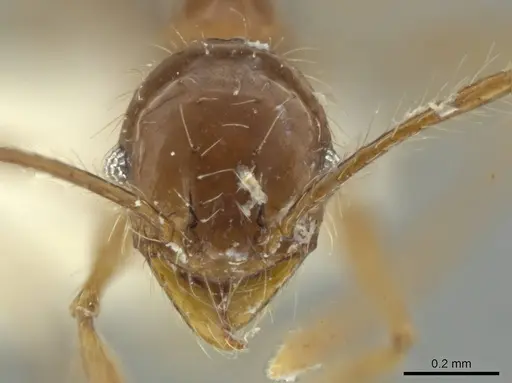
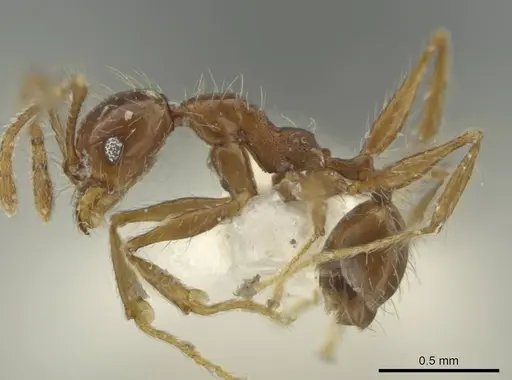
Pheidole venatrix is a dimorphic species with two distinct worker castes. Major workers have a head width of 0.94mm and total length around 1mm, characterized by small 'shark fin' extensions on the humerus (shoulder area), thin propodeal spines about one-third the length of the basal propodeal face, and a weakly concave posterior dorsal half of the head in side view. The postpetiolar node is spinose. Minor workers are much smaller at 0.44mm head width, lacking propodeal spines and having a narrowed occiput. Both castes have a medium brown body and mandibles with yellowish-brown appendages. This species belongs to the diligens group, which contains several similar Central and South American species. [2]
Distribution and Habitat
Pheidole venatrix is known only from the Magdalena region of Colombia, South America. The type series was collected at Finca El Recreo, Bonda, Magdalena at 850m elevation in a montane coffee plantation (cafetal). This elevation suggests a montane tropical environment with moderate temperatures. A 2009 study also recorded this species in Colombian Amazonia (bosque de tierra firme/upland forest), expanding the known range slightly. The species appears to inhabit forest edge and disturbed agricultural areas rather than deep forest. [1][2]
Known Biology
Direct biological studies on Pheidole venatrix do not exist. The species was described in 2003 and remains one of the least studied Pheidole in Colombia. Based on genus-level knowledge, Pheidole species are typically seed-harvesting ants (granivores) that also supplement their diet with protein from insects. They are known for their 'major' workers with enlarged heads that can crush hard seeds and defend the colony. The genus Pheidole is one of the most diverse ant genera globally with over 1000 described species, and they typically form colonies with a single founding queen (monogyne) that can grow to several thousand workers.
Keeping Considerations
This caresheet must be considered preliminary, Pheidole venatrix has never been kept in captivity and no species-specific husbandry information exists. If you obtain this species, document your observations carefully. Start with standard Pheidole care: test tube setups for founding colonies, temperatures in the 22-28°C range, and moderate humidity. Feed a mix of seeds (millet, chia, flax) and protein sources (dead insects, mealworms). Always use escape prevention as Pheidole are active foragers. The lack of data means this species could have unique requirements not shared with other Pheidole, approach keeping as experimental and share findings with the antkeeping community.
References

This caresheet is licensed under CC BY-SA 4.0 .
JTLC000016569
View on AntWeb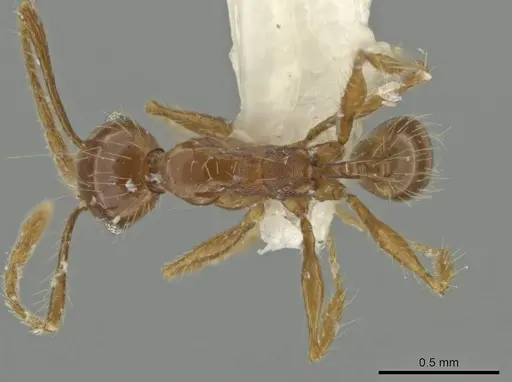
Literature
Loading...Loading products...