

Pheidole typhlos
- Scientific Name
- Pheidole typhlos
- Tribe
- Attini
- Subfamily
- Myrmicinae
- Author
- Salata & Fisher, 2020
- Distribution
- Found in 1 countries
Pheidole typhlos Overview
Pheidole typhlos is an ant species of the genus Pheidole. It is primarily documented in 1 countries , including Madagascar. Detailed taxonomic data and occurrence records can be further explored via authoritative databases such as AntWeb or the Global Biodiversity Information Facility (GBIF).
Pheidole typhlos
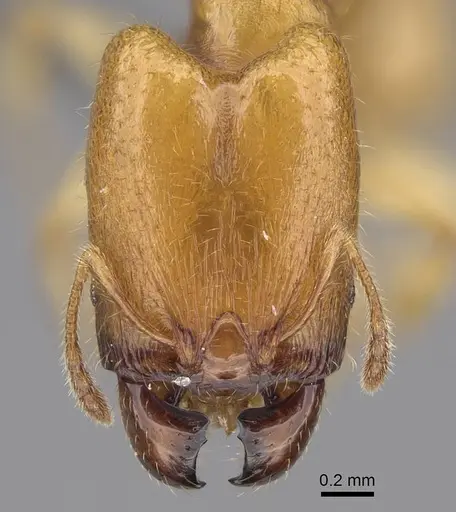
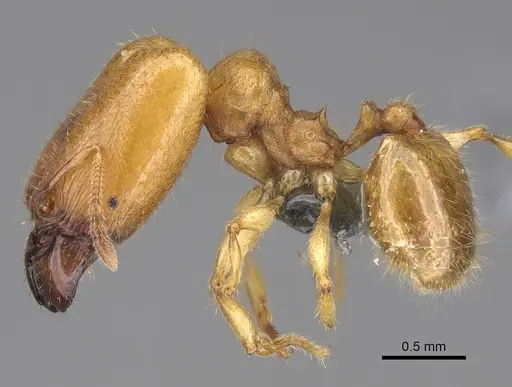
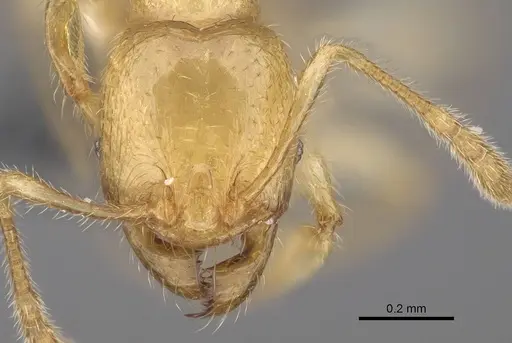
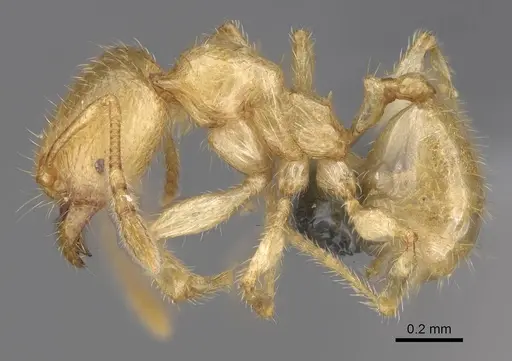
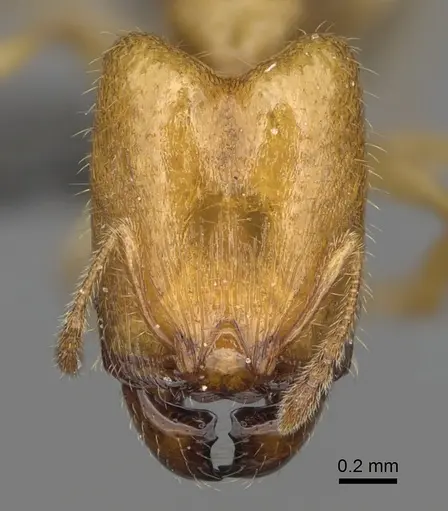
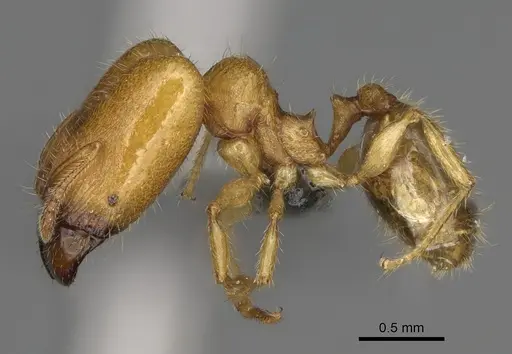
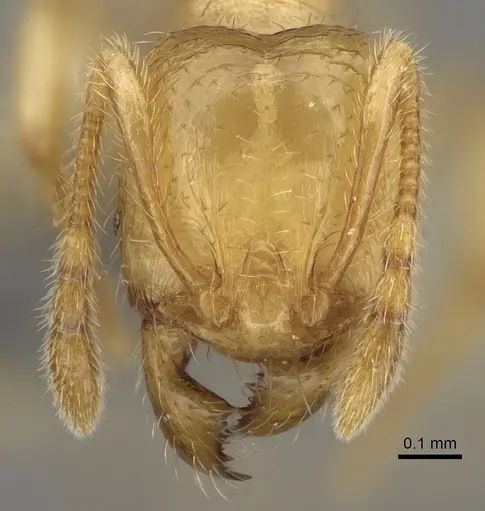
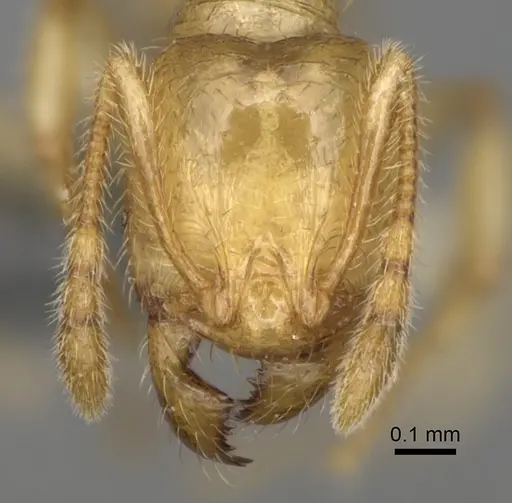
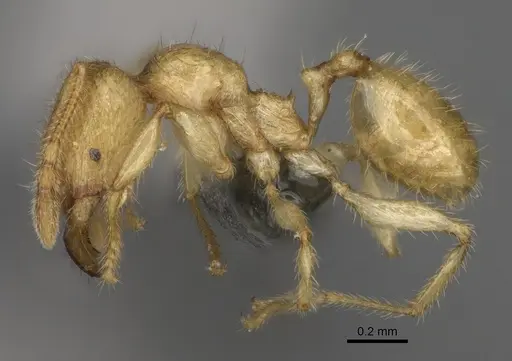
Pheidole typhlos is a tiny yellow ant from Madagascar, recently described in 2020. It belongs to the Pheidole lutea species group and the navoatrensis complex. The species gets its name 'typhlos' (Greek for blind) from its notably reduced, small eyes, a distinctive feature visible even to the naked eye. Major workers measure 1.2-1.34mm in head length, while the much smaller minor workers are only 0.55mm. The entire body is yellow, with major workers showing a darker yellow to brown coloration on the malar area and lower frons. This species was discovered in the montane rainforests of northern Madagascar at elevations between 520-980 meters.
Quick Summary
- Difficulty: Medium
- Origin & Habitat: Northern Madagascar (Antsiranana region), specifically Mont Galoko in the Galoko chain. Found in rainforest and montane forest habitats at 520-980m elevation [1].
- Colony Type: Colony structure is unconfirmed for this species. Most Pheidole species are monogyne (single queen colonies), though some can be polygyne. Further research is needed to confirm the exact colony structure of P. typhlos.
- Size & Growth:
- Queen: Unknown, not yet documented in scientific literature. Based on typical Pheidole genus patterns, queens are likely 4-6mm.
- Worker: Major workers: 1.2-1.34mm head length (HL), minor workers: 0.55mm HL [1].
- Colony: Unknown, no colony size data available. Related Pheidole species typically reach several hundred to a few thousand workers.
- Growth: Unknown, no development data exists for this species. Based on related species in the genus, expect moderate growth.
- Development: Estimated 4-8 weeks based on typical Pheidole development patterns at tropical temperatures. This is an inference, not a direct measurement. (No specific development data exists for P. typhlos. Temperature will significantly affect development speed, warmer conditions (24-28°C) will speed development, while cooler temperatures will slow it.)
- Antkeeping:
- Temperature: Based on their Madagascar rainforest origin, keep them warm at 24-28°C. A heating cable on one side of the nest creates a temperature gradient that allows the ants to regulate their own conditions.
- Humidity: Rainforest species need high humidity. Keep the nest substrate consistently moist but not waterlogged. The substrate should feel damp to the touch. Mist occasionally and ensure water reservoirs are present in test tube setups.
- Diapause: Unknown for this species. As a tropical Madagascar ant, they may not require a true hibernation, but a slight reduction in temperature during the dry season (around 18-20°C) may be beneficial.
- Nesting: Nesting preferences are unknown in the wild. In captivity, standard test tube setups work well for founding colonies. Once established, Y-tong nests or acrylic formicariums with narrow chambers scaled to their tiny size work well. The small minor workers (0.55mm) require tight-fitting equipment to prevent escapes.
- Behavior: These ants are small and likely quick-moving. Pheidole species are generally not aggressive but will defend their nest if threatened. Major workers have functional mandibles but the sting is minimal to absent. The reduced eyes suggest this species may rely less on visual cues and more on chemical/tactile communication. Escape prevention is critical due to their very small size, minor workers can easily slip through standard barrier setups. Use fine mesh and tight-fitting lids.
- Common Issues: escape prevention is critical, minor workers are tiny (0.55mm) and can squeeze through standard barriers, humidity management is challenging, too dry causes brood death, too wet causes mold, no species-specific care data exists, keepers must adapt from related species, slow founding phase, Pheidole queens can take weeks to lay first eggs, patience is required, wild-caught colonies may carry parasites that can devastate captive colonies
Housing and Setup
For founding colonies, a standard test tube setup works well. Fill the tube with water and plug the working end with cotton, this provides humidity and a constant water source. Wrap the tube in aluminum foil to create a dark, secure environment that encourages the queen to seal herself in. Once the colony reaches 20-30 workers, you can consider moving them to a small formicarium. Y-tong nests or acrylic nests with narrow chambers work best, the tiny minor workers (0.55mm) need appropriately scaled housing. Always use excellent escape prevention: fine mesh on any ventilation, tight-fitting lids, and barrier tape (fluon) around any openings. The small size of these ants makes them expert escape artists. [1]
Feeding and Diet
Pheidole species are typically omnivorous, accepting both protein sources and carbohydrates. Offer small protein sources like fruit flies, pinhead crickets, or mealworm pieces. For carbohydrates, provide sugar water, honey, or diluted honey water. In the wild, many Pheidole species also consume seeds (granivorous), so you could experiment with offering small seeds. Feed small amounts 2-3 times per week, removing any uneaten food after 24 hours to prevent mold. Always ensure a constant sugar water source is available.
Temperature and Humidity
As a Madagascar rainforest species, P. typhlos needs warm and humid conditions. Maintain temperatures between 24-28°C during the active season. A heating cable placed on top of the nest (never under it, as this can dry out the substrate) can create a gentle gradient. For humidity, keep the nest substrate consistently moist. In test tube setups, the water reservoir naturally maintains humidity. In formicariums, mist the nest area occasionally and monitor for condensation. Avoid both stagnant air (causes mold) and excessive airflow (causes drying). A hygrometer can help monitor conditions, aim for 60-80% relative humidity. [1]
Colony Development
Pheidole colonies grow through a major/minor worker system. The larger major workers (1.2-1.34mm) develop specialized functions like defense and seed processing, while the tiny minor workers (0.55mm) handle most day-to-day tasks. Development from egg to worker likely takes 4-8 weeks at optimal temperatures, but no specific data exists for this species. The first generation of workers (nanitics) are typically smaller than normal workers. Colonies may remain small initially as the queen invests energy in producing workers. Once established, growth typically accelerates as more workers can forage and care for brood. [1]
Unique Characteristics
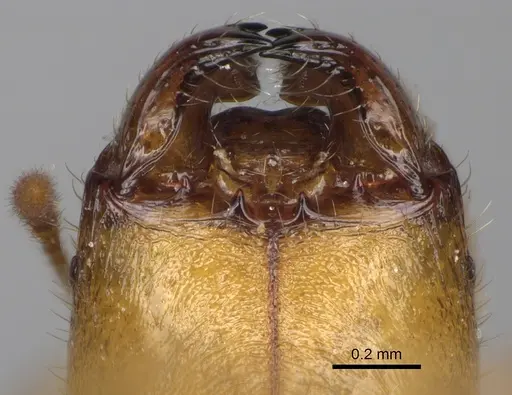
The most distinctive feature of Pheidole typhlos is its reduced eyes, the species name 'typhlos' means 'blind' in Greek, referring to this trait. This is an unusual characteristic among ants, which typically rely heavily on vision. The reduced eyes suggest this species may rely more on chemical signals and tactile cues for navigation and communication. The yellow body coloration is consistent with the lutea species group. Major workers have distinctive hypostomal teeth (mouthpart structures) that help distinguish this species from similar relatives like Pheidole parviocula. [1]
Frequently Asked Questions
How long does it take for Pheidole typhlos to produce first workers?
The exact timeline is unknown, but based on typical Pheidole development, expect first workers (nanitics) within 4-8 weeks at optimal temperatures (24-28°C). The queen will remain sealed in her chamber until the first workers emerge.
What do Pheidole typhlos ants eat?
They are omnivorous like most Pheidole species. Offer small protein sources (fruit flies, tiny insects, mealworm pieces) and carbohydrates (sugar water, honey). You can also experiment with small seeds.
Are Pheidole typhlos good for beginners?
This species is not well-documented in the antkeeping hobby, and there is limited species-specific care information available. If you have experience with other Pheidole species, this could be a rewarding species to keep. However, beginners may want to start with more established species.
How big do Pheidole typhlos colonies get?
The maximum colony size is unknown for this species. Based on related Pheidole species, colonies likely reach several hundred to a few thousand workers over time.
What temperature do Pheidole typhlos need?
Keep them warm at 24-28°C. As a Madagascar rainforest species, they prefer tropical temperatures. A heating cable on the nest can help maintain these conditions.
Do Pheidole typhlos need hibernation?
Hibernation requirements are unknown for this species. As a tropical Madagascar ant, they likely do not require a true hibernation. However, a slight temperature reduction during the dry season (around 18-20°C) may be beneficial if you want to simulate natural seasonal cycles.
Why are my Pheidole typhlos escaping?
Minor workers are extremely tiny (0.55mm) and can squeeze through the smallest gaps. Use fine mesh (at least 0.5mm or smaller), tight-fitting lids, and apply fluon or similar barrier compounds to all openings. Check all connections and seams regularly.
Can I keep multiple Pheidole typhlos queens together?
This has not been documented for this species. Most Pheidole are monogyne (single queen), though some can be polygyne. Unless you have specific information about this species, it is not recommended to combine unrelated queens.
When should I move Pheidole typhlos to a formicarium?
Wait until the colony has at least 20-30 workers and is actively foraging in the outworld. Moving too early can stress the colony. Make sure the formicarium has appropriately sized chambers for their tiny minor workers.
References

This caresheet is licensed under CC BY-SA 4.0 .
CASENT0279339
View on AntWeb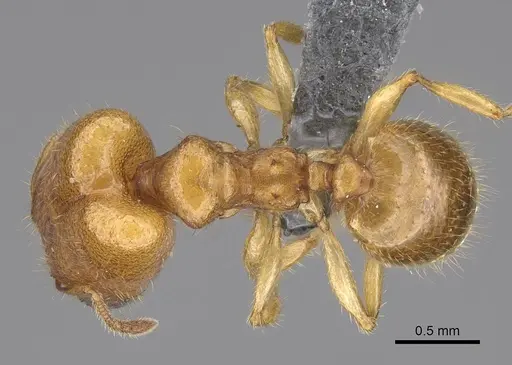
CASENT0279340
View on AntWeb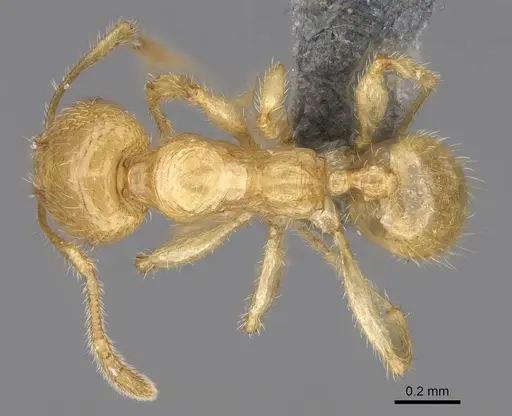
CASENT0302953
View on AntWeb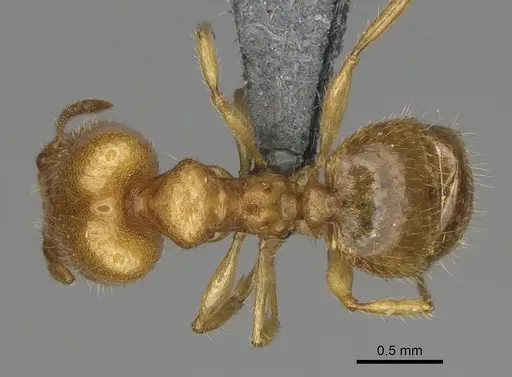
CASENT0923217
View on AntWeb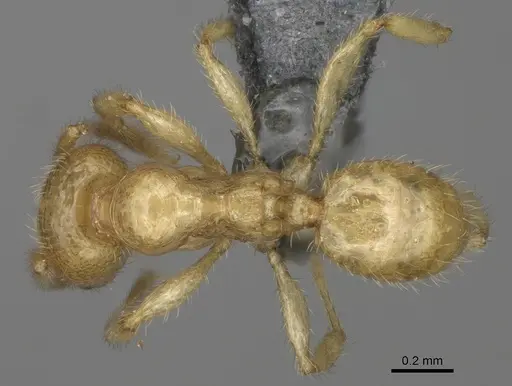
Literature
Loading...Loading products...