

Pheidole tisiphone
- Scientific Name
- Pheidole tisiphone
- Tribe
- Attini
- Subfamily
- Myrmicinae
- Author
- Wheeler, 1911
- Distribution
- Found in 1 countries
Pheidole tisiphone Overview
Pheidole tisiphone is an ant species of the genus Pheidole. It is primarily documented in 1 countries , including Mexico. Detailed taxonomic data and occurrence records can be further explored via authoritative databases such as AntWeb or the Global Biodiversity Information Facility (GBIF).
Pheidole tisiphone
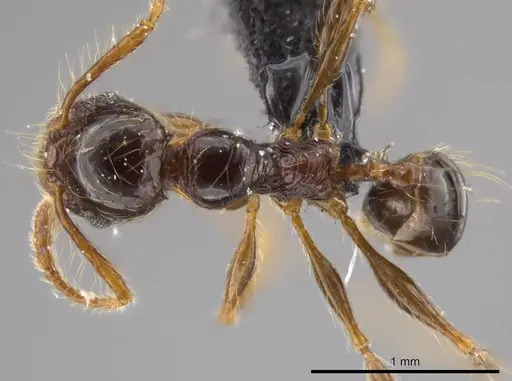
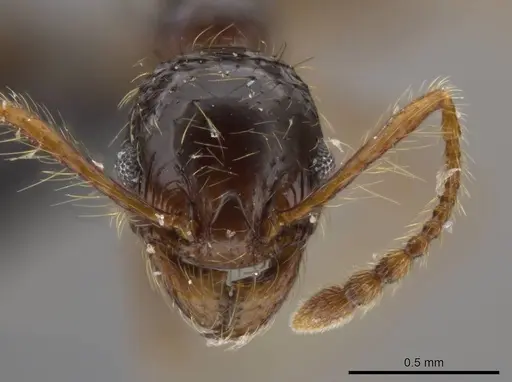
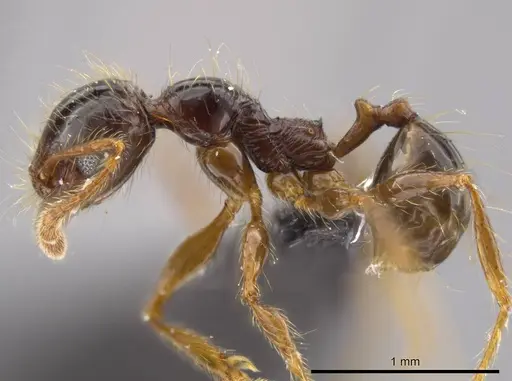
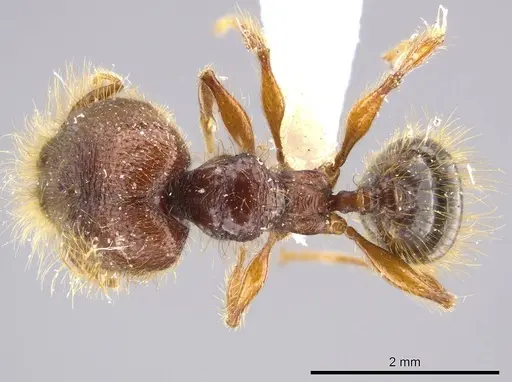
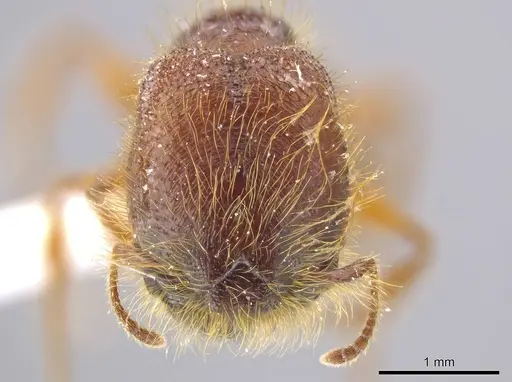
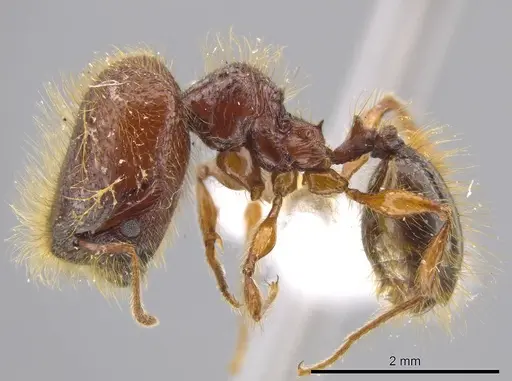
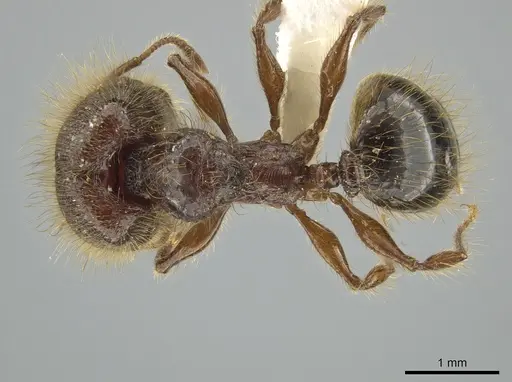
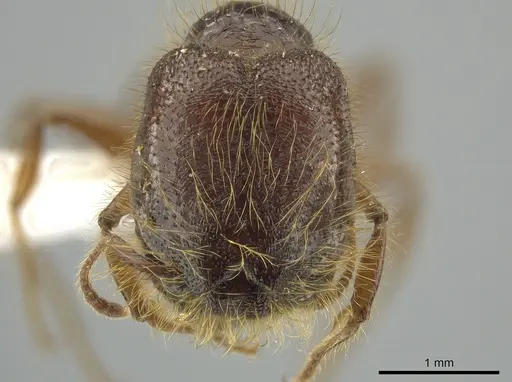
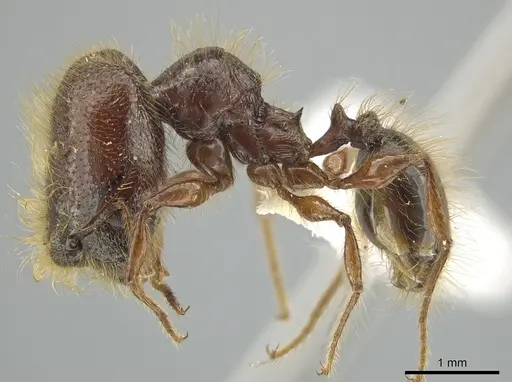
Pheidole tisiphone is a dimorphic ant species native to the Neotropical region, known only from a handful of specimens collected in Oaxaca, Mexico and Guatemala. This is an extremely rare species with virtually no documented biological observations in the wild. Majors are instantly recognizable by their bizarre shield-shaped head, which expands laterally to touch the margins of the head and extends anteriorly nearly to the clypeal border. The head is covered in dense, long hairs, and the species features deep, narrow antennal scrobes. Workers are light reddish brown with lighter reddish to yellowish brown appendages. Major workers measure approximately 1.80mm head width, while full measurements are HW 1.80,HL 2.16,SL 0.76,EL 0.20,PW 1.00[1]. Given the complete lack of biological data for this species, all care recommendations must be based on typical Pheidole genus behavior and should be treated as educated estimates rather than confirmed requirements.
Quick Summary
- Difficulty: Unknown, likely Moderate based on genus
- Origin & Habitat: Oaxaca, Mexico and Guatemala (Neotropical region). No specific habitat data exists for this species, but the region features tropical and subtropical climates.
- Colony Type: Unknown. Pheidole species are typically monogyne (single queen) but some can be polygyne. No data exists for this species.
- Size & Growth:
- Queen: Undocumented, estimated 6-8mm based on genus typical size
- Worker: Minors: approximately 2-3mm, Majors: approximately 3-4mm (based on HW 1.80mm for major)
- Colony: Unknown, likely several hundred workers typical of Pheidole genus
- Growth: Unknown, estimated Moderate based on genus patterns
- Development: Unknown, estimated 6-8 weeks based on typical Pheidole development at warm temperatures (No species-specific data exists. This is an estimate based on related Pheidole species.)
- Antkeeping:
- Temperature: Estimated 22-27°C based on Neotropical origin and typical Pheidole requirements. Provide a temperature gradient allowing ants to self-regulate.
- Humidity: Estimated 60-80% relative humidity, typical for Neotropical species. Keep substrate moderately moist but not waterlogged.
- Diapause: Unknown, Neotropical species may not require true hibernation but may have reduced activity periods. Monitor for seasonal slowdowns.
- Nesting: No documented nesting preferences. Based on genus, likely prefers soil nests or will accept test tube setups. A naturalistic setup with moist substrate would be appropriate.
- Behavior: No documented behavior for this species. Based on genus typical behavior: Pheidole ants are generally non-aggressive but will defend their nest. Majors serve as soldiers and food processors. Workers are active foragers. Escape prevention is important due to small size. The distinctive large head of majors suggests specialized functions, possibly related to seed processing or defense.
- Common Issues: No species-specific biological data exists, all care is estimated from genus patterns, Extremely rare in collections, likely difficult to acquire, Growth rate and development timeline are unconfirmed estimates, Colony structure (monogyne/polygyne) is unknown, Diapause requirements are unconfirmed for this Neotropical species
Species Status and Availability
Pheidole tisiphone is one of the most poorly documented ant species in existence. The entire scientific knowledge base consists of just four specimens, two workers and one soldier from Oaxaca, Mexico, and one soldier from Guatemala. This species has never been kept in captivity that we know of, and no biological observations whatsoever have been published. What this means for you as a potential keeper is that you will essentially be pioneering the husbandry of this species. There are no established care protocols, no documented growth rates, and no confirmed colony structures. Any colony you obtain would be extraordinarily valuable to the antkeeping community as it would provide the first-ever captive biological data. This also means you should expect a steep learning curve and be prepared to document your observations carefully. Given the extreme rarity of specimens, this species is unlikely to be available through typical ant vendors.[2]
Physical Characteristics and Identification
The most striking feature of Pheidole tisiphone is the major workers' bizarre shield-shaped head. In full-face view, the frontal lobes expand laterally to touch the lateral margins of the head at the level of the eyes and behind them, extending anteriorly almost to touch the anterior clypeal border. This creates an unmistakable silhouette that sets this species apart from most other Pheidole. The entire head is covered in very dense, long hairs, with those around the eye region curving posteriorly. Deep, narrow antennal scrobes are present. The mesonotum shows some variation between specimens, rugoreticulate in the Guatemalan specimen but mostly carinulate in the Mexican holotype. Body color is light reddish brown with appendages ranging from light reddish to yellowish brown. The species name tisiphone comes from Greek mythology, referring to Tisiphone, one of the Furies and avenger of murders. [1]
Estimated Care Requirements
Since no biological data exists for this species, all care recommendations must be derived from typical Pheidole genus behavior and the known climate of its collection localities in Mexico and Guatemala. Based on this, maintain temperatures in the range of 22-27°C, which aligns with Neotropical species requirements and typical Pheidole preferences. Humidity should be kept moderate to high, around 60-80%, mimicking the damp conditions of tropical forest habitats. As a founding setup, use a standard test tube setup with a water reservoir, which works well for most Pheidole species. The queen will likely seal herself in (claustral founding) and survive on stored fat reserves until her first workers emerge. Feed the colony a typical Pheidole diet: protein sources like small insects or commercial ant food, and sugar sources like honey or sugar water. The distinctive large-headed majors will likely develop as the colony grows, serving as soldiers and food processors. [2]
Colony Development Expectations
You should expect a slow start to the colony. Pheidole species typically take 6-8 weeks from egg to first worker at optimal temperatures, but this is entirely unconfirmed for P. tisiphone. The first workers, called nanitics, will be smaller than normal workers. As the colony grows, you should start seeing the development of major workers with their characteristic shield-shaped heads. Colony size is unknown but likely reaches several hundred workers based on typical Pheidole patterns. The presence of majors in the collected specimens suggests this is an established colony with soldiers, indicating the species does produce major workers in sufficient numbers. Monitor your colony closely and document growth, any information you gather would be scientifically valuable given how little we know about this species. [2]
Legal and Ethical Considerations
Before acquiring this species, verify the legal status in your jurisdiction. Pheidole tisiphone is native to Mexico and Guatemala, and international trade may be regulated under CITES or local wildlife laws. If you obtain a colony, ensure it was legally acquired from a reputable source that has permits for international ant trade. Additionally, because this species is known from so few specimens and has no documented captive populations, you have an opportunity to contribute meaningfully to scientific knowledge. Consider documenting your colony's development and sharing observations with the antkeeping community or academic researchers. Never release this species or any ant into non-native environments, this is both illegal and ecologically harmful. [2]
Frequently Asked Questions
How do I care for Pheidole tisiphone ants?
No established care protocol exists because this species has never been documented in captivity. Based on typical Pheidole genus behavior and its Neotropical origin, estimate care at 22-27°C temperature,60-80% humidity, using a standard test tube setup for founding and transitioning to a formicarium as the colony grows. This is pioneering antkeeping, you will be creating the first care guidelines for this species.
What do Pheidole tisiphone eat?
No dietary observations exist for this species. Based on genus typical behavior, offer protein sources like small insects (fruit flies, pinhead crickets, mealworms) and sugar sources like honey or sugar water. Pheidole species are generally omnivorous and accept a wide range of foods.
How long does it take for Pheidole tisiphone to produce first workers?
Unknown, no species-specific data exists. Based on typical Pheidole development, estimate 6-8 weeks from egg to first worker at optimal warm temperatures (around 25°C). This is an educated guess, not a confirmed timeline.
Are Pheidole tisiphone ants aggressive?
No documented behavior exists for this species. Pheidole genus species are generally not aggressive toward humans but will defend their nest if threatened. The large-headed majors likely serve as soldiers for defense.
How big do Pheidole tisiphone colonies get?
Unknown, no colony size data exists. Based on typical Pheidole genus patterns, colonies likely reach several hundred workers. The presence of majors in specimens suggests established colonies with soldier castes.
Can I keep multiple Pheidole tisiphone queens together?
Unknown, colony structure has never been documented. Most Pheidole species are monogyne (single queen), but some are polygyne. Do not combine unrelated queens without established evidence that this species tolerates multiple queens.
Does Pheidole tisiphone need hibernation?
Unknown, no documented seasonal behavior exists. As a Neotropical species from Mexico and Guatemala, true hibernation is unlikely. The ants may have reduced activity during cooler or drier periods but probably do not require a hibernation phase.
Where can I get Pheidole tisiphone ants?
This is likely one of the rarest ant species in the hobby, if it exists in captivity at all. The species is known from only four museum specimens worldwide. You would need to source from specialized dealers or possibly collect in the species' native range (Mexico/Guatemala) with proper permits.
Is Pheidole tisiphone a good species for beginners?
No, this species is not recommended for beginners or even experienced keepers due to the complete lack of any documented care information. Keeping this ant would be experimental pioneering work, not standard antkeeping. If you want a Pheidole species, choose one with established care protocols like Pheidole metallescens or Pheidole nodus.
References

This caresheet is licensed under CC BY-SA 4.0 .
Literature
Loading...Loading products...