

Pheidole tijucana
- Scientific Name
- Pheidole tijucana
- Tribe
- Attini
- Subfamily
- Myrmicinae
- Author
- Borgmeier, 1927
- Distribution
- Found in 1 countries
Pheidole tijucana Overview
Pheidole tijucana is an ant species of the genus Pheidole. It is primarily documented in 1 countries , including Brazil. Detailed taxonomic data and occurrence records can be further explored via authoritative databases such as AntWeb or the Global Biodiversity Information Facility (GBIF).
Pheidole tijucana
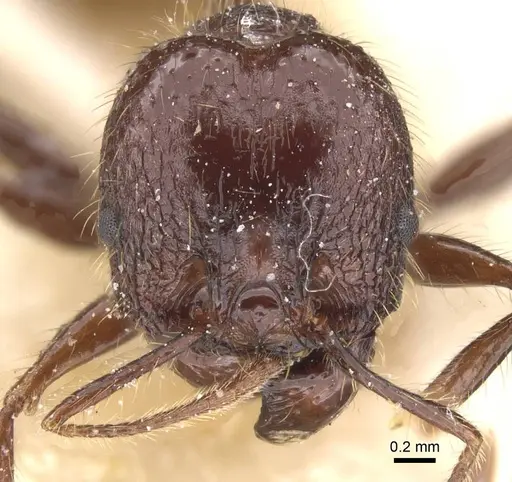
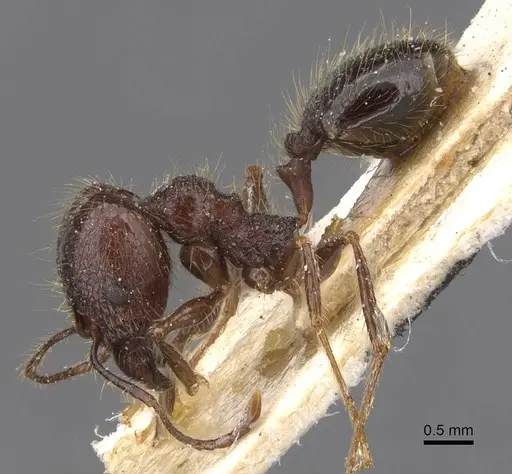
Pheidole tijucana is one of the least known ants in the genus, recognized only from museum specimens collected nearly a century ago. These ants display the classic big-headed major and small minor worker castes typical of Pheidole. Majors have reddish brown bodies with heads around 1.5mm wide, while minors are lighter brown with darker heads around 0.6mm wide [1]. The species was collected once in 1926 from Tijuca in Rio de Janeiro, Brazil, and has never been found again despite the area being well-sampled [1][2]. No information exists about their colony structure, behavior, or ecology in nature [1].
Quick Summary
- Difficulty: Expert
- Origin & Habitat: Tijuca, Rio de Janeiro, Brazil (Atlantic Forest region) [1][2]
- Colony Type: Unknown (genus typically single-queen but unconfirmed for this species)
- Size & Growth:
- Queen: Unknown (not described)
- Worker: Major heads 1.48mm wide, minor heads 0.58mm wide [1], estimated body lengths 3-4mm and 2mm respectively
- Colony: Unknown
- Growth: Unknown
- Development: Estimated 6-10 weeks based on typical Pheidole patterns at 25-28°C, unconfirmed (Timeline inferred from related species, actual duration unknown)
- Antkeeping:
- Temperature: Unknown, suggest 24-26°C based on tropical Rio de Janeiro climate
- Humidity: Unknown, suggest moderate to high humidity based on Atlantic Forest habitat
- Diapause: Unknown, likely unnecessary given tropical origin but unconfirmed
- Nesting: Unknown, likely soil or rotting wood based on genus patterns
- Behavior: Unknown. Majors likely serve as soldiers while minors forage, typical of the genus. Escape risk high for minors due to small size (under 2mm).
- Common Issues: essentially unavailable in ant keeping due to extreme rarity and single known location., no verified care information exists for this species., may be protected under Brazilian conservation laws restricting collection., minors are extremely small and likely to escape through tiny gaps.
Historical Context and Type Specimens
Pheidole tijucana is only known from the original type series collected on June 22,1926,by Thomas Borgmeier in Tijuca, Rio de Janeiro [2]. The series consists of 7 major workers and 6 minor workers [2]. Despite the Tijuca region being heavily sampled by entomologists over the past century, no additional specimens have ever been collected [1]. This extreme rarity suggests the species may be extinct, critically endangered, or possibly synonymous with another species awaiting confirmation. The type specimens are housed in the Museu de Zoologia da Universidade de São Paulo [2].
Morphology and Identification
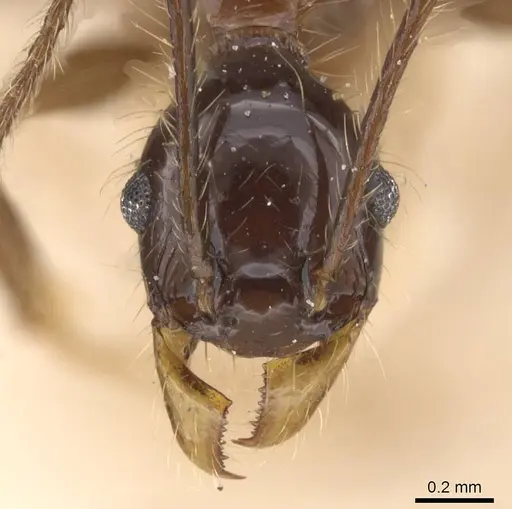
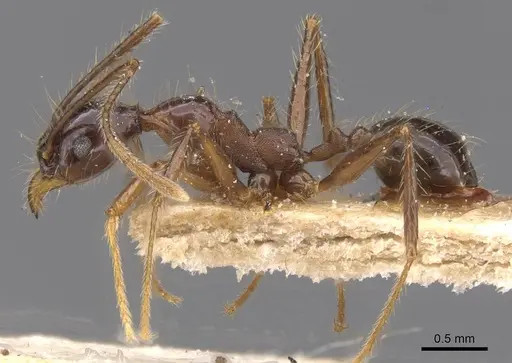
This species belongs to the jujuyensis complex within the larger fallax group [1]. Major workers have heads 1.48mm wide and 1.54mm long, with the back of the head (occiput), top of the head (vertex), and frontal lobes mostly smooth and shiny [1]. A small cluster of short ridges (carinulae) gathers around the center line at the back of the head, and a network of ridges (rugoreticulum) extends from the eye to the antennal socket [1]. The spines on the thorax (propodeal spines) are triangular [1]. Minor workers have heads only 0.58mm wide with thorax spines reduced to a small tooth, and the back of the head narrows to a neck with a broad collar [1]. Majors are uniformly rich reddish brown, while minors are plain light brown with darker reddish heads [1].
Inferred Care Guidelines
While no biological data exists for this specific species, general Pheidole care principles may provide a starting point. Queens likely seal themselves in during founding, living off stored body fat until the first workers hatch, based on typical genus patterns. Colonies probably have just one queen (monogyne). They likely accept a varied diet including seeds, small insects, and sugar sources such as honey water. Keep them warm around 24-26°C with moderate to high humidity. Use escape prevention suitable for very small ants, as the minors are under 2mm and can squeeze through the tiniest gaps. However, success with this species is entirely speculative given the complete lack of life history data.
Conservation and Legal Considerations
Given that Pheidole tijucana is only known from a single collection in 1926 and the Tijuca Forest is now an urban park surrounded by Rio de Janeiro, the species may be extinct or critically endangered. Brazilian law strictly protects native ant fauna. Do not attempt to collect, import, or trade this species without proper scientific permits and CITES documentation if applicable. The species is essentially unavailable to ant keepers and should be considered a museum curiosity rather than a candidate for captivity. [1]
Frequently Asked Questions
Can I buy or collect Pheidole tijucana?
No. This species is essentially unavailable to ant keepers. It is only known from museum specimens collected in 1926 and has never been found again [1][2]. It may be extinct or critically endangered, and Brazilian law protects native fauna.
How do I care for Pheidole tijucana?
No verified care information exists. Based on typical Pheidole patterns, they would likely need warm temperatures (24-26°C), moderate humidity, and a diet of seeds and insects. However, keeping this species would be experimental and likely unsuccessful given the complete lack of biological data.
Where does Pheidole tijucana live?
Only known from the type locality in Tijuca, Rio de Janeiro, Brazil [1][2]. This is in the Atlantic Forest region, though the specific microhabitat is unknown.
How big are Pheidole tijucana workers?
Major workers have heads 1.48mm wide, while minor workers have heads 0.58mm wide [1]. Estimated body lengths are roughly 3-4mm for majors and under 2mm for minors.
Do Pheidole tijucana need hibernation?
Unknown, but likely unnecessary given their tropical origin in Rio de Janeiro, which has warm temperatures year-round.
What do Pheidole tijucana eat?
Unknown. Most Pheidole species are omnivorous, eating seeds, insects, and honeydew, but the specific diet of this species has never been observed.
Are Pheidole tijucana aggressive?
Unknown. Their behavior has never been studied.
Can I keep multiple Pheidole tijucana queens together?
Not recommended. The colony structure is unknown, and combining queens has not been observed for this species.
References

This caresheet is licensed under CC BY-SA 4.0 .
CASENT0913460
View on AntWeb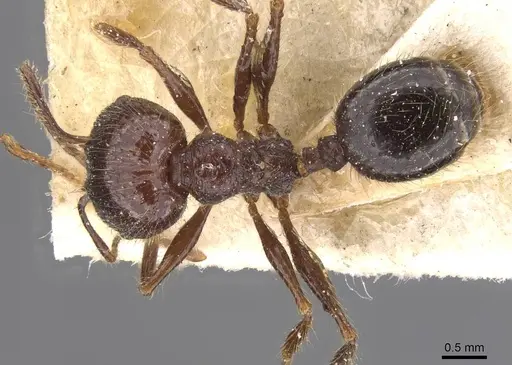
CASENT0913461
View on AntWeb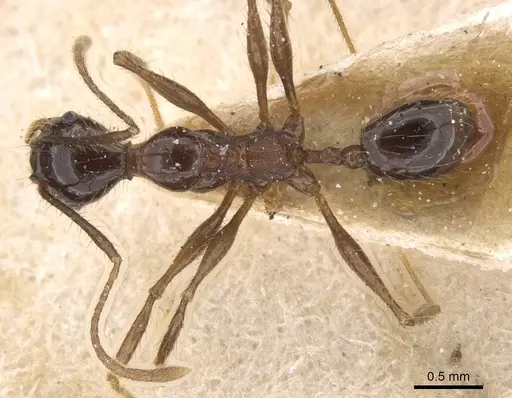
Literature
Loading...Loading products...