

Pheidole tetra
- Scientific Name
- Pheidole tetra
- Tribe
- Attini
- Subfamily
- Myrmicinae
- Author
- Creighton, 1950
- Distribution
- Found in 2 countries
Pheidole tetra Overview
Pheidole tetra is an ant species of the genus Pheidole. It is primarily documented in 2 countries , including Mexico, United States of America. Detailed taxonomic data and occurrence records can be further explored via authoritative databases such as AntWeb or the Global Biodiversity Information Facility (GBIF).
Pheidole tetra
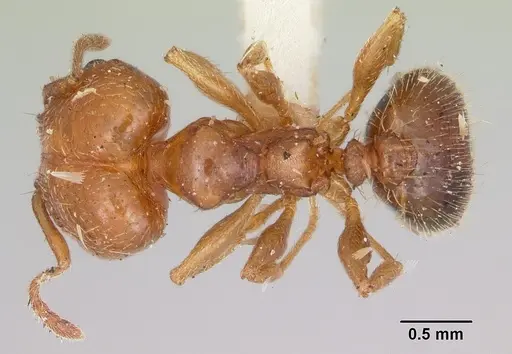
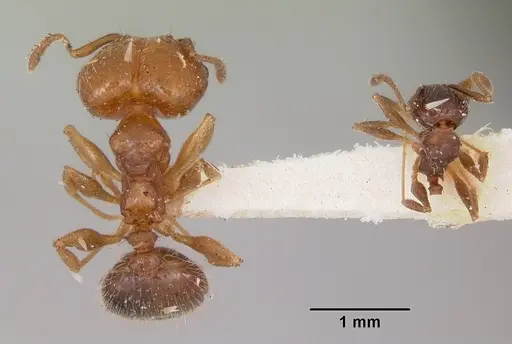
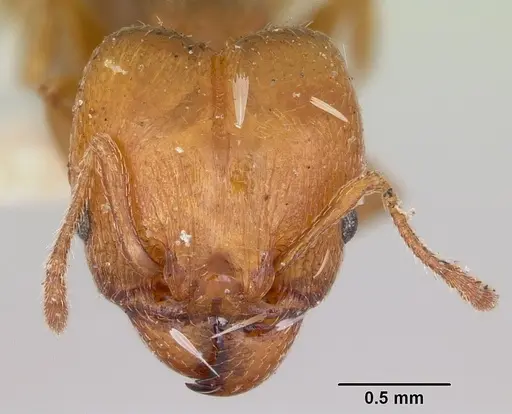
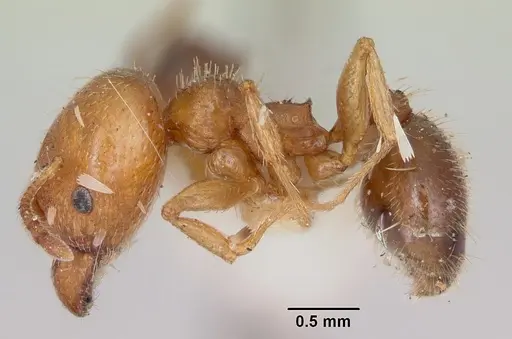
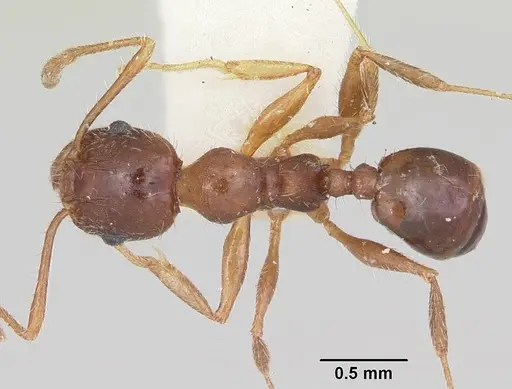
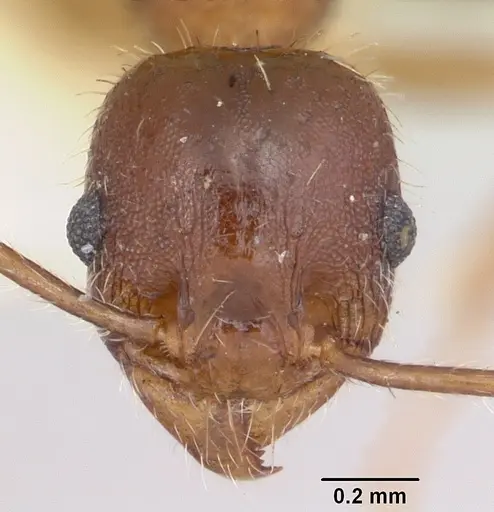
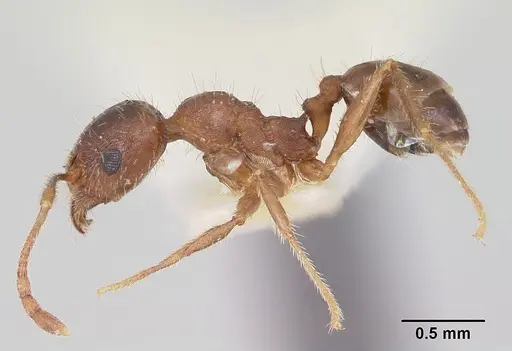
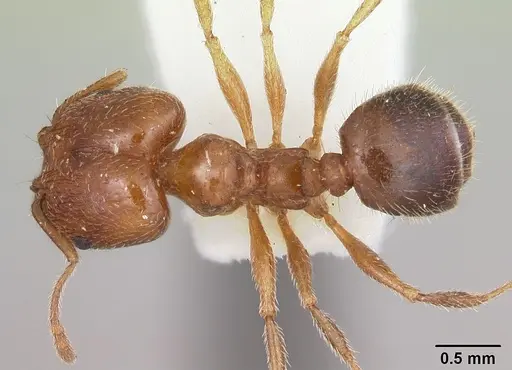
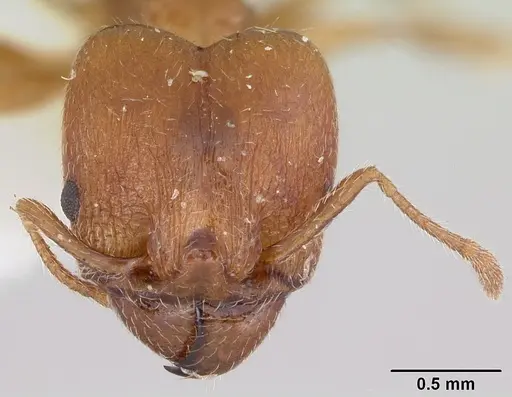
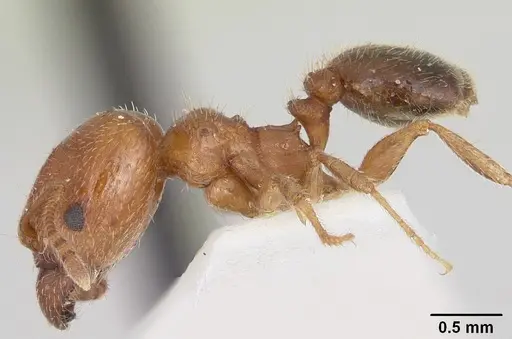
Pheidole tetra is a small North American ant species native to the south-central United States and northern Mexico. Major workers measure around 1.34mm in head width, while minor workers are much smaller at 0.66mm. The species has a distinctive appearance with a flattened base to the scape (antenna) and coarse sculpturing on the front two-thirds of the head, transitioning to a smoother, glossy surface toward the back. Workers are light to dark reddish brown in color. This ant is notable for being granivorous, it primarily eats seeds rather than hunting insects, and for being quite rare throughout its range. It nests in soil, often creating small mound entrances, and is commonly found under rocks in open areas of mixed pine-hardwood forest, grassy clearings, and floodplain areas.
Quick Summary
- Difficulty: Medium
- Origin & Habitat: Native to the south-central United States (Missouri, Arkansas, Texas, Arizona) and northern Mexico. Found in open areas of mixed pine-hardwood forest, grassy clearings, cottonwood floodplain forests, and open soil. Nests under rocks or directly in soil with small mound entrances. Elevation ranges from near sea level in some areas up to 1600m in western Texas and Arizona mountains [1][2].
- Colony Type: Likely monogyne (single queen colony) based on typical Pheidole genus patterns. No specific research on colony structure for this species.
- Founding: Claustral
- Size & Growth:
- Queen: Not directly measured in available literature, estimated at 6-8mm based on related Pheidole species
- Worker: Major workers: 1.34mm HW, Minor workers: 0.66mm HW
- Colony: Unknown, likely moderate colony size typical of Pheidole genus (several hundred workers)
- Growth: Moderate, inferred from related species
- Development: Estimated 6-8 weeks based on typical Pheidole development at optimal temperature (Development time inferred from genus-level data, specific timing unconfirmed for this species)
- Antkeeping:
- Temperature: Keep at room temperature around 20-24°C. This species comes from temperate regions with mild winters, so standard room conditions work well. A slight temperature gradient allows workers to self-regulate.
- Humidity: Moderate humidity preferred. In the wild, colonies inhabit sandy soil and soil under rocks in areas that are not extremely wet or dry. Keep the nest substrate lightly moist but allow it to dry partially between waterings. Avoid waterlogging.
- Diapause: Yes, this species is native to temperate regions with cold winters. Expect reduced activity during winter months. A hibernation period at 5-10°C for 2-3 months is likely beneficial, similar to other North American Pheidole species.
- Nesting: Natural nesting occurs in soil, often under rocks. In captivity, a standard formicarium with soil or plaster nesting medium works well. Y-tong (AAC) nests are also suitable. Provide a moisture gradient so ants can choose their preferred humidity zone.
- Behavior: Workers are group foragers, they leave the nest in groups rather than individually to find food. This species is granivorous, meaning it primarily collects seeds, but likely also feeds on small insects and honeydew like other Pheidole species. They are not aggressive and do not have a painful sting. Minor workers are very small (under 1mm), so escape prevention is important, they can squeeze through tiny gaps. Major workers (soldiers) are larger and have larger heads for seed processing.
- Common Issues: small minor workers mean escape prevention must be excellent, use fine mesh and tight-fitting lids, rare in the hobby so wild-caught colonies may be difficult to find, sensitive to competition from invasive fire ants in their range, may struggle if kept near other aggressive ant species, slow colony growth typical of Pheidole species may test keeper patience, granivorous diet means seeds should be a primary food source, not just insects
Housing and Nest Setup
Pheidole tetra does well in standard ant housing setups. Since minor workers are very small (under 1mm), use test tubes with cotton barriers or formicariums with appropriately sized chambers. A nesting area of about 10x10cm is sufficient for a starting colony. Since they naturally nest under rocks and in soil, a naturalistic setup with a soil layer works well, but Y-tong (AAC) nests or plaster nests are also suitable. Provide a water tube for humidity and ensure the nest can retain some moisture without becoming waterlogged. The outworld should have a small entrance that can be sealed with cotton or fluon to prevent escapes. [1]
Feeding and Diet
This species is granivorous, meaning seeds form a major part of their diet. Offer grass seeds, dandelion seeds, or commercial ant seed mixes. They will also readily accept small insects like fruit flies, pinhead crickets, or mealworms. Like most ants, they likely supplement with honey water or sugar water for energy. Feed seeds continuously and offer protein (insects) once or twice per week. Remove uneaten seeds and insects to prevent mold. The large major workers are specialized for cracking and processing hard seeds.
Temperature and Seasonal Care
Keep Pheidole tetra at room temperature, ideally around 20-24°C. They are native to temperate regions (Missouri, Arkansas, Texas, Arizona) and do not need extreme heat. A temperature gradient is beneficial, place the nest on one side of the enclosure and use a low-level heat mat if needed to create a warm zone around 24°C while the other side stays at room temperature. During winter, expect reduced activity. A hibernation period at 5-10°C for 2-3 months is recommended, similar to other North American ant species. Reduce feeding during this period and keep the colony slightly cooler. [1]
Colony Development
Pheidole species are known for having distinct major and minor worker castes. The majors (soldiers) develop from larvae that receive more food and have larger heads for seed processing and colony defense. Development from egg to worker likely takes 6-8 weeks under optimal conditions. Founding colonies grow slowly at first, the queen lays a small batch of eggs, and the first workers (nanitics) are often smaller than normal. As the colony grows, more majors will be produced. A mature colony may have several hundred workers with a significant portion being majors. Be patient, Pheidole colonies can take several months to a year to establish firm footing. [1]
Behavior and Foraging
Workers forage in groups rather than alone, which is characteristic of Pheidole species. They leave the nest and search for seeds collectively, which makes them efficient at locating food sources. The majors use their enlarged heads to crack open seeds and carry them back to the nest. This species is not aggressive toward keepers and cannot sting painfully. However, their small size means they are excellent escape artists, use fine mesh barriers and check all connections regularly. They are peaceful toward other colony members and do not exhibit territorial aggression outside normal foraging. [1]
Frequently Asked Questions
How long does it take for Pheidole tetra to produce first workers?
Expect first workers (nanitics) around 6-8 weeks after the queen lays eggs, assuming temperatures around 22-24°C. This is typical for Pheidole species, though exact timing varies based on temperature and feeding.
What do Pheidole tetra ants eat?
They are granivorous, meaning seeds are a primary food source. Offer grass seeds, dandelion seeds, or commercial seed mixes. They also accept small insects like fruit flies and pinhead crickets, plus sugar water or honey water for energy.
Can I keep multiple Pheidole tetra queens together?
Not recommended. While colony structure is not well-studied for this species, Pheidole species typically form single-queen colonies. Combining unrelated queens often results in fighting. Start with one queen for best success.
What temperature range is best for Pheidole tetra?
Keep them at room temperature, ideally 20-24°C. They come from temperate regions and do not need heat lamps. A slight gradient is beneficial but not required. Room temperature is usually sufficient.
Do Pheidole tetra need hibernation?
Yes, they likely benefit from a winter rest period. Since they are native to areas with cold winters (Missouri, Arkansas, Arizona), provide 2-3 months at 5-10°C during winter. Reduce feeding and expect reduced activity.
Why are my Pheidole tetra escaping?
Their minor workers are very small (under 1mm) and can squeeze through tiny gaps. Use fine mesh (at least 0.5mm or smaller), check all lid seals, and use fluon or cotton barriers on all connections. Inspect the outworld-entrance connection carefully.
Are Pheidole tetra good for beginners?
They are moderate difficulty. The small size makes escape prevention challenging, but their dietary needs are straightforward (seeds + insects). They are peaceful and don't require special heating. Patience is needed as colony growth is slow.
How big do Pheidole tetra colonies get?
Based on typical Pheidole genus patterns, colonies likely reach several hundred workers. The exact maximum is unknown for this species. Major workers (soldiers) will make up a portion of the workforce as the colony matures.
When should I move my colony to a formicarium?
Start in a test tube setup for the founding stage. Once the colony reaches 20-30 workers and you see the test tube drying out or becoming moldy, move them to a formicarium with appropriate-sized chambers.
References

This caresheet is licensed under CC BY-SA 4.0 .
Literature
Loading...Loading products...