

Pheidole subsphaerica
- Scientific Name
- Pheidole subsphaerica
- Tribe
- Attini
- Subfamily
- Myrmicinae
- Author
- Wilson, 2003
- Distribution
- Found in 1 countries
Pheidole subsphaerica Overview
Pheidole subsphaerica is an ant species of the genus Pheidole. It is primarily documented in 1 countries , including Colombia. Detailed taxonomic data and occurrence records can be further explored via authoritative databases such as AntWeb or the Global Biodiversity Information Facility (GBIF).
Pheidole subsphaerica
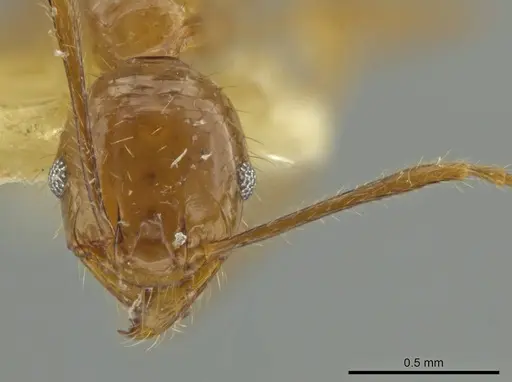
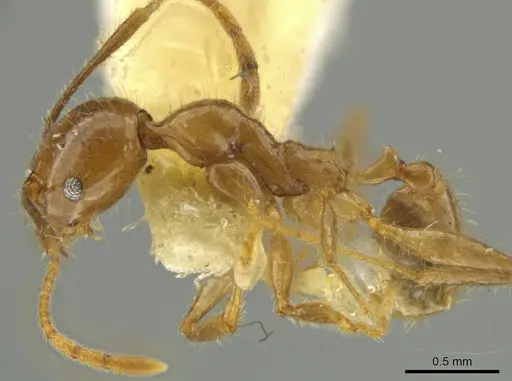
Pheidole subsphaerica is a rare and unusual ant species from the tristis group, known only from the Chinchina area in Caldas, Colombia [1][2]. The major workers have a distinctive circular head that gives them their scientific name, 'subsphaerica' means 'shaped somewhat like a ball' in Latin, referring to this rounded head shape [2]. Majors are light reddish yellow and reach about 2mm in head width, while the smaller minor workers are clear yellow at only 0.66mm head width [2]. Both castes are covered in dense fine hairs (pilosity), and the head and promesonotum are mostly smooth and glossy [2]. This species is closely related to other unusual Pheidole like P. pepo and the dramatically unique P. sphaerica [2].
What makes this species interesting is its extreme rarity, it's only known from a single collection in Colombia and nothing has been documented about its biology in the wild or in captivity. The genus Pheidole is famous for having major and minor worker castes, with majors developing enlarged heads for seed-crushing and colony defense. While most Pheidole species are well-studied, P. subsphaerica remains a complete mystery in terms of its colony structure, founding behavior, and care requirements.
Quick Summary
- Difficulty: Unknown
- Origin & Habitat: Known only from the Chinchina area in Caldas, Colombia, a tropical mid-elevation region [1][2]. The specific habitat details are unrecorded.
- Colony Type: Unconfirmed, no data on colony structure for this species. Most Pheidole are single-queen (monogyne) colonies, but this has not been documented for P. subsphaerica specifically.
- Size & Growth:
- Queen: Unrecorded for this species. Based on typical Pheidole patterns, queens are likely 4-6mm.
- Worker: Major: 2.02mm head width, Minor: 0.66mm head width [2].
- Colony: Unknown for this species. Pheidole colonies often reach thousands of workers, but no data exists for P. subsphaerica.
- Growth: Unknown, no development data exists for this species.
- Development: Unconfirmed. Based on typical Pheidole patterns in tropical conditions, estimate 6-8 weeks at warm temperatures, but this is a rough guess. (No direct development data exists for this species. The estimate is based on typical Pheidole genus patterns, not species-specific research.)
- Antkeeping:
- Temperature: Unconfirmed for this species. Start around 24-28°C (warm tropical conditions) and observe colony activity. Adjust based on behavior, if workers seem sluggish, increase slightly, if they avoid heated areas, reduce.
- Humidity: Unconfirmed. Based on its Colombian origin, likely prefers moderate to high humidity (60-80%). Keep the nest substrate consistently moist but not waterlogged.
- Diapause: Unknown. As a tropical Colombian species, it may not require a true hibernation, but may show reduced activity during cooler periods.
- Nesting: No specific data exists. In captivity, Pheidole typically thrive in test tubes for founding and acrylic or plaster nests for established colonies. Provide a dark, quiet location with proper humidity control.
- Behavior: Undocumented for this species. Based on typical Pheidole behavior, majors are likely defensive and will defend the colony against intruders. Workers are probably active foragers that search for seeds and small insects. Escape prevention should be good, Pheidole are not particularly known for climbing smooth surfaces, but standard precautions (fluon on rim edges) are always recommended.
- Common Issues: this species has never been kept in captivity, there are no established care protocols or known problems, extreme rarity means finding a colony to keep may be nearly impossible, without any biological data, keepers are essentially experimenting blindly, potential for the species to have specialized requirements not met by generic Pheidole care, wild-caught colonies may carry parasites or diseases with no documented treatment
Species Discovery and Rarity
Pheidole subsphaerica was described in 2003 by E.O. Wilson as part of his comprehensive revision of Pheidole in the New World [3]. The species is known only from the type locality in Chinchina, Colombia, where it was collected by W.L. Brown [2]. This makes it one of the rarest and least-known Pheidole species in existence. The original description noted it as a large, unusual species belonging to the tristis group, with distinctive features that set it apart from related species like P. pepo and P. rotundiceps [2]. The most notable feature is the major worker's nearly circular head, which inspired its scientific name 'subsphaerica' meaning 'somewhat ball-shaped' [2].
The fact that this species has only ever been collected once, in the early 20th century, suggests either extremely localized distribution, very small population sizes, or simply that it has been overlooked by researchers. Colombia is a biodiversity hotspot with many ant species still being discovered, and P. subsphaerica represents one of the many mysteries waiting to be studied.
Identification and Morphology
Pheidole subsphaerica is distinctive among Pheidole species due to its unusual morphology. The major workers have a nearly circular head when viewed from the front, with a flattened posterior dorsal margin, this is unlike the more typical rectangular or trapezoidal heads seen in most Pheidole majors [2]. The carinulae (raised ridges) on the head are limited to the level of the posterior margin of the eye, and those originating from the middle of the head curve downward below the eye and then back up again, creating a unique pattern [2]. Both the promesonotum (the middle body section) and the head are mostly smooth and glossy, while the entire body is covered in dense fine hairs (pilosity) [2].
The major workers are light reddish yellow throughout, while the minor workers are a uniform clear yellow [2]. The major measures approximately 2.02mm in head width, while the minor is much smaller at 0.66mm [2]. This size difference is typical of Pheidole, where majors develop enlarged heads for specialized tasks like seed processing and colony defense.
Challenges of Keeping Rare Species
Pheidole subsphaerica presents a unique challenge for antkeepers: there is absolutely no documented information about its biology, care requirements, or captive behavior. This is not a species where you can research established care protocols or draw from experienced keeper knowledge, any attempt to keep this species would be essentially experimental. The complete lack of biological data means we don't know its temperature preferences, humidity requirements, diet, colony structure, or any other fundamental aspect of its care.
For these reasons, P. subsphaerica is not recommended for anyone except the most advanced antkeepers who are specifically interested in contributing to our knowledge of rare species. Even then, obtaining a colony would be extremely difficult since the species is only known from a single historical collection. If by some chance a colony became available, keepers would need to document everything meticulously and share their findings with the antkeeping community to build any knowledge base for this species.
What We Can Infer from Related Species
While nothing is known about P. subsphaerica specifically, we can make educated guesses based on its genus and its known relatives. Pheidole as a genus is one of the most diverse ant genera globally, with well over 1,000 species. Most Pheidole are claustral founders, the queen seals herself in a chamber and raises her first workers entirely on stored body fat without needing to forage. Colony structure is typically monogyne (single queen), though some species can have multiple queens.
Pheidole species are typically omnivorous, eating seeds, insects, and tending aphids for honeydew. They prefer warm, humid conditions matching their tropical origins. The related species P. sphaerica and others in the tristis group are known from similar Neotropical regions. However, given that P. subsphaerica has unique morphological features (the circular head), it may have unique biological requirements that differ from typical Pheidole, this makes generalizing from genus patterns particularly speculative for this species.
Frequently Asked Questions
Is Pheidole subsphaerica available for purchase?
No. This is one of the rarest ant species in existence, known only from a single collection in Colombia. No colonies are documented as existing in captivity, and it is extremely unlikely that any are available for sale.
How do I care for Pheidole subsphaerica?
You cannot. This species has never been kept in captivity and absolutely no care information exists. There are no established protocols, no documented temperature or humidity requirements, and no known diet information. Attempting to keep this species would be pure experimentation with extremely low chances of success.
What does Pheidole subsphaerica eat?
Unknown. While most Pheidole species are omnivorous (eating seeds, insects, and honeydew), this species' specific diet has never been documented. Any feeding would be guesswork based on typical Pheidole behavior.
Do Pheidole subsphaerica majors have special behaviors?
Undocumented. The enlarged head of major workers in typical Pheidole is used for seed-crushing and colony defense, but whether P. subsphaerica majors exhibit any specific behaviors related to their uniquely shaped heads is completely unknown.
Where is Pheidole subsphaerica found?
Only known from Chinchina in Caldas, Colombia [1][2]. The exact habitat type is unrecorded, but the region is in the Colombian coffee belt at mid-elevations in the Andes.
How big do Pheidole subsphaerica colonies get?
Unknown. No colony size data exists for this species. Most Pheidole colonies grow to thousands of workers, but we have no information about whether P. subsphaerica follows this pattern.
Is Pheidole subsphaerica a good species for beginners?
Absolutely not. This species is completely unknown in captivity with no documented care requirements. It is not recommended for any keeper, beginner or experienced, unless you are specifically conducting research and have access to a wild-caught colony.
Does Pheidole subsphaerica need hibernation?
Unknown. As a tropical species from Colombia, it likely does not require a true hibernation period, but may show reduced activity during cooler seasons. No specific data exists for this species.
Can I keep multiple Pheidole subsphaerica queens together?
Unknown. The colony structure (single queen vs. multiple queens) has not been documented for this species. Without any data, combining queens is not recommended.
Why is Pheidole subsphaerica so rare?
We don't know. It may have an extremely limited geographic range, live in cryptic habitats that are difficult to sample, or simply exist in very small population sizes. It has only been collected once since being described in 2003.
References

This caresheet is licensed under CC BY-SA 4.0 .
JTLC000016544
View on AntWeb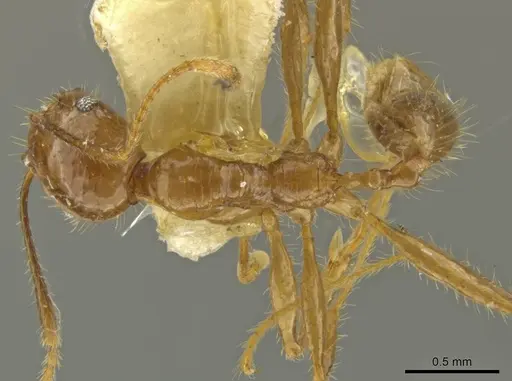
Literature
Loading...Loading products...