

Pheidole spinicornis
- Scientific Name
- Pheidole spinicornis
- Tribe
- Attini
- Subfamily
- Myrmicinae
- Author
- Eguchi, 2001
- Distribution
- Found in 1 countries
Pheidole spinicornis Overview
Pheidole spinicornis is an ant species of the genus Pheidole. It is primarily documented in 1 countries , including Malaysia. Detailed taxonomic data and occurrence records can be further explored via authoritative databases such as AntWeb or the Global Biodiversity Information Facility (GBIF).
Pheidole spinicornis
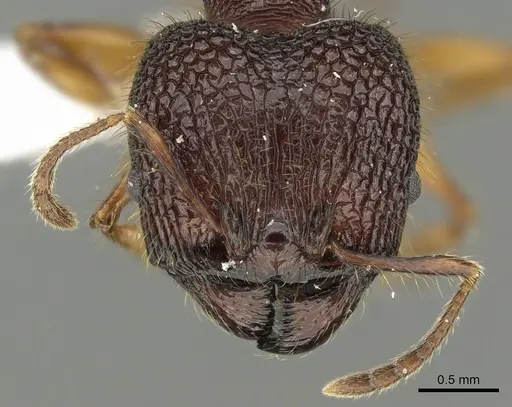
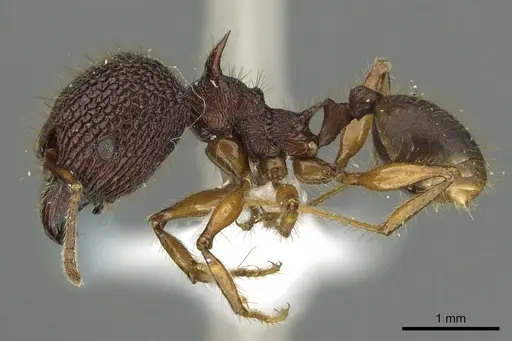
Pheidole spinicornis is a small but striking ant species native to the rainforests of Borneo. Majors measure 4.1-4.9mm with a distinctive feature: a pair of spines on their back that curve slightly backward, plus a ridge across their rear. Minors are much smaller at 2.7-3.0mm and have horn-like spines pointing downward. Both castes have a 3-segmented club at the end of their antennae. The species is dark reddish-brown with a lighter-colored alitrunk (middle body section). This ant lives in well-developed lowland and hill forests in Borneo, particularly in the Sepilok forest area, where it shares its habitat with two close relatives: P. quadricuspis and P. quadrensis [1].
What makes P. spinicornis interesting is its membership in the Pheidole quadricuspis group, a cluster of closely related species that can be tricky to tell apart. The majors use their spines and ridges as identification markers, and these ants play an important role in their ecosystem as seed dispersers and predators of small invertebrates. They nest in the forest floor and are part of the diverse leaf-litter ant community that inhabits Borneo's tropical rainforests.
Quick Summary
- Difficulty: Medium
- Origin & Habitat: Borneo (Sabah, Malaysia) and Indonesia, tropical rainforests in lowland and hill areas, particularly Sepilok forest at altitudes 500-1000m [1]. They inhabit well-developed forests and are sympatric with P. quadricuspis and P. quadrensis.
- Colony Type: Colony structure is unconfirmed for this species. Based on typical Pheidole patterns, likely single-queen (monogyne) colonies, but this has not been directly documented.
- Size & Growth:
- Queen: Undescribed in literature, estimated 6-8mm based on genus patterns for Pheidole species
- Worker: Minor: 2.7-3.0mm, Major: 4.1-4.9mm [1]
- Colony: Unknown, typical Pheidole colonies reach several hundred workers
- Growth: Moderate, estimated based on genus patterns
- Development: Estimated 6-8 weeks at tropical temperatures (25-28°C) based on typical Pheidole development (Development time is estimated from genus-level data since species-specific studies are unavailable)
- Antkeeping:
- Temperature: Keep at 24-28°C. As a Bornean tropical species, they need warm, stable temperatures. A heating cable on one side of the nest creates a gradient allowing workers to regulate their own temperature.
- Humidity: High humidity required, think damp rainforest floor. Keep nest substrate consistently moist but not waterlogged. Provide a water tube for drinking water. Mist occasionally but monitor for mold.
- Diapause: No true diapause, being tropical, they do not require hibernation. However, activity may slow during cooler periods. Keep temperatures stable year-round.
- Nesting: In captivity, they do well in Y-tong (AAC) nests, plaster nests, or naturalistic setups with soil. The key is maintaining moisture. They prefer nested areas that stay damp. Avoid completely dry nests.
- Behavior: Pheidole spinicornis is a generalist forager that searches for seeds, small insects, and honeydew. Majors are specialized soldiers that defend the colony and process large food items, they have powerful mandibles for cracking seeds. Workers are active foragers that can be aggressive toward threats but primarily flee rather than attack. Escape risk is moderate, use standard formicarium barriers. They are not known to be particularly aggressive or to sting painfully.
- Common Issues: Mold growth is the biggest risk, their high humidity needs can lead to fungal problems if ventilation is poor, Temperature drops can stress these tropical ants, keep them away from cold windows or air conditioning, Majors may have difficulty navigating narrow formicarium tubes due to their size, ensure passages are wide enough, Overfeeding can lead to mold in the nest, remove uneaten food promptly, Wild-caught colonies may harbor parasites that can devastate captive colonies
Housing and Nest Setup
Pheidole spinicornis does well in several nest types. Y-tong (AAC) nests work excellently because they hold humidity well while providing dark chambers that simulate their natural underground nests. Plaster nests are another good option, they absorb water and maintain moisture levels that this species needs. For a naturalistic approach, use a soil-filled formicarium with a layer of leaf litter on top. The key requirement is keeping the nest substrate consistently damp without creating standing water. A test tube setup can work for founding colonies, but you'll need to move them to a proper formicarium once the colony reaches 20-30 workers. Ensure all connections between outworld and nest are smooth, majors can get stuck on rough surfaces.
Feeding and Diet
Like most Pheidole species, P. spinicornis is a generalist that accepts a variety of foods. Their diet in nature includes seeds, small insects, and honeydew from aphids. In captivity, offer protein sources like small crickets, mealworms, fruit flies, and other small insects twice weekly. They will also accept sugar sources, a drop of honey or sugar water every few days provides energy. Seeds are an important part of their natural diet, so offering grass seeds or bird seed can mimic their natural foraging. Remove any uneaten food after 24-48 hours to prevent mold. Fresh water should always be available.
Temperature and Humidity Management
Being a Bornean rainforest species, P. spinicornis needs warm and humid conditions. Keep the nest area at 24-28°C (75-82°F). A simple way to achieve this is placing the formicarium at room temperature if your home stays in this range, or use a heating cable on one side of the nest to create a gentle temperature gradient. For humidity, aim for 60-80% relative humidity in the nest area. You can maintain this by keeping the water tube filled, misting the outworld occasionally, and choosing a nest material that holds moisture. However, balance humidity with adequate ventilation to prevent mold. Watch for condensation, some is good, but excessive moisture can drown colonies. [1]
Colony Growth and Development
Pheidole spinicornis follows the typical Pheidole development pattern. A newly mated queen seals herself in a chamber and lays eggs. She feeds the first brood using her stored fat reserves and wing muscles. The first workers (called nanitics) are smaller than normal workers but can already handle basic colony tasks. After that, subsequent batches of workers are larger. Majors typically appear once the colony reaches a certain size, usually when there are 50+ workers. The colony will gradually grow to several hundred workers over several years. Growth is moderate, not fast, so patience is needed. A well-fed colony in good conditions can reach 200-300 workers in 1-2 years.
Handling and Temperament
This species is not particularly aggressive but will defend if threatened. Majors have strong mandibles and can deliver a nippy bite, though their small size means it rarely breaks human skin. Workers are active foragers and will explore their outworld regularly. They are not known for escaping aggressively, but standard escape prevention (fluon barriers, tight-fitting lids) should still be used. When observing the colony, you'll notice majors and minors working together, minors handle most tasks while majors defend and process hard foods. They are fascinating to watch as they coordinate foraging expeditions.
Frequently Asked Questions
How long does it take for Pheidole spinicornis to get their first workers?
Expect first workers (nanitics) in about 6-8 weeks after the queen lays eggs, assuming temperatures around 25-28°C. This is an estimate based on typical Pheidole development since species-specific data is not available.
What do Pheidole spinicornis ants eat?
They are generalists that accept protein (small insects like crickets, mealworms, fruit flies), seeds, and sugar sources (honey, sugar water). Offer protein twice weekly and keep sugar water available.
What temperature do Pheidole spinicornis need?
Keep them at 24-28°C (75-82°F). As a tropical Bornean species, they need warm conditions year-round. Avoid temperatures below 20°C.
Are Pheidole spinicornis good for beginners?
They are rated as medium difficulty. They require warm, humid conditions that may need active management, but their generalist diet and moderate colony size make them manageable for intermediate antkeepers.
How big do Pheidole spinicornis colonies get?
Based on typical Pheidole patterns, colonies likely reach several hundred workers over 2-3 years. Exact maximum size is unknown for this species.
Do Pheidole spinicornis need hibernation?
No. As a tropical species from Borneo, they do not require a diapause or hibernation period. Keep their temperatures stable year-round.
What humidity level do Pheidole spinicornis need?
Aim for 60-80% humidity in the nest area. Keep the substrate consistently moist but not waterlogged. A water tube in the outworld provides drinking water.
Can I keep multiple Pheidole spinicornis queens together?
This has not been documented for this species. Most Pheidole are monogyne (single-queen), and combining unrelated queens is not recommended as it typically leads to fighting.
What size formicarium do I need for Pheidole spinicornis?
Start with a test tube for the founding queen. Once the colony reaches 20-30 workers, move them to a small formicarium like a Y-tong or plaster nest. They don't need huge spaces, a medium-sized nest will accommodate a mature colony.
References

This caresheet is licensed under CC BY-SA 4.0 .
CASENT0901620
View on AntWeb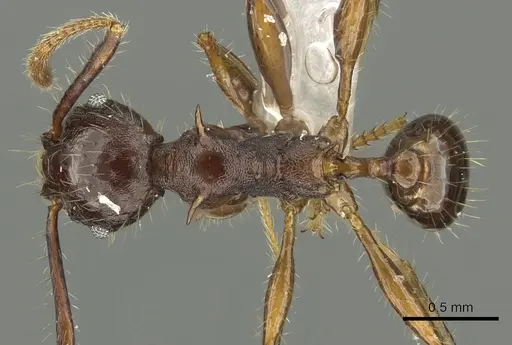
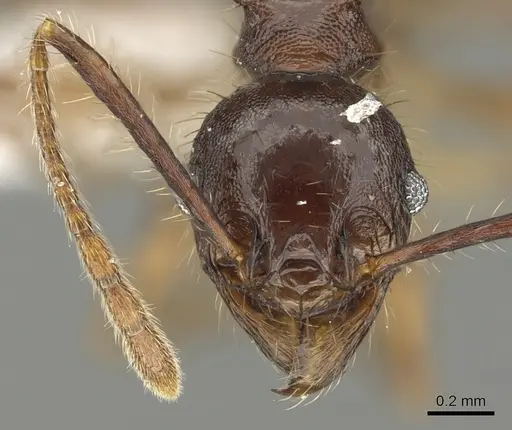
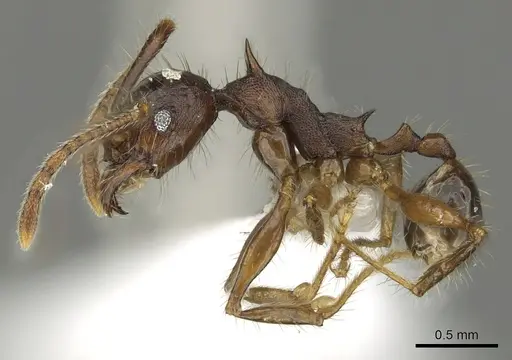
CASENT0901621
View on AntWeb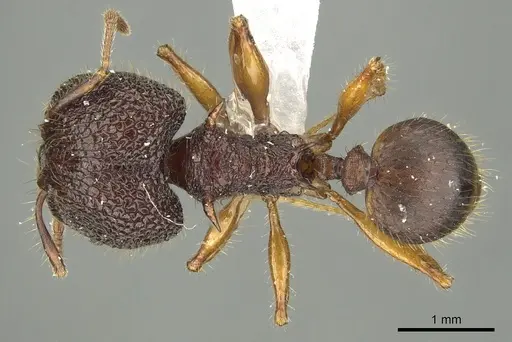
Literature
Loading...Loading products...