

Pheidole spadonia
- Scientific Name
- Pheidole spadonia
- Tribe
- Attini
- Subfamily
- Myrmicinae
- Author
- Wheeler, 1915
- Distribution
- Found in 2 countries
Pheidole spadonia Overview
Pheidole spadonia is an ant species of the genus Pheidole. It is primarily documented in 2 countries , including Mexico, United States of America. Detailed taxonomic data and occurrence records can be further explored via authoritative databases such as AntWeb or the Global Biodiversity Information Facility (GBIF).
Pheidole spadonia
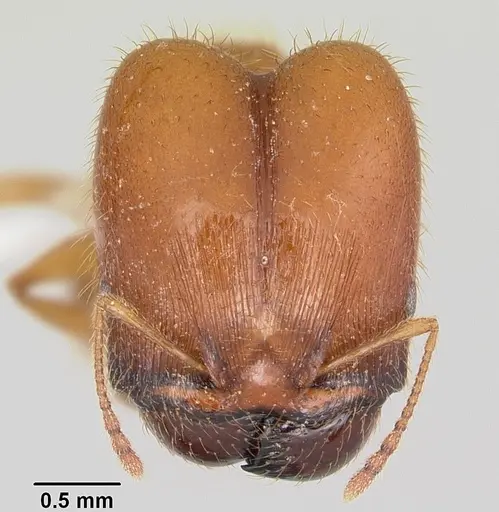
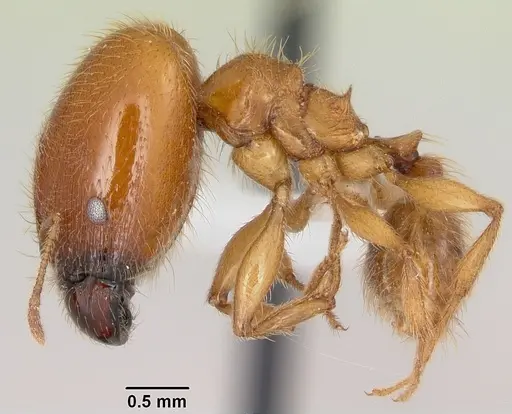
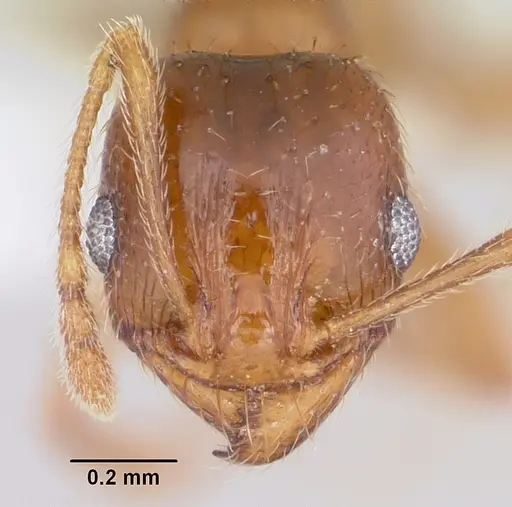
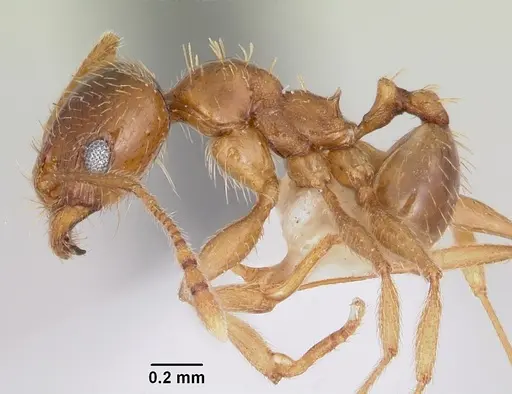
Pheidole spadonia is a dimorphic ant species native to the southwestern United States and northern Mexico, found from southern Arizona into Sonora, Mexico. This small ant gets its common name from the dramatically enlarged heads of its soldier caste. Majors are large (1.3-1.8mm head width) with massive, reddish-orange heads, while minors are tiny (0.5-0.6mm) and yellowish. The species nests in sandy or gravelly soil, often with small crater entrances, and is known for seed harvesting behavior. Colonies are monogyne (single queen) with a clear division of labor: minor workers handle foraging and live prey attack, while soldiers stay in the nest to process dead prey and assist with heavy tasks.
Quick Summary
- Difficulty: Medium
- Origin & Habitat: Southern Arizona into Mexico. Nests in sandy or clayey soil, often in open areas with sparse vegetation. Found at elevations in the Sonoran Desert region. [1][2][3]
- Colony Type: Monogyne (single queen) colonies. Workers are sterile, only the queen reproduces. The colony has two distinct worker castes: minor workers (foragers) and major soldiers (nest defenders and prey processors). [4]
- Colony: Monogyne
- Founding: Claustral
- Size & Growth:
- Queen: Not directly measured in available papers, estimated based on genus patterns at 7-9mm. Signal if estimated.
- Worker: Minor workers: 0.5-0.6mm body length (head width ~0.54mm). Major soldiers: 1.3-1.8mm head width, body proportionally larger. [4][3]
- Colony: Lab colonies average 1,221 ± 270 workers. Wild colonies observed with only 3-4 majors and ~20-30 minors (likely mature colonies were not fully sampled). [4][3]
- Growth: Moderate, soldier production increases for first 7 months after founding, then stabilizes. Nanitic soldiers appear within first few months. [4]
- Development: Estimated 6-8 weeks based on typical Pheidole development at warm temperatures. Direct measurements not available for this species. [inferred] (Development is temperature-dependent, faster at warmer temperatures. Lab colonies were raised at 30°C [4].)
- Antkeeping:
- Temperature: Keep at 26-30°C for optimal growth. This species comes from the warm Sonoran Desert and tolerates higher temperatures well. A heating cable on one side of the nest creates a gradient. [4][inferred]
- Humidity: Moderate humidity, these are desert ants but nest in soil. Keep nest substrate lightly moist, allowing it to partially dry between waterings. Provide a water tube for drinking.
- Diapause: No, this is a warm-climate species from the American Southwest. They do not require hibernation. However, they may reduce activity during extreme heat or drought conditions.
- Nesting: Y-tong (AAC) nests work well for this species. The major soldiers are significantly larger than minors, so ensure chambers are spacious enough. Alternatively, a naturalistic setup with sandy soil allows them to create their own tunnels. They prefer dark nest chambers.
- Behavior: Minor workers are the active foragers, they venture out to collect seeds and hunt small prey. Soldiers (majors) remain inside the nest and specialize in processing dead prey that foragers bring back. This is a notable behavioral division: soldiers do NOT attack live prey, only handle already-killed items. Workers and larvae cooperate during prey digestion, larvae perform extra-intestinal predigestion, then workers process and redistribute the nutrients. This species is not aggressive toward keepers, but majors can deliver a noticeable bite with their powerful jaws (171 mN bite force). Escape risk is moderate, minors are small but not particularly prone to escaping if barriers are in place.
- Common Issues: colonies may appear slow to grow because soldiers take months to reach full size, patience is required, overheating is more dangerous than cold, keep below 32°C, soldiers cannot process live prey, feeding only live insects may result in uneaten prey, small colony size means slower population growth than many common ant species, wild-caught colonies may have parasites that affect survival in captivity
Housing and Nest Setup
Pheidole spadonia does well in Y-tong (acrylic) nests or naturalistic setups with sandy soil. The key requirement is providing appropriately-sized chambers, the major soldiers are substantially larger than minors, so tight spaces that work for other small ants may cramp them. A test tube setup works for founding colonies, but be prepared to move them to a larger formicarium once the colony reaches 50+ workers. These ants prefer dark nest conditions, so cover three sides of any observation nest with dark paper. Escape prevention is important but not extreme, they are not particularly good climbers, but use Fluon on any exposed edges. [4][3]
Feeding and Diet
This species is omnivorous with a preference for protein. In the wild, they harvest seeds and hunt small invertebrates. In captivity, offer a varied diet: protein sources like fruit flies, small crickets, mealworms, or frozen insects 2-3 times per week. They also accept sugar water, honey, or diluted honey as an energy source. Notably, the division of labor means only minor workers handle live prey, soldiers process dead prey inside the nest. If you feed live insects, minors will kill them but may struggle to bring large prey back. Chop prey into smaller pieces to help soldiers process it. Seeds (like millet or sunflower seeds) can be offered occasionally, though they may not be a primary food source in captivity. [4][3]
Temperature and Heating
Pheidole spadonia thrives at warm temperatures, reflecting its Sonoran Desert origin. Keep nest temperatures between 26-30°C, laboratory colonies were successfully raised at 30°C [4]. A small heating cable placed on top of the nest (never underneath, which causes moisture evaporation) creates an ideal gradient. Room temperature (22-24°C) is acceptable but will slow development. Avoid temperatures above 32°C, as overheating is more dangerous than being slightly cool. If your room is naturally warm in summer, no additional heating may be needed.
Caste System and Colony Dynamics
This species has a well-documented dimorphic worker caste system. Minor workers (about 91% of the colony) handle all external tasks: foraging, hunting prey, and caring for brood. Major soldiers (about 9%) stay in the nest and specialize in processing dead prey with their powerful mandibles. The soldiers have an incredible bite force of 171 mN despite being smaller than some related species [4]. Interestingly, soldiers are not involved in processing live prey, only dead or disabled prey. The colony produces nanitic soldiers (smaller than mature soldiers) in the first few months after founding, then soldier size increases over 7 months before stabilizing. Workers are sterile, only the queen lays eggs [4].
Growth and Development
Colony growth is moderate rather than explosive. After founding, expect the first minor workers (nanitics) in 4-6 weeks, followed by the first soldiers a few months later. Soldier size increases progressively over approximately 7 months until reaching their maximum size [4]. The colony will then maintain a roughly stable soldier-to-minor ratio of about 9% soldiers. Unlike some Pheidole species, P. spadonia does not produce supersoldiers naturally, though they retain the ancestral developmental potential to do so if induced with juvenile hormone analogs [5]. Larvae cooperate with workers during prey digestion, late-instar larvae perform extra-intestinal predigestion, then workers process and redistribute nutrients [6][7].
Behavior and Temperament
This is a relatively calm species to keep. Minor workers are active foragers but not particularly aggressive or defensive. Major soldiers have powerful jaws and can deliver a noticeable pinch if handled, but they rarely leave the nest and are not aggressive toward humans. The most interesting behavioral aspect is the strict division of labor: minors do all the outside work, soldiers handle only internal tasks. When you observe your colony, you'll see minors running around the outworld while soldiers remain in the nest chambers. This species does not form supercolonies and is not invasive. They are not known for painful stings, their main defense is the bite from majors. [4][3]
Frequently Asked Questions
How long does it take for Pheidole spadonia to produce first workers?
Expect first workers (nanitics) in 4-6 weeks after the queen lays eggs, assuming temperatures around 28-30°C. Development is faster at warmer temperatures and slower at cooler ones. The first soldiers typically appear 2-3 months after founding.
What do Pheidole spadonia ants eat?
They are omnivorous. Feed protein (small insects like fruit flies, crickets, mealworms) 2-3 times per week, plus sugar sources (honey water, sugar water) constantly. They also occasionally accept seeds. The minor workers do the foraging, soldiers stay in the nest to process dead prey.
Are Pheidole spadonia good for beginners?
They are medium difficulty, not the easiest but not challenging. They require warm temperatures, need a varied diet, and grow more slowly than species like Lasius. The main learning curve is understanding their caste division of labor and not overfeeding live prey that goes uneaten. Their small colony size also requires patience.
How big do Pheidole spadonia colonies get?
Maximum colony size is around 1,200-2,000 workers based on laboratory data. The soldier ratio stays at approximately 9% of the workforce. They are not massive colony producers like some Pheidole species.
What temperature do Pheidole spadonia need?
Keep them warm: 26-30°C is ideal. They come from the Sonoran Desert and tolerate heat well. A small heating cable on the nest helps maintain warmth. Avoid temperatures above 32°C.
Can I keep multiple Pheidole spadonia queens together?
No. This species is monogyne, colonies have a single queen. Multiple unrelated queens will fight. Only one queen per colony.
Do Pheidole spadonia need hibernation?
No. As a warm-climate species from the American Southwest, they do not require hibernation. They may reduce activity during extreme heat or drought conditions, but year-round room temperature (22-24°C) or warmer is appropriate.
Why aren't my soldiers attacking live prey?
This is normal behavior. In P. spadonia, only minor workers handle live prey, they must disable it first. Soldiers only process dead or already-killed prey inside the nest. If you want to feed live insects, minors will kill them but may struggle to bring large prey back. Chop prey into smaller pieces for easier processing.
When should I move my colony to a formicarium?
Move from test tube to a formicarium when the colony reaches 50-100 workers or when the test tube becomes crowded. The major soldiers need more space than typical for their worker count due to their larger size. A Y-tong or naturalistic setup works well.
Why is my colony growing so slowly?
This is normal for P. spadonia. They are moderate growers, not fast like Lasius or tropical ants. Soldier production especially takes time, it takes 7 months for soldiers to reach full size. Ensure temperatures are warm (26-30°C) and diet is varied. Patience is key with this species.
Are Pheidole spadonia invasive anywhere?
No. Their native range is the southwestern US (Arizona) into northern Mexico. They have not been documented as invasive elsewhere. As with all non-native species, never release them outside their native range.
References

This caresheet is licensed under CC BY-SA 4.0 .
CASENT0104752
View on AntWeb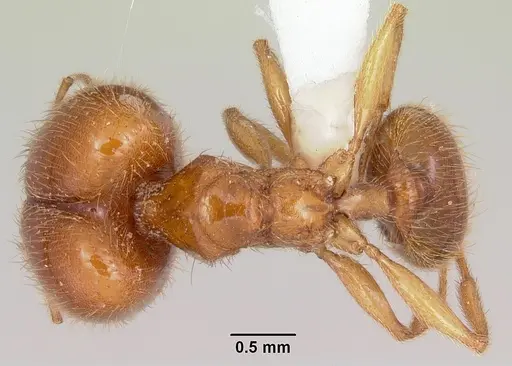
CASENT0104753
View on AntWeb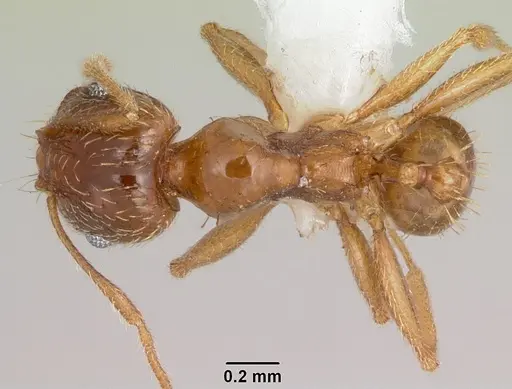
Literature
Loading...Loading products...