

Pheidole sagittaria
- Scientific Name
- Pheidole sagittaria
- Tribe
- Attini
- Subfamily
- Myrmicinae
- Author
- Wilson, 2003
- Distribution
- Found in 2 countries
Pheidole sagittaria Overview
Pheidole sagittaria is an ant species of the genus Pheidole. It is primarily documented in 2 countries , including Costa Rica, Panama. Detailed taxonomic data and occurrence records can be further explored via authoritative databases such as AntWeb or the Global Biodiversity Information Facility (GBIF).
Pheidole sagittaria
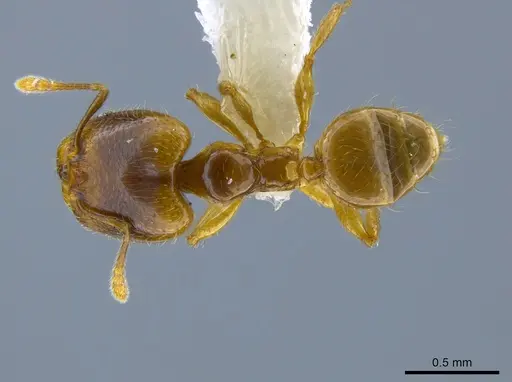
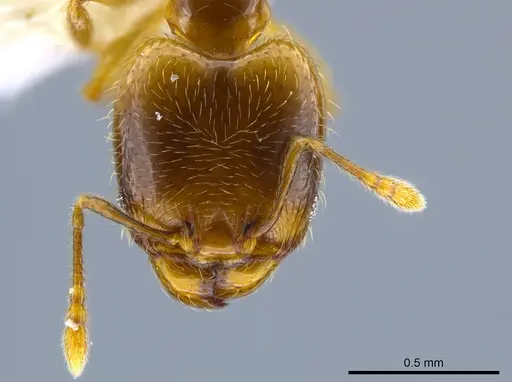
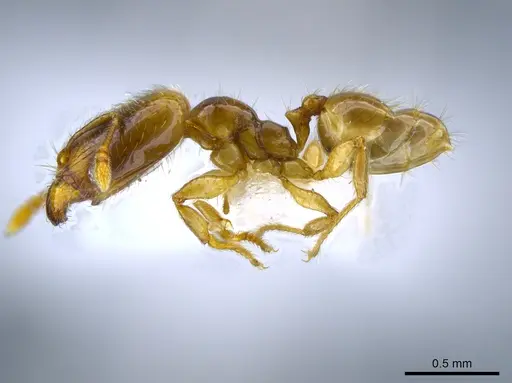
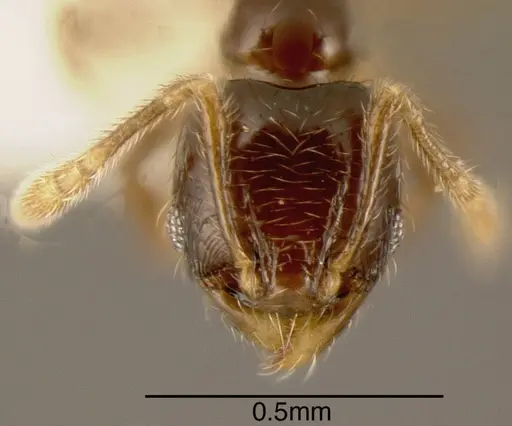
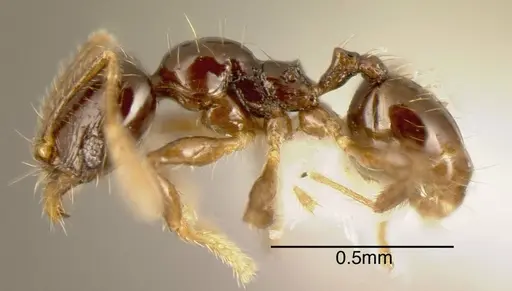
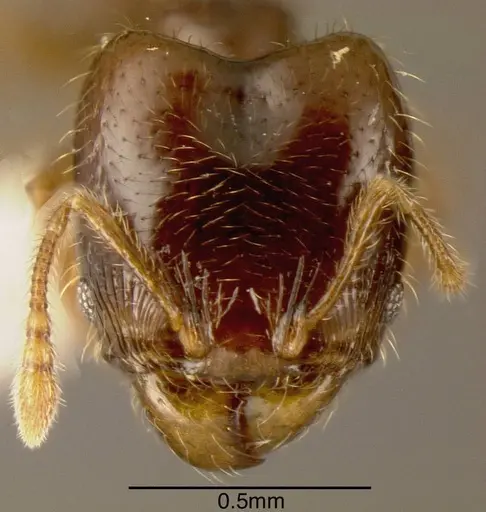
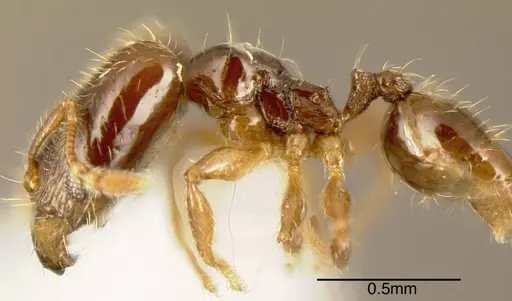
Pheidole sagittaria is a small neotropical ant native to the montane forests of Costa Rica, found at elevations between 500 and 1600 meters [1]. The species was formally described by Wilson in 2003 and gets its name from the Latin word for arrow, referring to the distinctive arrowhead-shaped head of the major workers [1]. Majors are light brown with a strongly flattened, heart-shaped head that makes them look like tiny arrowheads from above, while minors are yellowish brown with notably large oval eyes positioned far forward on their head [1]. This species is a classic Pheidole 'big-headed ant' with the majors having enlarged heads packed with muscles for crushing seeds and defending the colony [1]. In the wild, they nest in rotten wood on the forest floor or under loose bark on dead tree trunks, preferring the damp, shaded environment of mature wet forests [1].
Quick Summary
- Difficulty: Medium
- Origin & Habitat: Costa Rica, primarily in montane regions at 500-1600m elevation in mature wet forests [1].
- Colony Type: Single-queen colonies are typical for this species, following the common Pheidole pattern. Colonies can grow large over time.
- Colony: Monogyne
- Founding: Claustral
- Size & Growth:
- Queen: Approximately 5-6mm (estimated based on genus patterns for similar-sized Pheidole species)
- Worker: Majors: 0.72mm head width [1]. Minors: 0.34mm head width [1].
- Colony: Likely reaches several thousand workers over time based on typical Pheidole colony development patterns.
- Growth: Moderate, typical for neotropical Pheidole species
- Development: Estimated 6-8 weeks at optimal tropical temperatures (25-28°C), based on genus-level data for similar Pheidole species (Development time is inferred from related species, direct observations for this specific species are not available)
- Antkeeping:
- Temperature: Keep at 24-28°C. As a neotropical species from Costa Rica's montane forests, they prefer warm but not extreme heat. A slight temperature gradient allows workers to regulate their conditions [1].
- Humidity: High humidity is essential, these ants come from wet forest habitats. Keep nest substrate consistently moist but not waterlogged. The rotten wood and bark nesting preferences in the wild indicate they need damp conditions [1].
- Diapause: No true hibernation required. As a tropical species from Costa Rica, they do not enter diapause. However, slight temperature reductions during 'winter' months (roughly November-February) may be beneficial to simulate seasonal cooling, dropping to around 20-22°C.
- Nesting: In captivity, they do well in Y-tong (AAC) nests, plaster nests, or naturalistic setups with rotten wood and bark pieces. They prefer tight, humid chambers that mimic their natural rotten wood habitat. Test tube setups work for founding colonies but should be moved to more spacious accommodations as the colony grows [1].
- Behavior: These ants are generally peaceful and not aggressive toward keepers. The majors are specialized for defense and seed crushing, they have powerful mandibles but are not particularly aggressive toward humans. Workers are active foragers that search for seeds and small insects. They are moderate escape artists due to their small size, use standard barrier methods. Minors do the majority of foraging while majors stay near the nest or respond to threats. They are primarily seed-harvesters but will also collect small insects and honeydew.
- Common Issues: high humidity management is critical, too dry and colonies fail, too wet and mold becomes a problem, small minor workers can escape through standard barrier setups, use fine mesh and tight-fitting lids, colonies grow slowly in the first few months during claustral founding, patience is required, wild-caught colonies may contain parasites that can devastate captive colonies, major workers develop slowly, colonies may remain minor-only for extended periods
Nest Preferences and Housing
Pheidole sagittaria naturally nests in rotten wood on the forest floor and under loose bark on dead tree trunks [1]. This tells us they prefer humid, dark spaces with some wood material. In captivity, Y-tong (AAC) nests work very well because they provide tight chambers that hold humidity while allowing you to observe the colony. Plaster nests are another good option, they absorb moisture and create the damp conditions these ants need. For founding colonies, a simple test tube setup with a water reservoir works fine, but watch the humidity carefully. As the colony grows, provide expanding space. A naturalistic setup with pieces of rotting wood or cork bark on moist substrate mimics their natural habitat closely. Avoid dry nests or those with large open spaces, these ants feel safest in tight, enclosed chambers.
Feeding and Diet
Like all Pheidole species, P. sagittaria is a seed-harvesting ant (part of the tribe Attini) but they are opportunistic omnivores. In captivity, offer a varied diet: seeds (millet, chia, flax, or commercial ant seeds) for the majors to crush with their specialized mandibles, small insects like fruit flies, pinhead crickets, or mealworms for protein, and sugar water or honey as an energy source. Feed seeds continuously, they should always be available. Offer protein sources 2-3 times per week. Remove any uneaten prey after 24 hours to prevent mold. The large-eyed minors will do most of the foraging while majors typically stay near the nest entrance or respond to food discoveries. [1]
Temperature and Seasonal Care
As a neotropical species from Costa Rica's montane forests, P. sagittaria prefers temperatures in the range of 24-28°C. They can tolerate slightly cooler conditions down to around 20°C but growth will slow. Avoid temperatures above 32°C as this can stress the colony. Unlike temperate species, they do not require a true hibernation diapause. However, you might consider a slight seasonal temperature reduction during what would be winter months (roughly November through February in the northern hemisphere), dropping to around 20-22°C to simulate natural seasonal variation. This is optional but may help trigger more active breeding when temperatures return to normal. Keep the nest away from direct sunlight and heating vents, consistent, stable temperatures are more important than extremes. [1]
Behavior and Colony Dynamics
Pheidole sagittaria exhibits the classic Pheidole caste system with distinct major and minor workers. The majors (soldiers) have dramatically enlarged heads with powerful mandibles designed for crushing seeds and defending the colony. The minors do most of the day-to-day work, foraging, caring for brood, and maintaining the nest. When you first get a colony, you may see only minors for several months while the colony establishes. Major workers typically appear once the colony reaches several hundred workers. This species is not aggressive toward keepers, majors may display by raising their heads or opening mandibles but rarely bite. They are active foragers that will readily explore outworlds for food. The large eyes of the minor workers (notably large and oval, set far forward on the head) [1] suggest they may be more visually oriented than typical ants.
Colony Founding
Pheidole sagittaria follows the typical claustral founding pattern where the queen seals herself in a small chamber and does not leave to forage. She relies entirely on her stored fat reserves to survive and raise the first brood. This means you can found a colony in a simple test tube setup, just provide a water reservoir and keep it dark and undisturbed. The queen will lay eggs, and after several weeks (typically 4-6 weeks at warm temperatures), the first workers (called nanitics) will emerge. These first workers are usually smaller than normal minors. Once workers emerge, the colony becomes more active and will need access to food. Do not disturb the founding colony during this period, vibrations and light can cause the queen to abandon or eat her brood. Wait until you see workers before offering food. [1]
Frequently Asked Questions
How long does it take for Pheidole sagittaria to produce first workers?
Expect first workers (nanitics) to emerge in about 6-8 weeks at optimal temperatures of 25-28°C. This is based on typical Pheidole development patterns since specific timing for this species hasn't been documented.
What do Pheidole sagittaria ants eat?
They are seed-harvesters but also accept small insects and sugar sources. Offer commercial ant seeds, millet, or chia continuously. Feed small insects like fruit flies or pinhead crickets 2-3 times per week. Provide sugar water or honey as an occasional treat.
Are Pheidole sagittaria good for beginners?
They are intermediate difficulty. The main challenges are maintaining high humidity and preventing escapes due to their small size. If you have experience with at least one other ant species, you should do well with these.
How big do Pheidole sagittaria colonies get?
Mature colonies can reach several thousand workers over several years. The colony grows moderately, expect 1-2 years to reach several hundred workers.
What temperature do Pheidole sagittaria need?
Keep them at 24-28°C. They are from Costa Rica's montane forests and prefer warm, stable conditions. Avoid temperatures below 20°C or above 32°C.
Do Pheidole sagittaria need hibernation?
No, they do not require hibernation. As a neotropical species from Costa Rica, they do not enter winter diapause. You can keep them at room temperature year-round, though a slight seasonal temperature drop in winter is optional.
What type of nest is best for Pheidole sagittaria?
Y-tong (AAC) nests or plaster nests work well. They prefer tight, humid chambers that mimic their natural habitat in rotten wood. Avoid dry or overly spacious nests.
Why are my Pheidole sagittaria dying?
Common causes include: too low humidity (they need consistently damp conditions), temperature stress (too cold or too hot), mold from overwatering, or parasites from wild-caught colonies. Check your humidity levels first, this is the most common killer of neotropical ants in captivity.
Can I keep multiple Pheidole sagittaria queens together?
This species is typically monogyne (single queen). Combining unrelated queens is not recommended as they will likely fight. Only one queen per colony.
When should I move my colony to a formicarium?
Move them when the test tube setup becomes crowded, typically when you see 50+ workers and the water reservoir is running low. Make sure the new setup has pre-established humidity before introducing the colony.
What makes Pheidole sagittaria majors special?
Their heads are strongly flattened dorsoventrally and shaped like an arrowhead when viewed from above, this is how they got the name 'sagittaria' (meaning arrow-related). These specialized heads house powerful muscles for crushing seeds and defending the colony.
References

This caresheet is licensed under CC BY-SA 4.0 .
Literature
Loading...Loading products...