

Pheidole rugofitarata
- Scientific Name
- Pheidole rugofitarata
- Tribe
- Attini
- Subfamily
- Myrmicinae
- Author
- Salata & Fisher, 2020
- Distribution
- Found in 1 countries
Pheidole rugofitarata Overview
Pheidole rugofitarata is an ant species of the genus Pheidole. It is primarily documented in 1 countries , including Madagascar. Detailed taxonomic data and occurrence records can be further explored via authoritative databases such as AntWeb or the Global Biodiversity Information Facility (GBIF).
Pheidole rugofitarata
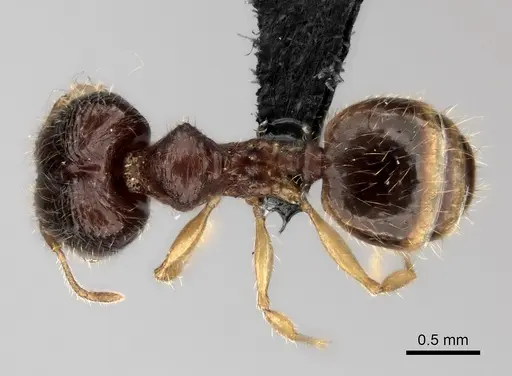
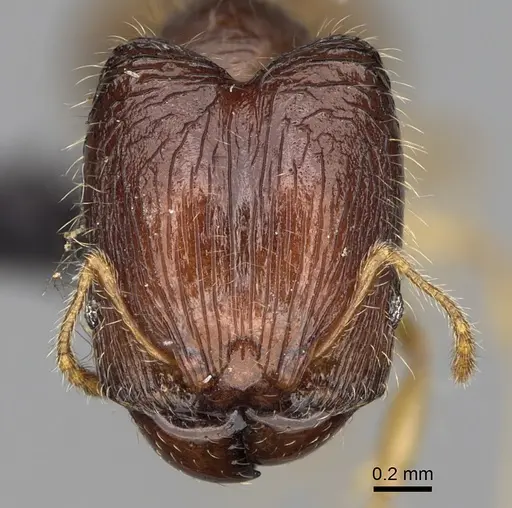
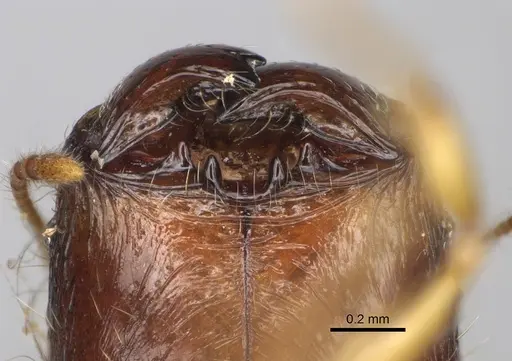
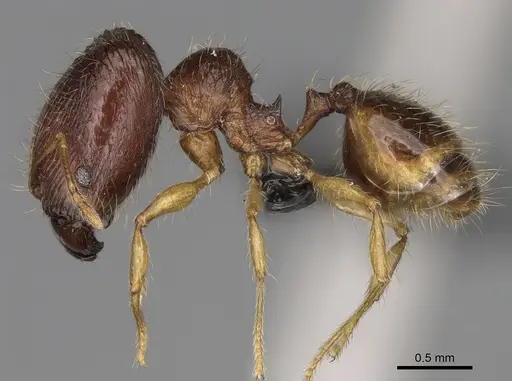
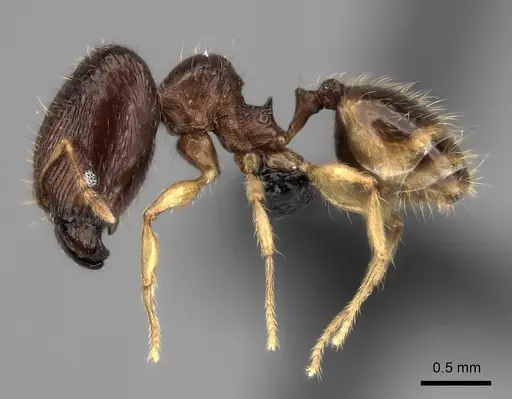
Pheidole rugofitarata is a small ant species native to Madagascar, described in 2020. Major workers measure 1.05-1.17mm in head width with a distinctive elongated head featuring thick longitudinal rugae on the frons and transverse rugae on the occipital lobes. The body coloration ranges from reddish brown to brown. This species belongs to the Pheidole makaensis group and was discovered in the Parc National Tsingy de Bemaraha region at elevations between 10-250 meters. In their natural habitat, these ants nest in rotten logs within rainforest and tropical dry forest environments.
Quick Summary
- Difficulty: Medium
- Origin & Habitat: Madagascar, Parc National Tsingy de Bemaraha region in Mahajanga province. Found in rainforest and tropical dry forest at 10-250m elevation. Nests located in rotten logs [1].
- Colony Type: Colony structure is unconfirmed. Based on typical Pheidole patterns, likely single-queen (monogyne) colonies. Minor workers have not been described.
- Colony: Monogyne
- Founding: Claustral
- Size & Growth:
- Queen: Undescribed, queen measurements not available in original description [1].
- Worker: Major workers: 1.05-1.17mm head width,0.95-1.02mm mesosoma length [1]. Minor workers: unknown.
- Colony: Maximum colony size unconfirmed. Pheidole colonies typically reach several hundred to a few thousand workers.
- Growth: Moderate, based on typical Pheidole development patterns.
- Development: 6-10 weeks estimated based on typical Pheidole genus development at tropical temperatures. (Direct development data not available for this species. Estimates based on related tropical Pheidole species.)
- Antkeeping:
- Temperature: Keep at 24-28°C, these are lowland tropical ants from Madagascar requiring warm conditions. Avoid temperatures below 22°C.
- Humidity: Maintain high humidity around 70-80%. Their natural habitat in rainforest and tropical dry forest is consistently moist. Keep nest substrate damp but not waterlogged.
- Diapause: No, this is a tropical species that does not require hibernation. Maintain warm conditions year-round.
- Nesting: In nature they nest in rotten logs. In captivity, a Y-tong (AAC) nest or plaster nest with moisture chambers works well. Provide damp substrate they can tunnel into. Avoid dry, airy setups.
- Behavior: Typical Pheidole behavior, major workers have enlarged heads for seed milling and defense. They are active foragers, likely accepting protein foods and seeds. Minor workers (when discovered) would handle brood care and routine tasks. Escape prevention is important due to their small size, use fine mesh and tight-fitting barriers.
- Common Issues: limited availability, this is a newly described species rarely available in the antkeeping hobby, minor workers undescribed, making colony identification and care more uncertain, tropical humidity requirements mean mold can be an issue if ventilation is poor, small size requires excellent escape prevention despite being larger than some Pheidole
Housing and Nest Setup
Pheidole rugofitarata requires a moist, humid environment reflecting their natural habitat in rotten logs within Madagascar's rainforest and dry forest. A Y-tong (AAC) nest or plaster formicarium with built-in water chambers works well. Keep the nest substrate consistently damp, these ants need moisture to survive and develop brood properly. The nest should have narrow chambers suitable for their small size. An outworld area allows for foraging and feeding. Use a test tube water reservoir connected to the nest for humidity control. Ensure excellent escape prevention, while not among the smallest ants, they can still slip through small gaps. [1]
Feeding and Diet
Like most Pheidole species, these ants are omnivorous with a preference for protein. Offer small insects like fruit flies, pinhead crickets, or mealworms as primary protein sources. Seeds may be accepted given the major workers' enlarged heads designed for seed milling, try small grass seeds or broken sunflower seeds. Sugar sources like honey water or sugar water should be available, especially for founding colonies and during rapid growth periods. Feed protein 2-3 times per week and keep sugar water constantly available. Remove uneaten food after 24-48 hours to prevent mold.
Temperature and Humidity Management
As a lowland tropical species from Madagascar, Pheidole rugofitarata requires warm and humid conditions. Maintain temperatures between 24-28°C year-round, do not allow temperatures to drop below 22°C. A small heating cable on one side of the nest can create a gentle gradient if room temperature is insufficient. Humidity should stay around 70-80%, this is critical for brood development. Use a water reservoir or moisture chamber connected to the nest to maintain consistent humidity. Avoid placing the setup near air conditioning or heating vents that could cause temperature swings. Since they come from a tropical environment, no hibernation or cooling period is needed. [1]
Colony Development and Growth
This species was only described in 2020,so detailed development data is not available. Based on typical Pheidole patterns, expect 6-10 weeks from egg to first worker (nanitics) at optimal tropical temperatures. The first generation will likely be smaller nanitics, with subsequent generations growing larger as the colony establishes. Pheidole colonies can grow substantial, expect several hundred workers over time. Major workers develop from larger larvae and have the distinctive enlarged heads characteristic of the genus. Be patient during founding, claustral queens seal themselves in and may take several months before the first workers emerge. [1]
Behavior and Observation
Pheidole rugofitarata displays typical Pheidole behavior with distinct major and minor worker castes. Major workers have the characteristic enlarged heads with specialized mandibles for seed processing and colony defense. They are active foragers that will emerge to collect protein foods and seeds. The species shows the notable mesosoma shape mentioned in research, a strongly convex promesonotum that sits well above the propodeum. Watch for major workers to actively engage with larger prey items. Their small size means they may be overlooked by beginners, but their interesting head sculpture and behavior make them rewarding to observe. [1]
Frequently Asked Questions
How long does it take for Pheidole rugofitarata to produce first workers?
Based on typical Pheidole development, expect 6-10 weeks from egg to first worker at optimal temperatures of 24-28°C. The exact timeline for this specific species has not been documented, so these are estimates based on related species.
What do Pheidole rugofitarata ants eat?
They accept small insects like fruit flies, pinhead crickets, and mealworms as protein sources. Major workers may also process small seeds. Offer sugar water or honey regularly. Feed protein 2-3 times per week with constant sugar access.
Do Pheidole rugofitarata ants need hibernation?
No, this is a tropical species from Madagascar and does not require hibernation. Keep them warm year-round at 24-28°C. Temperature drops below 22°C can stress the colony and slow development.
What temperature and humidity do they need?
Keep temperatures at 24-28°C with humidity around 70-80%. Their natural habitat in Madagascar's rainforest and dry forest is warm and moist. Use a water reservoir to maintain humidity.
Are Pheidole rugofitarata good for beginners?
This species is rated as medium difficulty. While Pheidole in general are manageable, this newly described species has limited availability and some care details are estimated from genus patterns rather than direct observation. Experienced antkeepers will have better success.
How big do Pheidole rugofitarata colonies get?
Maximum colony size is not documented for this species, but Pheidole colonies typically reach several hundred to a few thousand workers. Expect moderate growth over 1-3 years to a substantial colony.
What type of nest should I use for Pheidole rugofitarata?
A Y-tong (AAC) nest or plaster formicarium with moisture chambers works well. They naturally nest in rotten logs, so provide damp substrate they can tunnel into. Avoid dry setups.
Can I keep multiple queens together?
Colony structure is unconfirmed for this species. Based on typical Pheidole patterns, single-queen colonies are most common. Combining unrelated queens is not recommended without documented evidence of pleometrosis in this species.
Where is Pheidole rugofitarata found in the wild?
This species is endemic to Madagascar, specifically found in the Parc National Tsingy de Bemaraha region in Mahajanga province. They live in rotten logs at elevations of 10-250 meters in rainforest and tropical dry forest.
References

This caresheet is licensed under CC BY-SA 4.0 .
CASENT0078206
View on AntWeb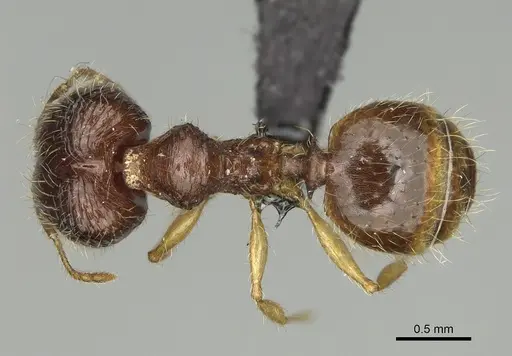
Literature
Loading...Loading products...