

Pheidole roberti
- Scientific Name
- Pheidole roberti
- Tribe
- Attini
- Subfamily
- Myrmicinae
- Author
- Forel, 1902
- Distribution
- Found in 2 countries
Pheidole roberti Overview
Pheidole roberti is an ant species of the genus Pheidole. It is primarily documented in 2 countries , including China, India. Detailed taxonomic data and occurrence records can be further explored via authoritative databases such as AntWeb or the Global Biodiversity Information Facility (GBIF).
Pheidole roberti
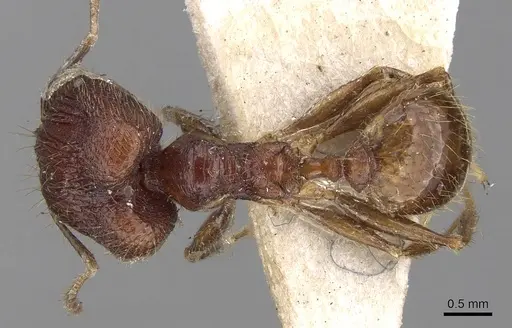
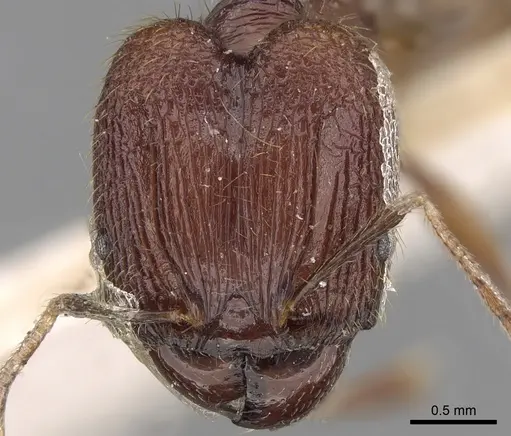
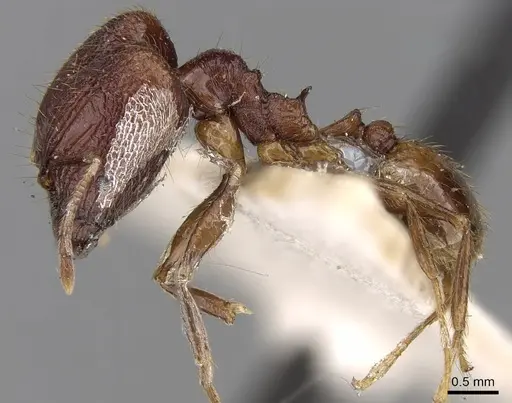
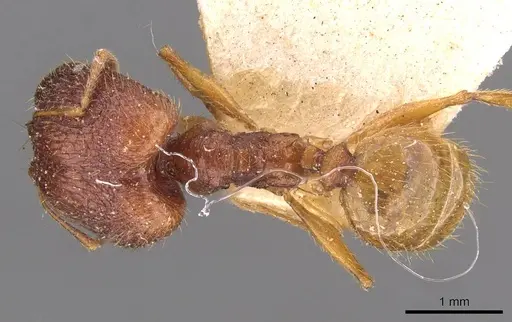
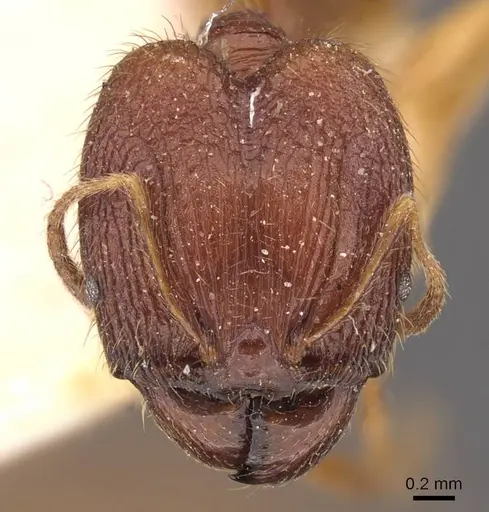
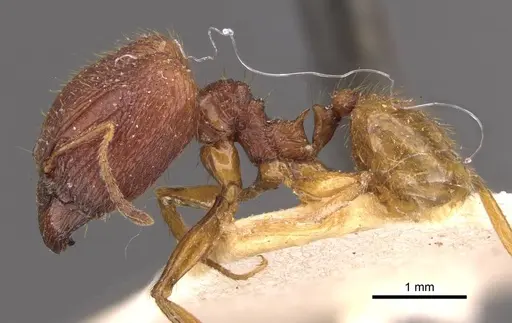
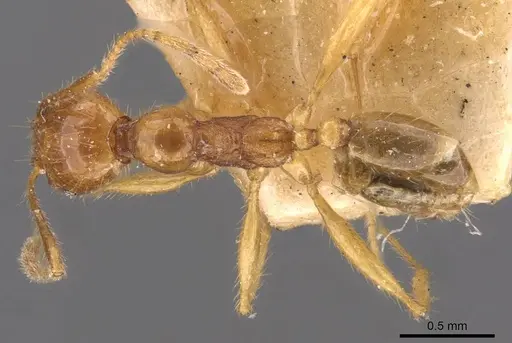
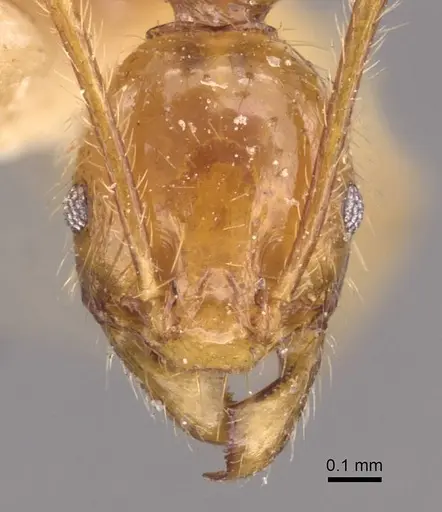
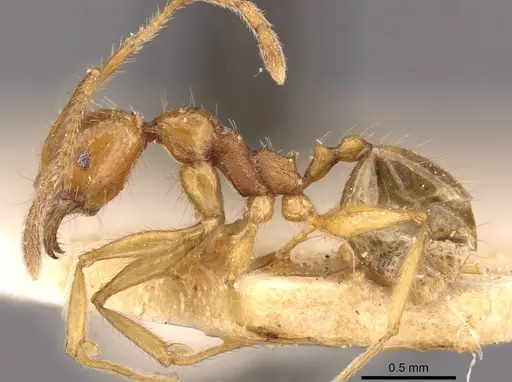
Pheidole roberti is a small but distinctive ant species known for its dramatic size difference between workers and soldiers (majors). The soldiers measure 4.5-5mm and have a bright light red coloration with brown antennae, legs, and abdomen. Their heads are longer than broad with fine striations that break into reticulation toward the back. This species belongs to the Myrmicinae subfamily and is famous for having two worker castes: small minor workers and large major workers (soldiers) that specialize in seed crushing and defense [1].
This ant is one of the most abundant species across its range in the Indian subcontinent and southern China. Studies in Meghalaya, India found P. roberti comprised up to 66% of all ant specimens collected in autumn, making it a dominant species in its ecosystem [2]. They nest in the ground and are commonly found in areas of natural vegetation at elevations around 1400-1500 meters [3][2]. Their most fascinating behavior is their food-carrying strategy, they can lift objects 50 times their own body weight and have developed four distinct methods for transporting food: lifting, pulling, pushing, and coordinated group transport [4].
Quick Summary
- Difficulty: Easy
- Origin & Habitat: Native to the Indomalaya and Palaearctic regions, found across India (Gujarat, Karnataka, Kerala, Maharashtra, Meghalaya, Sikkim, Tamil Nadu, West Bengal), Pakistan (Gilgit-Baltistan), and southern China (Yunnan). They live in ground nests in natural vegetation areas at elevations of 1400-1500 meters [5][6][7][2].
- Colony Type: Single-queen colonies (monogyne) with two worker castes, minor workers and major soldiers. The presence of ergatoid replacement reproductives has not been documented for this species.
- Colony: Monogyne
- Founding: Claustral
- Size & Growth:
- Queen: Estimated 7-9mm based on genus patterns (Pheidole queens typically 7-10mm)
- Worker: Minor workers: 2-3mm, Major soldiers: 4.5-5mm [1]
- Colony: Likely several hundred workers based on typical Pheidole colony sizes
- Growth: Moderate, typical for Pheidole genus
- Development: Estimated 6-8 weeks at optimal temperature based on genus patterns (Pheidole species typically develop from egg to worker in 6-8 weeks. First workers (nanitics) are smaller than normal workers.)
- Antkeeping:
- Temperature: Keep at 22-26°C. This species is found in subtropical highland regions (1400-1500m elevation) so they prefer moderate temperatures rather than extreme heat. Room temperature within this range works well [2].
- Humidity: Moderate humidity around 50-70%. They are ground-nesting ants from areas with natural vegetation, so keep the nest substrate moderately moist but allow some drying between waterings. Avoid waterlogging.
- Diapause: Yes, based on seasonal activity patterns showing reduced abundance in winter months (down to 15% of specimens vs 66% in autumn), they likely require a winter rest period at cooler temperatures (15-18°C) for 2-3 months [2].
- Nesting: Ground-nesting species. In captivity, they do well in Y-tong nests, plaster nests, or naturalistic setups with soil substrate. Provide a nest chamber scaled to colony size with connecting outworld access. Because they have major soldiers, ensure passages are wide enough for the 4.5-5mm soldiers to move through.
- Behavior: Pheidole roberti has a fascinating foraging system. Unlike many ants that use recruitment, foragers operate individually, the first ant to find food does not inform nestmates but simply carries the food back alone. Other ants discover food through chance encounters [8]. They use four food-carrying strategies depending on particle size: lifting (48%), pulling (48%), and group transport (3%). Heavier items require more ants working together [4]. They are not aggressive toward keepers but majors will defend the colony. Escape risk is moderate, minor workers are small (2-3mm) so ensure your barrier is fine-meshed.
- Common Issues: colonies may decline in winter if not given proper cool period, they show sharp population drop in winter in the wild [2], minor workers are small enough to escape through standard barriers, use fine mesh and tight-fitting lids, overheating can be fatal, avoid temperatures above 30°C despite being from a warm region, founding colonies are slow to establish, patience is needed during the claustral period, major soldiers may get stuck in narrow passages, ensure nest passages are at least 5mm wide
Housing and Nest Setup
Pheidole roberti is a ground-nesting species that does well in several captive setups. Y-tong (acrylic) nests work excellently because you can control humidity precisely and watch the colony develop. Plaster nests are another good option, they hold moisture well and provide the dark, secure environment these ants prefer. For a naturalistic setup, use a soil-filled container with a layer of gravel at the bottom for drainage.
The nest chamber should be appropriately sized for your colony. For a founding queen, a small test tube setup works fine. As the colony grows (to 50+ workers), upgrade to a proper nest. Because they have major soldiers that are 4.5-5mm, ensure all passages and chambers are at least 5mm wide, majors cannot navigate narrow tunnels designed for tiny ants.
The outworld should connect to the nest via a short foraging tube. Provide a water tube and feeding area in the outworld. These ants are moderate climbers but are not extreme escape artists, standard barrier methods work well, though fine mesh is recommended given the small size of minor workers. [1]
Feeding and Diet
In the wild, P. roberti shows remarkable flexibility in food handling. Studies observed them transporting sugar cubes, biscuit fragments, seeds, insects, and even fish fragments [4]. They can lift objects 50 times their body weight and carry items 5 times heavier than themselves, this makes them capable of handling surprisingly large food items.
For captive colonies, offer a varied diet. Protein sources include small insects (fruit flies, small crickets, mealworms), while carbohydrates can come from sugar water, honey, or pure sugar cubes. They will readily accept seeds, the major soldiers are specialized for seed-crushing with their large heads. Offer seeds like sesame, millet, or chia as enrichment.
Foraging behavior is individual rather than collective, the first ant to find food does not recruit others through tandem running or pheromone trails. Instead, subsequent foragers discover food through chance encounters [8]. This means you may see just one or two ants at a food item initially, with numbers increasing as more workers happen upon it. Feed every 2-3 days and remove uneaten protein after 24 hours.
Temperature and Seasonal Care
Keep your colony at 22-26°C. This species originates from high-elevation areas (1400-1500m) in the Himalayan region, so they prefer moderate temperatures rather than extreme heat. Room temperature in this range is ideal, avoid placing the nest near heating elements that might push temperatures above 30°C.
Seasonal changes matter for this species. Field studies show P. roberti is most abundant in autumn (66% of specimens) and spring (58%), with a sharp decline in winter to just 15% [2]. This indicates they need a winter rest period. In captivity, provide 2-3 months of cooler temperatures around 15-18°C during winter. Reduce feeding during this period and minimize disturbance. This diapause helps maintain natural colony cycles and promotes healthy development.
During active season (spring through autumn), maintain stable temperatures within the 22-26°C range. Avoid temperature fluctuations and drafts.
Colony Development and Castes
One of the most interesting aspects of Pheidole roberti is their caste system. Each colony contains two worker types: minor workers (2-3mm) and major soldiers (4.5-5mm). The majors develop from the same larval food as minors but receive more resources during development, resulting in their dramatically larger heads.
Major soldiers specialize in two tasks: seed crushing (thanks to their powerful mandibles) and colony defense. When threatened, they will block nest entrances and attack intruders. In feeding observations, majors were the ones handling larger food particles while minors focused on smaller items [4].
Colony growth follows typical Pheidole patterns. A founding queen will lay eggs and raise the first brood alone (claustral founding). These first workers (nanitics) are smaller than normal workers. As the colony grows, majors begin appearing, typically once the colony reaches 50-100 workers. A mature colony may have several hundred workers with a significant proportion being majors.
Behavior and Observation
Watching P. roberti reveals fascinating behaviors. Their food-carrying strategies are particularly entertaining, they use lifting (holding food overhead), pulling (dragging with ground contact), pushing, and group coordination. The strategy depends on food size: small items are lifted individually, while larger items require pulling or multiple ants [4].
Their foraging is individual rather than collective. When a forager discovers food, it does not recruit nestmates through pheromone trails. Instead, it carries what it can and leaves the rest. Other foragers find the food by chance, which explains why you might see food sit untouched for a while before being 'discovered' [8].
These ants are not particularly aggressive but will defend vigorously if their nest is threatened. The major soldiers will emerge to confront perceived threats. They are diurnal and actively forage during daylight hours. Minor workers are constantly moving through the outworld while majors tend to stay near the nest entrance.
Frequently Asked Questions
How long does it take for Pheidole roberti to raise first workers?
Expect first workers (nanitics) in 6-8 weeks after the queen lays eggs. This is typical for Pheidole species at room temperature (22-26°C). The founding queen seals herself in and raises the first brood alone using stored fat reserves.
What do Pheidole roberti eat?
They accept a varied diet including protein (small insects like fruit flies, crickets, mealworms), carbohydrates (sugar water, honey, sugar cubes), and seeds. The major soldiers are specialized for crushing seeds with their large mandibles.
Can I keep multiple Pheidole roberti queens together?
No. This species is monogyne, colonies have a single queen. Combining unrelated queens typically results in fighting. Only keep one queen per colony.
Do Pheidole roberti need hibernation?
Yes. Based on seasonal activity data showing sharp population decline in winter, they require a 2-3 month cool period around 15-18°C. Reduce feeding and avoid disturbing the colony during this diapause.
What size colony do Pheidole roberti reach?
Based on typical Pheidole patterns, established colonies likely reach several hundred workers. They are a common and abundant species in the wild, indicating healthy reproductive capacity.
Are Pheidole roberti good for beginners?
Yes. They are considered easy to keep, moderate temperature needs, straightforward diet, and hardy colonies. The main challenges are providing proper winter diapause and ensuring escape prevention for the small minor workers.
When should I move my colony to a formicarium?
Move from test tube to a proper nest once the colony reaches 30-50 workers. Ensure the new nest has passages wide enough (5mm+) for the major soldiers to navigate. Y-tong or plaster nests work well.
Why is my Pheidole roberti colony declining?
Common causes include: lack of proper winter diapause (they need 2-3 months cool), temperatures above 30°C (avoid overheating), poor escape prevention (minor workers are tiny), or insufficient protein in diet. Check these factors and adjust accordingly.
References

This caresheet is licensed under CC BY-SA 4.0 .
Literature
Loading...Loading products...