

Pheidole rectispina
- Scientific Name
- Pheidole rectispina
- Tribe
- Attini
- Subfamily
- Myrmicinae
- Author
- Wilson, 2003
- Distribution
- Found in 5 countries
Pheidole rectispina Overview
Pheidole rectispina is an ant species of the genus Pheidole. It is primarily documented in 5 countries , including Costa Rica, Guatemala, Honduras. Detailed taxonomic data and occurrence records can be further explored via authoritative databases such as AntWeb or the Global Biodiversity Information Facility (GBIF).
Pheidole rectispina
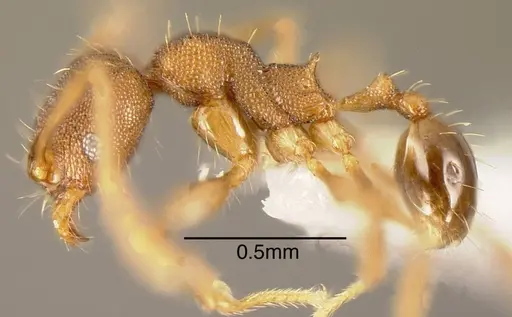
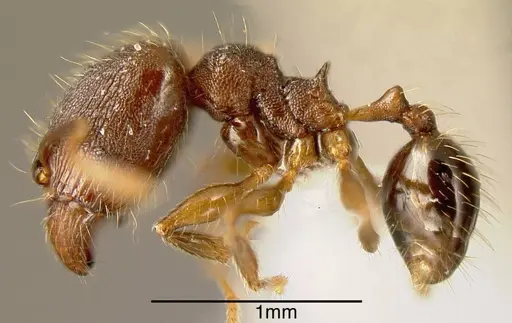
Pheidole rectispina is a dimorphic ant species native to the Neotropical region, found in Costa Rica, Belize, Guatemala, Honduras, and Mexico. As with all Pheidole species, they have two distinct worker castes: large major workers with notably enlarged heads for seed-crushing and defense, and smaller minor workers that handle most day-to-day tasks. Majors measure around 1mm head width and are dark blackish-brown, while minors are smaller at 0.44mm head width with medium brown bodies and yellowish-brown legs [1][2]. These ants inhabit the floor of primary rainforest, from lowland areas up to montane forest [3].
This species was formally described by E.O. Wilson in 2003 and is part of a genus known for its seed-harvesting habits and complex social structures. While not as widely studied as some other Pheidole species, their natural history follows the typical patterns of Central American rainforest floor ants.
Quick Summary
- Difficulty: Medium
- Origin & Habitat: Primary rainforest floor in the Neotropical region, Costa Rica through Mexico, from lowlands to montane forest elevations [3].
- Colony Type: Colony structure is unconfirmed for this specific species. Most Pheidole species are monogyne (single queen), though some can be polygyne. The genus typically shows dimorphic worker castes with major and minor workers [1].
- Founding: Claustral
- Size & Growth:
- Queen: Unknown for this species, Pheidole queens are typically 6-10mm
- Worker: Major workers: HW 1.00mm. Minor workers: HW 0.44mm [1].
- Colony: Unknown for this species, typical Pheidole colonies reach hundreds to low thousands of workers
- Growth: Moderate, inferred from genus patterns
- Development: 6-10 weeks, estimated based on typical Pheidole development at tropical temperatures (Development time is estimated from genus-level data, as no species-specific studies exist. Tropical rainforest species typically develop faster than temperate species.)
- Antkeeping:
- Temperature: Keep at 24-28°C, mimicking warm rainforest conditions. A slight gradient allows workers to regulate their temperature. Room temperature in most homes should work if kept in a warm room, otherwise use a heating cable on one side of the nest.
- Humidity: Rainforest floor species need moderate to high humidity. Keep the nest substrate consistently moist but not waterlogged. Provide a water source and mist occasionally. Think damp forest floor conditions.
- Diapause: No, as a tropical species from low elevations, they do not require hibernation. They remain active year-round in captivity.
- Nesting: In nature they nest in soil on the rainforest floor. In captivity, a test tube setup works well for founding colonies. Once established, a Y-tong (AAC) nest or naturalistic setup with moist substrate mimics their natural environment. They prefer enclosed, humid spaces.
- Behavior: Pheidole ants are generally non-aggressive but will defend their nest vigorously. Major workers use their large heads to block nest entrances and crush seeds. They are primarily seed-harvesters but also collect insect prey and honeydew. Workers forage on the ground surface. Their small size (especially minors at ~2mm) means escape prevention is important, use fine mesh and tight-fitting barriers.
- Common Issues: high humidity needs can lead to mold if ventilation is poor, balance moisture with airflow, small minor workers can escape through standard test tube barriers, use fine mesh, tropical species may struggle in air-conditioned rooms with temperature swings, slow founding phase, new keepers may overcheck the queen and disturb the nest, wild-caught colonies may contain parasites that can devastate captive colonies
Housing and Setup
For founding colonies, a standard test tube setup works well. Fill the tube about one-third with water, plug the open end with cotton, and place the queen in the tube. The cotton provides moisture while the queen seals herself in a chamber at the dry end. Keep the tube in a dark, quiet location at 24-28°C and do not disturb for 4-6 weeks until the first workers emerge. Once the colony reaches 20-30 workers, you can consider moving them to a formicarium. A Y-tong (AAC) nest with moist substrate mimics their natural rainforest floor habitat well. Alternatively, a naturalistic setup with a soil-filled container allows them to create their own tunnels. Whatever setup you choose, ensure escape prevention is excellent, these are tiny ants that can squeeze through surprisingly small gaps.
Feeding and Diet
Pheidole ants are primarily seed-harvesters and granivores. In captivity, offer a variety of seeds, millet, sesame, and small bird seed are readily accepted. They also need protein sources: small insects like fruit flies, pinhead crickets, and mealworms work well. Offer protein once or twice weekly. Sugar sources are also important, a drop of sugar water or honey every few days provides energy. Remove uneaten food within 24-48 hours to prevent mold. Fresh water should always be available. The major workers will use their enlarged heads to crack open seeds, so offering some larger seeds gives them natural enrichment.
Temperature and Humidity
As a tropical rainforest species from Central America, Pheidole rectispina needs warm, humid conditions. Keep the nest area at 24-28°C, this is warmer than most home rooms, so you may need a small heating cable or heat mat on one side of the nest to create a gradient. Humidity should be moderate to high, around 60-80%. The nest substrate should feel consistently moist but never waterlogged. You can achieve this by keeping the water reservoir in test tube setups full, or by misting the formicarium occasionally. Avoid placing the nest near air conditioning vents or drafty windows, as temperature swings can stress the colony.
Growth and Development
The colony starts with the queen sealing herself in a chamber, laying eggs, and raising the first brood alone on her stored fat reserves. After approximately 6-10 weeks (timing depends on temperature), the first workers called nanitics emerge. These are typically smaller than normal workers but can already handle foraging and brood care. The colony grows slowly at first, expect several months to reach 50 workers. Once the colony hits around 100 workers, growth typically accelerates. Pheidole colonies can eventually reach several hundred to over a thousand workers. The presence of major workers (with their distinctive large heads) usually appears when the colony reaches several hundred workers. Be patient during the founding phase, disturbing the queen too often is a common cause of colony failure.
Behavior and Colony Structure
Pheidole rectispina has dimorphic workers, minor workers handle most tasks including foraging, brood care, and nest maintenance, while major workers specialize in seed-crushing, defense, and nest entrance guarding. The majors use their enlarged heads to block the nest entrance, acting as living doors. This species is not particularly aggressive toward keepers but will vigorously defend the nest if threatened. Workers forage individually on the ground surface, collecting seeds, small insects, and honeydew. They do not sting, though their bite is negligible due to their small size. The colony is centered around a single queen (most likely, based on genus patterns), with workers living for several months to a year.
Frequently Asked Questions
How long does it take for Pheidole rectispina to have first workers?
Expect 6-10 weeks from egg to first worker at optimal temperatures of 24-28°C. This is typical for Pheidole species in warm conditions. The queen will remain sealed in her chamber until the first nanitics emerge.
What do Pheidole rectispina ants eat?
They are seed-harvesters, so offer various small seeds like millet, sesame, and bird seed. They also need protein from small insects (fruit flies, pinhead crickets, mealworms) offered weekly, plus sugar sources (honey or sugar water) for energy.
Can I keep multiple Pheidole rectispina queens together?
Not recommended. While some Pheidole species can be polygyne, this is not confirmed for P. rectispina, and combining unrelated queens typically leads to fighting. Start with a single queen for best results.
Do Pheidole rectispina ants need hibernation?
No. As a tropical species from Central American rainforests, they do not require hibernation. Keep them warm year-round at 24-28°C.
Are Pheidole rectispina ants good for beginners?
They are rated Medium difficulty. The main challenges are their need for warm, humid conditions and their small size requiring good escape prevention. If you can maintain stable warmth and humidity, they are a rewarding species.
How big do Pheidole rectispina colonies get?
Colony size is not specifically documented, but based on typical Pheidole patterns, expect several hundred to possibly over a thousand workers at maturity. Major workers typically appear once the colony reaches several hundred workers.
When should I move Pheidole rectispina to a formicarium?
Wait until the colony has 20-30 workers and the test tube is becoming crowded. Moving too early can stress the colony. A Y-tong nest or naturalistic setup with moist soil works well for this species.
What temperature is best for Pheidole rectispina?
Keep them at 24-28°C. This mimics their natural rainforest floor habitat. A heating cable on one side of the nest creates a gradient that allows workers to regulate their temperature.
Why are my Pheidole rectispina workers dying?
Common causes include: temperature stress (too cold or too hot), low humidity drying out the nest, mold from excessive moisture, disturbance during founding, or parasites from wild-caught colonies. Check that conditions match their warm, humid requirements.
What makes Pheidole rectispina different from other ants?
Their dimorphic worker castes are their most distinctive feature, major workers have dramatically enlarged heads for seed-crushing and defense. They also inhabit rainforest floors rather than the more common dry or open habitats.
References

This caresheet is licensed under CC BY-SA 4.0 .
CASENT0635516
View on AntWeb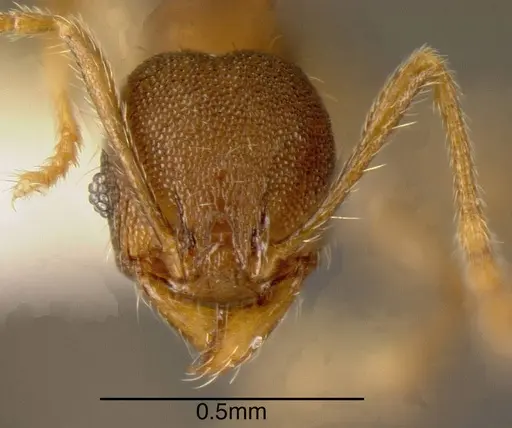
INBIOCRI001242943
View on AntWeb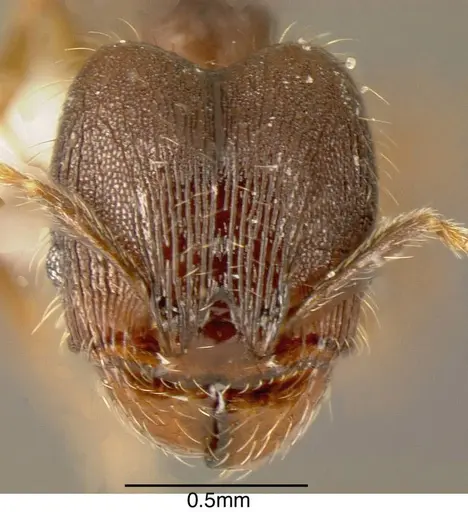
Literature
Loading...Loading products...