

Pheidole recondita
- Scientific Name
- Pheidole recondita
- Tribe
- Attini
- Subfamily
- Myrmicinae
- Author
- Clouse, 2007
- Distribution
- Found in 1 countries
Pheidole recondita Overview
Pheidole recondita is an ant species of the genus Pheidole. It is primarily documented in 1 countries , including Palau. Detailed taxonomic data and occurrence records can be further explored via authoritative databases such as AntWeb or the Global Biodiversity Information Facility (GBIF).
Pheidole recondita
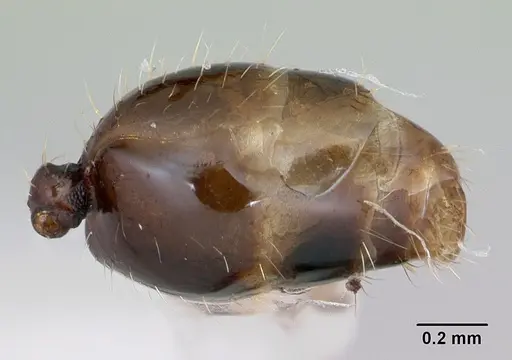
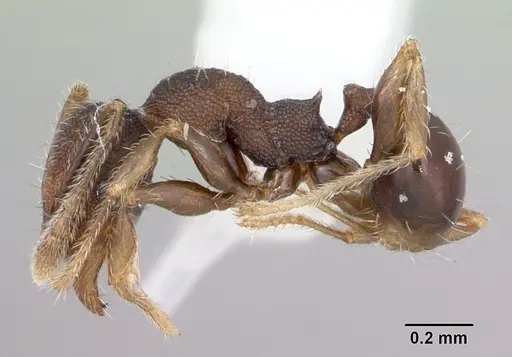
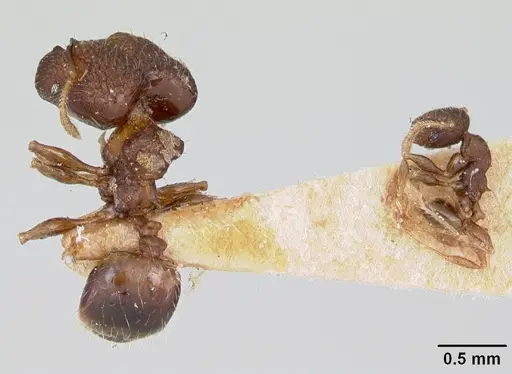
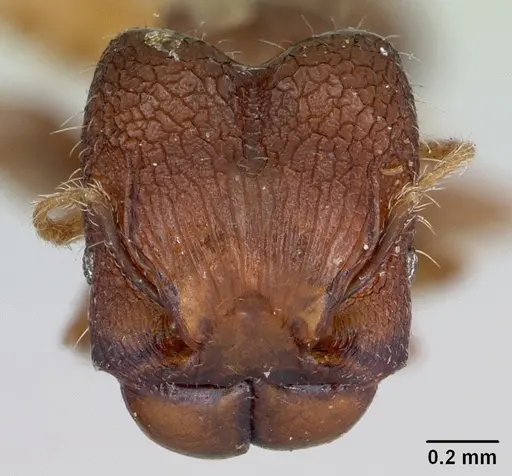
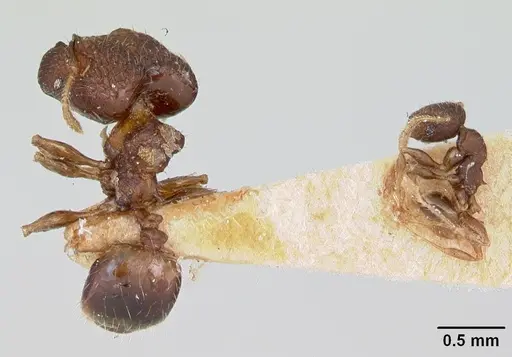
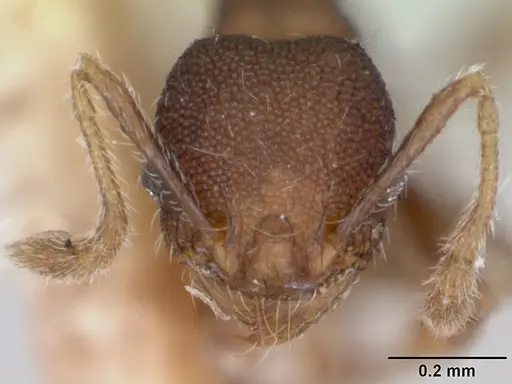
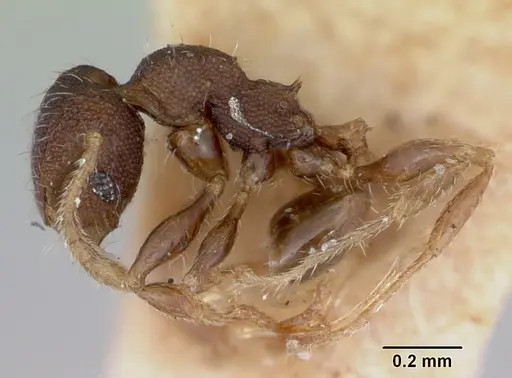
Pheidole recondita is an exceptionally tiny ant species native to Micronesia, where it's found on islands including Guam, Rota, Pohnpei, and Kosrae [1]. Majors measure just 2.3-2.8mm while minors are a mere 1.0-1.2mm, making them among the smallest Pheidole species in the region [1]. The species gets its name from the Latin word 'recondita' meaning mysterious, reflecting how uncommon and poorly understood this ant remains [1]. Their coloration is distinctive, the entire body appears blackish orange to ashy brown, darker than related species, with orange highlights on the legs, antennae, and mandibles [2]. This species is one of only three extremely small, punctured Pheidole in Micronesia and Melanesia, and it's unique among Micronesian endemics for being found on multiple islands [1].
In the wild, these ants live in mid- to high-elevation forests, typically found nesting under moss on trees or in leaf litter [2]. Their tiny size and preference for humid, shaded microhabitats make them a challenging but rewarding species for experienced antkeepers who can provide the specific conditions they need.
Quick Summary
- Difficulty: Expert
- Origin & Habitat: Micronesian islands including Guam, Rota, Pohnpei, and Kosrae. Found in mid- to high-elevation forest, typically under moss on trees or in leaf litter [1][2].
- Colony Type: Likely single-queen colonies (monogyne), which is typical for most Pheidole species. Colony structure has not been directly documented in scientific literature.
- Colony: Monogyne
- Founding: Claustral
- Size & Growth:
- Queen: Unknown, queen caste has not been described in the original species description [1].
- Worker: Majors: 2.3-2.8mm, Minors: 1.0-1.2mm [1].
- Colony: Unknown, no colony size data available. Likely smaller colonies given the tiny worker size.
- Growth: Unknown, no development timing data exists for this species.
- Development: Unconfirmed, no direct development data exists. Based on typical small tropical Pheidole, estimate 4-8 weeks at optimal temperature. (Development timeline is unconfirmed. Related small tropical Pheidole species typically develop faster than larger temperate species.)
- Antkeeping:
- Temperature: Keep warm at 24-28°C. This species comes from tropical Micronesian islands where temperatures are consistently warm year-round. A gentle heat gradient allows ants to regulate their temperature.
- Humidity: High humidity is essential, aim for 70-80%. Their natural habitat is mossy forest floor and tree surfaces in humid tropical conditions. Keep the nest substrate consistently moist but not waterlogged.
- Diapause: No diapause required, this is a tropical species from consistent year-round warm conditions. Maintain stable temperatures year-round.
- Nesting: This species prefers humid setups. Because they're tiny and found under moss on trees in the wild, they do well in naturalistic setups with moisture-retaining materials like soil or plaster. Y-tong (AAC) nests with small chambers also work if humidity is maintained. Avoid dry setups.
- Behavior: Pheidole recondita is a timid, small ant species. As with most tiny Pheidole, majors (soldier ants) use their heads to block nest entrances rather than actively attacking. They are not aggressive and pose no threat to keepers. Their tiny size means escape prevention must be excellent, they can squeeze through remarkably small gaps. Foraging behavior is typical of Pheidole, they collect seeds, tend aphids for honeydew, and hunt small insects.
- Common Issues: escape prevention is critical, at just 1-2.8mm, they can squeeze through gaps that seem impossible, humidity control is challenging, too dry and colonies desiccate, too wet and mold becomes a problem, tiny size makes feeding difficult, prey items must be appropriately sized (fruit flies, pinhead crickets, or other very small insects), slow colony growth due to small colony size means keepers may lose patience and overfeed, causing pest problems, wild-caught colonies may have parasites or diseases that are difficult to treat in captivity
Housing and Nest Setup
Because of their tiny size and preference for humid, mossy environments, Pheidole recondita requires careful housing choices. A naturalistic setup with a soil-filled container works well, use a moisture-retaining substrate that stays damp but doesn't become waterlogged. The setup should mimic their natural habitat of mossy forest floor and tree surfaces. A Y-tong (AAC) formicarium with small chambers can also work, but you'll need to maintain high humidity carefully. Regardless of nest type, ensure excellent escape prevention, these tiny ants can escape through remarkably small gaps. Use tight-fitting lids, fine mesh on any ventilation, and barrier tape on edges. A hydration chamber or water tube connected to the nest helps maintain humidity. [1][2]
Feeding and Diet
Like other Pheidole species, these ants are omnivorous and will accept a variety of foods. Offer small protein sources like fruit flies, tiny crickets, small mealworms, or other appropriately-sized insects. They also likely accept sweet liquids like sugar water or honey, similar to related species. In the wild, they probably forage for small insects, collect seeds, and tend aphids for honeydew. Feed protein 2-3 times per week and keep a constant sugar water source available. Remove uneaten food promptly to prevent mold. Because of their tiny size, prey items must be very small, fruit flies are an excellent choice.
Temperature and Seasonal Care
As a tropical species from Micronesia, Pheidole recondita needs warm, stable temperatures year-round. Keep the nest area at 24-28°C with a gentle gradient so ants can choose their preferred temperature. Room temperature in most homes may be too cool, consider using a heating cable or mat on one side of the nest to create warmth. Avoid temperature fluctuations and drafts. Unlike temperate species, they do not require hibernation or diapause, maintaining consistent tropical conditions year-round is essential for colony health and growth. A thermometer connected to the heating element helps monitor temperatures. [2]
Humidity Management
High humidity is one of the most critical factors for keeping this species successfully. In the wild, they're found under moss on trees in humid forest environments, their entire natural range is consistently humid tropical conditions. Aim for 70-80% humidity in the nest area. Use a moisture-retaining substrate and consider adding a hydration chamber or water reservoir connected to the nest. Monitor for condensation, some condensation is good, but excessive wetness leads to mold. If the substrate dries too quickly, the colony will likely decline. Balancing humidity without creating stagnant, mold-prone conditions requires attention and adjustment. [1][2]
Colony Establishment and Growth
Starting a colony from a wild-caught queen is the most common approach. If you find a founding queen, house her in a small test tube setup with a water reservoir. Like most Pheidole, she's likely claustral, she'll seal herself in a chamber and raise her first workers alone without foraging. Once the first nanitic (first-generation) workers emerge, you can begin regular feeding. Growth will be slow initially, these are tiny ants with naturally small colony sizes. Be patient and avoid overfeeding, which causes pest problems in small colonies. A healthy established colony may eventually reach a few hundred workers, but this takes time.
Frequently Asked Questions
How long does it take for Pheidole recondita to develop from egg to worker?
The exact development timeline is unconfirmed for this species. Based on typical small tropical Pheidole, expect approximately 4-8 weeks from egg to first worker at optimal warm temperatures. The first workers (nanitics) will be smaller than normal workers and may take longer to develop than subsequent generations.
What do Pheidole recondita ants eat?
They are omnivorous like other Pheidole species. Offer small protein sources (fruit flies, tiny crickets, small mealworms) 2-3 times per week, and provide a constant sugar source (sugar water or honey). Remove uneaten food promptly to prevent mold.
What temperature do Pheidole recondita need?
Keep them warm at 24-28°C. This tropical Micronesian species requires year-round warmth. A heating cable on one side of the nest creates a temperature gradient. Avoid temperatures below 22°C for extended periods.
Are Pheidole recondita good for beginners?
No, this is an expert-level species. Their tiny size creates significant challenges with escape prevention, feeding appropriately-sized prey, and maintaining the high humidity they require. They are also rarely available in the antkeeping hobby.
How big do Pheidole recondita colonies get?
Colony size is not documented, but given their tiny worker size (1.0-2.8mm), colonies will likely remain smaller than typical Pheidole, likely a few hundred workers at maximum. Growth is slow.
Do Pheidole recondita need hibernation?
No, this is a tropical species from consistent year-round warm conditions. They do not require diapause or hibernation. Maintain stable warm temperatures throughout the year.
Can I keep multiple queens together?
Pheidole recondita is likely monogyne (single queen) like most Pheidole species. Combining unrelated queens has not been studied and is not recommended. If you find a wild queen, house her alone.
When should I move my colony to a formicarium?
Wait until the colony has at least 20-30 workers before moving from a test tube setup. The colony should be actively foraging and consuming food regularly. Moving too early can stress or kill the colony.
What humidity level do Pheidole recondita need?
High humidity at 70-80% is essential. Use a moisture-retaining substrate and consider a hydration chamber. Their natural habitat is mossy forest floor in humid tropical conditions, dry conditions will kill them.
Where is Pheidole recondita found in the wild?
This species is endemic to Micronesia, found only on Guam, Rota, Pohnpei, and Kosrae islands. They live in mid- to high-elevation forests, typically under moss on trees or in leaf litter.
References

This caresheet is licensed under CC BY-SA 4.0 .
CASENT0173102
View on AntWeb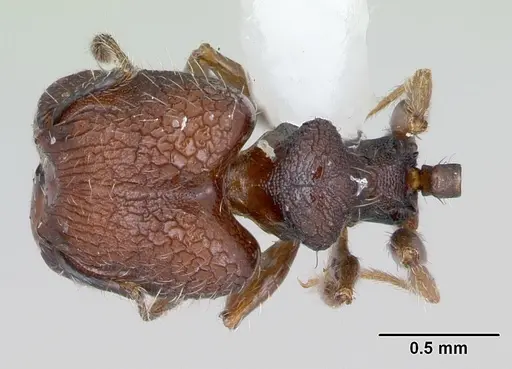
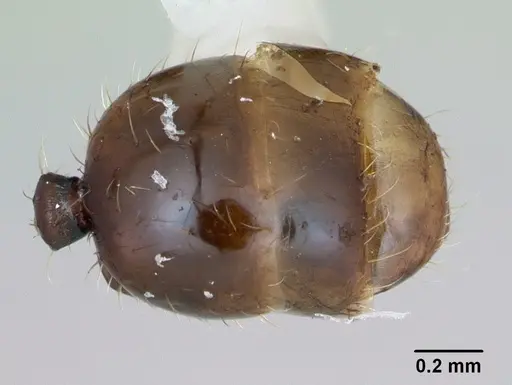
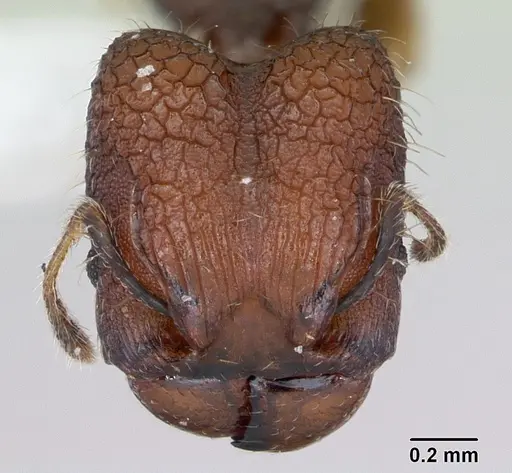
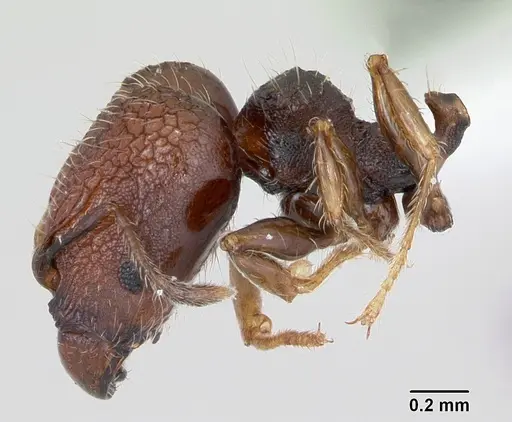
CASENT0173103
View on AntWeb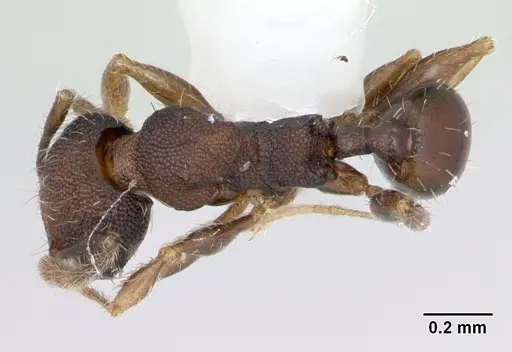
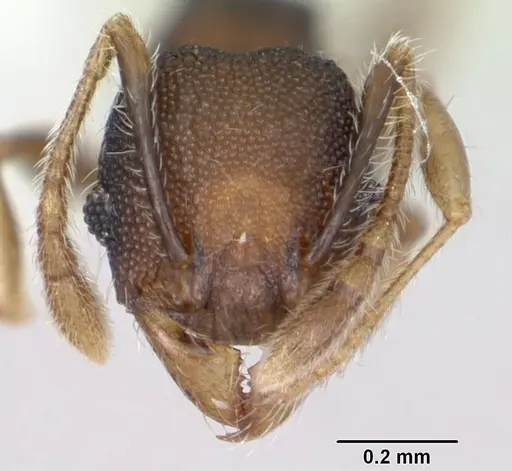
CASENT0173104
View on AntWeb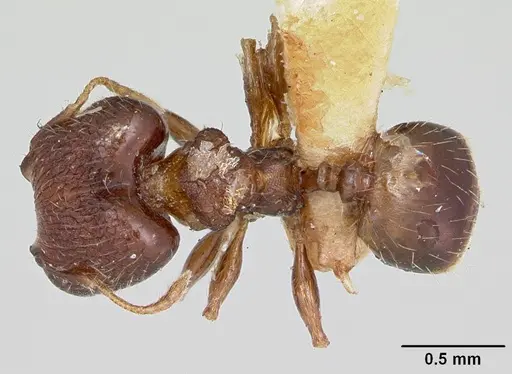
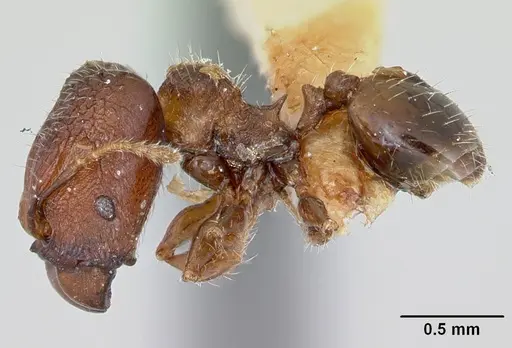
CASENT0173105
View on AntWeb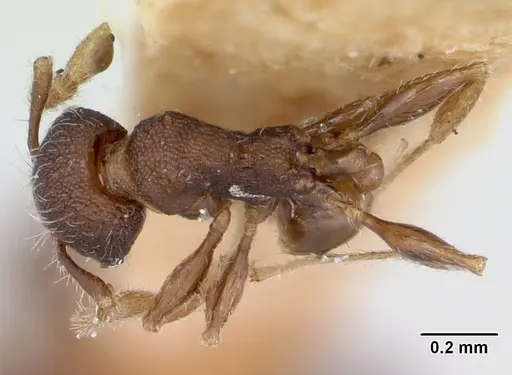
Literature
Loading...Loading products...